

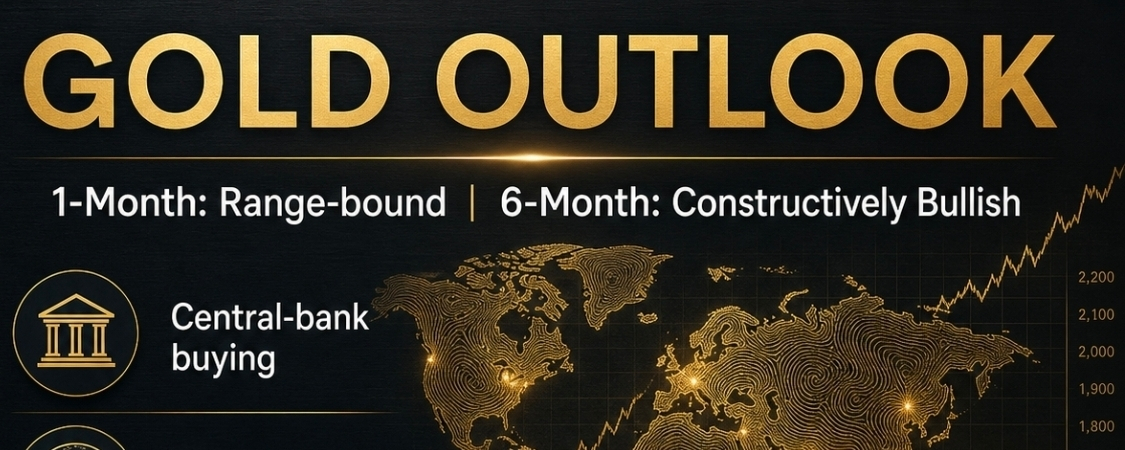

#GOLD Ausblick:
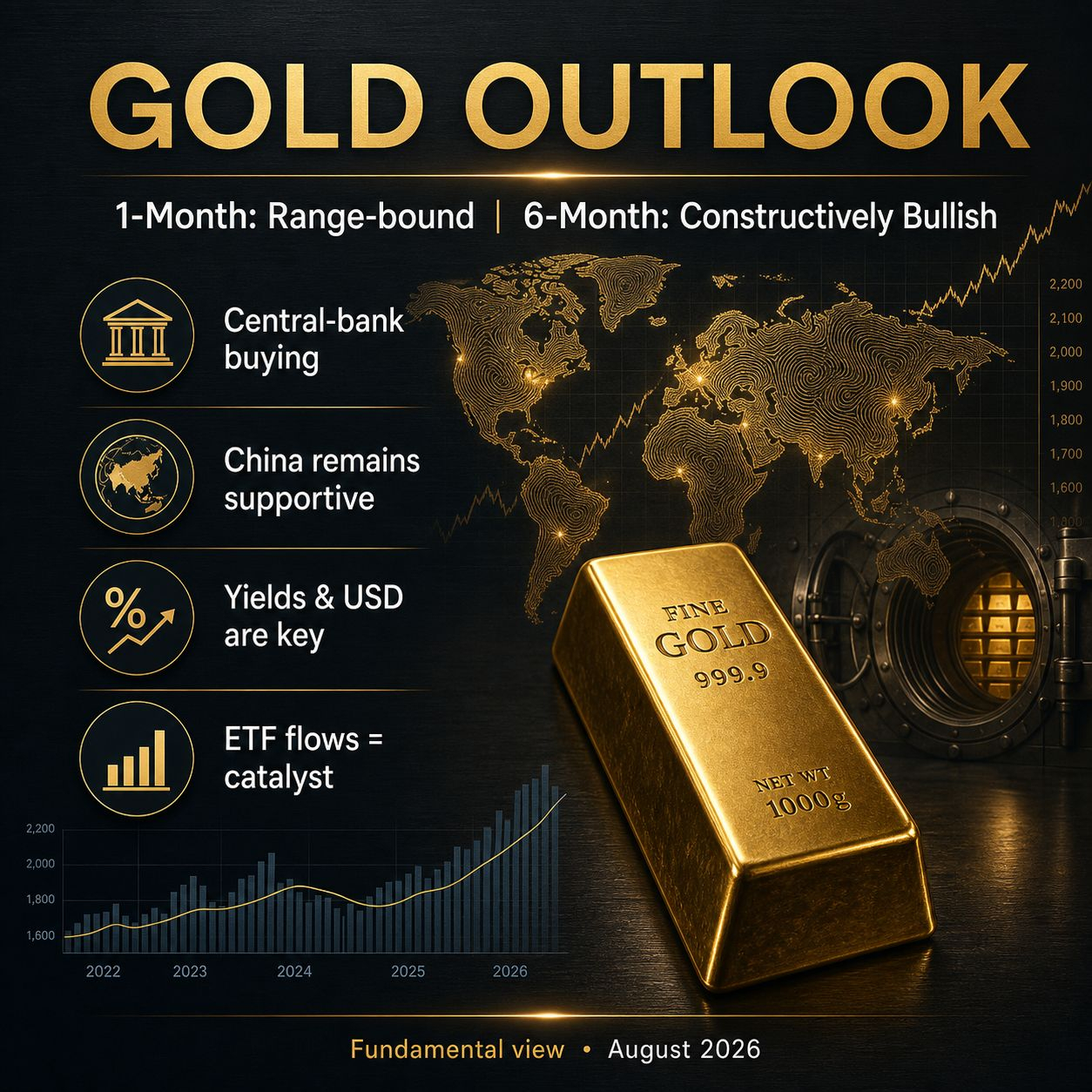
1-Monat: Spanne gebunden
6-Monate: Konstruktiv bullisch
WICHTIGE FUNDAMENTALS
- Der Kauf der Zentralbanken bleibt eine wichtige strukturelle Stütze für Gold
- China fügt weiterhin Goldreserven hinzu und stützt die physische Nachfrage
- Andere Zentralbanken diversifizieren ihre Reserven weg von einer übermäßigen USD-Exponierung
- Fallende Realrenditen und ein schwächerer US-Dollar wären stark bullisch
- Höhere Renditen für Anleihen und ein stärkerer Dollar bleiben die wichtigsten Abwärtsrisiken
- ETF-Zuflüsse könnten der Schlüssel-Katalysator für den nächsten großen Aufwärtsschub sein
- Schmucknachfrage unter Druck bei hohen Preisen, insbesondere in China und Indien
- Der Bergbau-Lieferumfang verändert sich nur langsam; Recycling nimmt zu, wenn die Preise hoch sind
AUSBLICK AUF 1 MONAT
Neutral bis leicht bullisch.
Gold kann konsolidieren oder in einer breiten Spanne handeln, sofern kein großer Katalysator auftritt. Wichtige positive Auslöser sind niedrigere US-Anleiherenditen, ein schwächerer Dollar, eine geopolitische Eskalation, schwächere Wirtschaftsdaten oder erneute Zuflüsse in ETFs.
Erwartetes Szenario: etwa -5% bis +5% gegenüber den aktuellen Kursniveaus.
AUSBLICK AUF 6 MONATE
Leicht bullisch.
Der breitere Ausblick bleibt positiv, weil Käufe durch Zentralbanken, Chinas Aufbau von Reserven, geopolitische Unsicherheit, fiskal-/Schuldenbedenken und mögliches geldpolitisches Lockerungstempo die Nachfrage weiter stützen.
Bullisches Szenario: +5% bis +20%, wenn die Renditen fallen, das Rezessionsrisiko steigt oder die geopolitische Anspannung zunimmt.
Bärisches Szenario: -5% bis -15%, falls die US-Wirtschaft stark bleibt, die Anleiherenditen steigen, der Dollar sich festigt und Anleger stark in risikoreiche Assets umschichten.
WORAUF ES ANKOMMT
- US-10-Jahres-Treasury-Renditen und reale Renditen
- US-Dollar-Index (DXY)
- Erwartungen an Zinssenkungen der Federal Reserve
- Zuflüsse oder Abflüsse in Gold-ETFs
- Monatliche Gold-Reservenankäufe der PBoC
- Weitere Ankündigungen zum Ankauf durch Zentralbanken
- Chinas physische Nachfrage und Shanghaier Goldprämie
- Indien-Importe, Schmucknachfrage und Festival-Saison
- Geopolitische Entwicklungen
- Inflations- und Rezessionsdaten
FAZIT
Gold ist strukturell weiterhin gestützt, aber kurzfristige Volatilität ist wahrscheinlich. Die stärkste bullische Bestätigung wäre fallende reale Renditen, ein schwächerer US-Dollar, erneuerte
ETF-Nachfrage und anhaltende Käufe durch Zentralbanken