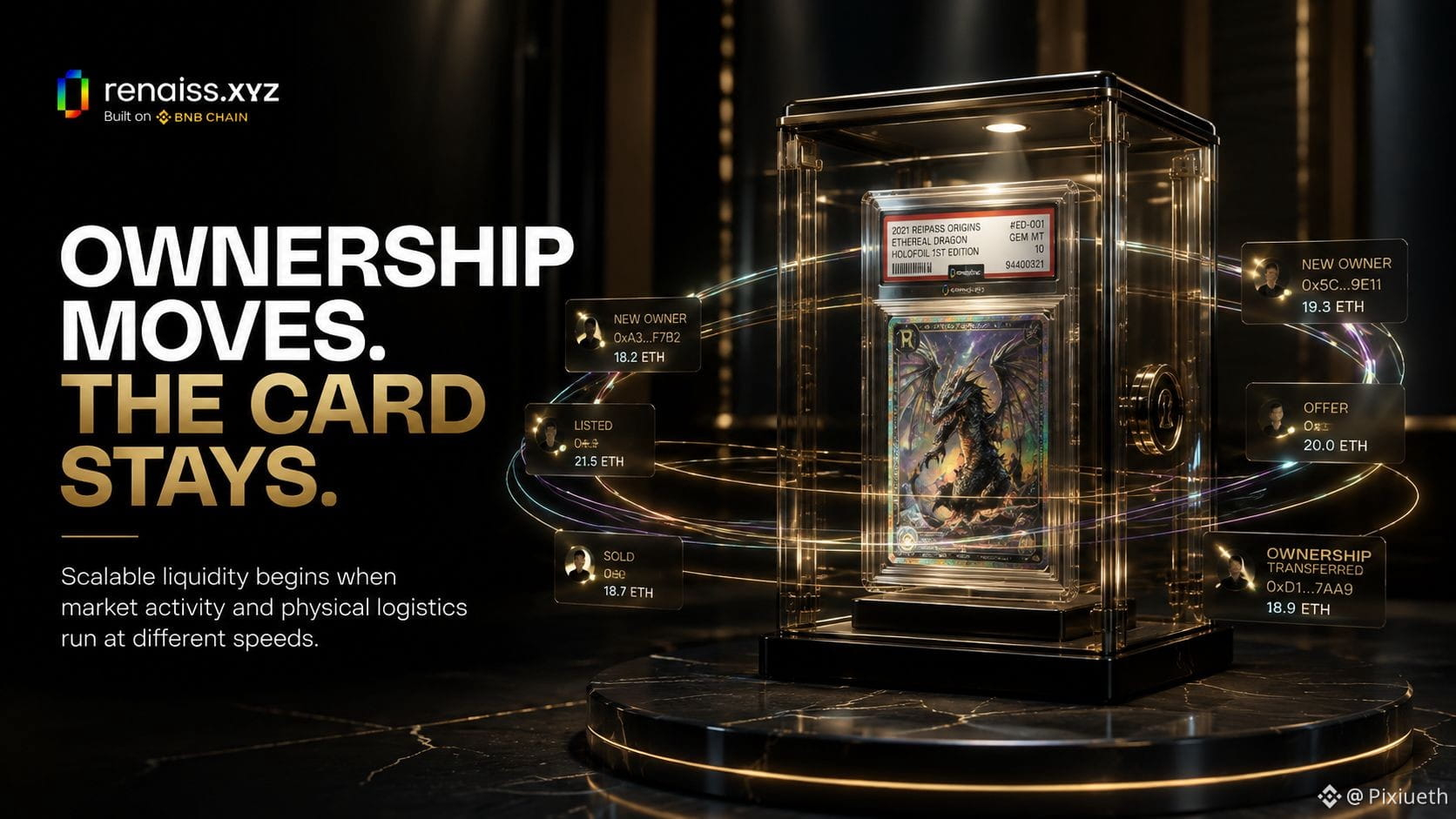
Die wichtigste Renaiss-Transaktion könnte die sein, bei der die Karte sich nie bewegt.
Physische Sammlerstücke haben schon immer zwei Dinge miteinander verbunden: erst den Eigentumswechsel, dann folgt die Logistik. Eine Karte wird verkauft, verpackt, versichert, versendet, empfangen und unter Umständen erneut versendet, wenn sie das nächste Mal den Besitzer wechselt. Dadurch trägt jede Runde des Marktes einen physischen Aufwand.
@renaissxyz trennt diese Uhren. Drittlager halten die zugrunde liegende Karte, während ihre On-Chain-Repräsentation an dieser Verwahrposition gelistet und gehandelt werden kann. Full Redemption, jetzt für alle offen, ist der Punkt, an dem der Eigentümer wählt, diesen digitalen Eigentumsstatus wieder in eine physische Zustellung umzuwandeln.
Diese Unterscheidung ist die Architektur. Verwahrung beantwortet, wo sich die Karte befindet. Eigentum beantwortet, wer den Anspruch kontrolliert. Marktaktivität verändert ihren wirtschaftlichen Status. Redemption ist das, was schließlich das physische Objekt auffordert, sich zu bewegen. Diese Ereignisse gehören zu einem System, aber sie müssen nicht mit derselben Häufigkeit stattfinden.
Nichts davon lässt die Logistik verschwinden. Die Verwahrung durch Dritte birgt weiterhin betriebliche Risiken, und die Redemption beinhaltet weiterhin Versand, Gebühren, regionale Beschränkungen und Abwicklung. Renaiss garantiert außerdem nicht öffentlich „mehrere Trades, eine einzige Sendung“. Der stärkere Punkt ist vielmehr, dass Marktaktivität stattfinden kann, während die physische Verwahrposition stabil bleibt.
Wenn man Renaiss durch Packs, Marketplace, Index, Vaults und Redemption betrachtet, könnte dies die Idee sein, die den gesamten Stack miteinander verbindet. Der Durchbruch liegt nicht darin, eine Karte auf On-Chain zu setzen. Er besteht darin, dass sich das Eigentum häufiger bewegt als das Objekt es muss.
Das ist letztlich das, was skalierbare Liquidität für physische Sammlerstücke braucht: Der Markt sollte sich bewegen können, ohne dass das Asset jedes Mal reisen muss, wenn es gehandelt wird.
Physische Sammlerstücke haben schon immer zwei Dinge miteinander verbunden: erst den Eigentumswechsel, dann folgt die Logistik. Eine Karte wird verkauft, verpackt, versichert, versendet, empfangen und unter Umständen erneut versendet, wenn sie das nächste Mal den Besitzer wechselt. Dadurch trägt jede Runde des Marktes einen physischen Aufwand.
@renaissxyz trennt diese Uhren. Drittlager halten die zugrunde liegende Karte, während ihre On-Chain-Repräsentation an dieser Verwahrposition gelistet und gehandelt werden kann. Full Redemption, jetzt für alle offen, ist der Punkt, an dem der Eigentümer wählt, diesen digitalen Eigentumsstatus wieder in eine physische Zustellung umzuwandeln.
Diese Unterscheidung ist die Architektur. Verwahrung beantwortet, wo sich die Karte befindet. Eigentum beantwortet, wer den Anspruch kontrolliert. Marktaktivität verändert ihren wirtschaftlichen Status. Redemption ist das, was schließlich das physische Objekt auffordert, sich zu bewegen. Diese Ereignisse gehören zu einem System, aber sie müssen nicht mit derselben Häufigkeit stattfinden.
Nichts davon lässt die Logistik verschwinden. Die Verwahrung durch Dritte birgt weiterhin betriebliche Risiken, und die Redemption beinhaltet weiterhin Versand, Gebühren, regionale Beschränkungen und Abwicklung. Renaiss garantiert außerdem nicht öffentlich „mehrere Trades, eine einzige Sendung“. Der stärkere Punkt ist vielmehr, dass Marktaktivität stattfinden kann, während die physische Verwahrposition stabil bleibt.
Wenn man Renaiss durch Packs, Marketplace, Index, Vaults und Redemption betrachtet, könnte dies die Idee sein, die den gesamten Stack miteinander verbindet. Der Durchbruch liegt nicht darin, eine Karte auf On-Chain zu setzen. Er besteht darin, dass sich das Eigentum häufiger bewegt als das Objekt es muss.
Das ist letztlich das, was skalierbare Liquidität für physische Sammlerstücke braucht: Der Markt sollte sich bewegen können, ohne dass das Asset jedes Mal reisen muss, wenn es gehandelt wird.