Der größte Irrtum, den ich in Bezug auf Tokenisierung hatte, betraf nicht den Preis, die Liquidität oder den Handel.
Lange Zeit dachte ich, der schwierigste Teil von tokenisierten Aktien bestünde einfach darin, einen Token zu schaffen, der eine echte Aktie abbildet. Aber je mehr ich darüber gelesen habe, wie bStocks funktionieren, desto klarer wurde mir, dass das wahrscheinlich der einfachste Teil des gesamten Systems ist.
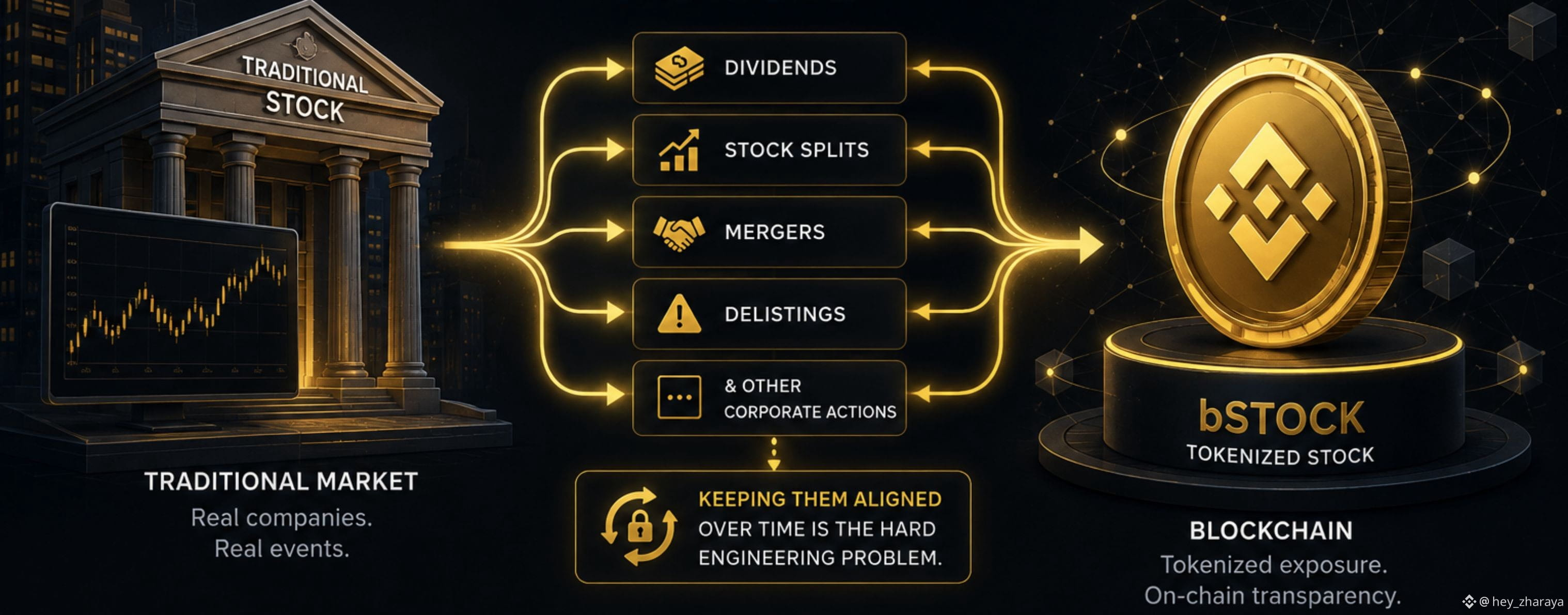
Die eigentliche Herausforderung beginnt erst, nachdem der Token erstellt wurde. Unternehmen zahlen Dividenden, splitten ihre Aktien, fusionieren mit anderen Unternehmen, werden vom Handel ausgenommen (delistet) und durchlaufen viele weitere gesellschaftsrechtliche Maßnahmen. Wenn ein Token weiterhin denselben zugrunde liegenden Vermögenswert repräsentieren soll, kann er nicht einfach unabhängig auf einer Blockchain existieren. Er muss mit allem, was mit der echten Aktie passiert, synchron bleiben.
Deshalb wurden Funktionen wie der Multiplier-Mechanismus und die Handhabung gesellschaftsrechtlicher Maßnahmen für mich viel interessanter, als ich erwartet hatte. Jeder kann einen Token ausgeben. Ihn über die Zeit hinweg mit einem realen Vermögenswert in Einklang zu halten, ist eine völlig andere ingenieurtechnische Herausforderung.
Bevor ich über bStocks gelesen habe, dachte ich, Tokenisierung ginge vor allem darum, traditionelle Vermögenswerte on-chain zu bringen. Jetzt glaube ich, dass das schwierigere Problem darin besteht, zwei völlig unterschiedliche Finanzsysteme gemeinsam in Bewegung zu halten, ohne diese Verbindung zu beschädigen.
Das war wahrscheinlich der Aspekt an bStocks, den ich am stärksten unterschätzt habe.
Was hat deine Sicht am meisten verändert, nachdem du gelernt hast, wie tokenisierte Aktien tatsächlich funktionieren?
#bstockscis @BinanceCIS
Lange Zeit dachte ich, der schwierigste Teil von tokenisierten Aktien bestünde einfach darin, einen Token zu schaffen, der eine echte Aktie abbildet. Aber je mehr ich darüber gelesen habe, wie bStocks funktionieren, desto klarer wurde mir, dass das wahrscheinlich der einfachste Teil des gesamten Systems ist.
Die eigentliche Herausforderung beginnt erst, nachdem der Token erstellt wurde. Unternehmen zahlen Dividenden, splitten ihre Aktien, fusionieren mit anderen Unternehmen, werden vom Handel ausgenommen (delistet) und durchlaufen viele weitere gesellschaftsrechtliche Maßnahmen. Wenn ein Token weiterhin denselben zugrunde liegenden Vermögenswert repräsentieren soll, kann er nicht einfach unabhängig auf einer Blockchain existieren. Er muss mit allem, was mit der echten Aktie passiert, synchron bleiben.
Deshalb wurden Funktionen wie der Multiplier-Mechanismus und die Handhabung gesellschaftsrechtlicher Maßnahmen für mich viel interessanter, als ich erwartet hatte. Jeder kann einen Token ausgeben. Ihn über die Zeit hinweg mit einem realen Vermögenswert in Einklang zu halten, ist eine völlig andere ingenieurtechnische Herausforderung.
Bevor ich über bStocks gelesen habe, dachte ich, Tokenisierung ginge vor allem darum, traditionelle Vermögenswerte on-chain zu bringen. Jetzt glaube ich, dass das schwierigere Problem darin besteht, zwei völlig unterschiedliche Finanzsysteme gemeinsam in Bewegung zu halten, ohne diese Verbindung zu beschädigen.
Das war wahrscheinlich der Aspekt an bStocks, den ich am stärksten unterschätzt habe.
Was hat deine Sicht am meisten verändert, nachdem du gelernt hast, wie tokenisierte Aktien tatsächlich funktionieren?
#bstockscis @BinanceCIS