Was Smart-Contract-Risiko für STON.fi-Nutzer bedeutet
Smart-Contract-Risiko ist die Möglichkeit, dass der On-Chain-Code hinter einem Swap, einer Liquiditätsaktion oder einem verwandten Prozess eine Schwäche enthält, sich unerwartet verhält oder schlecht mit einem anderen Contract interagiert. Für STON.fi-Nutzer ist das nicht dasselbe wie der Verlust des Wallet-Zugriffs und auch nicht dasselbe wie Kursvolatilität bei Tokens. Es geht um Risiko durch Code und Ausführung.
STON.fi ist nicht verwahrend (non custodial), sodass es Ihre privaten Schlüssel nie hält. Dennoch hängt jede signierte Transaktion davon ab, dass Smart Contracts korrekt ausgeführt werden. Ein selbstverwahrender DEX schützt das Eigentum, nimmt jedoch nicht das Risiko weg, dass die Logik des Contracts fehlschlagen, ausgenutzt werden oder ein Ergebnis liefern könnte, das nicht dem entspricht, was der Nutzer beabsichtigt hat.
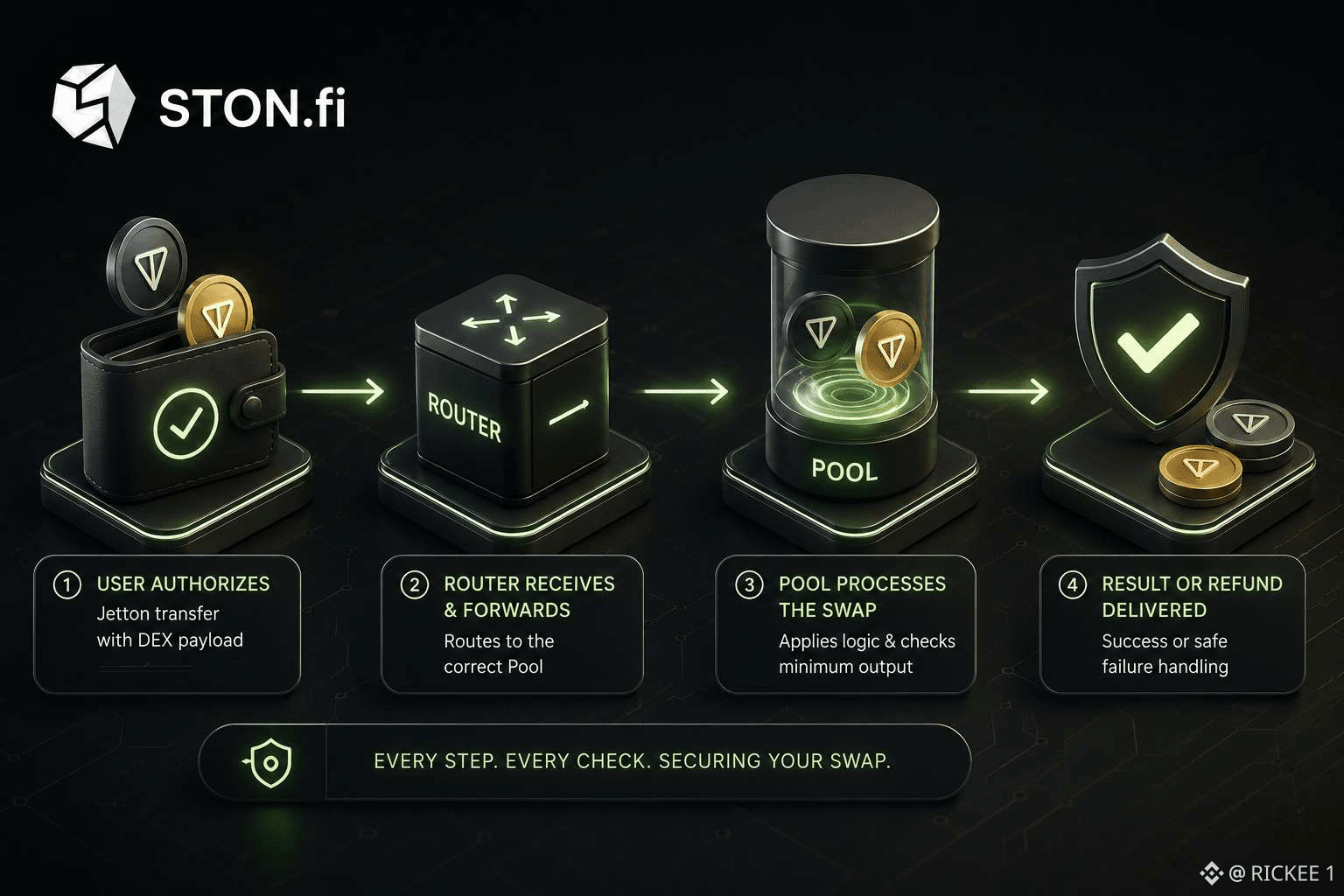
Ein STON.fi-Swap durchläuft mehrere Contract-Schritte. Zuerst prüfen Sie den Quote und autorisieren eine Jetton-Übertragung mit der DEX-Payload. Als Nächstes erhält der Router die Benachrichtigung und leitet sie an das richtige Pool weiter. Der Pool wendet dann die Swap-Logik an und prüft die Mindest-Ausgabe. Schließlich liefern die Contracts das Ergebnis oder lösen Refund- und Fehlerbehandlungsprozesse aus. Jede Phase ist entscheidend, weil das endgültige Ergebnis von der Integrität des gesamten Contract-Ablaufs abhängt.
STON.fi reduziert dieses Risiko auf mehrere Arten. Die DEX-v2-Contracts wurden im Januar 2025 einer unabhängigen Sicherheitsprüfung durch Trail of Bits unterzogen. Das Projekt stellt außerdem öffentliche technische Dokumentationen für den Router, den Pool, das Vault und die verwandten Komponenten bereit. Darüber hinaus unterhält STON.fi ein aktives HackenProof-Bug-Bounty und ein CertiK-Monitoring.
Trotzdem kann keine Prüfung jede zukünftige Schwachstelle oder jedes externe Token-Risiko vollständig ausschließen. Sicherheitsreviews erhöhen das Vertrauen zu einem bestimmten Zeitpunkt, garantieren jedoch keine dauerhafte Sicherheit.
Für Nutzer ist die praktische Erkenntnis einfach: Bevor Sie bedeutende Mittel einsetzen, bestätigen Sie die offizielle Oberfläche, prüfen Sie die Transaktionsdetails, überprüfen Sie die Einstellung für die Mindest-Ausgabe und planen Sie die Positionsgrößen sorgfältig. In DeFi gehört sorgfältige Aufmerksamkeit zur Sicherheit.
$DRIFT $USDT $BNB
Smart-Contract-Risiko ist die Möglichkeit, dass der On-Chain-Code hinter einem Swap, einer Liquiditätsaktion oder einem verwandten Prozess eine Schwäche enthält, sich unerwartet verhält oder schlecht mit einem anderen Contract interagiert. Für STON.fi-Nutzer ist das nicht dasselbe wie der Verlust des Wallet-Zugriffs und auch nicht dasselbe wie Kursvolatilität bei Tokens. Es geht um Risiko durch Code und Ausführung.
STON.fi ist nicht verwahrend (non custodial), sodass es Ihre privaten Schlüssel nie hält. Dennoch hängt jede signierte Transaktion davon ab, dass Smart Contracts korrekt ausgeführt werden. Ein selbstverwahrender DEX schützt das Eigentum, nimmt jedoch nicht das Risiko weg, dass die Logik des Contracts fehlschlagen, ausgenutzt werden oder ein Ergebnis liefern könnte, das nicht dem entspricht, was der Nutzer beabsichtigt hat.
Ein STON.fi-Swap durchläuft mehrere Contract-Schritte. Zuerst prüfen Sie den Quote und autorisieren eine Jetton-Übertragung mit der DEX-Payload. Als Nächstes erhält der Router die Benachrichtigung und leitet sie an das richtige Pool weiter. Der Pool wendet dann die Swap-Logik an und prüft die Mindest-Ausgabe. Schließlich liefern die Contracts das Ergebnis oder lösen Refund- und Fehlerbehandlungsprozesse aus. Jede Phase ist entscheidend, weil das endgültige Ergebnis von der Integrität des gesamten Contract-Ablaufs abhängt.
STON.fi reduziert dieses Risiko auf mehrere Arten. Die DEX-v2-Contracts wurden im Januar 2025 einer unabhängigen Sicherheitsprüfung durch Trail of Bits unterzogen. Das Projekt stellt außerdem öffentliche technische Dokumentationen für den Router, den Pool, das Vault und die verwandten Komponenten bereit. Darüber hinaus unterhält STON.fi ein aktives HackenProof-Bug-Bounty und ein CertiK-Monitoring.
Trotzdem kann keine Prüfung jede zukünftige Schwachstelle oder jedes externe Token-Risiko vollständig ausschließen. Sicherheitsreviews erhöhen das Vertrauen zu einem bestimmten Zeitpunkt, garantieren jedoch keine dauerhafte Sicherheit.
Für Nutzer ist die praktische Erkenntnis einfach: Bevor Sie bedeutende Mittel einsetzen, bestätigen Sie die offizielle Oberfläche, prüfen Sie die Transaktionsdetails, überprüfen Sie die Einstellung für die Mindest-Ausgabe und planen Sie die Positionsgrößen sorgfältig. In DeFi gehört sorgfältige Aufmerksamkeit zur Sicherheit.
$DRIFT $USDT $BNB