@BabylonLabs_io brachte mich dazu, über etwas nachzudenken, das ich normalerweise für selbstverständlich halte: Wer entscheidet eigentlich, wohin Sicherheiten gelangen dürfen, wenn es kompliziert wird?
Mit dem Vault-Design von Babylon ist die Antwort überraschend früh.
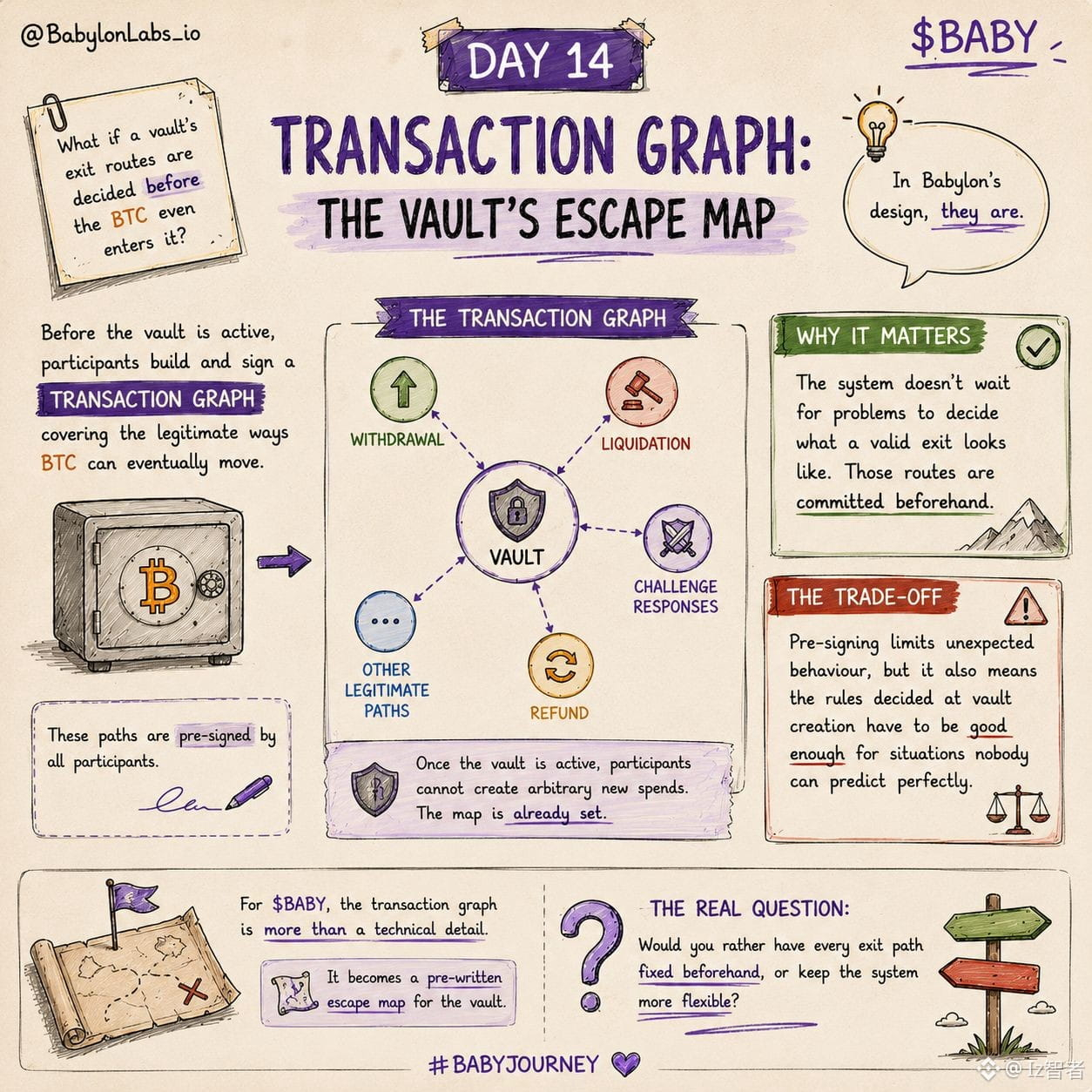
Bevor der Vault überhaupt aktiv ist, erstellen und signieren die Teilnehmer einen Transaktionsgraphen, der die legitimen Wege abdeckt, über die sich BTC später bewegen kann — Auszahlung, Liquidation, Challenge-Responses und sogar der Rückerstattungs-Pfad.
Das verändert für mich das Sicherheitsmodell.
Das System wartet nicht erst, bis etwas schiefgeht, um festzulegen, wie ein gültiger Ausstieg aussieht. Diese Routen werden im Voraus festgelegt.
Aber es gibt einen interessanten Kompromiss.
Das Vorabsignieren begrenzt unerwartetes Verhalten, bedeutet aber auch, dass die Regeln, die bei der Erstellung des Vault festgelegt wurden, gut genug sein müssen für Situationen, die niemand perfekt vorhersagen kann.
Für #baby wird der Transaktionsgraph damit mehr als nur ein technisches Detail.
Er wird zu einer Art „vorabgeschriebener Fluchtkarte“ für den Vault.
Würdest du lieber haben, dass jeder Ausstiegspfad vorher festgelegt ist, oder das System flexibler halten?
$HEI $BLESS $BABY
Mit dem Vault-Design von Babylon ist die Antwort überraschend früh.
Bevor der Vault überhaupt aktiv ist, erstellen und signieren die Teilnehmer einen Transaktionsgraphen, der die legitimen Wege abdeckt, über die sich BTC später bewegen kann — Auszahlung, Liquidation, Challenge-Responses und sogar der Rückerstattungs-Pfad.
Das verändert für mich das Sicherheitsmodell.
Das System wartet nicht erst, bis etwas schiefgeht, um festzulegen, wie ein gültiger Ausstieg aussieht. Diese Routen werden im Voraus festgelegt.
Aber es gibt einen interessanten Kompromiss.
Das Vorabsignieren begrenzt unerwartetes Verhalten, bedeutet aber auch, dass die Regeln, die bei der Erstellung des Vault festgelegt wurden, gut genug sein müssen für Situationen, die niemand perfekt vorhersagen kann.
Für #baby wird der Transaktionsgraph damit mehr als nur ein technisches Detail.
Er wird zu einer Art „vorabgeschriebener Fluchtkarte“ für den Vault.
Würdest du lieber haben, dass jeder Ausstiegspfad vorher festgelegt ist, oder das System flexibler halten?
$HEI $BLESS $BABY