Jeder @BabylonLabs_io -„Erklärer“ wiederholt dieselbe Aussage: Man soll an einen Finality-Provider delegieren, der sich fehlverhält, und dann wird dein Bitcoin bestraft. Das wird als das dargestellt, was „56.000+ BTC“ dabei „sichern“, dass diese Chains überhaupt etwas bedeuten – echtes Kapital ist gefährdet, wenn ein Provider doppelt signiert.
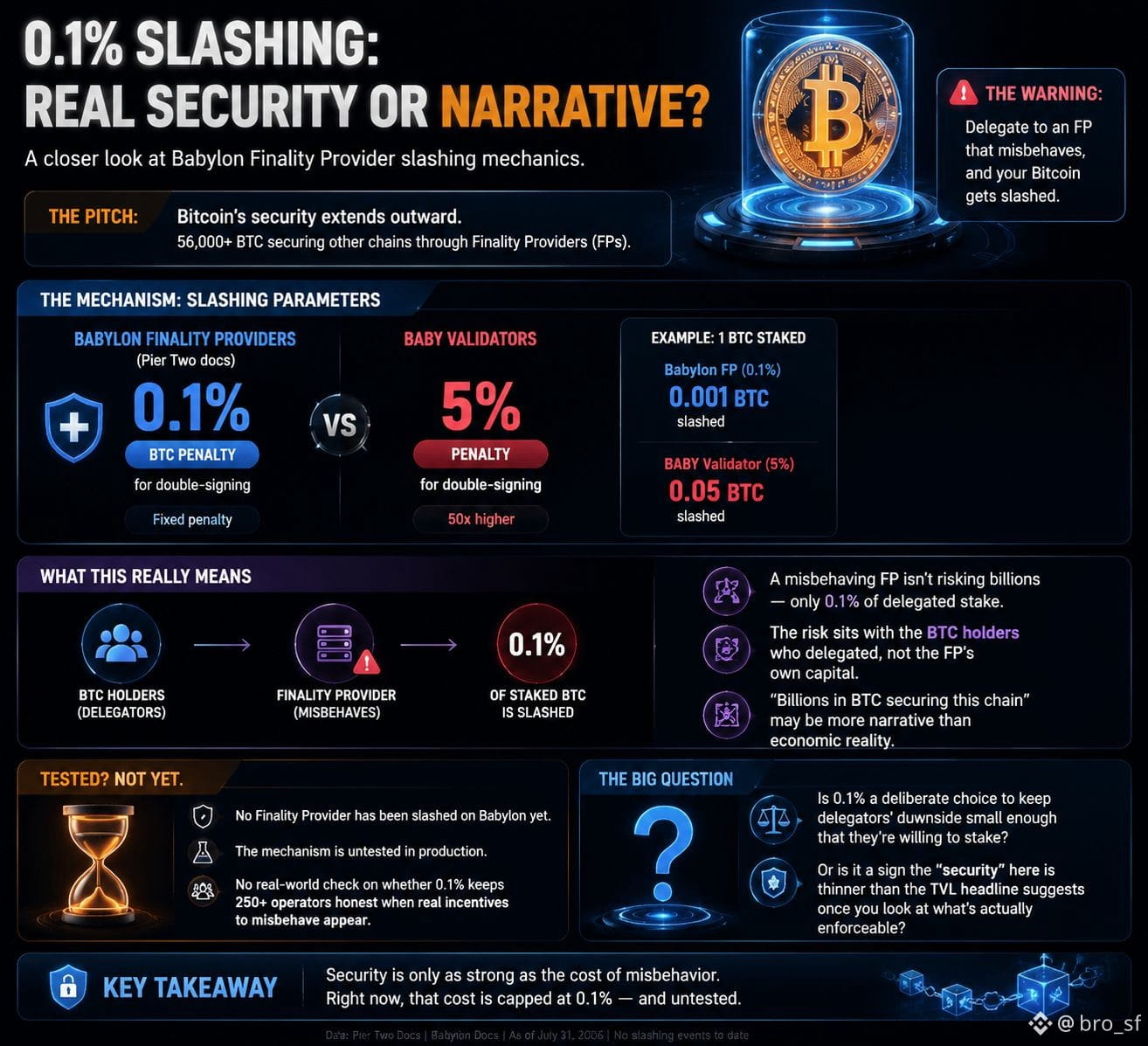
Also habe ich statt des Warntexts den tatsächlichen Parameter geprüft. Die Node-Operator-Dokumentation von Pier Two schreibt es ausdrücklich so hin: Doppel-Sign, und die BTC-Strafe beträgt einen festen Satz von 0,1% des gestakten Betrags. Vergleiche das mit BABY-Validatoren: Die verlieren 5% für dieselbe Verfehlung – fünfzigmal so hoch.
Diese Lücke war der Grund, warum ich aufgehört habe, weiterzuschauen. Der Pitch lautet: „Bahn-„Sicherheit“ reicht nach außen“, und die meisten lesen das so, dass man damit gegen ein BSN vorgeht, das etwas kostet – ungefähr die vollen BTC dahinter –, so wie ernsthaftes Slashing auf Ethereum funktioniert. Aber wenn der tatsächliche Abschreckungsmechanismus bei einem Zehntel Prozent gedeckelt ist, dann macht „Milliarden in BTC, die diese Chain absichern“ mehr erzählerische Arbeit als ökonomische. Ein sich fehlverhaltender Provider riskiert keine Milliarden – er riskiert 0,1% des delegierten Stakings, und dieses Risiko liegt bei den BTC-Inhabern, die delegiert haben, nicht bei dem eigenen Kapital des Providers.
Ganz nüchtern zu erwähnen: Bisher wurde bei Babylon noch kein Finality-Provider tatsächlich geslashed. Der Mechanismus ist in Produktion noch ungetestet – es gibt keinen realen Check, ob 0,1% 250+ Operatoren noch ehrlich halten, sobald echte Anreize auftauchen, sich fehlzuverhalten.
Ist die 0,1% eine bewusste Entscheidung, um den Nachteil für Delegatoren klein genug zu halten, dass sie bereit sind zu staken, oder ein Zeichen dafür, dass die „Sicherheit“ hier dünner ist, als der TVL-Headline suggeriert, wenn man sich anschaut, was tatsächlich durchsetzbar ist?
#baby $BABY $BTC
Also habe ich statt des Warntexts den tatsächlichen Parameter geprüft. Die Node-Operator-Dokumentation von Pier Two schreibt es ausdrücklich so hin: Doppel-Sign, und die BTC-Strafe beträgt einen festen Satz von 0,1% des gestakten Betrags. Vergleiche das mit BABY-Validatoren: Die verlieren 5% für dieselbe Verfehlung – fünfzigmal so hoch.
Diese Lücke war der Grund, warum ich aufgehört habe, weiterzuschauen. Der Pitch lautet: „Bahn-„Sicherheit“ reicht nach außen“, und die meisten lesen das so, dass man damit gegen ein BSN vorgeht, das etwas kostet – ungefähr die vollen BTC dahinter –, so wie ernsthaftes Slashing auf Ethereum funktioniert. Aber wenn der tatsächliche Abschreckungsmechanismus bei einem Zehntel Prozent gedeckelt ist, dann macht „Milliarden in BTC, die diese Chain absichern“ mehr erzählerische Arbeit als ökonomische. Ein sich fehlverhaltender Provider riskiert keine Milliarden – er riskiert 0,1% des delegierten Stakings, und dieses Risiko liegt bei den BTC-Inhabern, die delegiert haben, nicht bei dem eigenen Kapital des Providers.
Ganz nüchtern zu erwähnen: Bisher wurde bei Babylon noch kein Finality-Provider tatsächlich geslashed. Der Mechanismus ist in Produktion noch ungetestet – es gibt keinen realen Check, ob 0,1% 250+ Operatoren noch ehrlich halten, sobald echte Anreize auftauchen, sich fehlzuverhalten.
Ist die 0,1% eine bewusste Entscheidung, um den Nachteil für Delegatoren klein genug zu halten, dass sie bereit sind zu staken, oder ein Zeichen dafür, dass die „Sicherheit“ hier dünner ist, als der TVL-Headline suggeriert, wenn man sich anschaut, was tatsächlich durchsetzbar ist?
#baby $BABY $BTC