
Der Käufer tätigte eine anfängliche reibungslose Zahlung von ₹4.000 für einen USDT-Trade auf Binance P2P. Jedoch drückte er fünf Stunden später zusätzlich ₹20.000 über zwei ungefragte Transaktionen (₹3.000 und ₹17.000) in das Konto des Verkäufers. Der Käufer verlangte sofort eine direkte Rückerstattung und behauptete, es handle sich um einen versehentlichen „Auto-Transfer“-Störfall.
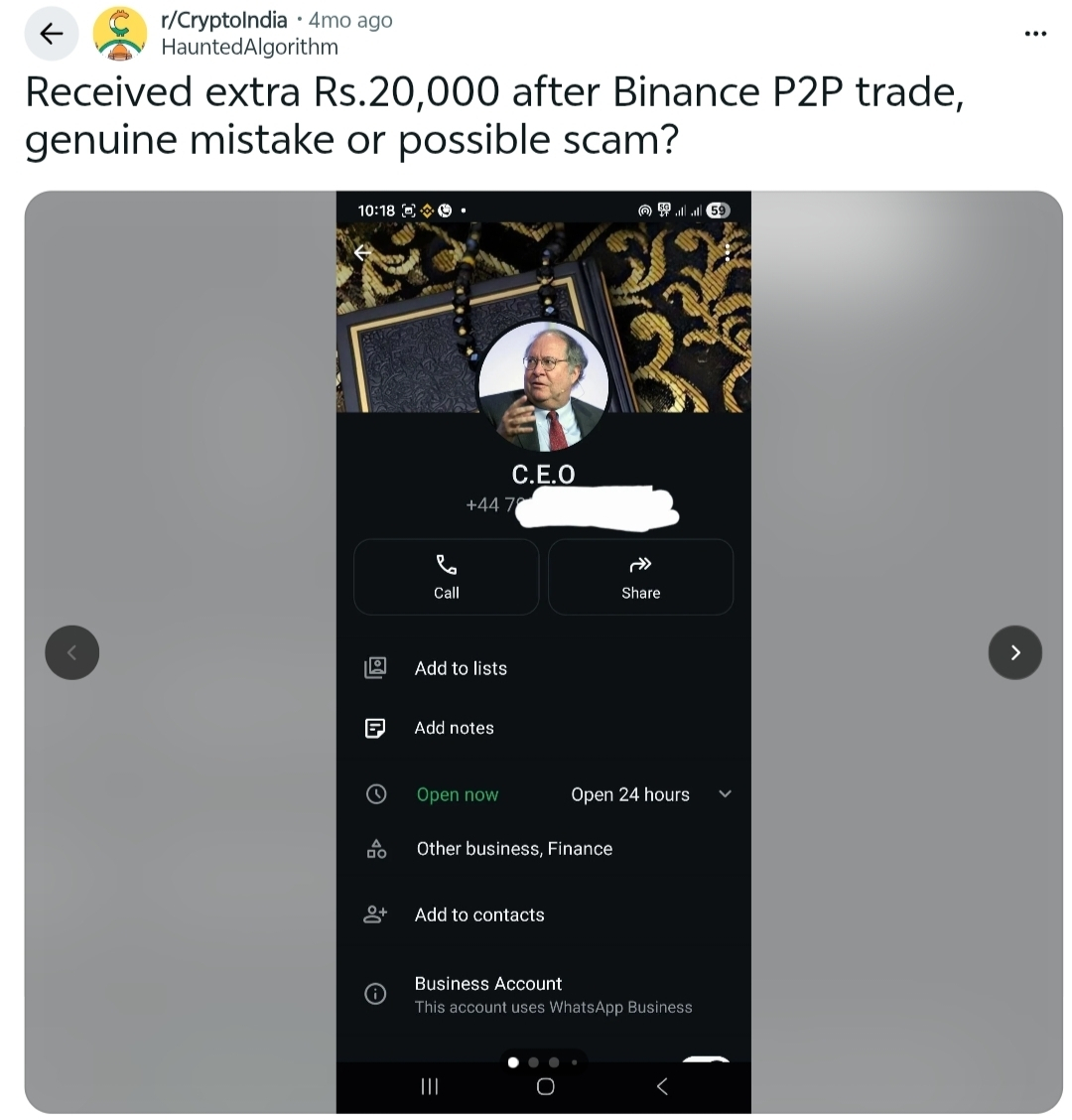
Die Transaktion zerfiel schnell unter genauerer Prüfung, als der Verkäufer eine geschäftliche Nummer mit Sitz im Vereinigten Königreich (+44...) auf dem Screenshot des Käufers bemerkte, obwohl der Käufer behauptete, das Geld stamme von einem indischen Bankkonto. Danach verlagerte sich die Erklärung des Käufers auf einen „Bruder, der im Vereinigten Königreich lebt“, und sie begannen, mit intensiver emotionaler Manipulation Druck auszuüben, als der Verkäufer sich weigerte, Geld blind zurückzuschicken, und zwar unter Verweis auf einen erkrankten Elternteil. Als der Verkäufer die typischen Anzeichen eines P2P-Chargeback-Betrugsplans erkannte, lehnte er eine direkte manuelle Überweisung ab und wies den Käufer an, eine offizielle Rückbuchung über ihre Bank zu veranlassen. Trotz dieser Vorsicht legte der Käufer bei Binance Berufung ein, wodurch 196 der USDT des Verkäufers eingefroren wurden, während eine ₹20.000 Belastung (Lien) auf dem Bankkonto des Verkäufers hinterlegt wurde.
Die P2P-Falle: Wie ein „fälschlich“-Einzahlungsbetrag von 20.000 ₹ dein ganzes Leben einfrieren könnte
Es ist ein ruhiger Abend, und du hast gerade einen makellosen P2P-Verkauf im Wert von 4.000 ₹ USDT abgeschlossen. Die Transaktion ist erledigt, das Geld ist da, und du machst mit deinem Tag weiter. Doch fünf Stunden später vibriert dein Telefon mit zwei Benachrichtigungen. Zusätzlich 3.000 ₹ landen auf deinem Bankkonto, unmittelbar danach noch einmal 17.000 ₹.
Plötzlich hat ein Fremder 20.000 ₹ Bargeld, das du nicht angefordert hast, direkt in deine Hände gelegt. Bevor du überhaupt begreifen kannst, was passiert ist, explodiert dein P2P-Chat vor hektischen Nachrichten.
„Bitte! Mein Handy hat geglitcht und das Geld wurde automatisch überwiesen! Gib es sofort zurück!“
Dieses konkrete Szenario ist genau in unserer Community einem Krypto-Händler passiert und hat sie in eine Situation mit hohem Einsatz gebracht – zwischen gutem Samariter sein und das mühsam verdiente Geld zu schützen.
Die Anatomie eines High-Tech-Betrugs
Unser Händler, HauntedAlgorithm, spürte sofort das unangenehme Gefühl von Schuld. Die meisten ehrlichen Menschen würden sofort auf „Überweisen“ klicken, um Bargeld zurückzugeben, das nicht ihnen gehört. Doch als sie genauer hinschauten, begann die Geschichte des Käufers zu reißen wie billiges Glas:
Die nicht passende Fußspur: Das Geld kam von einem lokalen indischen Bankkonto an, aber ein Screenshot, den der Käufer geschickt hatte, enthüllte aus Versehen ein Benachrichtigungs-Popup von einer äußerst verdächtigen WhatsApp-Nummer eines UK-Geschäfts (+44...).
Die wechselnde Geschichte: Als man den Käufer zur Rede stellte, fiel er abrupt auf die Ausrede mit dem „Handy-Glitch“ zurück und behauptete, das UK-Konto gehöre einem Bruder.
Die emotionale Erpressung: Sobald der Händler ablehnte, eine nicht regulierte manuelle Überweisung vorzunehmen, setzte der Käufer sofort harte, schuldinduzierende Notfall-Ausreden aus dem Familienkreis ein („Meine Mutter ist schwer krank!“), um einen schnellen Auszahlungsvorgang zu erzwingen.
Der Double-Dip-Trap – erklärt
Was passiert, wenn du das Geld manuell zurücksendest? Du verlierst alles.
Das ist der klassische Third-Party- / Chargeback-Betrug. Der Hacker oder Scammer nutzt ein kompromittiertes, gestohlenes oder ein Konto eines Dritten, um dir die zusätzlichen 20.000 ₹ zu schicken. Sie wollen verzweifelt, dass du dieses Geld manuell zurücküberweist – auf ein komplett anderes Konto, das von ihnen kontrolliert wird.
Sobald du die Gelder zurückgibst, entdeckt der eigentliche Betroffene des gestohlenen Bankkontos das fehlende Geld und meldet bei seiner Bank einen betrügerischen Chargeback oder eine Cyber-Beschwerde. Die Bank zieht dann weitere 20.000 ₹ direkt aus deinem Kontostand oder legt eine restriktive Sperre für dein Profil fest. Der Betrüger geht mit einem sauberen Gewinn von 20.000 ₹ auf deine Kosten davon, während deine Finanzkonten im Ungewissen eingefroren bleiben.
In unserem Fall führte das „richtige“ Vorgehen trotzdem zu Konsequenzen. Sie lehnten eine manuelle Überweisung korrekt ab und wiesen den Käufer an, eine offizielle Bankrückbuchung zu veranlassen. Als Vergeltung reichte der böswillige Käufer einen Einspruch bei Binance ein und erstattete eine Cyber-Beschwerde, wodurch erfolgreich 196 USDT des Verkäufers gesperrt wurden und eine Bankpfändung in Höhe von 20.000 ₹ verhängt wurde.
So immunisierst du dein P2P-Portfolio
Wenn eine unbekannte Person nach einem Handel versehentlich zusätzliches Geld auf deinem Konto ablegt, priorisiere deine digitale Sicherheit statt einer schnellen Erledigung:
Gib niemals Gelder manuell zurück: Überweise auf keinen Fall Geld zurück – aus eigenem Antrieb – auf eine nicht verifizierte UPI-Adresse oder ein Drittanbieter-Konto, das dir der Käufer anbietet.
Verlange offizielle Bankrückbuchungen: Weise den Käufer an, bei seiner Finanzinstitution ausdrücklich eine Meldung wegen Fehlüberweisung/Rückbuchung einzureichen. Formuliere klar, dass du nur dann zustimmen wirst, wenn deine Bank dich offiziell kontaktiert, um die sichere interne Rückabwicklung zu genehmigen.
Benachrichtige proaktiv über deine Rückerstattung: Geh in deinen lokalen Zweig hinein oder rufe den Kundensupport an, um den unerwarteten Zufluss von Geldern zu melden. Reiche die P2P-Transaktionshistorie als schriftlichen Beleg für eine rechtmäßige Geldspur ein, um dein Profil davor zu schützen, vollständig auf die schwarze Liste gesetzt zu werden.
Entdecke sichere Off-ramps: Traditionelle P2P-Abwicklungen sind ein ideales Terrain für bösartige Chargebacks. Minimiere dein Oberflächenrisiko, indem du alternative Liquiditätsmethoden wie Cash Deposit Machines (CDM) oder direkte, vollständig geprüfte regulierte Gateways in Betracht ziehst.