Die zwei Personen, die „Restaking“ für Ethereum und Bitcoin erfunden haben, arbeiteten früher zusammen
Ich bin heute in ein Kaninchenloch gefallen und habe Babylon mit EigenLayer verglichen, da beide bereits gestaktes Kapital nutzen, um zusätzliche Netzwerke für zusätzliche Rendite abzusichern. Ich hatte erwartet, zwei unabhängige Projekte zu finden, die sich auf eine ähnliche Idee zugelaufen sind. Stattdessen habe ich etwas anderes gefunden.
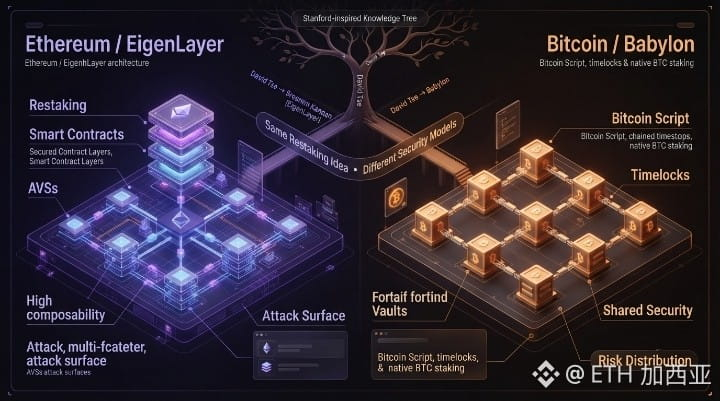
Babylons Gründer, David Tse, ist Professor an der Stanford University. Einer seiner ehemaligen Studenten ist Sreeram Kannan — der anschließend EigenLayer gründete. Gleiche intellektuelle Linie, gleiche Kern-Erkenntnis zur Wiederverwendung von gestaktem Kapital — angewendet auf zwei völlig unterschiedliche Ketten, die tatsächlich nicht miteinander sprechen können.
Aber der Teil, der wirklich zählt, ist mehr als die Kuriosität: EigenLayer führt seine Logik in Ethereum-Smart-Contracts aus. Babylon kann das nicht — Bitcoin unterstützt keine Smart Contracts — also musste es dasselbe Problem stattdessen mit Bitcoin Script und Timelocks lösen. Das ist keine als Feature verkleidete Einschränkung. Es ist der Grund, warum Babylon überhaupt keine Smart-Contract-Risikoebene hat, während EigenLayers gesamtes Sicherheitsmodell von einer abhängt. Gleiche Idee, entgegengesetzte Angriffsfläche.
EigenLayer hat außerdem echte Kritik dafür aufgesammelt, das Risiko zu konzentrieren — also dass ETH dutzende Dienste gleichzeitig absichert; so kann ein einzelnes schlechtes AVS Kapital mit nach unten ziehen, das damit gar nichts zu tun hatte. Babylons Multi-Staking steuert auf dieselbe Form zu. Ob Bitos komplexeres, vertragsfreies Design dieses Problem tatsächlich vermeidet oder es nur hinauszögert, ist noch nicht geklärt.
Zwei Schüler derselben Idee, bauen auf Ketten, die sich gegenseitig nicht kompromittieren können. Wird die „ohne Smart Contracts“-Version am Ende sicherer, oder nur anders riskant?
@BabylonLabs_io #baby $BABY
#BTC $BTC
Ich bin heute in ein Kaninchenloch gefallen und habe Babylon mit EigenLayer verglichen, da beide bereits gestaktes Kapital nutzen, um zusätzliche Netzwerke für zusätzliche Rendite abzusichern. Ich hatte erwartet, zwei unabhängige Projekte zu finden, die sich auf eine ähnliche Idee zugelaufen sind. Stattdessen habe ich etwas anderes gefunden.
Babylons Gründer, David Tse, ist Professor an der Stanford University. Einer seiner ehemaligen Studenten ist Sreeram Kannan — der anschließend EigenLayer gründete. Gleiche intellektuelle Linie, gleiche Kern-Erkenntnis zur Wiederverwendung von gestaktem Kapital — angewendet auf zwei völlig unterschiedliche Ketten, die tatsächlich nicht miteinander sprechen können.
Aber der Teil, der wirklich zählt, ist mehr als die Kuriosität: EigenLayer führt seine Logik in Ethereum-Smart-Contracts aus. Babylon kann das nicht — Bitcoin unterstützt keine Smart Contracts — also musste es dasselbe Problem stattdessen mit Bitcoin Script und Timelocks lösen. Das ist keine als Feature verkleidete Einschränkung. Es ist der Grund, warum Babylon überhaupt keine Smart-Contract-Risikoebene hat, während EigenLayers gesamtes Sicherheitsmodell von einer abhängt. Gleiche Idee, entgegengesetzte Angriffsfläche.
EigenLayer hat außerdem echte Kritik dafür aufgesammelt, das Risiko zu konzentrieren — also dass ETH dutzende Dienste gleichzeitig absichert; so kann ein einzelnes schlechtes AVS Kapital mit nach unten ziehen, das damit gar nichts zu tun hatte. Babylons Multi-Staking steuert auf dieselbe Form zu. Ob Bitos komplexeres, vertragsfreies Design dieses Problem tatsächlich vermeidet oder es nur hinauszögert, ist noch nicht geklärt.
Zwei Schüler derselben Idee, bauen auf Ketten, die sich gegenseitig nicht kompromittieren können. Wird die „ohne Smart Contracts“-Version am Ende sicherer, oder nur anders riskant?
@BabylonLabs_io #baby $BABY
#BTC $BTC