$BABY 🔥 #Baby 🪤
Früher dachte ich, „bitcoinbesichertes Lending“ würde bedeuten, dass dein echtes BTC von Anfang bis Ende als Sicherheit verwendet wird. Nachdem ich mir genauer angesehen habe, wie die meisten Protokolle funktionieren, wurde mir klar, dass das normalerweise nicht der Fall ist.
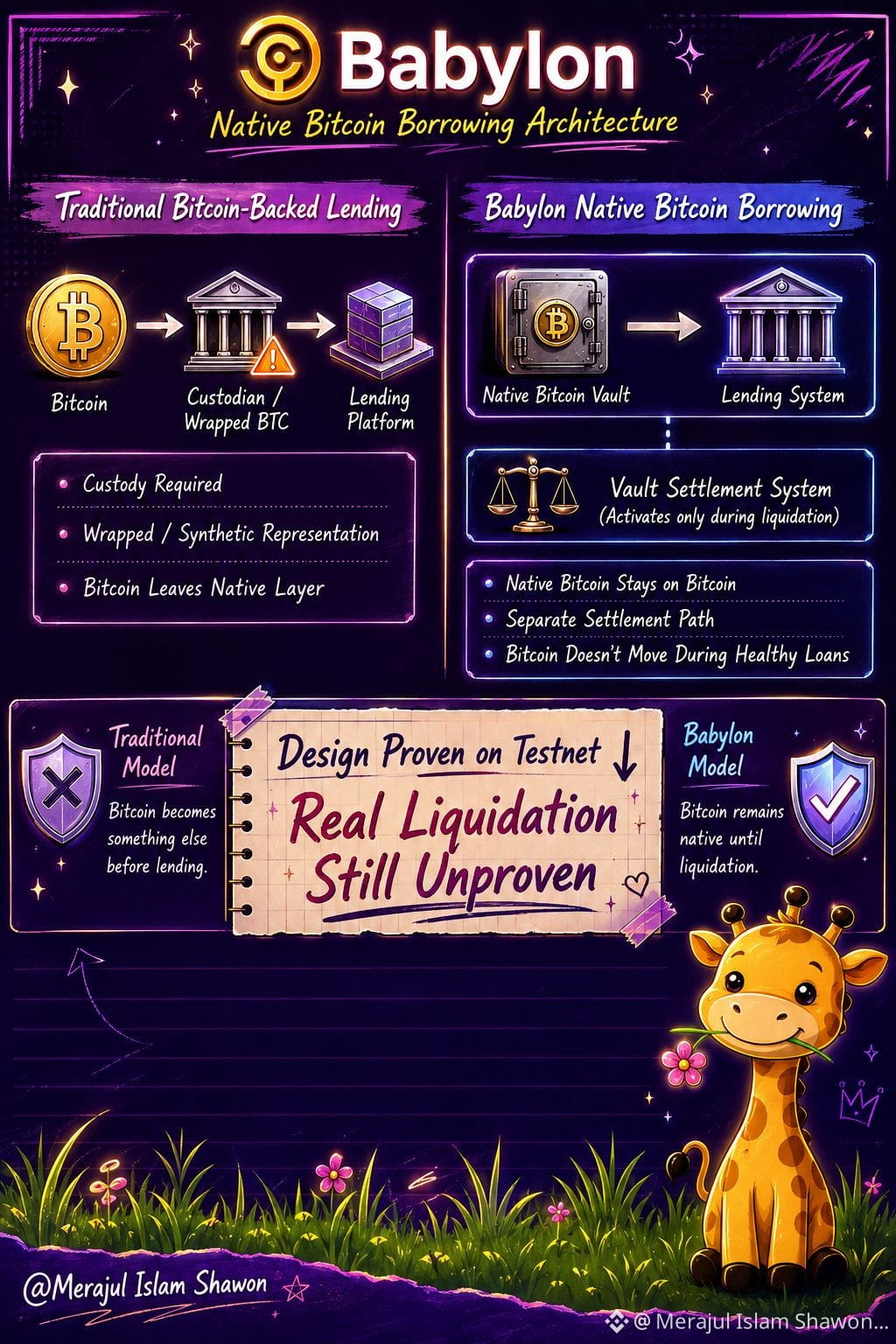
In vielen Lending-Systemen wird dein Bitcoin zuerst an einen Custodian übergeben oder in einen „Wrapped Asset“ umgewandelt, bevor er einen Kredit absichern kann. Sobald das passiert, ist die Sicherheit nicht mehr wirklich natives Bitcoin – sondern eher eine tokenisierte Forderung bzw. Darstellung, die außerhalb des Bitcoin-Netzwerks verwaltet wird. Du leihst also gegen etwas, das Bitcoin spiegelt, nicht gegen Bitcoin selbst.
Deshalb hat mich @BabylonLabs_io besonders interessiert.
Sein „Native Bitcoin Borrowing“-Design auf
Aave V4 geht einen anderen Weg. Anstatt BTC zu „wrappen“ oder auf eine andere Chain zu übertragen, bleibt der Bitcoin in einem bitcoin-nativen Vault gesperrt. Der Lending-Prozess funktioniert, ohne das Asset in etwas anderes umzuwandeln.
Ein weiterer Aspekt, den ich interessant fand, ist, wie die Architektur die Verantwortlichkeiten trennt. Das Lending-System verwaltet das Borrowing und die Rückzahlungen, während ein dedizierter Settlement-Mechanismus im Leerlauf bleibt, es sei denn, eine Liquidation wird notwendig. Solange der Kredit gesund bleibt, verlässt das zugrunde liegende Bitcoin nie das Bitcoin-Netzwerk.
Ein Punkt, den ich weiterhin genau beobachte, ist, was unter echtem Marktdruck passiert.
Die Architektur läuft bereits seit ungefähr einem Monat auf Testnet, was aus technischer Sicht ermutigend ist. Der echte Test kommt jedoch, wenn die erste Live-Liquidation eintritt. Das ist der Moment, in dem jedes Lending-Design wirklich geprüft wird – und es wird spannend zu sehen, wie Babylons Modell abschneidet, wenn dieser Tag kommt.
@BabylonLabs_io #baby $BABY 🗯️#Meraj_910
$AAVE 🦋
Früher dachte ich, „bitcoinbesichertes Lending“ würde bedeuten, dass dein echtes BTC von Anfang bis Ende als Sicherheit verwendet wird. Nachdem ich mir genauer angesehen habe, wie die meisten Protokolle funktionieren, wurde mir klar, dass das normalerweise nicht der Fall ist.
In vielen Lending-Systemen wird dein Bitcoin zuerst an einen Custodian übergeben oder in einen „Wrapped Asset“ umgewandelt, bevor er einen Kredit absichern kann. Sobald das passiert, ist die Sicherheit nicht mehr wirklich natives Bitcoin – sondern eher eine tokenisierte Forderung bzw. Darstellung, die außerhalb des Bitcoin-Netzwerks verwaltet wird. Du leihst also gegen etwas, das Bitcoin spiegelt, nicht gegen Bitcoin selbst.
Deshalb hat mich @BabylonLabs_io besonders interessiert.
Sein „Native Bitcoin Borrowing“-Design auf
Aave V4 geht einen anderen Weg. Anstatt BTC zu „wrappen“ oder auf eine andere Chain zu übertragen, bleibt der Bitcoin in einem bitcoin-nativen Vault gesperrt. Der Lending-Prozess funktioniert, ohne das Asset in etwas anderes umzuwandeln.
Ein weiterer Aspekt, den ich interessant fand, ist, wie die Architektur die Verantwortlichkeiten trennt. Das Lending-System verwaltet das Borrowing und die Rückzahlungen, während ein dedizierter Settlement-Mechanismus im Leerlauf bleibt, es sei denn, eine Liquidation wird notwendig. Solange der Kredit gesund bleibt, verlässt das zugrunde liegende Bitcoin nie das Bitcoin-Netzwerk.
Ein Punkt, den ich weiterhin genau beobachte, ist, was unter echtem Marktdruck passiert.
Die Architektur läuft bereits seit ungefähr einem Monat auf Testnet, was aus technischer Sicht ermutigend ist. Der echte Test kommt jedoch, wenn die erste Live-Liquidation eintritt. Das ist der Moment, in dem jedes Lending-Design wirklich geprüft wird – und es wird spannend zu sehen, wie Babylons Modell abschneidet, wenn dieser Tag kommt.
@BabylonLabs_io #baby $BABY 🗯️#Meraj_910
$AAVE 🦋