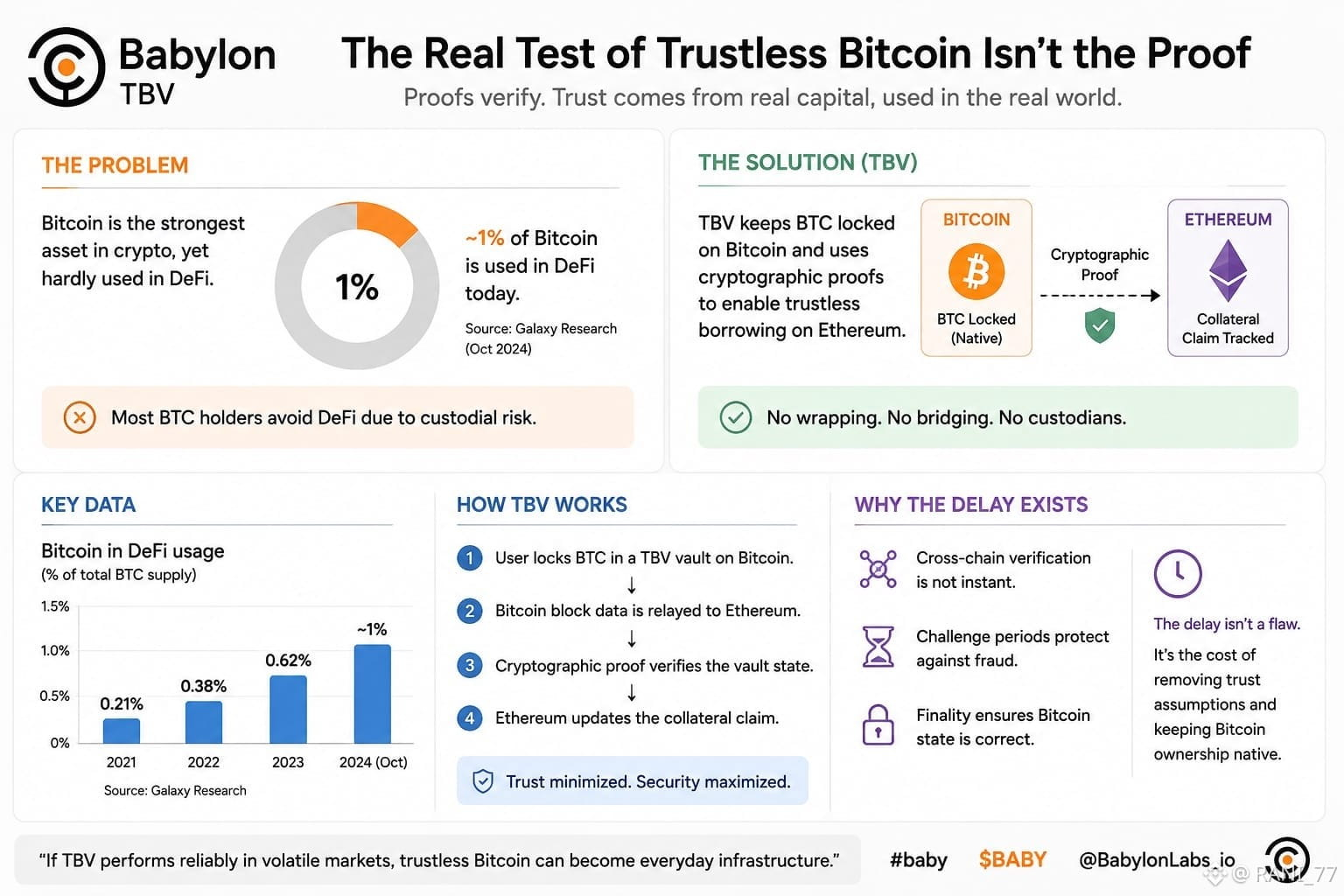
Ich frage mich immer wieder: Was beweist eigentlich, dass Trustless Bitcoin funktioniert, wenn kryptografische Beweise bereits jede Verwahrung verifizieren? Die Antwort ist nicht der Beweis selbst. Der eigentliche Test beginnt erst nach der Verifikation: Wenn echte Nutzer das System mit bedeutsamem Kapital vertrauen. TBV hält BTC auf Bitcoin gebunden – statt es zu verpacken oder zu brücken – während Ethereum eine kryptografische Behauptung über dieses Sicherheiten-Backing nachverfolgt. So verlagert sich das Vertrauen weg von Verwahrstellen hin zu verifizierbarer Kryptografie, Bitcoin, Ethereum und der Anwendungsschicht. Heute werden nur etwa 1 % von Bitcoins in DeFi genutzt, vor allem weil viele Inhaber das Verwahrungsrisiko ablehnen. TBV adressiert genau dieses Problem, indem es das Eigentum nativer hält und das Ausleihen durch kryptografische Verifikation ermöglicht – statt durch Intermediäre. Beweise sind jedoch niemals sofort. Sie hängen von der Cross-Chain-Verifikation, von Challenge-Perioden und von Finalität ab, bevor der Kollateralstatus vollständig anerkannt wird. Diese Verzögerung ist kein Fehler – sie ist der Preis dafür, Vertrauensannahmen zu reduzieren, statt sie hinter Bequemlichkeit zu verstecken. Wenn das System auch in volatilen Märkten zuverlässig weiter funktioniert, könnten Nutzer akzeptieren, dass sie warten müssen, weil Sicherheit wichtiger ist als Geschwindigkeit. Ich denke, dieser Moment wird zeigen, ob trustless Bitcoin zur alltäglichen Infrastruktur wird oder nur eine weitere clevere Gestaltung, die vor allem von Entwicklern bewundert wird. #baby
$BABY @BabylonLabs_io
$BABY @BabylonLabs_io