Am Anfang dachte ich, dass der Self-Claim-Weg nur als Backup gedacht ist. Etwas dafür, für den seltenen Fall, dass ein Anbieter still wird.
Aber je mehr ich gesehen habe, wie es tatsächlich funktioniert, desto mehr ist diese Idee in sich zusammengefallen.
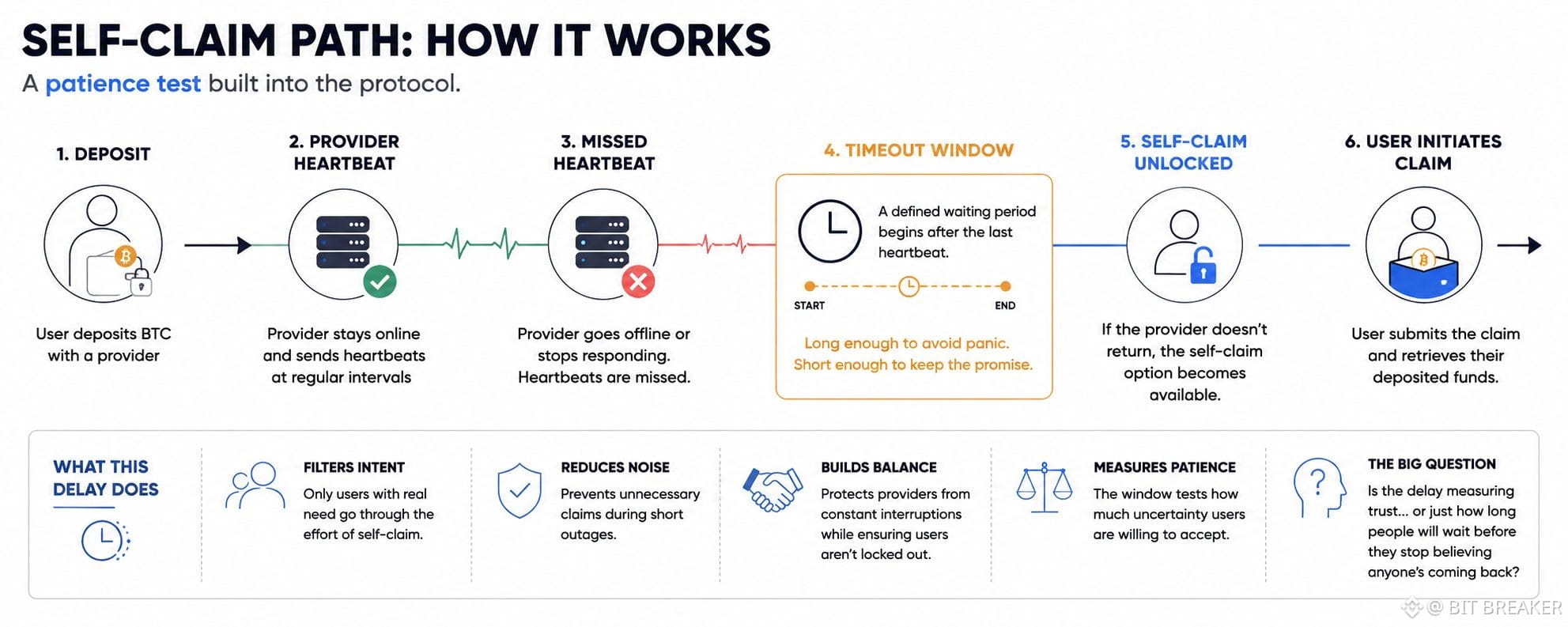
Es greift nicht sofort ein. Es wird erst verfügbar, nachdem der Heartbeat des Anbieters für eine festgelegte Zeit nicht mehr vorhanden war. Diese Einzelheit verändert alles. Das ist nicht nur eine Sicherheitsfunktion, die im Hintergrund wartet. Es gehört zum Erlebnis.
Die meisten werden es wahrscheinlich nicht einmal nutzen, selbst wenn sie könnten. Sie warten. Sie aktualisieren die Seite. Sie gehen davon aus, dass der Anbieter zurückkommt, bevor sie selbst eingreifen müssen.
Diese Verzögerung sagt sehr viel aus. Sie trennt still und leise die Menschen, die den Zugriff wirklich jetzt brauchen, von denen, die nur unruhig sind und zu oft nachsehen.
Am meisten sticht für mich der Zeitabstand heraus. Er ist nicht zufällig. Er ist lang genug, um zu verhindern, dass Menschen in Panik sofort claimen, aber nicht so lang, dass das Versprechen sich leer anfühlt. Wer dieses Zeitfenster gewählt hat, hat nicht nur ein Fallback gebaut. Er hat entschieden, wie viel Geduld der Nutzer mitbringen sollte, um das System zu handhaben.
Also ist die eigentliche Frage nicht, ob der Self-Claim funktioniert. Sondern was diese Wartezeit tatsächlich misst.
Vertrauen.
Oder vielleicht nur, wie lange Menschen weiter hoffen werden, dass jemand zurückkommt, bevor sie sich schließlich entscheiden, es selbst zu tun.
#BABY $BABY @BabylonLabs_io
Aber je mehr ich gesehen habe, wie es tatsächlich funktioniert, desto mehr ist diese Idee in sich zusammengefallen.
Es greift nicht sofort ein. Es wird erst verfügbar, nachdem der Heartbeat des Anbieters für eine festgelegte Zeit nicht mehr vorhanden war. Diese Einzelheit verändert alles. Das ist nicht nur eine Sicherheitsfunktion, die im Hintergrund wartet. Es gehört zum Erlebnis.
Die meisten werden es wahrscheinlich nicht einmal nutzen, selbst wenn sie könnten. Sie warten. Sie aktualisieren die Seite. Sie gehen davon aus, dass der Anbieter zurückkommt, bevor sie selbst eingreifen müssen.
Diese Verzögerung sagt sehr viel aus. Sie trennt still und leise die Menschen, die den Zugriff wirklich jetzt brauchen, von denen, die nur unruhig sind und zu oft nachsehen.
Am meisten sticht für mich der Zeitabstand heraus. Er ist nicht zufällig. Er ist lang genug, um zu verhindern, dass Menschen in Panik sofort claimen, aber nicht so lang, dass das Versprechen sich leer anfühlt. Wer dieses Zeitfenster gewählt hat, hat nicht nur ein Fallback gebaut. Er hat entschieden, wie viel Geduld der Nutzer mitbringen sollte, um das System zu handhaben.
Also ist die eigentliche Frage nicht, ob der Self-Claim funktioniert. Sondern was diese Wartezeit tatsächlich misst.
Vertrauen.
Oder vielleicht nur, wie lange Menschen weiter hoffen werden, dass jemand zurückkommt, bevor sie sich schließlich entscheiden, es selbst zu tun.
#BABY $BABY @BabylonLabs_io