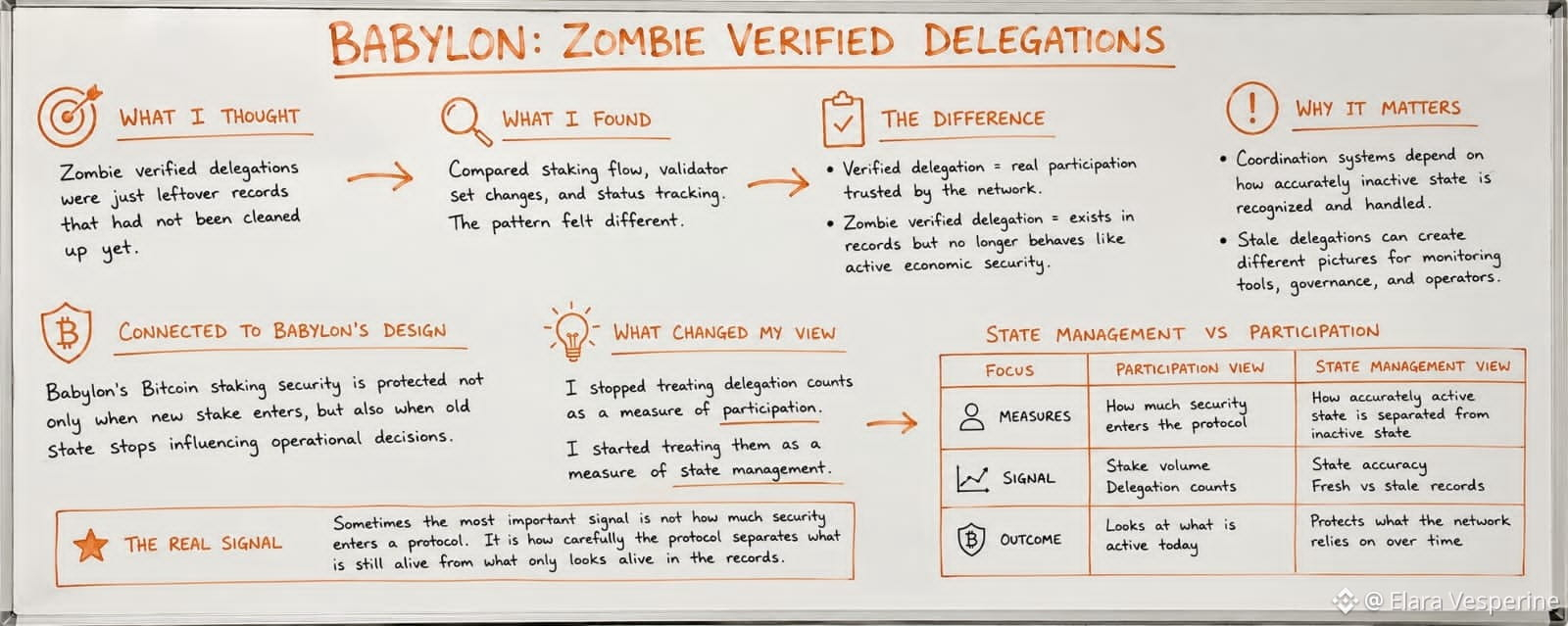
Ich dachte, der interessante Teil wären Babylons verifizierte Delegationen. Doch es waren die zombie-verifizierten Delegationen, die meine Aufmerksamkeit immer wieder zurückzogen.
Zuerst nahm ich an, es handele sich nur um übrig gebliebene Einträge, die noch nicht bereinigt worden waren. Dann verglich ich, wie verifizierte Delegationen durch den Staking-Flow laufen, mit der Art, wie sich Validator-Sets im Laufe der Zeit verändern, und damit, wie der Delegationsstatus nachverfolgt wird. Das Muster wirkte anders.
Eine verifizierte Delegation soll echte Beteiligung abbilden, der das Netzwerk vertrauen kann. Eine Zombie-verifizierte Delegation existiert zwar weiterhin in den Aufzeichnungen, verhält sich aber nicht mehr wie aktive wirtschaftliche Absicherung. Dieser Unterschied ist wichtig, weil Koordinationssysteme sich nicht nur darauf stützen, was heute aktiv ist. Sie hängen auch davon ab, wie genau der inaktive Zustand erkannt und gehandhabt wird.
Je länger ich hinsah, desto mehr schien das mit Bablyons Design rund um Bitcoin-Staking zusammenzuhängen. Sicherheit wird nicht nur geschaffen, wenn neues Stake hinzukommt. Sie wird auch geschützt, wenn alter Zustand aufhört, operative Entscheidungen zu beeinflussen. Wenn veraltete Delegationen länger als erwartet als gültig erscheinen, können Monitoring-Tools, Governance-Teilnehmer und Operatoren alle am Ende leicht unterschiedliche Bilder desselben Netzwerks betrachten.
Das veränderte die Art, wie ich die Daten las. Ich hörte auf, Delegationszahlen als Maß für Beteiligung zu behandeln, und begann, sie als Maß für Zustandsverwaltung zu betrachten. Manchmal ist das wichtigste Signal nicht, wie viel Sicherheit in ein Protokoll einfließt. Sondern wie sorgfältig das Protokoll trennt, was noch lebt, von dem, was nur in den Aufzeichnungen so aussieht.
#baby @BabylonLabs_io $BABY
Zuerst nahm ich an, es handele sich nur um übrig gebliebene Einträge, die noch nicht bereinigt worden waren. Dann verglich ich, wie verifizierte Delegationen durch den Staking-Flow laufen, mit der Art, wie sich Validator-Sets im Laufe der Zeit verändern, und damit, wie der Delegationsstatus nachverfolgt wird. Das Muster wirkte anders.
Eine verifizierte Delegation soll echte Beteiligung abbilden, der das Netzwerk vertrauen kann. Eine Zombie-verifizierte Delegation existiert zwar weiterhin in den Aufzeichnungen, verhält sich aber nicht mehr wie aktive wirtschaftliche Absicherung. Dieser Unterschied ist wichtig, weil Koordinationssysteme sich nicht nur darauf stützen, was heute aktiv ist. Sie hängen auch davon ab, wie genau der inaktive Zustand erkannt und gehandhabt wird.
Je länger ich hinsah, desto mehr schien das mit Bablyons Design rund um Bitcoin-Staking zusammenzuhängen. Sicherheit wird nicht nur geschaffen, wenn neues Stake hinzukommt. Sie wird auch geschützt, wenn alter Zustand aufhört, operative Entscheidungen zu beeinflussen. Wenn veraltete Delegationen länger als erwartet als gültig erscheinen, können Monitoring-Tools, Governance-Teilnehmer und Operatoren alle am Ende leicht unterschiedliche Bilder desselben Netzwerks betrachten.
Das veränderte die Art, wie ich die Daten las. Ich hörte auf, Delegationszahlen als Maß für Beteiligung zu behandeln, und begann, sie als Maß für Zustandsverwaltung zu betrachten. Manchmal ist das wichtigste Signal nicht, wie viel Sicherheit in ein Protokoll einfließt. Sondern wie sorgfältig das Protokoll trennt, was noch lebt, von dem, was nur in den Aufzeichnungen so aussieht.
#baby @BabylonLabs_io $BABY