

When people talk about decentralized storage scalability, they usually focus on:
Cost per GB
Number of nodes
Raw throughput
But historically, that is not what kills storage networks.
What kills them is something quieter:
Proof overhead.
🔍 The Per-File Proof Trap
In many decentralized storage designs:
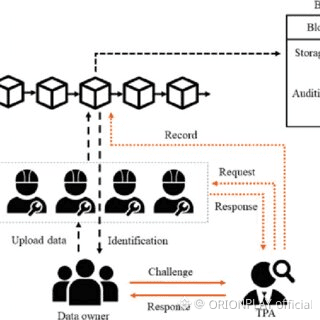
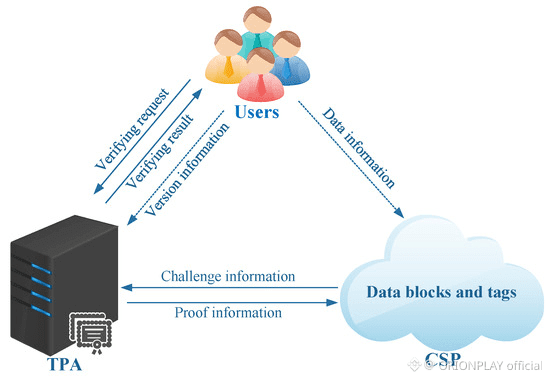
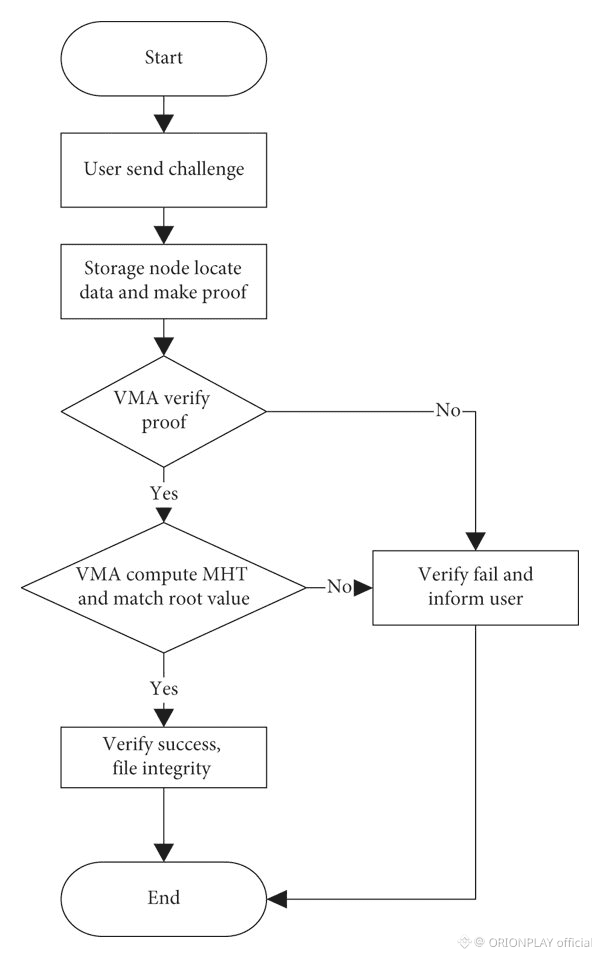
Each file requires continuous challenges
Each challenge must be verified
Each verification consumes bandwidth and compute
As the system grows:
Files ↑
Proofs ↑
Verification cost ↑
This creates a second scalability curve — independent of storage size — and it grows faster than people expect.
This phenomenon is well-studied in distributed systems literature:
Verification complexity often becomes the dominant cost at scale.
🦭 Walrus Changes the Question Entirely
Walrus does not ask:
“Can you prove you store this file?”
Instead, it asks:
“Can you prove you are fulfilling all your storage obligations?”
This is a radical reframing.
🧠 Whole-Network Storage Attestation
In Walrus:
Every storage node holds slivers of all blobs
Storage responsibility is global, not selective
Proofs challenge the node as a whole
Result:
Proof cost grows logarithmically
Not linearly with file count
Not explosively with scale
This approach aligns with classical verification theory:
Proving a state is cheaper than proving every element individually.
Walrus applies this idea directly to decentralized storage
📉 Why This Matters in Real Numbers
Imagine:
1 million blobs
1,000 nodes
Traditional systems:
Millions of challenges
Constant verification storms
High failure probability
Walrus:
Fixed attestation rhythm
Predictable verification cost
Stable long-term operation
This is the difference between theoretical scalability and operational scalability.
🔄 Asynchrony: Why Waiting Forever Is Not an Option
Distributed systems theory teaches a harsh truth:
In asynchronous networks, waiting guarantees nothing.
This is formalized in the FLP impossibility result, which shows that:
You cannot rely on timing assumptions
You cannot wait for “everyone”
You must design for partial progress
Walrus fully embraces this reality.
🧯 Progress Without Global Coordination
Walrus protocols:
Stop retransmissions after quorum
Allow partial dissemination
Enable later recovery
This means:
Writers do not block forever
Readers eventually succeed
The system never deadlocks
This property is rare — and extremely valuable.
🧠 Why Epochs Are a Control Mechanism, Not a Convenience
Epochs in Walrus are not a scheduling trick.
They are an economic and safety boundary.
Within an epoch:
Storage committee is fixed
Responsibilities are clear
Fault tolerance is well-defined
Across epochs:
Shards migrate
Stakes rebalance
Recovery is enforced
This mirrors how:
Classical replicated systems handle membership
Modern blockchains handle validator sets
Walrus applies this logic to storage — correctly.
🔐 Fraud Proofs: Handling Malicious Writers
Another under-discussed failure mode:
What if the writer is malicious?
Walrus handles this explicitly.
If a writer uploads inconsistent slivers:
Nodes fail to recover
Generate cryptographic inconsistency proofs
Publish attestations on-chain
Once confirmed:
The blob is globally marked invalid
Nodes stop serving it
No endless retries occur
This is defensive finality, not optimistic recovery
🧠 Why This Is Research-Grade Design
Every major Walrus decision maps cleanly to known theory:
Walrus Design Academic Parallel
f = ⌊n/3⌋ Byzantine fault tolerance
2D erasure coding Twin-code frameworks XOR-based encoding Fountain codes Epochs Membership reconfiguration Whole-node proofs State attestation
This is not accidental.
It is the result of systems-first thinking.
😄 Final Analogy (Because It Ties Everything Together)
Most storage systems:
“Let’s hope nothing bad happens.”
Walrus:
“Something bad will happen — let’s make it boring.”
When failures become boring, systems scale.
🧠 Why Walrus Escaped the Replication Trap
Walrus succeeds because it:
Reduces redundancy without reducing safety
Localizes recovery instead of global panic
Verifies states, not individual files
Enforces correctness economically
Accepts asynchrony as default
This is how decentralized storage finally grows up.