Zuerst habe ich das 129-GB-Restore-Problem von Babylon als ein simples Bandbreitenproblem betrachtet.
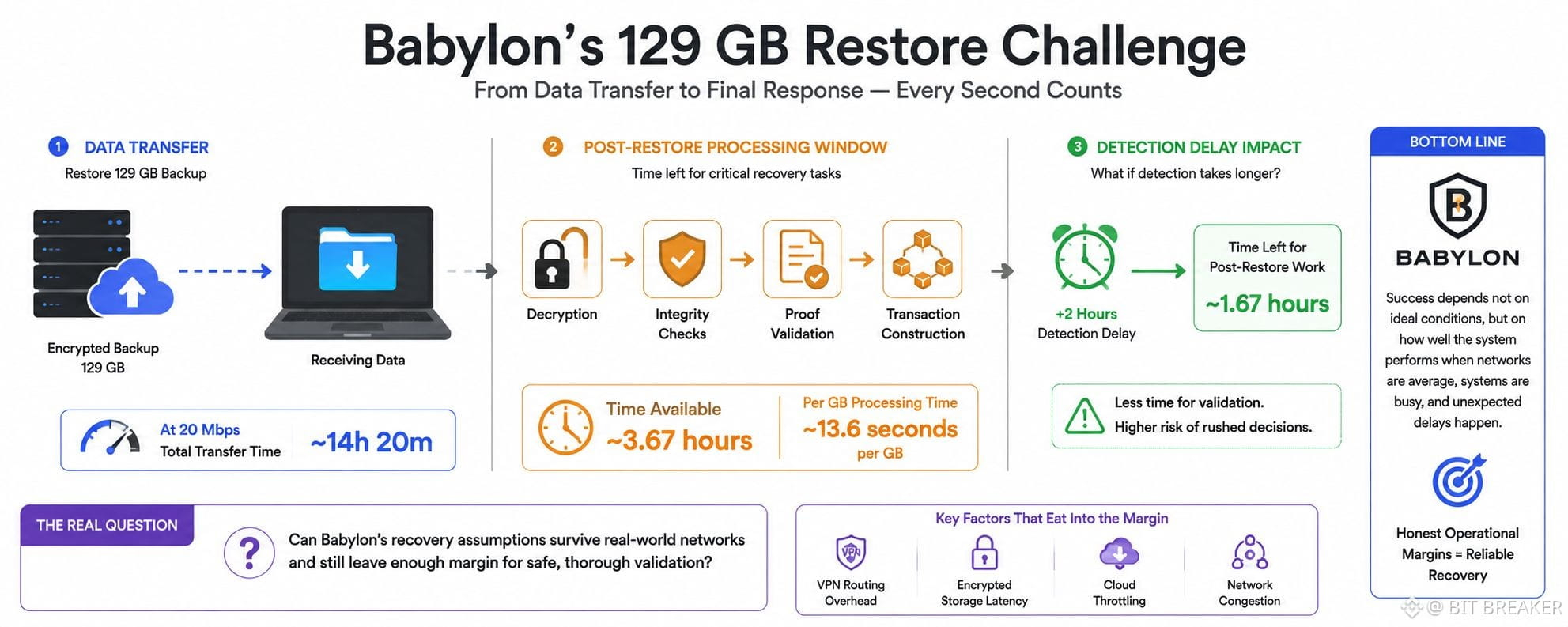
Bei 20 Mbit/s würde die Datenübertragung etwa 14 Stunden und 20 Minuten dauern. Das klingt zwar langsam, liegt aber immer noch innerhalb eines 18-Stunden-Antwortfensters.
Aber diese Auslegung ist wahrscheinlich zu vereinfacht.
Der eigentliche Druck beginnt erst, nachdem die Dateien wiederhergestellt sind. Babylon hat möglicherweise nur noch etwa 3,67 Stunden für Entschlüsselung, Integritätsprüfungen, Proof-Validierung und die Erstellung von Transaktionen. Über 129 GB gerechnet entspricht das ungefähr 13,6 Sekunden pro Gigabyte. Das ist nicht viel Zeit.
Ein wenig Verzögerung ist normal. VPN-Routing, verschlüsselter Speicher und Cloud-Drosselung gehören zur realen Infrastruktur. Aber sie fressen immer noch denselben Spielraum auf, von dem Babylon für die eigentliche Wiederherstellungsarbeit abhängt.
Und dann ist da der Faktor Mensch. Was passiert, wenn die Erkennung selbst zwei Stunden dauert? Plötzlich sinkt das Zeitfenster nach der Wiederherstellung auf etwa 1,67 Stunden. Haben die Operatoren dann noch genug Puffer, um sorgfältig zu validieren, oder zwingt die Deadline zu überstürzten Entscheidungen?
Hier trifft Infrastrukturstärke auf echte Zugänglichkeit.
Babylon beweist sich nur dann, wenn die Annahmen zur Wiederherstellung auch in gewöhnlichen Netzwerken bestehen – nicht nur unter idealen Laborbedingungen. Es braucht nicht überall perfekte Bandbreite, aber es braucht realistische operative Puffer.
Ich beobachte weiterhin, ob die Backup-Richtlinie wirklich das Antwortfenster schützt – oder es still und leise aufbraucht, bevor die Validierung überhaupt beginnt.
#BABY @BabylonLabs_io $BABY
Bei 20 Mbit/s würde die Datenübertragung etwa 14 Stunden und 20 Minuten dauern. Das klingt zwar langsam, liegt aber immer noch innerhalb eines 18-Stunden-Antwortfensters.
Aber diese Auslegung ist wahrscheinlich zu vereinfacht.
Der eigentliche Druck beginnt erst, nachdem die Dateien wiederhergestellt sind. Babylon hat möglicherweise nur noch etwa 3,67 Stunden für Entschlüsselung, Integritätsprüfungen, Proof-Validierung und die Erstellung von Transaktionen. Über 129 GB gerechnet entspricht das ungefähr 13,6 Sekunden pro Gigabyte. Das ist nicht viel Zeit.
Ein wenig Verzögerung ist normal. VPN-Routing, verschlüsselter Speicher und Cloud-Drosselung gehören zur realen Infrastruktur. Aber sie fressen immer noch denselben Spielraum auf, von dem Babylon für die eigentliche Wiederherstellungsarbeit abhängt.
Und dann ist da der Faktor Mensch. Was passiert, wenn die Erkennung selbst zwei Stunden dauert? Plötzlich sinkt das Zeitfenster nach der Wiederherstellung auf etwa 1,67 Stunden. Haben die Operatoren dann noch genug Puffer, um sorgfältig zu validieren, oder zwingt die Deadline zu überstürzten Entscheidungen?
Hier trifft Infrastrukturstärke auf echte Zugänglichkeit.
Babylon beweist sich nur dann, wenn die Annahmen zur Wiederherstellung auch in gewöhnlichen Netzwerken bestehen – nicht nur unter idealen Laborbedingungen. Es braucht nicht überall perfekte Bandbreite, aber es braucht realistische operative Puffer.
Ich beobachte weiterhin, ob die Backup-Richtlinie wirklich das Antwortfenster schützt – oder es still und leise aufbraucht, bevor die Validierung überhaupt beginnt.
#BABY @BabylonLabs_io $BABY