
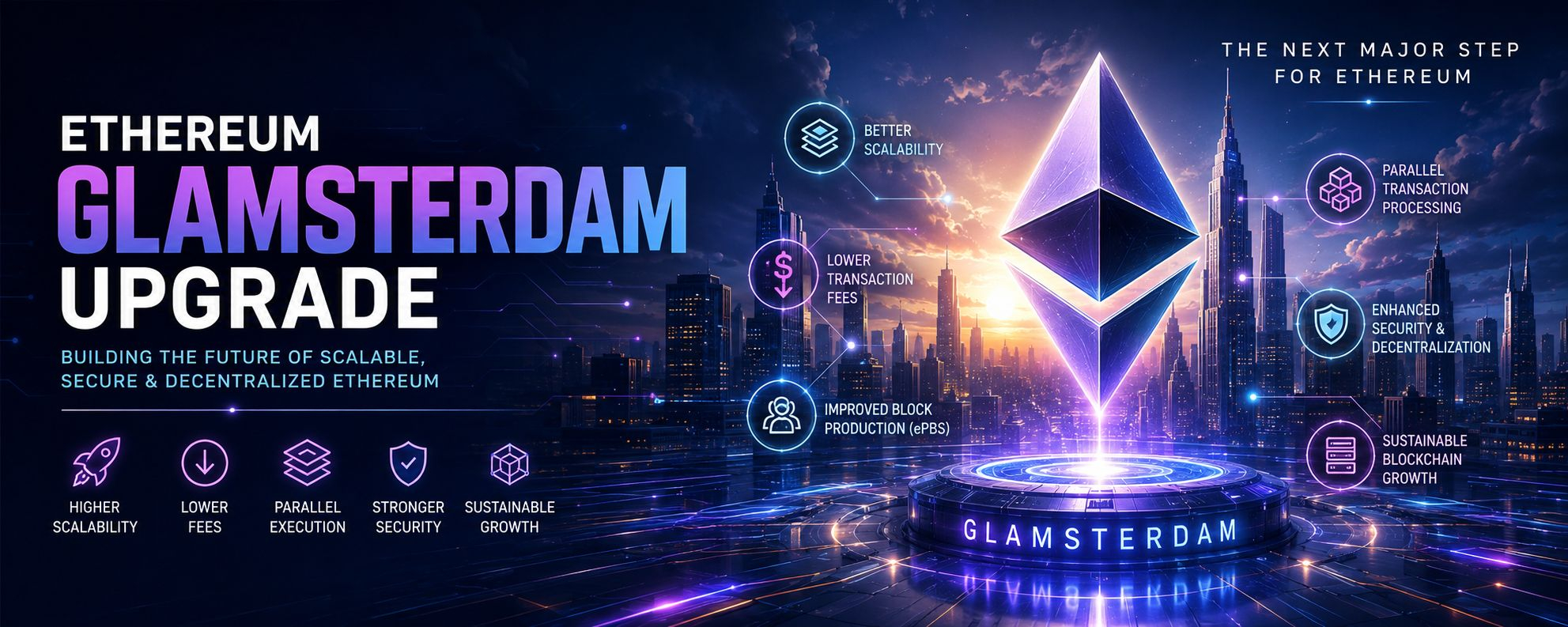

Ethereum hat sich in den letzten Jahren zu einem der leistungsstärksten Blockchain-Netzwerke der Welt entwickelt. Von The Merge über Dencun bis Fusaka: Jede Aktualisierung hat Ethereum näher daran gebracht, schneller, günstiger und besser skalierbar zu werden.
Nun steht der nächste große Meilenstein im Fokus: Glamsterdam.
Dieses Upgrade ist nicht einfach nur ein weiterer routinemäßiger Hard Fork – es stellt eine der größten architektonischen Veränderungen für Ethereum seit The Merge dar. Ziel ist es, das Netzwerk für die nächste Generation dezentraler Anwendungen, Layer-2-Ökosysteme und die institutionelle Akzeptanz vorzubereiten.
🌍 Was ist Glamsterdam?
Glamsterdam ist das bevorstehende Protokoll-Upgrade von Ethereum, das für die zweite Hälfte des Jahres 2026 geplant ist.
Der Name setzt sich zusammen aus:
Amsterdam → Upgrade der Execution Layer
Gloas → Upgrade der Consensus Layer
Gemeinsam bilden sie Glamsterdam – in Anlehnung an Ethenums Tradition, Namen aus beiden Ebenen miteinander zu verbinden.
Glamsterdam bringt nicht nur eine einzelne Funktion mit, sondern bündelt mehrere Ethereum Improvement Proposals (EIPs), die darauf ausgelegt sind, Skalierbarkeit, Effizienz, Dezentralisierung und Nutzererfahrung zu verbessern.
⚡ Warum braucht Ethereum ein weiteres Upgrade?
Ethereum ist zur Grundlage für:
DeFi
NFTs
Stablecoins
Gaming
Tokenisierte Real-World-Assets (RWAs)
Von KI angetriebene dezentrale Anwendungen
Doch mit der steigenden Akzeptanz entstehen auch Herausforderungen:
Hohe Gasgebühren bei Überlastung des Netzwerks
Wachsende Größe des Blockchain-States
Skalierungsgrenzen
Bedenken rund um MEV (Maximal Extractable Value)
Höhere Hardwareanforderungen für Node-Betreiber
Glamsterdam will diese Probleme lösen, während Ethereum seine zentralen Werte der Dezentralisierung und Sicherheit bewahrt.
🔥 Zentrale Verbesserungen, die mit Glamsterdam kommen
1. Bessere Layer-1-Skalierbarkeit
Eines der größten Ziele ist es, dass Ethereum deutlich mehr Aktivitäten verarbeiten kann, ohne die Sicherheit zu gefährden.
Das Upgrade bringt architektonische Verbesserungen mit, die Ethereum für zukünftige parallele Ausführung von Transaktionen und höheren Durchsatz vorbereiten.
Das bedeutet:
✅ Schnellere Bestätigungen
✅ Bessere Effizienz im Netzwerk
✅ Höhere Transaktionskapazität
2. Niedrigere Transaktionsgebühren
Mehrere vorgeschlagene EIPs senken unnötige Transaktionskosten, indem sie die Gasabrechnung verbessern.
Einfache ETH-Überweisungen könnten deutlich günstiger werden, sodass Ethereum für alltägliche Zahlungen und kleinere Transaktionen praktischer wird.
Auch wenn die Gebühren weiterhin von der Nachfrage im Netzwerk abhängen, geht die Gesamtrichtung hin zu einer erschwinglicheren Layer-1-Erfahrung.
3. Parallele Verarbeitung von Transaktionen
Heute verarbeitet Ethereum Transaktionen größtenteils sequenziell.
Glamsterdam schafft die Grundlage, unabhängige Transaktionen parallel zu verarbeiten.
Das kann die Netzwerkleistung deutlich verbessern und gleichzeitig zukünftige Erhöhungen von Gasgrenzen und Durchsatz unterstützen.
4. Verbesserte Blockproduktion
Ein zentrales Feature ist Enshrined Proposer-Builder Separation (ePBS).
Statt sich stark auf externe Block-Builder-Systeme zu verlassen, plant Ethereum, diesen Mechanismus direkt in das Protokoll zu bringen.
Mögliche Vorteile sind:
Bessere Dezentralisierung
Geringere Risiken im Zusammenhang mit MEV
Mehr Transparenz bei der Blockproduktion
Stärkere Validator-Sicherheit
5. Nachhaltiges Wachstum der Blockchain
Ethenums Blockchain wächst jeden Tag weiter.
Ohne Optimierung wird das Betreiben eines Nodes immer teurer.
Glamsterdam führt Verbesserungen ein, die die Speicherplatzkosten besser an die Anforderungen der Hardware für den Langzeitbetrieb anpassen und so dabei helfen, das Netzwerk für unabhängige Node-Betreiber zugänglich zu halten.
👨💻 Vorteile für Entwickler
Entwickler können erwarten:
Bessere Skalierbarkeit
Geringere Infrastrukturkosten
Verbesserte Performance von Smart Contracts
Einfacheres On-Chain-Datenmanagement
Stärkere Grundlage für zukünftige Anwendungen
So entsteht ein gesünderes Umfeld, um Produkte der nächsten Generation für Web3 zu entwickeln.
💰 Was bedeutet das für ETH-Investoren?
Historisch haben große Ethereum-Upgrades die langfristigen Grundlagen des Netzwerks gestärkt.
Glamsterdam könnte:
Verbessere die Nutzererfahrung
Erhöhung der Ethereum-Akzeptanz
Layer-2-Ökosysteme unterstützen
Institutionelle Beteiligung fördern
Verbessere die Wettbewerbsfähigkeit von Ethereum gegenüber schnelleren Layer-1-Blockchains
Auch wenn kein Upgrade eine Preissteigerung garantiert, unterstützt eine stärkere Infrastruktur oft das langfristige Wachstum des Ökosystems.
⚠️ Müssen ETH-Inhaber etwas tun?
Für normale Nutzer:
Nein.
Dein ETH bleibt exakt gleich.
Du musst dein ETH nicht umwandeln, migrieren oder upgraden.
Sei vorsichtig bei allen, die behaupten, du müsstest dein ETH „upgraden“ – das sind Betrügereien.
Nur Validatoren und Node-Betreiber müssen vor Aktivierung des Netzwerk-Upgrades ihre Client-Software aktualisieren.
Abschließende Gedanken
Glamsterdam ist mehr als nur ein weiteres Ethereum-Upgrade – es ist ein bedeutender Schritt in Richtung von Ethenums langfristiger Vision, eine Blockchain zu werden, die Milliarden von Nutzern unterstützen kann, ohne dabei auf Dezentralisierung zu verzichten.
Indem Glamsterdam die Skalierbarkeit verbessert, Gebühren senkt, die Blockproduktion optimiert und das Netzwerk auf zukünftige Innovation vorbereitet, schafft es die Grundlage für Ethenums nächste Ära.
Sowohl für Investoren als auch für Entwickler und Blockchain-Enthusiasten ist dies eines der wichtigsten Ethereum-Upgrades, auf das man 2026 achten sollte.
Ethereum skaliert nicht nur – es gestaltet die Zukunft dezentraler Infrastruktur neu.