Ich habe heute Morgen in meiner Binance-App die HODLer-Airdrop-Bedingungen geprüft, während ich auf das Ende von Sehri beim Kochen gewartet habe – größtenteils aus reiner Neugier, ob ich tatsächlich lange genug BNB gestakkt hatte, um für den BABY-Drop im April zu qualifizieren. Das hatte ich nicht, aber es hat mich in ein Kaninchenloch geführt, wer bei der Genesis wirklich Tokens bekommen hat.
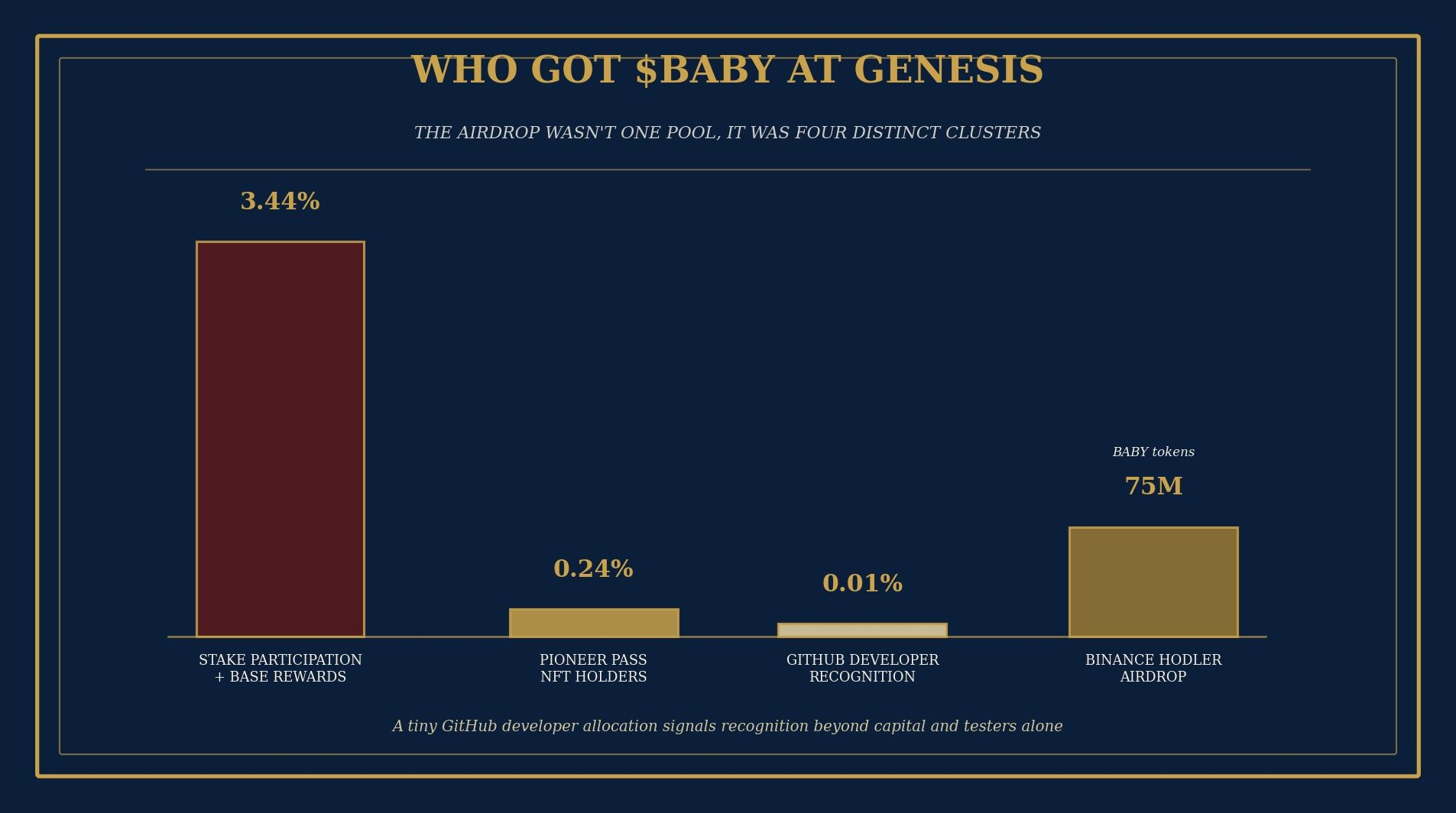
Ich ging davon aus, dass der Airdrop im Grunde ein einzelner Pool war, aufgeteilt unter frühe Community-Mitglieder, plus die übliche Binance-HODLer-Zuteilung. Das ist eine starke Vereinfachung, die verdeckt, wohin der Großteil der Day-1-Lieferung tatsächlich gegangen ist. Der Airdrop-Cluster teilt sich in klar unterscheidbare Gruppen mit sehr unterschiedlichen Größen. Die Beteiligung am Staking plus die Basis-Staking-Rewards machten den größten Block aus – 3,44 Prozent der gesamten Supply. Die eigene HODLer-Airdrop-Zuteilung von Binance lag bei 75.000.000 BABY. Inhaber des Pioneer-Pass-NFT erhielten 0,24 Prozent, und das GitHub-Developer-Recognition-Programm bekam winzige 0,01 Prozent.
So bringt mich das durcheinander – oder besser: so ordnet es es für mich neu. Diese GitHub-Developer-Zuteilung, so klein sie auch ist, signalisiert, dass Babylon technische Mitwirkende auf Protokoll-Ebene anerkannt haben wollte – nicht nur Kapitalgeber oder frühe Tester. Die meisten Projekte lassen das komplett aus.
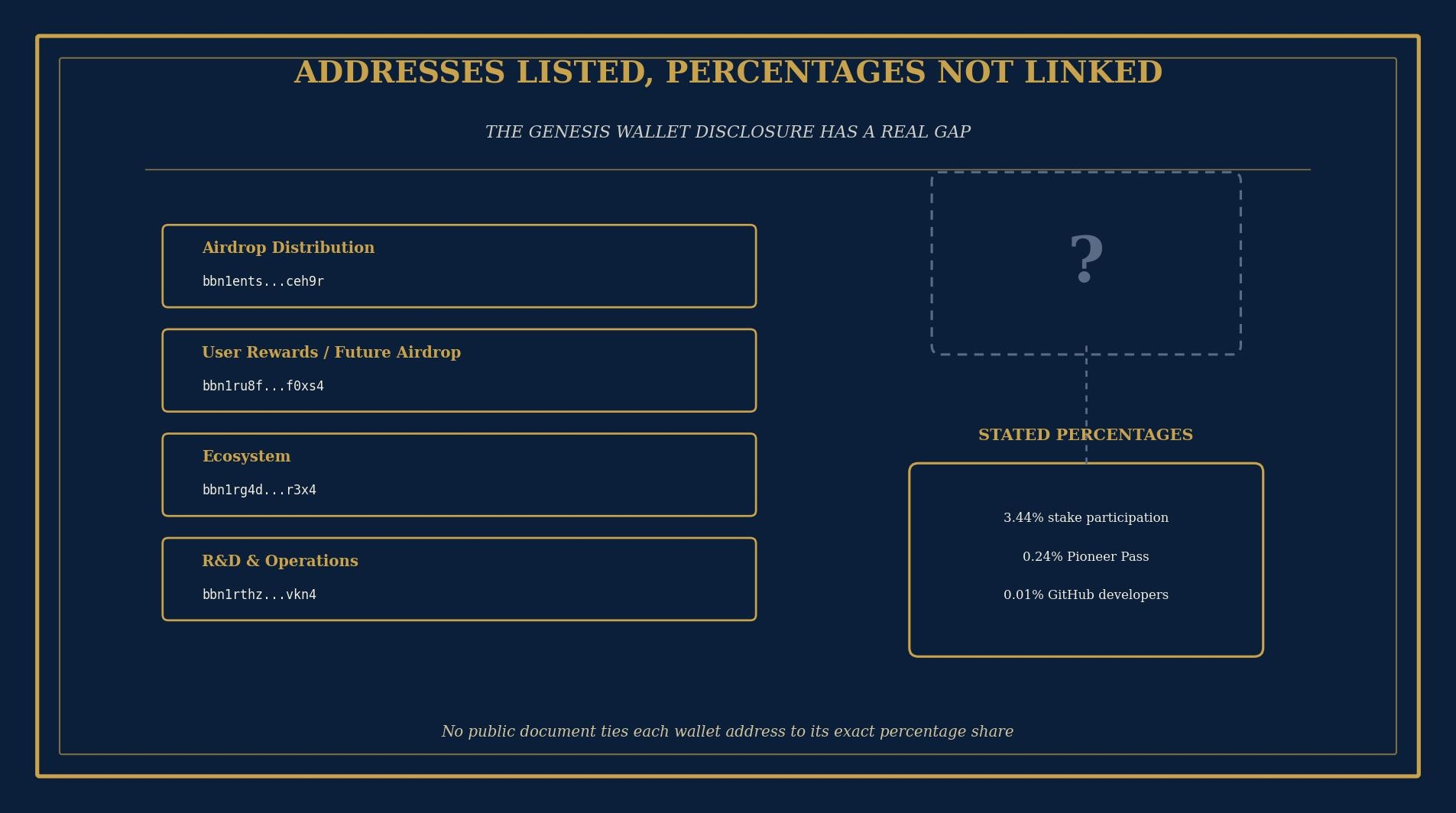
Was ich anhand der öffentlichen Zahlen nicht in Einklang bringen kann, ist, wie sich diese separaten On-Chain-Wallet-Adressen für Airdrop-Distribution, Ökosystem- und F&E-Operations sauber mit den Prozentwerten decken lassen, die anderswo in der Offenlegung genannt werden. Die Adressen werden aufgelistet, aber nicht ausdrücklich mit exakten Allokationsprozenten verknüpft.
Der echte Test für $BABY ist, ob die Developer- und Staker-Cluster langfristig aktiv bleiben – statt sich nur schnell Tokens zu sichern und dann auszusteigen.
Hat hier jemand tatsächlich für die Pioneer-Pass-NFT-Zuteilung qualifiziert?
@BabylonLabs_io #baby $BABY
Ich ging davon aus, dass der Airdrop im Grunde ein einzelner Pool war, aufgeteilt unter frühe Community-Mitglieder, plus die übliche Binance-HODLer-Zuteilung. Das ist eine starke Vereinfachung, die verdeckt, wohin der Großteil der Day-1-Lieferung tatsächlich gegangen ist. Der Airdrop-Cluster teilt sich in klar unterscheidbare Gruppen mit sehr unterschiedlichen Größen. Die Beteiligung am Staking plus die Basis-Staking-Rewards machten den größten Block aus – 3,44 Prozent der gesamten Supply. Die eigene HODLer-Airdrop-Zuteilung von Binance lag bei 75.000.000 BABY. Inhaber des Pioneer-Pass-NFT erhielten 0,24 Prozent, und das GitHub-Developer-Recognition-Programm bekam winzige 0,01 Prozent.
So bringt mich das durcheinander – oder besser: so ordnet es es für mich neu. Diese GitHub-Developer-Zuteilung, so klein sie auch ist, signalisiert, dass Babylon technische Mitwirkende auf Protokoll-Ebene anerkannt haben wollte – nicht nur Kapitalgeber oder frühe Tester. Die meisten Projekte lassen das komplett aus.
Was ich anhand der öffentlichen Zahlen nicht in Einklang bringen kann, ist, wie sich diese separaten On-Chain-Wallet-Adressen für Airdrop-Distribution, Ökosystem- und F&E-Operations sauber mit den Prozentwerten decken lassen, die anderswo in der Offenlegung genannt werden. Die Adressen werden aufgelistet, aber nicht ausdrücklich mit exakten Allokationsprozenten verknüpft.
Der echte Test für $BABY ist, ob die Developer- und Staker-Cluster langfristig aktiv bleiben – statt sich nur schnell Tokens zu sichern und dann auszusteigen.
Hat hier jemand tatsächlich für die Pioneer-Pass-NFT-Zuteilung qualifiziert?
@BabylonLabs_io #baby $BABY