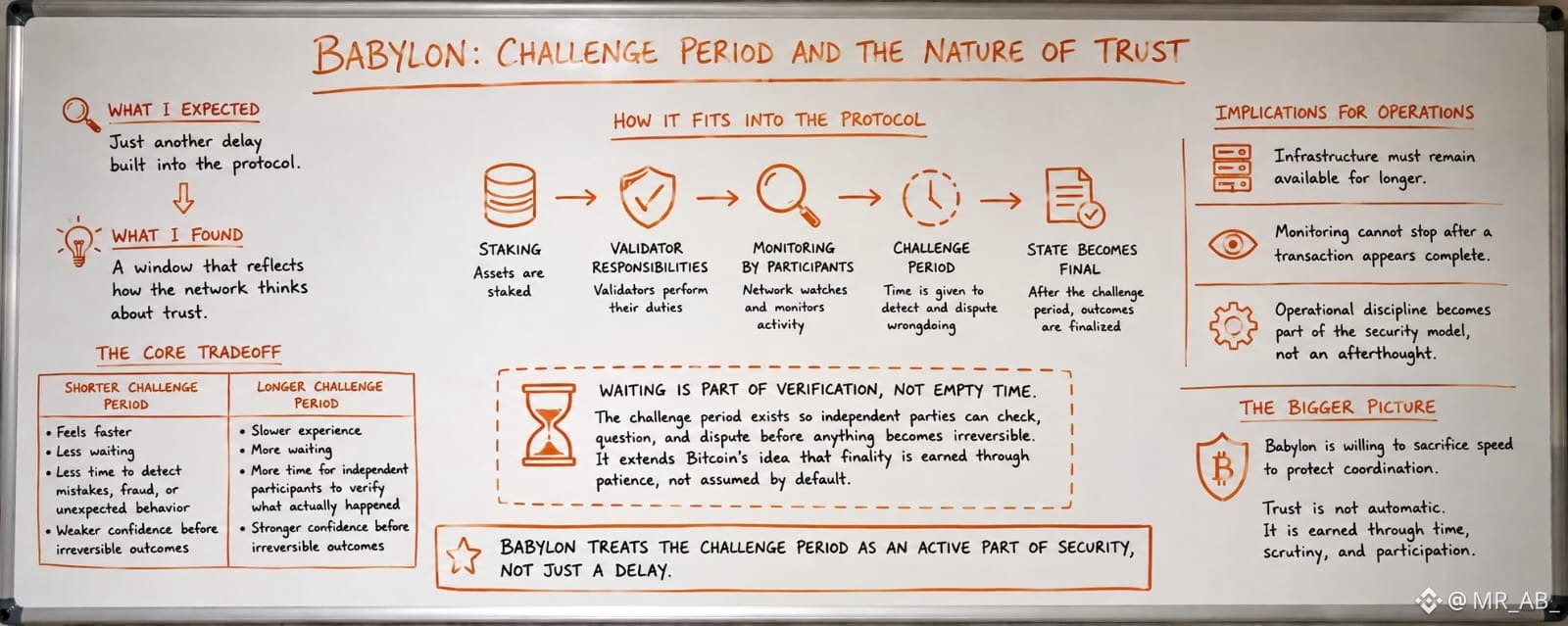
Ich dachte, der interessante Teil wäre Babylons Herausforderungszeitraum. Es stellte sich heraus, dass das genau das ist, was die Wartezeit darüber aussagt, wie das Netzwerk Vertrauen bewertet.
Ich begann damit zu lesen, wie der Herausforderungszeitraum funktioniert. Zunächst sah es so aus, als handele es sich um eine weitere Verzögerung, die in das Protokoll eingebaut ist. Dann verglich ich ihn mit dem Staking-Flow, den Aufgaben des Validators und der Art, wie Streitfälle behandelt werden. Das Muster wurde deutlich schwerer zu ignorieren.
Ein kürzerer Herausforderungszeitraum würde das System schneller wirken lassen. Er würde außerdem die verfügbare Zeit verringern, um Fehler, Betrug oder unerwartetes Verhalten zu erkennen, bevor Zustandsänderungen endgültig werden. Ein längerer bremst alles zwar aus, gibt aber unabhängigen Teilnehmenden mehr Raum, um zu überprüfen, was tatsächlich passiert ist. Dieses Abwägen betrifft nicht die Nutzererfahrung. Es geht darum, wie viel Vertrauen das Protokoll verlangt, bevor es irreversible Ergebnisse akzeptiert.
Je mehr ich las, desto mehr schien es so, als sei Babylon bereit, Geschwindigkeit zu opfern, um die Koordination zu schützen. Bitcoin zeigt bereits, dass Finalität etwas ist, das man sich durch Geduld erarbeitet, statt es standardmäßig vorauszusetzen. Der Herausforderungszeitraum erweitert diese Idee in das Protokoll selbst hinein.
Was ebenfalls auffiel, war, wie das mit den Validator-Operationen zusammenhängt. Die Infrastruktur muss länger verfügbar bleiben. Das Monitoring darf nicht aufhören, nachdem eine Transaktion als abgeschlossen erscheint. Operative Disziplin wird Teil des Sicherheitsmodells statt eine nachträgliche Überlegung.
Ich hatte erwartet, etwas über eine Sicherheitsfunktion zu lernen. Stattdessen habe ich ein Protokoll gesehen, das Warten als aktiven Bestandteil der Verifikation behandelt und nicht als leere Zeit.#baby $BABY @BabylonLabs_io
Ich begann damit zu lesen, wie der Herausforderungszeitraum funktioniert. Zunächst sah es so aus, als handele es sich um eine weitere Verzögerung, die in das Protokoll eingebaut ist. Dann verglich ich ihn mit dem Staking-Flow, den Aufgaben des Validators und der Art, wie Streitfälle behandelt werden. Das Muster wurde deutlich schwerer zu ignorieren.
Ein kürzerer Herausforderungszeitraum würde das System schneller wirken lassen. Er würde außerdem die verfügbare Zeit verringern, um Fehler, Betrug oder unerwartetes Verhalten zu erkennen, bevor Zustandsänderungen endgültig werden. Ein längerer bremst alles zwar aus, gibt aber unabhängigen Teilnehmenden mehr Raum, um zu überprüfen, was tatsächlich passiert ist. Dieses Abwägen betrifft nicht die Nutzererfahrung. Es geht darum, wie viel Vertrauen das Protokoll verlangt, bevor es irreversible Ergebnisse akzeptiert.
Je mehr ich las, desto mehr schien es so, als sei Babylon bereit, Geschwindigkeit zu opfern, um die Koordination zu schützen. Bitcoin zeigt bereits, dass Finalität etwas ist, das man sich durch Geduld erarbeitet, statt es standardmäßig vorauszusetzen. Der Herausforderungszeitraum erweitert diese Idee in das Protokoll selbst hinein.
Was ebenfalls auffiel, war, wie das mit den Validator-Operationen zusammenhängt. Die Infrastruktur muss länger verfügbar bleiben. Das Monitoring darf nicht aufhören, nachdem eine Transaktion als abgeschlossen erscheint. Operative Disziplin wird Teil des Sicherheitsmodells statt eine nachträgliche Überlegung.
Ich hatte erwartet, etwas über eine Sicherheitsfunktion zu lernen. Stattdessen habe ich ein Protokoll gesehen, das Warten als aktiven Bestandteil der Verifikation behandelt und nicht als leere Zeit.#baby $BABY @BabylonLabs_io