#baby $BABY @BabylonLabs_io
Je mehr ich die Krypto-Infrastruktur untersuche, desto mehr frage ich mich, ob wir das richtige Problem lösen. Jede neue Blockchain konzentriert sich auf Geschwindigkeit, Skalierbarkeit und Liquidität, doch die meisten bauen ihre Sicherheit weiterhin weitgehend von Grund auf selbst. Das wirkt ineffizient.
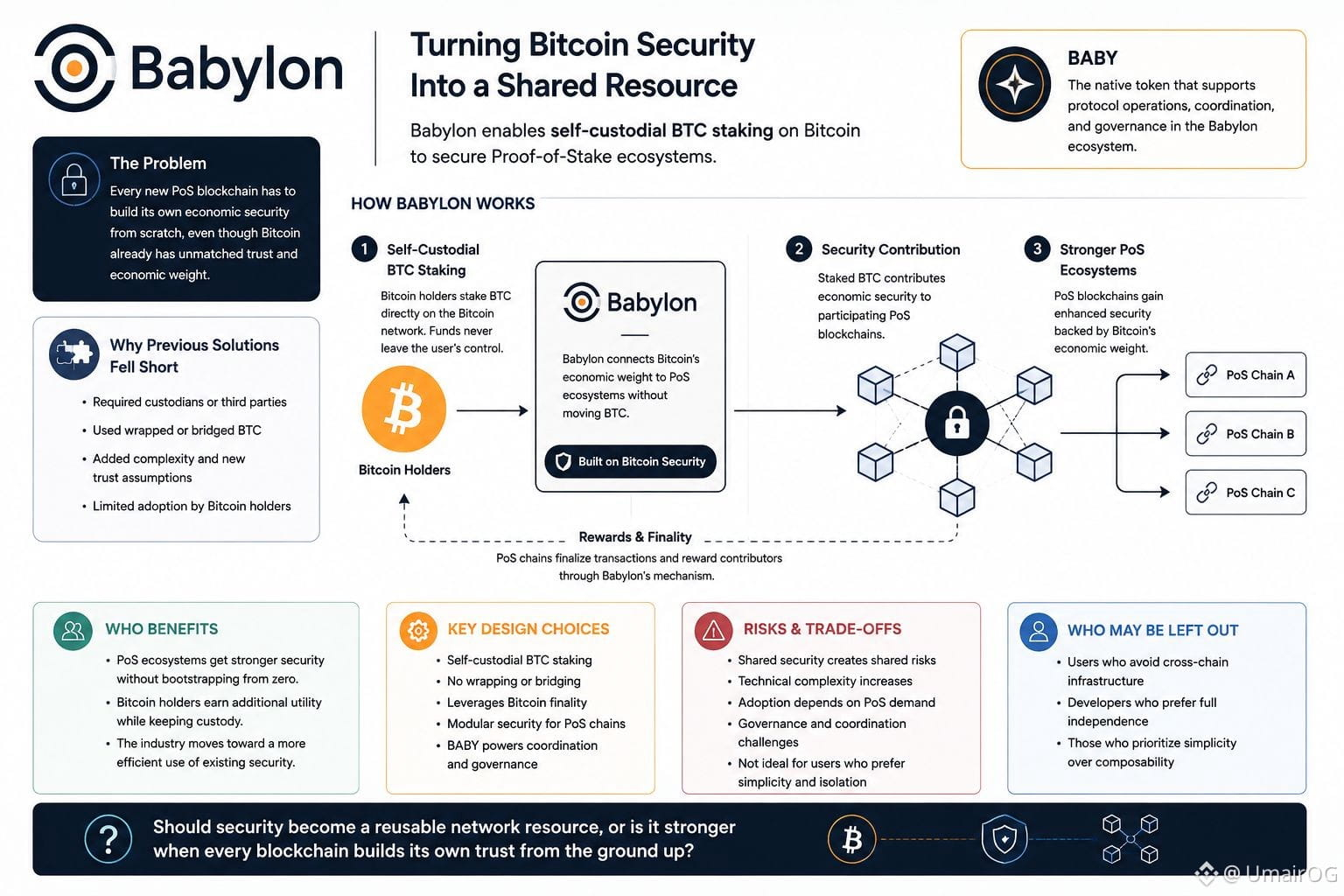
Babylon stach für mich heraus, weil es einen anderen Ansatz verfolgt. Anstatt Bitcoin aus seinem Netzwerk zu verlagern, ermöglicht Babylon Self-Custodial-BTC-Staking. So kann die ökonomische Sicherheit von Bitcoin teilnehmenden PoS-Blockchains helfen, sich zu schützen. In meiner Sicht bleibt Bitcoin die Sicherheitsgrundlage, während BABY dabei hilft, das Protokoll zu koordinieren – statt Bitcoins Rolle zu ersetzen.
Ich sehe Babylon nicht als eine perfekte Antwort. Geteilte Sicherheit könnte die Effizienz verbessern, bringt jedoch auch neue technische und Governance-spezifische Abwägungen mit sich. Ob sich diese Abwägungen lohnen, wird davon abhängen, was sich in der Praxis tatsächlich durchsetzt.
Daher stelle ich mir immer wieder die Frage: Ist geteilte Sicherheit der nächste Schritt für die Blockchain-Infrastruktur – oder nur eine andere Art, Risiken zu steuern?
Je mehr ich die Krypto-Infrastruktur untersuche, desto mehr frage ich mich, ob wir das richtige Problem lösen. Jede neue Blockchain konzentriert sich auf Geschwindigkeit, Skalierbarkeit und Liquidität, doch die meisten bauen ihre Sicherheit weiterhin weitgehend von Grund auf selbst. Das wirkt ineffizient.
Babylon stach für mich heraus, weil es einen anderen Ansatz verfolgt. Anstatt Bitcoin aus seinem Netzwerk zu verlagern, ermöglicht Babylon Self-Custodial-BTC-Staking. So kann die ökonomische Sicherheit von Bitcoin teilnehmenden PoS-Blockchains helfen, sich zu schützen. In meiner Sicht bleibt Bitcoin die Sicherheitsgrundlage, während BABY dabei hilft, das Protokoll zu koordinieren – statt Bitcoins Rolle zu ersetzen.
Ich sehe Babylon nicht als eine perfekte Antwort. Geteilte Sicherheit könnte die Effizienz verbessern, bringt jedoch auch neue technische und Governance-spezifische Abwägungen mit sich. Ob sich diese Abwägungen lohnen, wird davon abhängen, was sich in der Praxis tatsächlich durchsetzt.
Daher stelle ich mir immer wieder die Frage: Ist geteilte Sicherheit der nächste Schritt für die Blockchain-Infrastruktur – oder nur eine andere Art, Risiken zu steuern?