
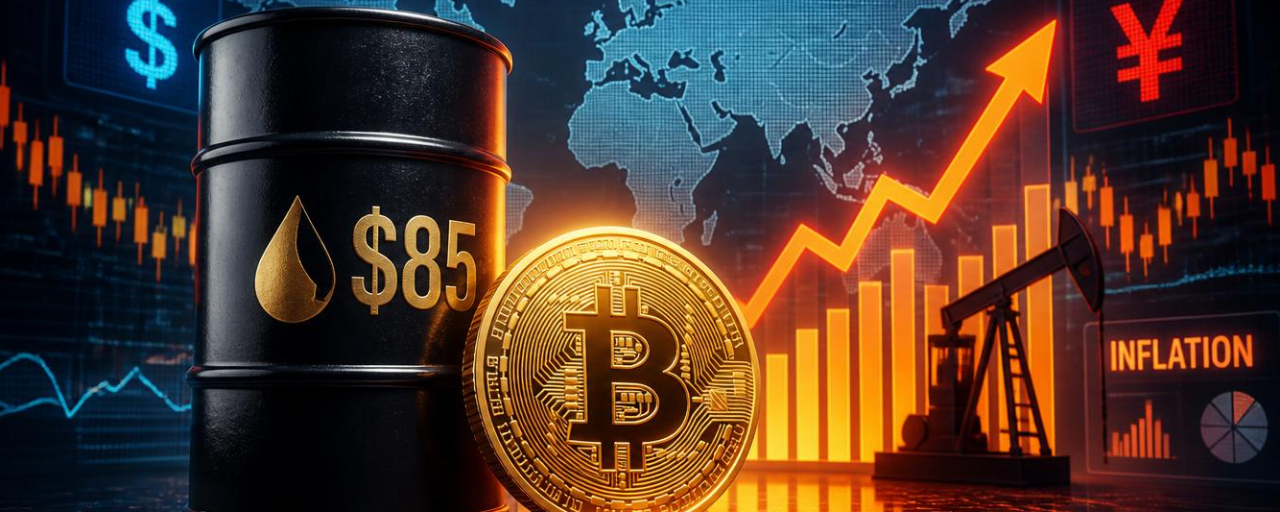
Oil is back in the spotlight.
WTI crude has climbed to $85, while central banks continue trying to stabilize currencies and global markets.
Whenever energy prices rise, investors start asking the same question:
Where does money flow next?
Historically, expensive energy increases inflation concerns. If inflation stays higher for longer, central banks may delay interest-rate cuts. That creates uncertainty across traditional markets.
But crypto doesn't always react the same way.
Bitcoin has increasingly become a global macro asset. During periods of economic uncertainty, some investors reduce risk, while others see Bitcoin as an alternative store of value.
Meanwhile, countries continue managing currency volatility, with the latest intervention involving the U.S. and Japan to support the yen. These moves remind us that governments can influence fiat markets—but Bitcoin operates 24/7 without a central authority.
So the real question isn't just whether oil reaches $90.
It's whether rising energy prices, inflation concerns, and currency interventions will push more investors toward digital assets over the coming months.
What do you think happens first?
🟢 Bitcoin breaks to new highs.
🔴 Higher inflation keeps crypto under pressure.
Vote in the comments and explain why.
#bitcoin #crypto #oil #Inflation #Macro


