@BabylonLabs_io
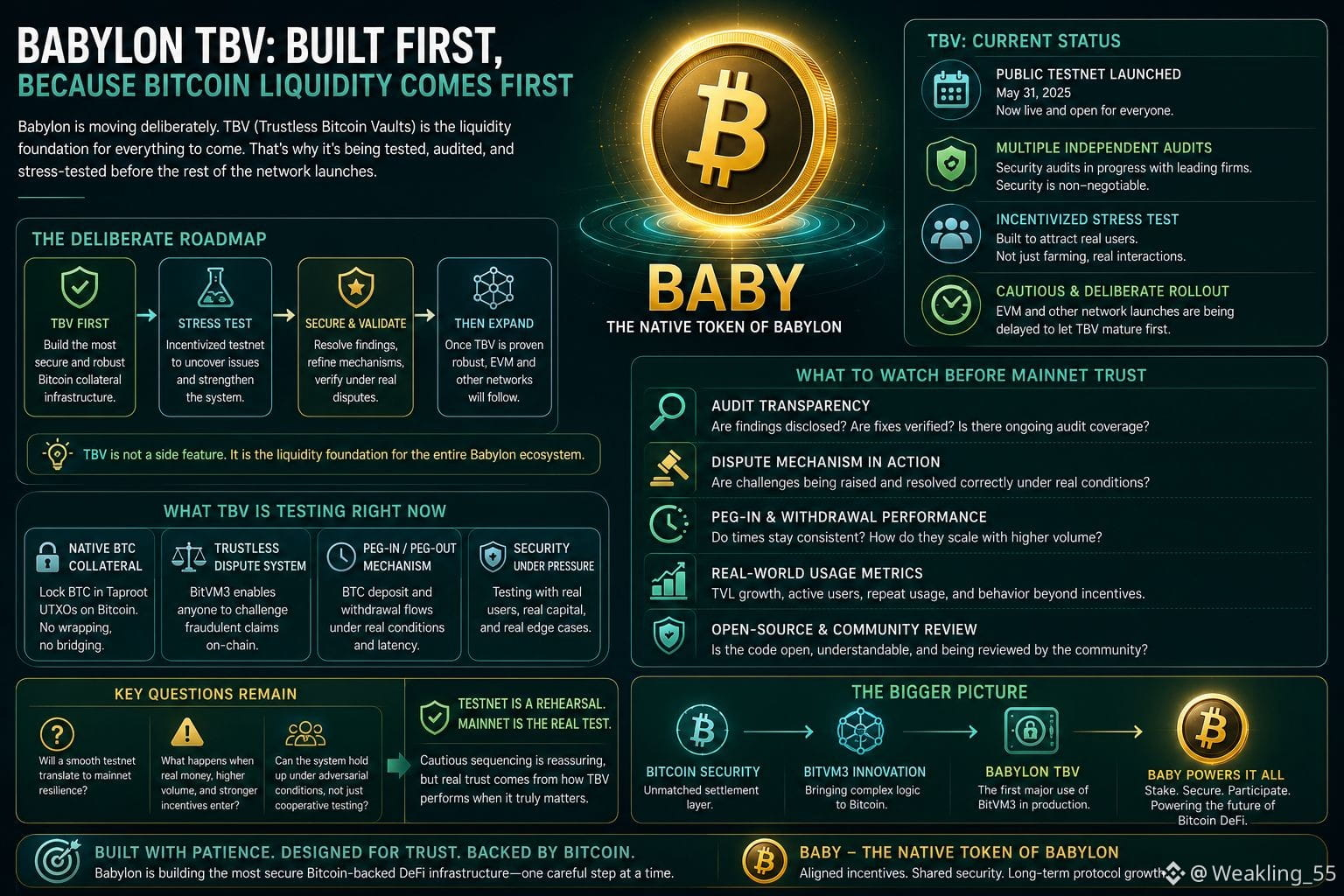
Ich bin noch einmal durch die eigenen Quartals-Updates von Babylon gegangen, um herauszufinden, wo TBV aktuell wirklich steht – und das Bild, das sich ergibt, ist eher ein Projekt, das sorgfältig vorgeht statt sich zu beeilen. Das öffentliche Testnet wurde Ende Mai gestartet und lief durch mehrere unabhängige Sicherheits-Audits. Das Team hat es dabei ausdrücklich als Anreiz-gestressten Test („Incentivized Stress Test“) gerahmt, um echte Nutzer anzuziehen, statt nur inaktive Teilnehmer. Manchmal frage ich mich, wie viel von dem, was in so einer Testnet-Phase aufgefangen wird, tatsächlich reale Belastung widerspiegelt – oder ob Menschen einfach nur Anreize „farmten“, ohne echte Nutzungs-Muster.
Interessant wirkt vor allem, wie bewusst diese Rollout-Reihenfolge abgestimmt ist. Babylon hat offenbar die eigenen EVM- und anderen Netzwerk-Starts zurückgestellt, speziell um TBV zuerst reifen zu lassen. TBV wird als Liquiditäts-Grundlage behandelt, von der alles andere abhängt, statt als Nebenfunktion. Schon diese Reihenfolge sagt mir etwas über interne Prioritäten – gleichzeitig bedeutet sie aber auch, dass bei genau diesem Baustein alles auf dem Spiel steht, bevor darauf aufbauend wirklich etwas beginnen kann.
Bevor ich realem Kapital so etwas vertraue, sind die Punkte, die ich persönlich im Blick hätte: wie die Ergebnisse aus den Audits offengelegt werden, ob der Challenge-Mechanismus sauber ausgelöst und unter echten Streit-/Disput-Bedingungen gelöst wird, und wie sich Peg-in- und Withdrawal-Zeiten halten, sobald das Volumen über kontrolliertes Testen hinaus zunimmt. Die Frage, die mir dabei kommt, ist, ob ein reibungsloses Testnet wirklich Vorhersagekraft für das Mainnet-Verhalten hat – oder ob sich die „echten“ Tests erst dann zeigen, wenn relevantes Geld und adversariale Anreize ins Spiel kommen.
Von außen betrachtet wirkt die vorsichtige Reihenfolge beruhigend, aber Vorsicht im Test bedeutet keine Garantie für Robustheit, sobald echte Risiken und Einsätze im Spiel sind. Die Struktur ist heute klar, doch die Reaktion in der Zukunft bleibt ungewiss... na ja, die Zeit wird es zeigen👍
$BABY
$BTC
#baby
Ich bin noch einmal durch die eigenen Quartals-Updates von Babylon gegangen, um herauszufinden, wo TBV aktuell wirklich steht – und das Bild, das sich ergibt, ist eher ein Projekt, das sorgfältig vorgeht statt sich zu beeilen. Das öffentliche Testnet wurde Ende Mai gestartet und lief durch mehrere unabhängige Sicherheits-Audits. Das Team hat es dabei ausdrücklich als Anreiz-gestressten Test („Incentivized Stress Test“) gerahmt, um echte Nutzer anzuziehen, statt nur inaktive Teilnehmer. Manchmal frage ich mich, wie viel von dem, was in so einer Testnet-Phase aufgefangen wird, tatsächlich reale Belastung widerspiegelt – oder ob Menschen einfach nur Anreize „farmten“, ohne echte Nutzungs-Muster.
Interessant wirkt vor allem, wie bewusst diese Rollout-Reihenfolge abgestimmt ist. Babylon hat offenbar die eigenen EVM- und anderen Netzwerk-Starts zurückgestellt, speziell um TBV zuerst reifen zu lassen. TBV wird als Liquiditäts-Grundlage behandelt, von der alles andere abhängt, statt als Nebenfunktion. Schon diese Reihenfolge sagt mir etwas über interne Prioritäten – gleichzeitig bedeutet sie aber auch, dass bei genau diesem Baustein alles auf dem Spiel steht, bevor darauf aufbauend wirklich etwas beginnen kann.
Bevor ich realem Kapital so etwas vertraue, sind die Punkte, die ich persönlich im Blick hätte: wie die Ergebnisse aus den Audits offengelegt werden, ob der Challenge-Mechanismus sauber ausgelöst und unter echten Streit-/Disput-Bedingungen gelöst wird, und wie sich Peg-in- und Withdrawal-Zeiten halten, sobald das Volumen über kontrolliertes Testen hinaus zunimmt. Die Frage, die mir dabei kommt, ist, ob ein reibungsloses Testnet wirklich Vorhersagekraft für das Mainnet-Verhalten hat – oder ob sich die „echten“ Tests erst dann zeigen, wenn relevantes Geld und adversariale Anreize ins Spiel kommen.
Von außen betrachtet wirkt die vorsichtige Reihenfolge beruhigend, aber Vorsicht im Test bedeutet keine Garantie für Robustheit, sobald echte Risiken und Einsätze im Spiel sind. Die Struktur ist heute klar, doch die Reaktion in der Zukunft bleibt ungewiss... na ja, die Zeit wird es zeigen👍
$BABY
$BTC
#baby