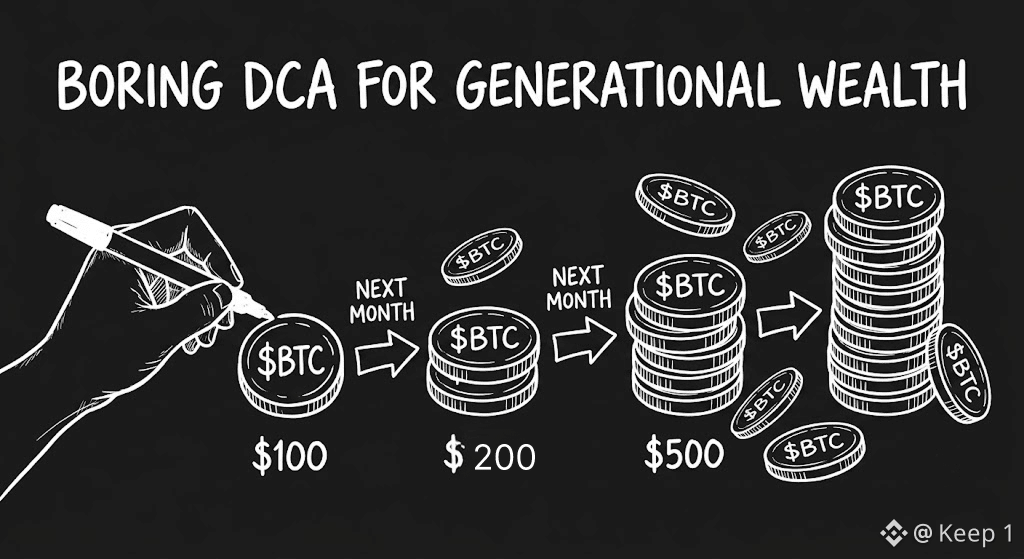
$50/Woche $BTC-Strategie – Der Weg zur finanziellen Freiheit (ohne Risiko).
Web3-Menschen sind in einer Binär-Vorstellung gefangen: Entweder sie bereiten sich auf einen parabolischen Run bis $120k vor – oder auf einen katastrophalen Absturz zurück auf mehrjährige Tiefs. Sie handeln mit hohem Leverage, geraten bei Korrekturen in Panik und verbrennen Kapital, um exakte Top- und Bottom-Zeitpunkte zu treffen.
So verhält sich die Mathematik tatsächlich in drei realistischen Marktszenarien, bei einem Start-Baseline von $BTC
ungefähr bei $64k:
Szenario 1: Bitcoin expandiert auf $100 – $120k
Wenn der Kurs in den nächsten 12–18 Monaten Richtung $120k läuft, kauft ein Investor, der jede Woche $50 einsetzt, nicht „den Top“ mit einer massiven Einmalzahlung. Er senkt kontinuierlich seine durchschnittlichen Anschaffungskosten während Konsolidierungsphasen und nimmt dabei die steigende Dynamik im Sinne von Zinseszins mit. Bei $120k haben sich die Kaufpositionen aus den früheren $50-Käufen zu $64k nahezu verdoppelt – bezogen auf die Kaufkraft. So baust du eine bedeutende Position auf und profitierst von echter Expansion, ohne den Druck, ein riskantes Trade-Setup managen zu müssen.
Szenario 2: Bitcoin korrigiert oder es kommt zu einer tiefen Korrektur
Hier verschiebt sich systematisches Ansammeln von einem Wachstums-Tool hin zu einem Mechanismus zur Kapitalerhaltung. Wenn Gegenwinde aus dem Makrobereich Bitcoin in Richtung niedrigerer Unterstützungszonen drücken, erleidet eine einzige Einmalinvestition sofort einen „Paper Drawdown“. Umgekehrt kauft eine wöchentliche Zuteilung von $50 automatisch deutlich mehr $BTC
zu niedrigeren Bewertungsniveaus. Du durchschnittest den Einstiegspreis kontinuierlich nach unten, wodurch sich der Zeitraum, der nötig ist, um bei einer unvermeidlichen Erholung wieder profitabel zu werden, verkürzt.
Szenario 3: Die Realität der Geldentwertung
Bargeld, das nicht investiert ist, auf einem normalen Bankkonto zu halten, garantiert den Verlust realer Kaufkraft – durch anhaltende Inflation. Die Umsetzung einer DCA-Strategie über eine Full-Reserve-Plattform wie River verändert die Rechnung: Cash-Reserven erwirtschaften eine Rendite (aktuell 3,30% APY, direkt in Bitcoin ausgezahlt) bei null Gebühren für automatisierte, wiederkehrende Käufe, während ungenutztes Fiat systematisch in ein hartes, begrenzt wahres Asset umgewandelt wird.
Web3-Menschen sind in einer Binär-Vorstellung gefangen: Entweder sie bereiten sich auf einen parabolischen Run bis $120k vor – oder auf einen katastrophalen Absturz zurück auf mehrjährige Tiefs. Sie handeln mit hohem Leverage, geraten bei Korrekturen in Panik und verbrennen Kapital, um exakte Top- und Bottom-Zeitpunkte zu treffen.
So verhält sich die Mathematik tatsächlich in drei realistischen Marktszenarien, bei einem Start-Baseline von $BTC
ungefähr bei $64k:
Szenario 1: Bitcoin expandiert auf $100 – $120k
Wenn der Kurs in den nächsten 12–18 Monaten Richtung $120k läuft, kauft ein Investor, der jede Woche $50 einsetzt, nicht „den Top“ mit einer massiven Einmalzahlung. Er senkt kontinuierlich seine durchschnittlichen Anschaffungskosten während Konsolidierungsphasen und nimmt dabei die steigende Dynamik im Sinne von Zinseszins mit. Bei $120k haben sich die Kaufpositionen aus den früheren $50-Käufen zu $64k nahezu verdoppelt – bezogen auf die Kaufkraft. So baust du eine bedeutende Position auf und profitierst von echter Expansion, ohne den Druck, ein riskantes Trade-Setup managen zu müssen.
Szenario 2: Bitcoin korrigiert oder es kommt zu einer tiefen Korrektur
Hier verschiebt sich systematisches Ansammeln von einem Wachstums-Tool hin zu einem Mechanismus zur Kapitalerhaltung. Wenn Gegenwinde aus dem Makrobereich Bitcoin in Richtung niedrigerer Unterstützungszonen drücken, erleidet eine einzige Einmalinvestition sofort einen „Paper Drawdown“. Umgekehrt kauft eine wöchentliche Zuteilung von $50 automatisch deutlich mehr $BTC
zu niedrigeren Bewertungsniveaus. Du durchschnittest den Einstiegspreis kontinuierlich nach unten, wodurch sich der Zeitraum, der nötig ist, um bei einer unvermeidlichen Erholung wieder profitabel zu werden, verkürzt.
Szenario 3: Die Realität der Geldentwertung
Bargeld, das nicht investiert ist, auf einem normalen Bankkonto zu halten, garantiert den Verlust realer Kaufkraft – durch anhaltende Inflation. Die Umsetzung einer DCA-Strategie über eine Full-Reserve-Plattform wie River verändert die Rechnung: Cash-Reserven erwirtschaften eine Rendite (aktuell 3,30% APY, direkt in Bitcoin ausgezahlt) bei null Gebühren für automatisierte, wiederkehrende Käufe, während ungenutztes Fiat systematisch in ein hartes, begrenzt wahres Asset umgewandelt wird.