
@BabylonLabs_io
Ich bin neulich bei einer zufälligen Nachricht über ein Land gestolpert, das offenbar einen digitalen Ausweis auf einer Blockchain für Dinge wie die Registrierung zur Stimmabgabe und Sozialleistungen testet. Mein erster Gedanke war keine Begeisterung, sondern: Wer kontrolliert eigentlich diesen Datensatz, sobald er dauerhaft niedergeschrieben ist?
Genau diese Frage macht das Thema schwerer als die meisten Krypto-News. Digitale Identität ist kein spekulativer Vermögenswert oder ein Handelspaar, sondern an einen echten rechtlichen Status gebunden: Ihr Recht zu wählen, Leistungen zu erhalten, ein Bankkonto zu eröffnen oder nachzuweisen, dass Sie Bürger sind. Wenn eine Regierung oder ein Regulierer so ein System tatsächlich übernimmt – selbst in einem kleinen Pilotversuch – hört es auf, ein theoretischer Anwendungsfall zu sein, und wird zu etwas mit echter rechtlicher Tragweite. Das ist eine ganz andere Ebene der Ernsthaftigkeit als bei den meisten Projekten, die nur von „Übernahme“ sprechen.
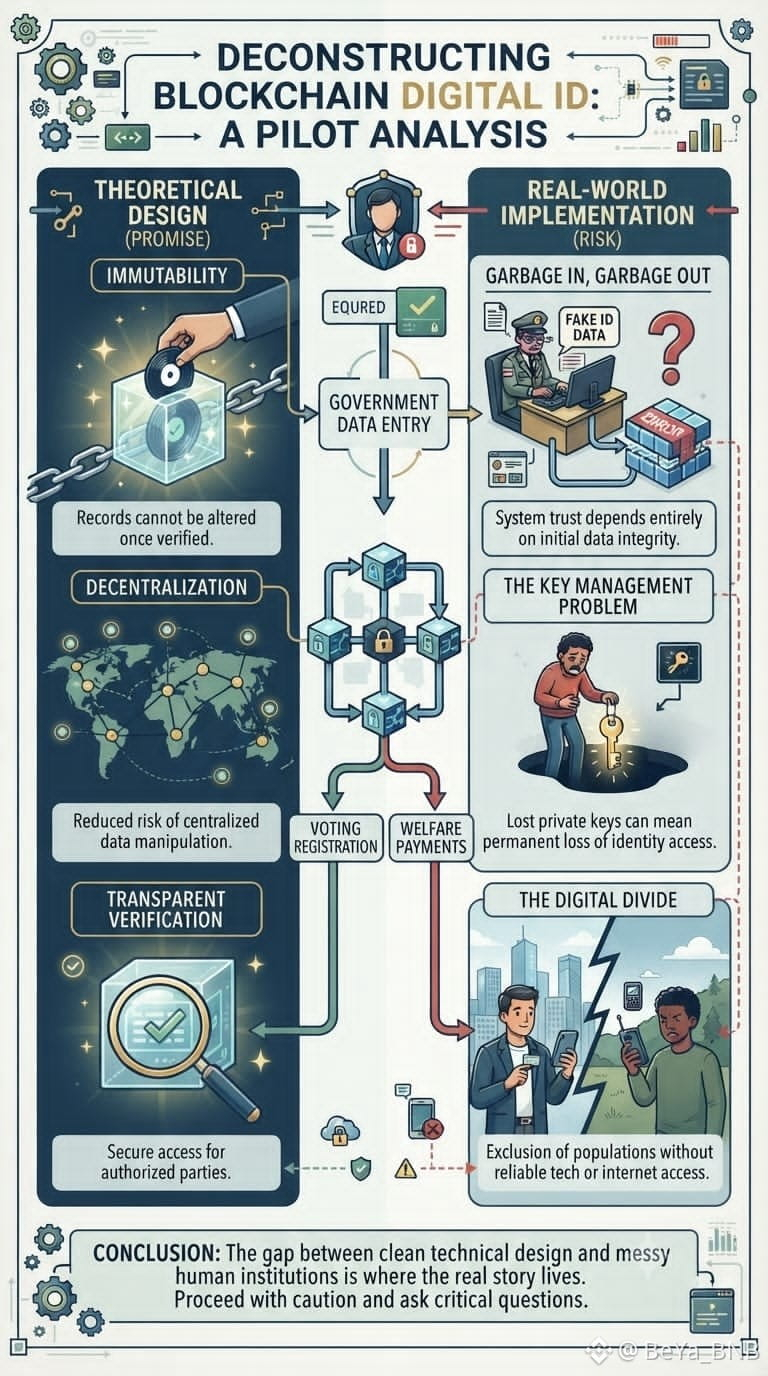
Aber hier setzen auch meine Zweifel an. Ein Blockchain-Datensatz ist nur so zuverlässig wie der Prozess, der die Daten überhaupt erst darauf bringt. Wenn ein korrupter Amtsträger falsche Informationen eingibt, „repariert“ die Kette das nicht – sie macht den Fehler nur dauerhaft und schwerer, ihn still und heimlich zu korrigieren. Außerdem stellt sich die echte Frage, was passiert, wenn jemand seinen privaten Schlüssel verliert oder wenn das System Menschen ausschließt, die kein zuverlässiges Internet oder keine Smartphones haben. Technologie, die ein Vertrauensproblem auf dem Papier löst, löst nicht automatisch die menschlichen und institutionellen Probleme darunter.
Also versuche ich, beides gleichzeitig zu halten: Das ist wirklich wichtige Arbeit, aber es ist auch noch lange nicht fertig oder narrensicher. Die Lücke zwischen einem sauberen technischen Design und der chaotischen Durchsetzung in der realen Welt ist normalerweise genau dort, wo die eigentliche Geschichte steckt.
Ich lerne, diese Projekte langsamer zu lesen, mehr Fragen zu stellen und ein bisschen mehr zu wachsen, bevor ich mir eine Meinung bilde.
@BabylonLabs_io $BABY #baby
Ich bin neulich bei einer zufälligen Nachricht über ein Land gestolpert, das offenbar einen digitalen Ausweis auf einer Blockchain für Dinge wie die Registrierung zur Stimmabgabe und Sozialleistungen testet. Mein erster Gedanke war keine Begeisterung, sondern: Wer kontrolliert eigentlich diesen Datensatz, sobald er dauerhaft niedergeschrieben ist?
Genau diese Frage macht das Thema schwerer als die meisten Krypto-News. Digitale Identität ist kein spekulativer Vermögenswert oder ein Handelspaar, sondern an einen echten rechtlichen Status gebunden: Ihr Recht zu wählen, Leistungen zu erhalten, ein Bankkonto zu eröffnen oder nachzuweisen, dass Sie Bürger sind. Wenn eine Regierung oder ein Regulierer so ein System tatsächlich übernimmt – selbst in einem kleinen Pilotversuch – hört es auf, ein theoretischer Anwendungsfall zu sein, und wird zu etwas mit echter rechtlicher Tragweite. Das ist eine ganz andere Ebene der Ernsthaftigkeit als bei den meisten Projekten, die nur von „Übernahme“ sprechen.
Aber hier setzen auch meine Zweifel an. Ein Blockchain-Datensatz ist nur so zuverlässig wie der Prozess, der die Daten überhaupt erst darauf bringt. Wenn ein korrupter Amtsträger falsche Informationen eingibt, „repariert“ die Kette das nicht – sie macht den Fehler nur dauerhaft und schwerer, ihn still und heimlich zu korrigieren. Außerdem stellt sich die echte Frage, was passiert, wenn jemand seinen privaten Schlüssel verliert oder wenn das System Menschen ausschließt, die kein zuverlässiges Internet oder keine Smartphones haben. Technologie, die ein Vertrauensproblem auf dem Papier löst, löst nicht automatisch die menschlichen und institutionellen Probleme darunter.
Also versuche ich, beides gleichzeitig zu halten: Das ist wirklich wichtige Arbeit, aber es ist auch noch lange nicht fertig oder narrensicher. Die Lücke zwischen einem sauberen technischen Design und der chaotischen Durchsetzung in der realen Welt ist normalerweise genau dort, wo die eigentliche Geschichte steckt.
Ich lerne, diese Projekte langsamer zu lesen, mehr Fragen zu stellen und ein bisschen mehr zu wachsen, bevor ich mir eine Meinung bilde.
@BabylonLabs_io $BABY #baby