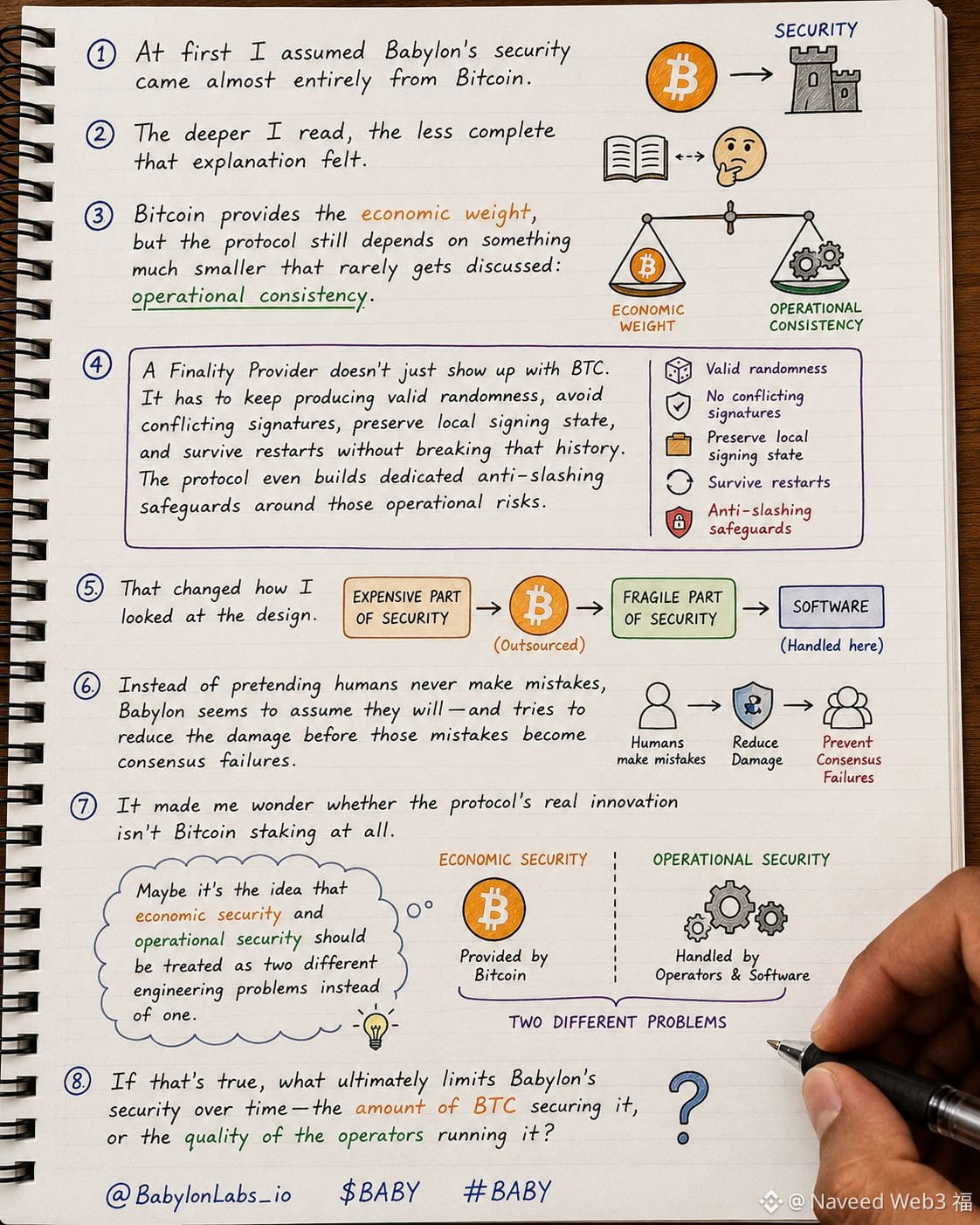
#baby $BABY Zunächst ging ich davon aus, dass Babylons Sicherheit fast vollständig aus Bitcoin kommt.
Je tiefer ich las, desto unvollständiger erschien diese Erklärung.
Bitcoin liefert das wirtschaftliche Gewicht, aber das Protokoll hängt noch von etwas viel Kleinerem ab, das selten zur Sprache kommt: betriebliche Konsistenz.
Ein Finality Provider taucht nicht einfach mit BTC auf. Er muss weiterhin gültige Zufallszahlen erzeugen, widersprüchliche Signaturen vermeiden, den lokalen Signierstatus bewahren und Neustarts überstehen, ohne diese Historie zu beschädigen. Das Protokoll baut sogar eigene Anti-Slashing-Schutzmaßnahmen rund um diese betrieblichen Risiken.
Das veränderte, wie ich das Design betrachtete.
Der teure Teil der Sicherheit wird an Bitcoin ausgelagert. Der fragile Teil wird in Software verlagert.
Vielleicht ist das Absicht.
Anstatt so zu tun, als würden Menschen niemals Fehler machen, scheint Babylon davon auszugehen, dass sie welche machen werden – und versucht, den Schaden zu verringern, bevor diese Fehler zu Konsensfehlern werden.
Das ließ mich fragen, ob die eigentliche Innovation des Protokolls gar kein Bitcoin-Staking ist.
Vielleicht ist es die Idee, dass wirtschaftliche Sicherheit und betriebliche Sicherheit als zwei unterschiedliche Ingenieurprobleme betrachtet werden sollten – statt als eines.
Wenn das stimmt: Was begrenzt letztlich Babylons Sicherheit im Laufe der Zeit – die Menge an BTC, die es absichert, oder die Qualität der Betreiber, die es betreiben?
@BabylonLabs_io
Je tiefer ich las, desto unvollständiger erschien diese Erklärung.
Bitcoin liefert das wirtschaftliche Gewicht, aber das Protokoll hängt noch von etwas viel Kleinerem ab, das selten zur Sprache kommt: betriebliche Konsistenz.
Ein Finality Provider taucht nicht einfach mit BTC auf. Er muss weiterhin gültige Zufallszahlen erzeugen, widersprüchliche Signaturen vermeiden, den lokalen Signierstatus bewahren und Neustarts überstehen, ohne diese Historie zu beschädigen. Das Protokoll baut sogar eigene Anti-Slashing-Schutzmaßnahmen rund um diese betrieblichen Risiken.
Das veränderte, wie ich das Design betrachtete.
Der teure Teil der Sicherheit wird an Bitcoin ausgelagert. Der fragile Teil wird in Software verlagert.
Vielleicht ist das Absicht.
Anstatt so zu tun, als würden Menschen niemals Fehler machen, scheint Babylon davon auszugehen, dass sie welche machen werden – und versucht, den Schaden zu verringern, bevor diese Fehler zu Konsensfehlern werden.
Das ließ mich fragen, ob die eigentliche Innovation des Protokolls gar kein Bitcoin-Staking ist.
Vielleicht ist es die Idee, dass wirtschaftliche Sicherheit und betriebliche Sicherheit als zwei unterschiedliche Ingenieurprobleme betrachtet werden sollten – statt als eines.
Wenn das stimmt: Was begrenzt letztlich Babylons Sicherheit im Laufe der Zeit – die Menge an BTC, die es absichert, oder die Qualität der Betreiber, die es betreiben?
@BabylonLabs_io