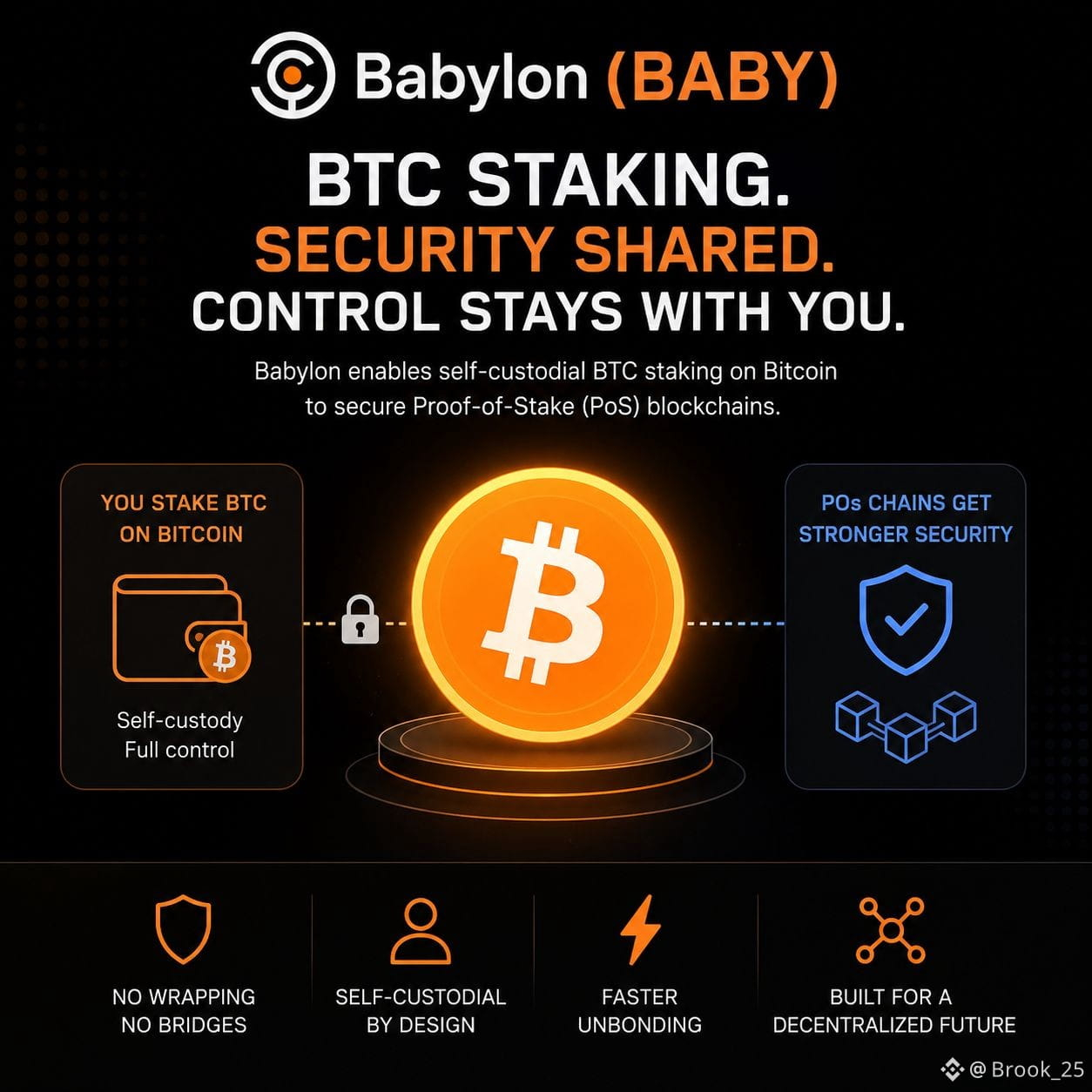
Ich fand es schon immer interessant, dass Bitcoin die sicherste Blockchain ist, doch jahrelang konnte es nicht direkt zur Absicherung von Proof-of-Stake-(PoS)-Netzwerken beitragen, ohne auf Wrapped BTC oder Custodians (Verwahrstellen) angewiesen zu sein. Dieses Kompromissverhältnis fühlte sich nie ideal an, weil es zusätzliches Vertrauen und weitere Risiken einführte.
Als ich mir Babylon (BABY) ansah, fiel mir vor allem sein anderer Ansatz auf. Anstatt BTC in eine andere Blockchain zu verlagern, will das Projekt es ermöglichen, dass Bitcoin direkt im Bitcoin-Netzwerk selbstverwahrt gestakt werden kann, und gleichzeitig dabei helfen, beteiligte PoS-Ketten abzusichern. Theoretisch erlaubt das den Nutzern, die Kontrolle über ihr Bitcoin zu behalten, statt es an eine dritte Partei abzugeben.
Allerdings sehe ich Babylon nicht als perfekte Lösung. Das Protokoll ist technisch komplex, hängt von spezialisierter Infrastruktur ab, und sein langfristiger Erfolg wird von einer sicheren Umsetzung sowie von einer breiteren Akzeptanz über PoS-Ökosysteme hinweg abhängen. Selbstverwahrung bedeutet zudem, dass Nutzer weiterhin selbst dafür verantwortlich sind, ihre eigenen Vermögenswerte zu schützen.
Aus meiner Sicht geht Babylon ein echtes Problem an, statt einfach nur eine weitere Krypto-Funktion hinzuzufügen. Ob sich sein Modell über die Zeit als tragfähig erweist, kann nur die reale Nutzung in der Praxis und fortlaufendes Testen beantworten.
Mich interessiert, ob Bitcoin zu einer breiteren Sicherheits-Schicht für andere Blockchains werden kann, ohne dabei die Einfachheit und die Vertrauensannahmen zu verlieren, die es von Anfang an wertvoll gemacht haben.
@Babylon #baby $BITCOIN
#BABYLABUBU
$BABY
Als ich mir Babylon (BABY) ansah, fiel mir vor allem sein anderer Ansatz auf. Anstatt BTC in eine andere Blockchain zu verlagern, will das Projekt es ermöglichen, dass Bitcoin direkt im Bitcoin-Netzwerk selbstverwahrt gestakt werden kann, und gleichzeitig dabei helfen, beteiligte PoS-Ketten abzusichern. Theoretisch erlaubt das den Nutzern, die Kontrolle über ihr Bitcoin zu behalten, statt es an eine dritte Partei abzugeben.
Allerdings sehe ich Babylon nicht als perfekte Lösung. Das Protokoll ist technisch komplex, hängt von spezialisierter Infrastruktur ab, und sein langfristiger Erfolg wird von einer sicheren Umsetzung sowie von einer breiteren Akzeptanz über PoS-Ökosysteme hinweg abhängen. Selbstverwahrung bedeutet zudem, dass Nutzer weiterhin selbst dafür verantwortlich sind, ihre eigenen Vermögenswerte zu schützen.
Aus meiner Sicht geht Babylon ein echtes Problem an, statt einfach nur eine weitere Krypto-Funktion hinzuzufügen. Ob sich sein Modell über die Zeit als tragfähig erweist, kann nur die reale Nutzung in der Praxis und fortlaufendes Testen beantworten.
Mich interessiert, ob Bitcoin zu einer breiteren Sicherheits-Schicht für andere Blockchains werden kann, ohne dabei die Einfachheit und die Vertrauensannahmen zu verlieren, die es von Anfang an wertvoll gemacht haben.
@Babylon #baby $BITCOIN
#BABYLABUBU
$BABY