
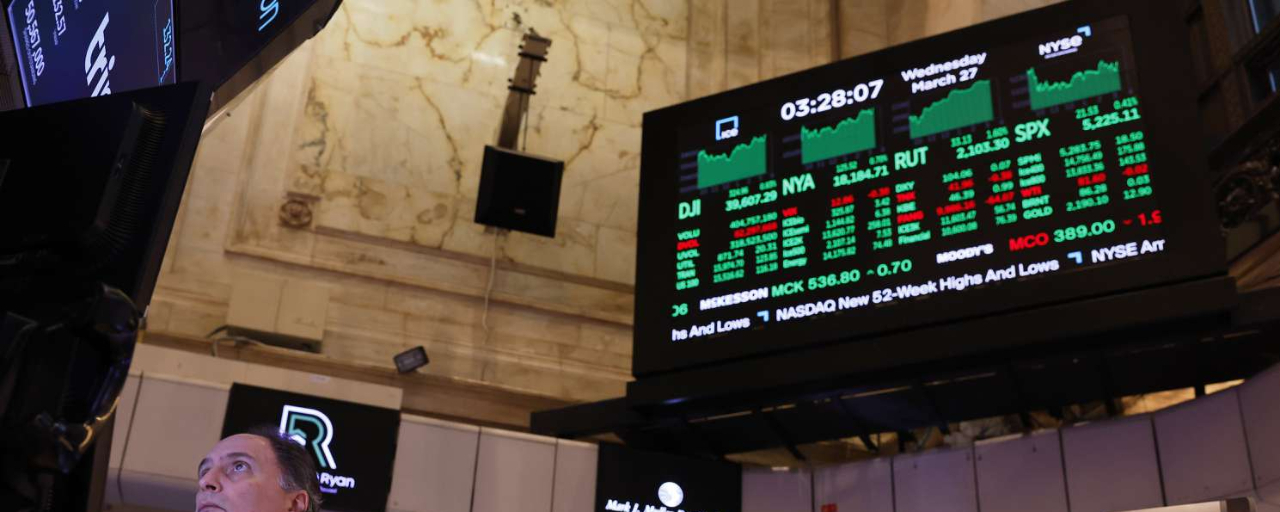
Wall Street opened Monday ready to celebrate lower oil prices, but spent the rest of the day arguing with itself. Futures had jumped on news that the US and Iran were holding fire while Tehran talked to Oman about the Strait of Hormuz — the kind of headline that usually sends oil down and stocks up in a straight line.
Oil obliged. Stocks didn't, not entirely. A fresh wave of selling in semiconductor and AI-infrastructure names clawed back the early gains, and the major indices spent the afternoon fighting to a draw.
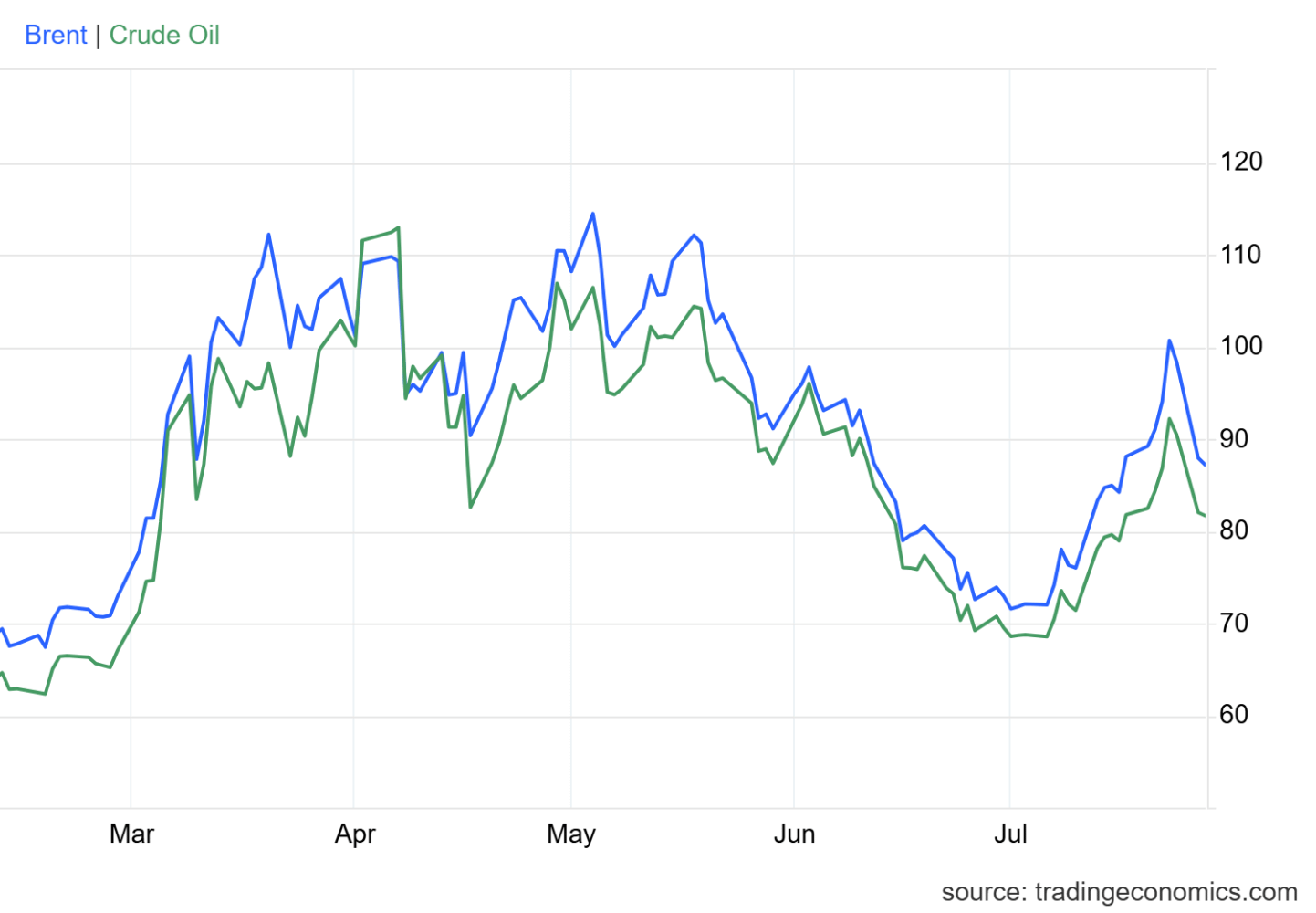
Crude did exactly what geopolitics said it should. Brent tumbled 8.7% to close at $88.36 a barrel, its steepest drop in months, as the pause in US-Iran hostilities held and Tehran's talks with Oman over Hormuz shipping showed signs of progress. WTI fell 7.5% Monday and continued sliding into Tuesday's Asian session, extending losses toward the low $80s.
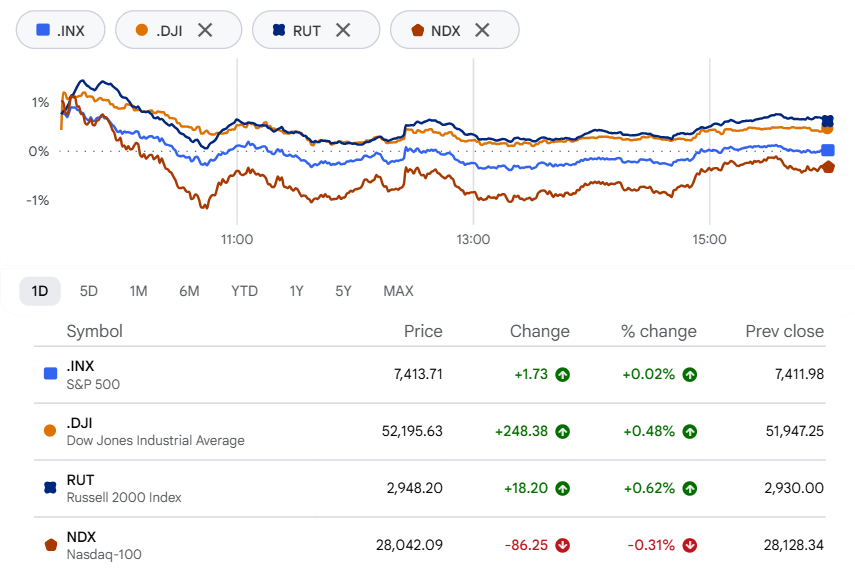
The S&P 500 closed essentially flat, adding just 0.02% to settle at 7,413.18. The Nasdaq Composite slipped 0.18%, weighed down by chip stocks and a 5% drop in Nvidia. The Dow Jones Industrial Average was the exception, climbing 0.51% to 52,210.08, helped along by Apple's strength and its lighter weighting in chip stocks. The small-cap Russell 2000, less exposed to the semiconductor rout, outperformed the headline indices, closing up 0.6%.
Normally a move like that is rocket fuel for equities — lower energy costs, lower inflation pressure, more room for the Fed to ease. It showed up exactly where you'd expect: financials caught a bid as Treasury yields eased, and energy stocks were the session's biggest laggards as the war premium that had propped them up evaporated. But the relief didn't extend to the sectors investors actually wanted to buy.
Chips Are Having Their Worst Month Since the Financial Crisis
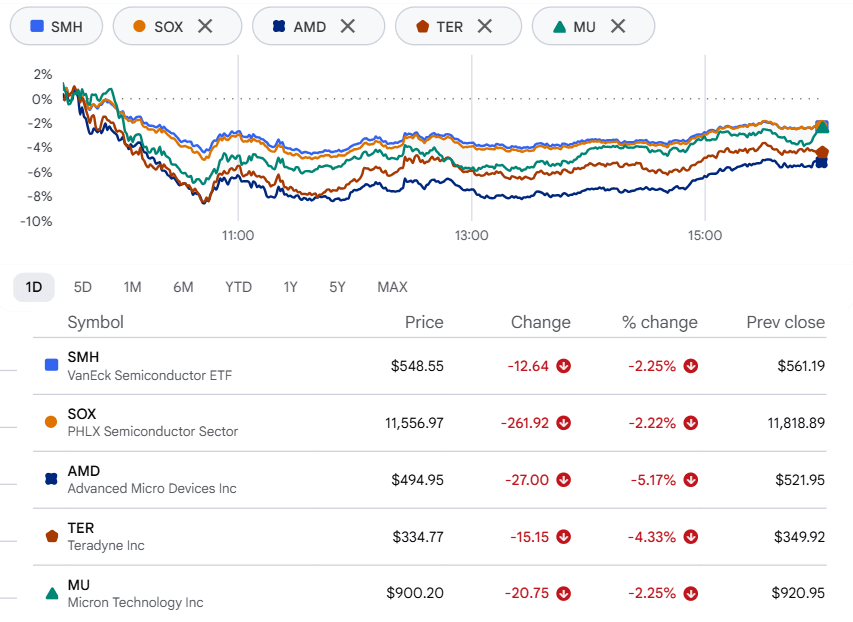
Semiconductor stocks bounced off their session lows but still finished broadly lower. The VanEck Semiconductor ETF (SMH) lost more than 2%, adding to Friday's losses, while the PHLX Semiconductor Index dropped (-2%) and is now on pace for its worst month since November 2008, even as chip-focused ETFs have pulled in record inflows — investors buying the dip in the market's most-punished corner rather than fleeing it. AMD and Teradyne dropped 5% and 4%, leading the declines, while Micron shed about 2%.
Two separate storylines did the damage. First, US-listed shares of ASML fell roughly 6% after The Information reported that a Shanghai-based, state-backed manufacturer has begun mass-producing immersion deep ultraviolet lithography machines — the class of chipmaking equipment ASML has been restricted from selling into China. It's not the cutting-edge extreme ultraviolet technology that remains ASML's exclusive domain, but it's enough to unsettle a stock price in years of uncontested market share.
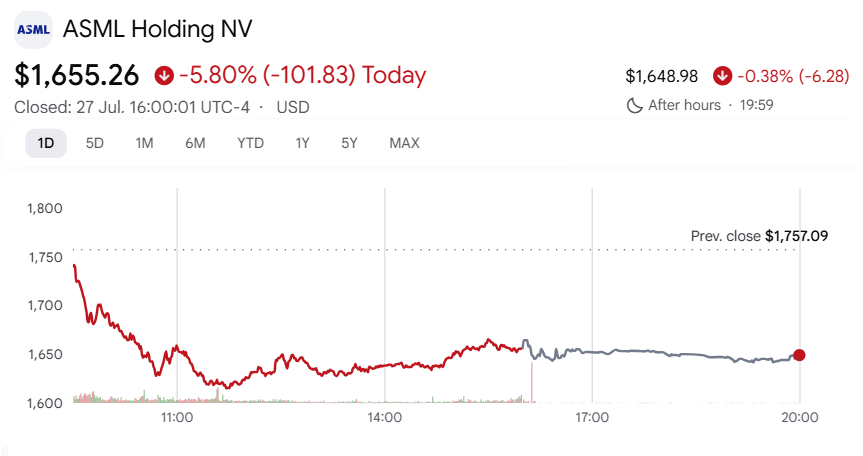
Second, shares of ChangXin Memory Technologies (CXMT), China's largest DRAM maker, exploded more than 460% on their Shanghai STAR Market debut — Asia's biggest IPO of the year, and a reminder to Western chipmakers that Beijing's push for semiconductor self-sufficiency isn't slowing down. The listing briefly rattled global chip stocks before easing, then compounded the ASML news by underscoring exactly the kind of Chinese capability the export controls were meant to prevent. China-focused ETFs caught the tailwind, with the iShares MSCI China and iShares China Large-Cap funds both advancing on the day.
Apple Takes Back the Crown
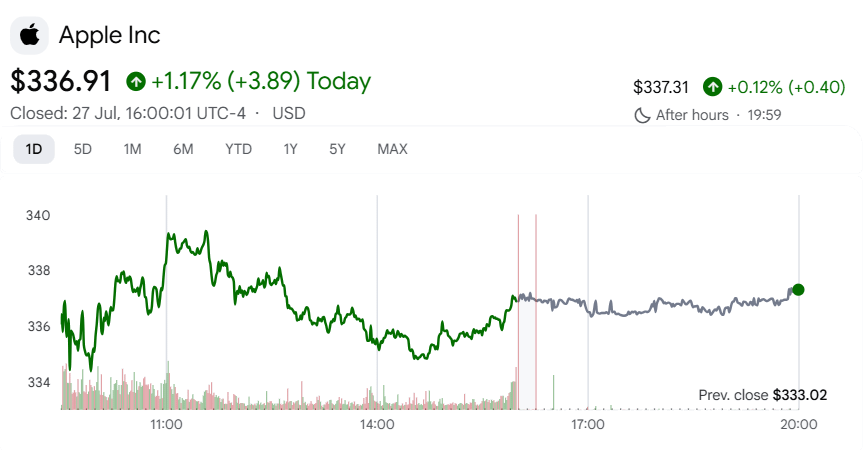
Away from the chip carnage, Apple closed at a record high, up 1.17%, pushing its market cap to roughly $4.95 trillion and reclaiming the title of world's most valuable company from Nvidia for the first time since April 2025. Nvidia's own 5% slide Monday, tied to the broader AI-infrastructure jitters, left it just behind at about $4.77 trillion. The swap reflects a real shift in sentiment: investors are increasingly rewarding Apple's restrained capital spending over Nvidia's exposure to a data-center buildout that markets are starting to question.
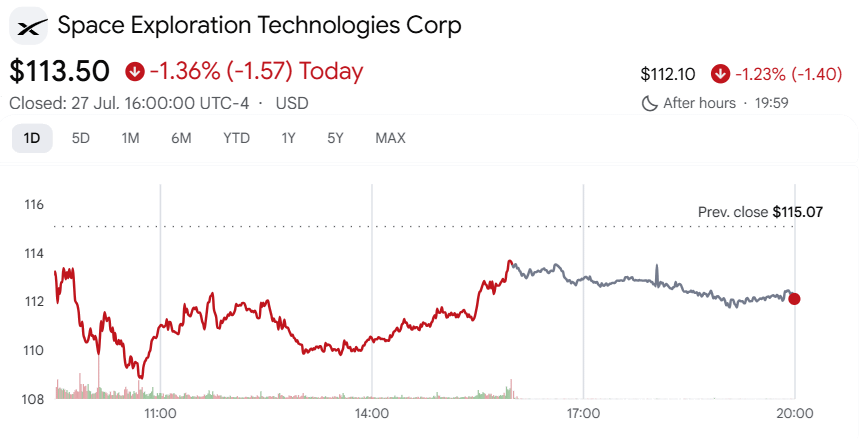
That same buildout skepticism is punishing Elon Musk's other public company harder than almost anything else on the tape. SpaceX fell for the 13th session out of the last 16, shedding more than 1% to close at an all-time low of $113.50 — down exactly half from its post-IPO peak of $225.64 in June. The stock has now erased more than $1.2 trillion in market value since that peak, roughly the entire market capitalization of Tesla.
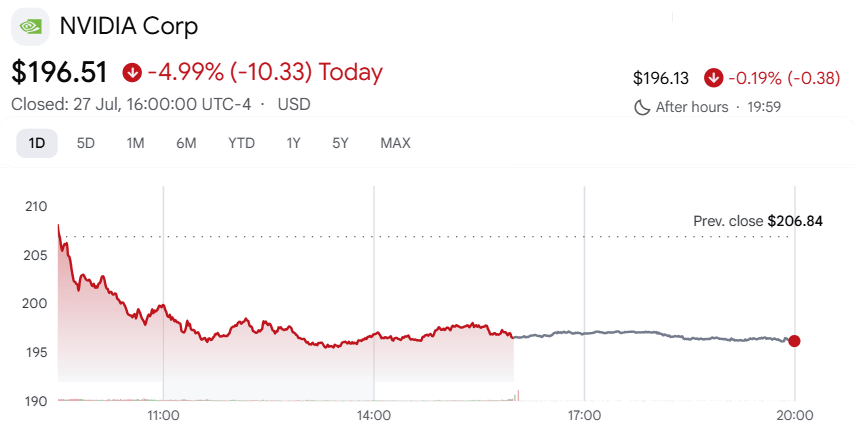
Nvidia stock tumbled nearly 5% following reports that the chipmaker may backstop a massive $250 billion funding deal for an OpenAI data center project in Ohio. This renewed investor anxiety over "circular" financing—where a supplier financially backs its own customer—fueled broader tech-sector jitters regarding sustainable AI infrastructure spending.
Bitcoin's Balance Sheet Bets Beat Its Miners
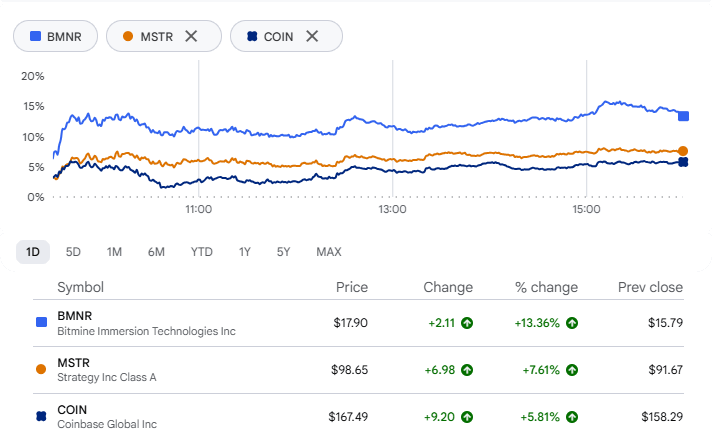
Crypto-adjacent equities split cleanly along a line: companies that hold digital assets rallied, companies that mine or power them didn't. Bitmine Immersion surged 13%, Strategy climbed more than 7%, and Coinbase gained 5.8%, even as the broader market sold off elsewhere and capital rotated out of chip and AI-infrastructure names.
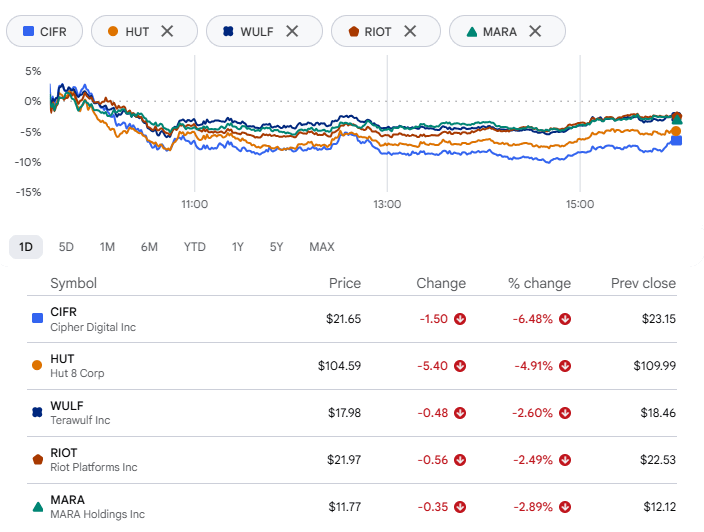
Bitcoin miners went the other way, caught in the same concerns about circular financing and Chinese competition dragging down semiconductors. Cipher Mining led the group lower with a 6% decline; Hut 8 (-5%), Terawulf (-2.6%), Riot Platforms (-2.5%), Mara Holdings (-2.9%), CleanSpark and Core Scientific all fell alongside it, the last shedding 9%.
Sector Analysis:
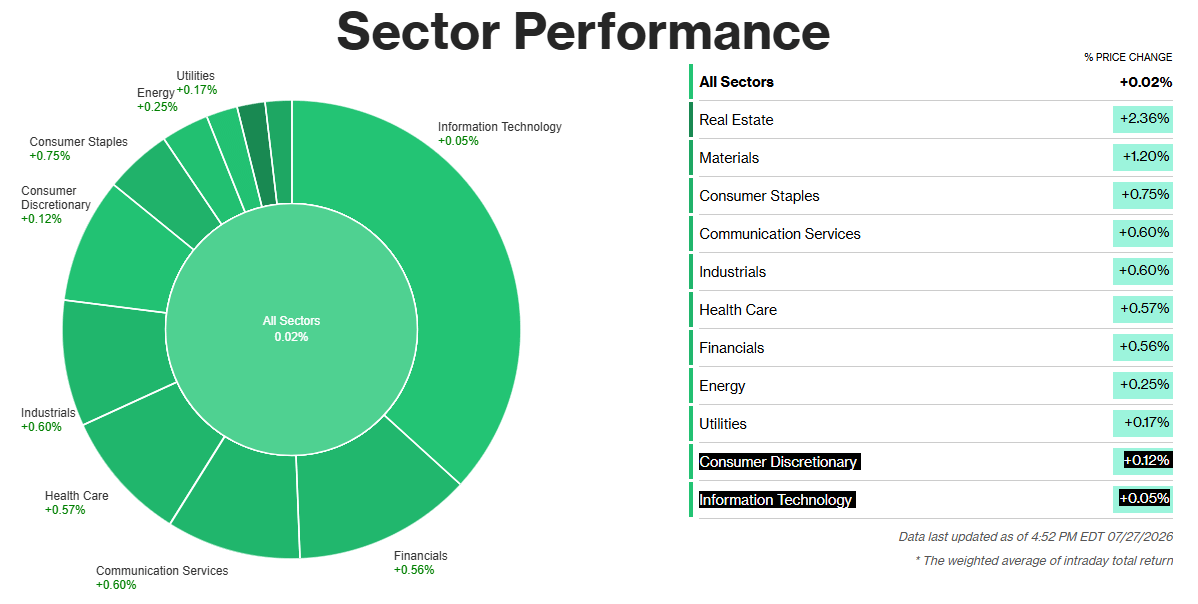
Underneath the flat headline numbers, every one of the S&P 500's 11 sectors actually finished green — a broader rally than the flat close let on.
Real estate led by a wide margin, up 2.36%, as falling Treasury yields sent buyers back into rate-sensitive property stocks.
Materials followed at 1.20%, catching a lift from the same crude slide that squeezed input costs across heavy industry.
Consumer staples added a steadier 0.75%, the usual defensive ballast on a day nobody was quite sure which way to lean.
Technology and discretionary spending brought up the rear, barely positive. Information technology closed up just 0.05%, propped up by the broader rally but dragged hard by Nvidia's 5% slide.
Consumer discretionary managed only 0.12%, with lingering worry over stretched household budgets keeping buyers away from retail and travel names even as the rest of the market partied. The 10-year Treasury yield eased toward the mid-4.6% range as the oil-driven inflation scare cooled off, even briefly.
None of it added up to a decisive move in either direction. That's arguably the point. With a Fed decision and a run of Big Tech earnings — Meta's among them — landing this week, Monday looked less like a market making up its mind than one killing time before it has to.