
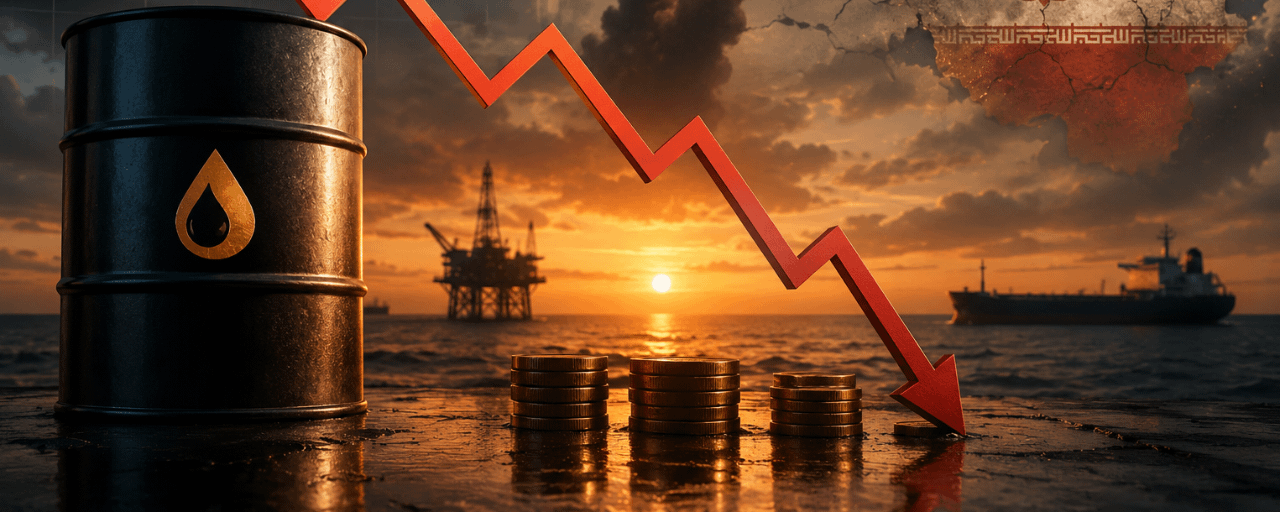
Crude oil just posted its worst session in three months, and dwindling missile inventories may deserve more credit than diplomacy.
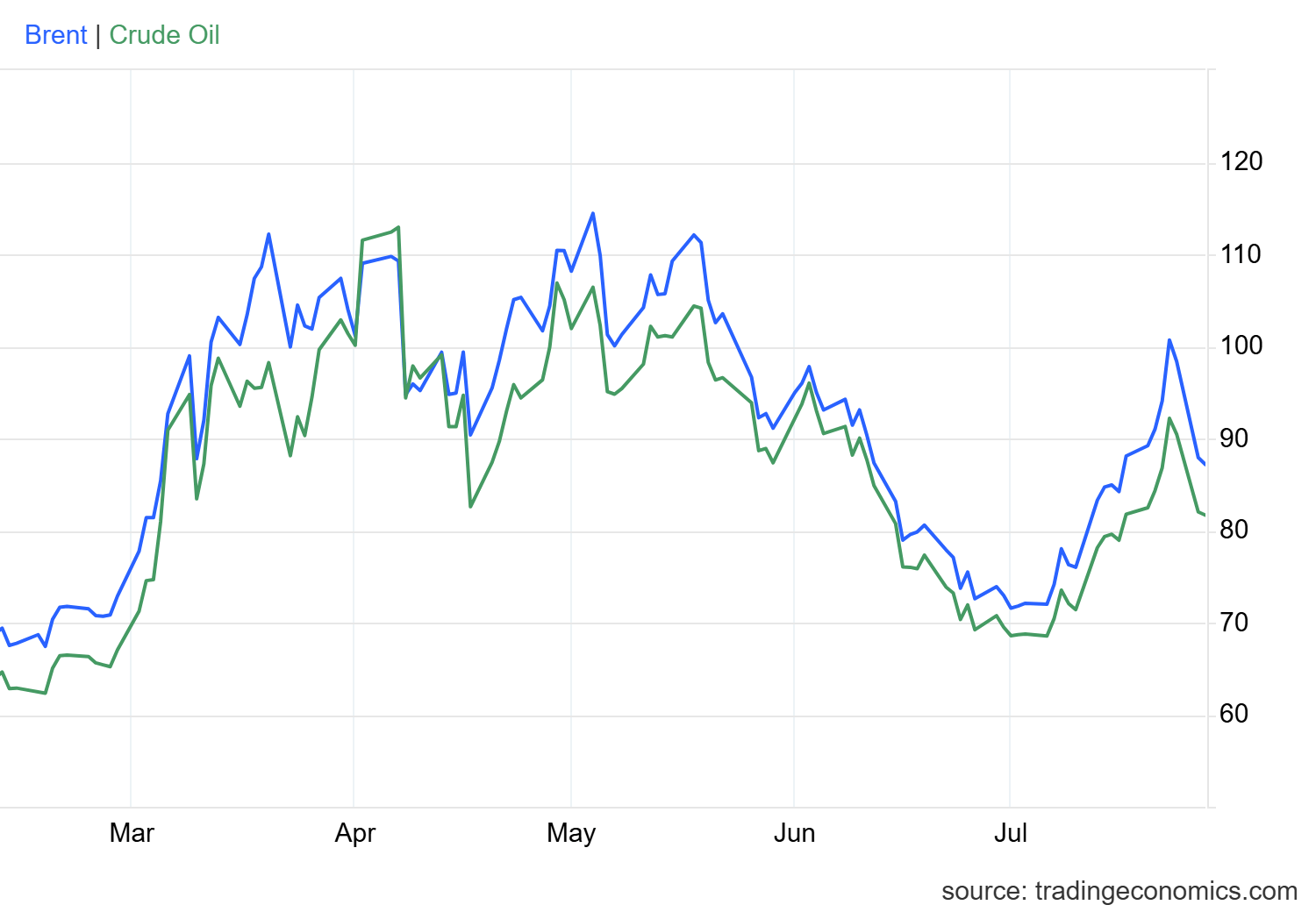
Brent futures collapsed 8.7% on Monday to close at $88.36 a barrel, the steepest one-day drop since the spring. West Texas Intermediate fell 7.5%, settling at $82.61.
The slide didn't stop there — by Tuesday's Asian session, Brent has pushed further, extending losses toward $87 while WTI is trading around $81, both down more than 1%, as traders digested the latest turn in a five-month war that has repeatedly wrong-footed anyone betting on its direction. The trigger was a pause in US-Iran hostilities that neither side is willing to call a ceasefire.
A Truce Nobody Will Sign
Fighting between the two countries broke off Friday after 13 consecutive nights of American strikes, the longest sustained bombing campaign of the conflict. Tehran has denied Israeli and regional media reports that it agreed to a formal 10-day pause, even as its Revolutionary Guard held off retaliatory strikes on US allies in the region.
Iran's position, relayed to Reuters by a senior official on Sunday, is narrower than a truce: it will keep standing down for as long as Washington does the same. Foreign ministry spokesperson Esmail Baghaei went further Monday, insisting Iran "currently has no negotiations with the United States" — only an active channel with Oman over the Strait of Hormuz.
That's not quite how President Trump described it. In an interview published Monday, he told Axios simply: "We are in very deep talks with Iran." He framed the pause as a favor to mediating governments who'd asked him to hold fire, and made clear his patience has limits — better than even odds of a deal, he suggested, but not much runway if talks stall. Speaking to Israel's Channel 12 later the same day, he sounded less patient still, signaling any breakdown in negotiations would bring a swift return to major strikes.
Running Low on the Wrong Ammunition
The more interesting story may be what's driving the pause from Washington's side. The New York Times reported that Trump shelved plans for an expanded assault after officials raised alarms about depleted stockpiles of Patriot interceptors and other air-defense munitions across the Middle East — concerns Joint Chiefs Chairman Gen. Dan Caine reportedly raised directly with the president.
NBC News took that reporting a step further, citing two senior officials who said US commanders have been quietly declining to intercept some incoming Iranian missiles and drones, prioritizing which threats are worth spending scarce munitions on.
Trump has waved off the entire premise. "We have a lot of ammunition, different types," he told reporters aboard Air Force One, blaming the Biden administration for depleted reserves sent to Ukraine.
UN Ambassador Mike Waltz was blunter in public, calling the shortage reports "nonsense" from leakers who "deserve to be in jail" — even as he confirmed elsewhere that the military had inherited a depleted position.
A Waterway Nobody Trusts Yet
Behind the battlefield pause sits a quieter negotiation that matters more for oil markets: Iran and Oman are trying to hash out how ships move through the Strait of Hormuz at all. Omani officials met Iranian counterparts in Tehran over the weekend, with both sides describing the talks as productive, if unfinished.
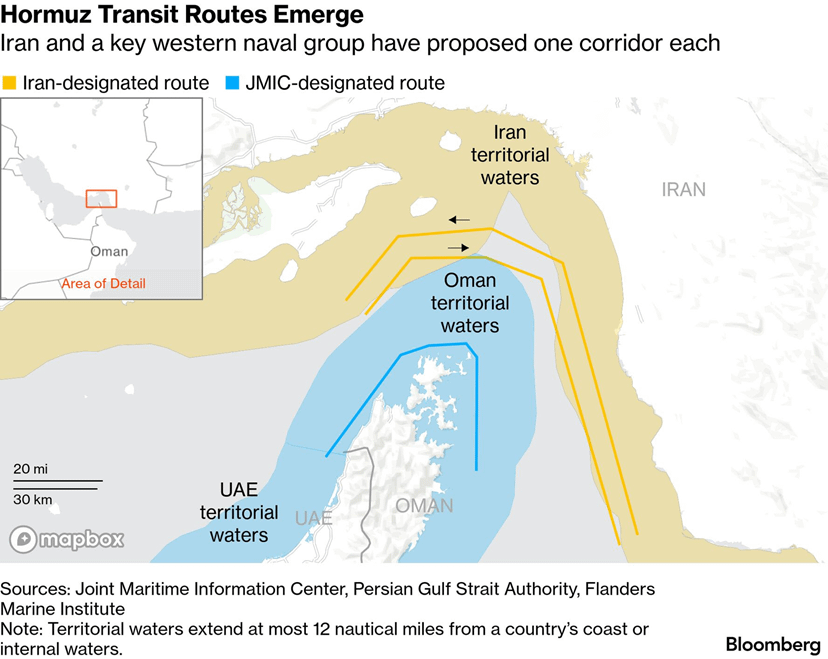
The waterway's traditional central corridor — the deep-water route most tankers used before the war — has sat essentially empty since late February, with vessels instead splitting between a northern lane requiring Iranian permission near Larak Island and a longer, riskier southern route through Omani waters near the Musandam Peninsula.
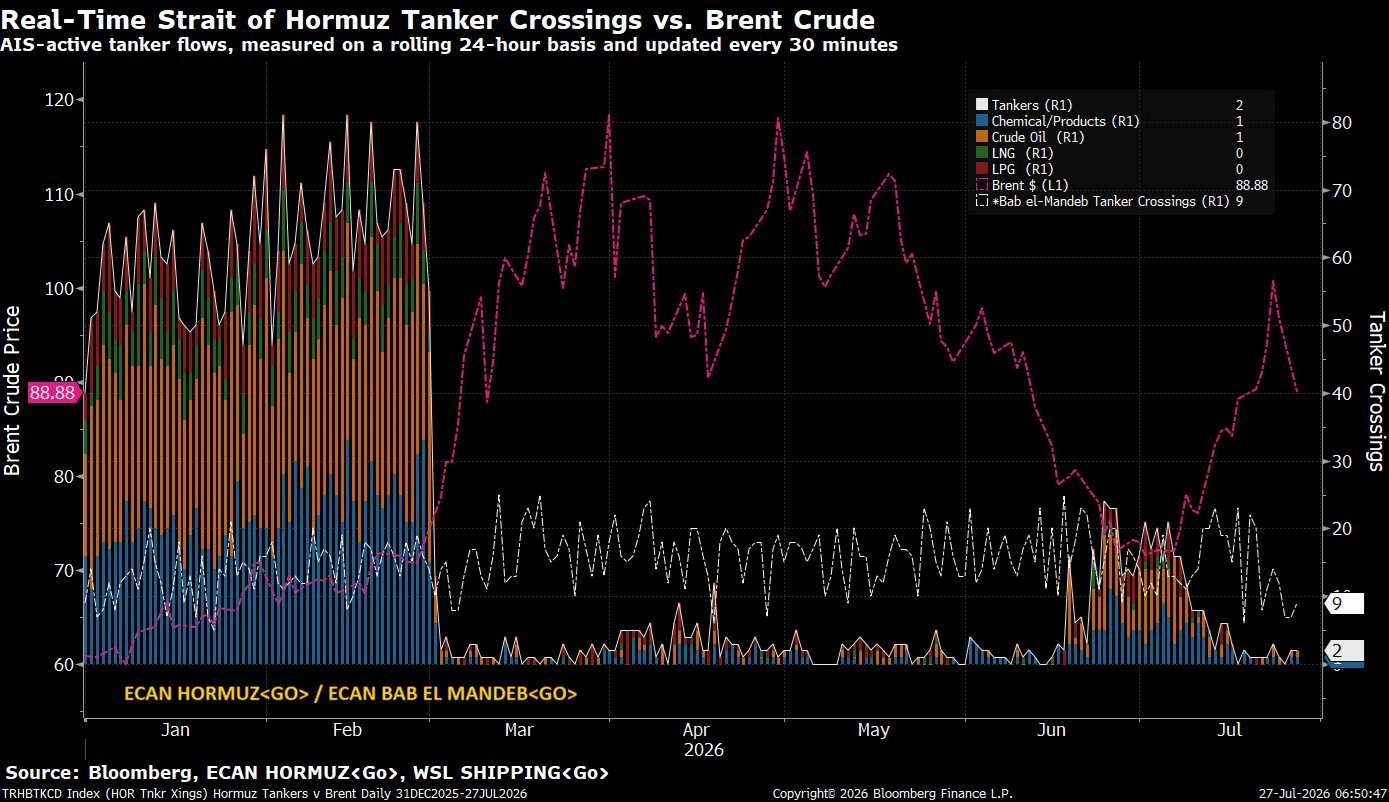
Daily crossings had fallen to roughly 70% below pre-pause levels as of July 23, according to Kpler. Tanker traffic remains severely constrained: just 2 crossings through Hormuz in the past 24 hours versus 9 at Bab el-Mandeb. Weekly tanker transits by non-Iranian-linked vessels have collapsed from 108 to just 25 over a single week, per Lloyd's List Intelligence.
Getting ships back through the middle of the strait, rather than picking sides of it, is the precondition both Tehran and Washington have tied to any broader resumption of talks.
Smoke Over Abqaiq
Even with the battlefield quiet, the Gulf's oil infrastructure took fresh fire. Saudi Arabia's Ministry of Defense said Monday its air defenses intercepted and destroyed several drones launched from Iraqi territory, aimed at facilities in the Eastern Province and Riyadh, which it blamed on Iran-backed militias. The kingdom said it "reserves the right to respond." Iraq's prime minister ordered an investigation; Jordan separately shot down two drones over its own territory the same day.
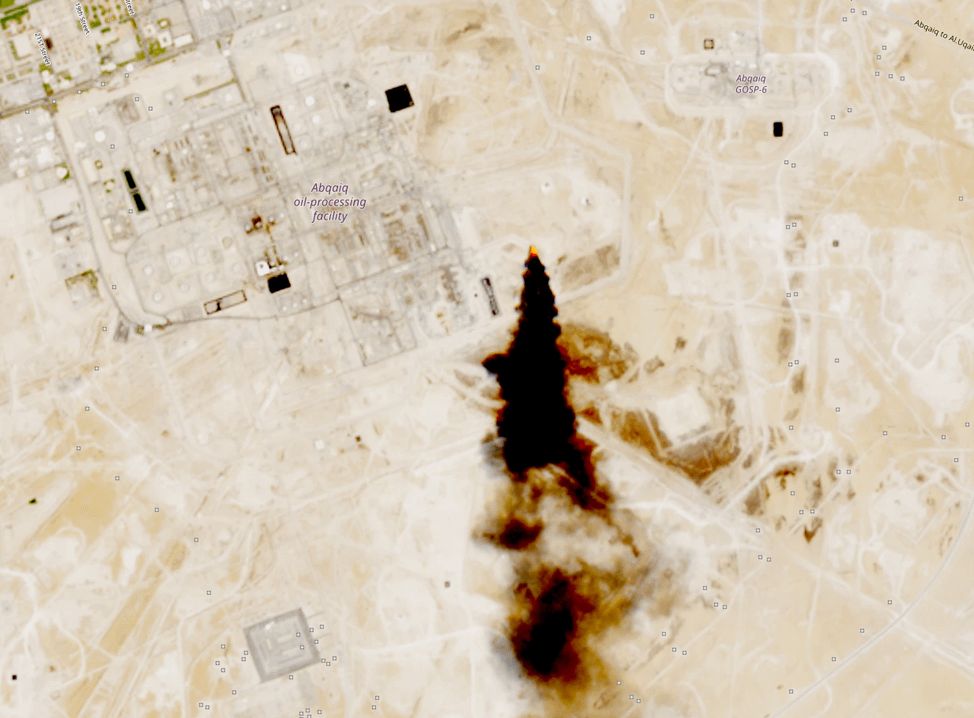
Satellite images added to the unease without resolving it. European Union Sentinel-2 imagery captured flaring and smoke at Saudi Aramco's Abqaiq processing plant — a facility capable of handling roughly 7 million barrels a day and one previously crippled by a 2019 Houthi strike — though traders combing the images found little to confirm whether output had actually been hit.
None of it moved oil prices Monday. That's arguably the more telling data point: after five months of tanker attacks, blockades and near-daily escalation headlines, the market is now pricing a Saudi drone interception and Abqaiq smoke as background noise, not a supply shock.
Whether that complacency survives the week probably depends less on satellite photos than on a phone line between Tehran and Muscat — and on whether Washington's stockpiles, or its patience, run out first.