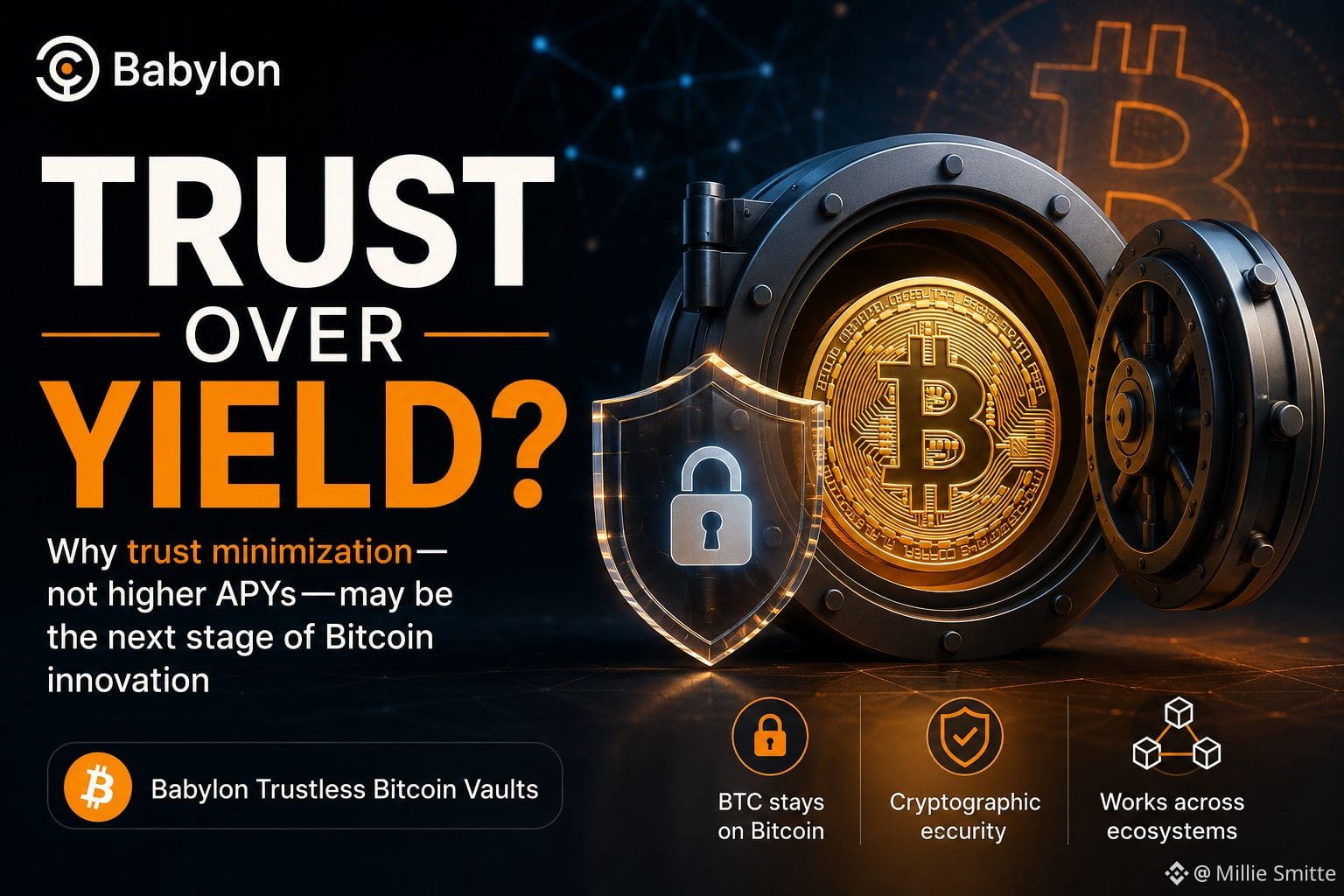
Die meisten Bitcoin-Gespräche laufen irgendwann darauf hinaus, Rendite zu erzielen. Wie viel kann ich verdienen? Welche Plattform zahlt mehr? Aber ich denke, die wichtigere Frage ist: Worauf muss ich vertrauen, um diese Rendite zu erzielen?
Anstatt Nutzer zu bitten, ihr BTC an einen Custodian abzugeben oder sich auf eine ummantelte Version von Bitcoin zu verlassen, geht es darum, natives BTC auf Bitcoin gesperrt zu halten, während kryptografische Beweise koordinieren, wie es anderswo genutzt werden kann. Das Ziel ist, die Abhängigkeit von vertrauenswürdigen Zwischenstellen zu verringern – nicht einfach nur ein weiteres, höher verzinsliches Produkt zu schaffen.
Eine einfache Analogie ist die Aufbewahrung wichtiger Dokumente. Die meisten Menschen würden ihre Originale lieber in einem persönlichen Safe aufbewahren und nur bei Bedarf geprüfte Kopien vorlegen, statt die Originale an jemand anderen zu geben. Trust-Minimierung folgt demselben Denkansatz: Reduziere die Anzahl der Parteien, die einen Fehler machen können – oder dein Vertrauen missbrauchen.
Ich persönlich glaube, dass Bitcoin-Innovation genau in diese Richtung gehen könnte. Höhere APYs können zwar Aufmerksamkeit auf sich ziehen, aber Annahmen über Vertrauen werden oft erst sichtbar, wenn die Märkte unter Stress stehen.
Wenn die Infrastruktur es ermöglicht, dass Bitcoin-Inhaber auf breitere Finanzanwendungen zugreifen können, ohne die Kontrolle über ihre Vermögenswerte aufzugeben, verändert das die Diskussion vom Jagen nach Renditen hin zu einem intelligenteren Umgang mit Risiken.
@BabylonLabs_io $BABY #baby
Glaubst du, dass der nächste große Bitcoin-Durchbruch eher darin bestehen wird, Vertrauen zu reduzieren als die Rendite zu erhöhen?
#baby $BABY
Anstatt Nutzer zu bitten, ihr BTC an einen Custodian abzugeben oder sich auf eine ummantelte Version von Bitcoin zu verlassen, geht es darum, natives BTC auf Bitcoin gesperrt zu halten, während kryptografische Beweise koordinieren, wie es anderswo genutzt werden kann. Das Ziel ist, die Abhängigkeit von vertrauenswürdigen Zwischenstellen zu verringern – nicht einfach nur ein weiteres, höher verzinsliches Produkt zu schaffen.
Eine einfache Analogie ist die Aufbewahrung wichtiger Dokumente. Die meisten Menschen würden ihre Originale lieber in einem persönlichen Safe aufbewahren und nur bei Bedarf geprüfte Kopien vorlegen, statt die Originale an jemand anderen zu geben. Trust-Minimierung folgt demselben Denkansatz: Reduziere die Anzahl der Parteien, die einen Fehler machen können – oder dein Vertrauen missbrauchen.
Ich persönlich glaube, dass Bitcoin-Innovation genau in diese Richtung gehen könnte. Höhere APYs können zwar Aufmerksamkeit auf sich ziehen, aber Annahmen über Vertrauen werden oft erst sichtbar, wenn die Märkte unter Stress stehen.
Wenn die Infrastruktur es ermöglicht, dass Bitcoin-Inhaber auf breitere Finanzanwendungen zugreifen können, ohne die Kontrolle über ihre Vermögenswerte aufzugeben, verändert das die Diskussion vom Jagen nach Renditen hin zu einem intelligenteren Umgang mit Risiken.
@BabylonLabs_io $BABY #baby
Glaubst du, dass der nächste große Bitcoin-Durchbruch eher darin bestehen wird, Vertrauen zu reduzieren als die Rendite zu erhöhen?
#baby $BABY