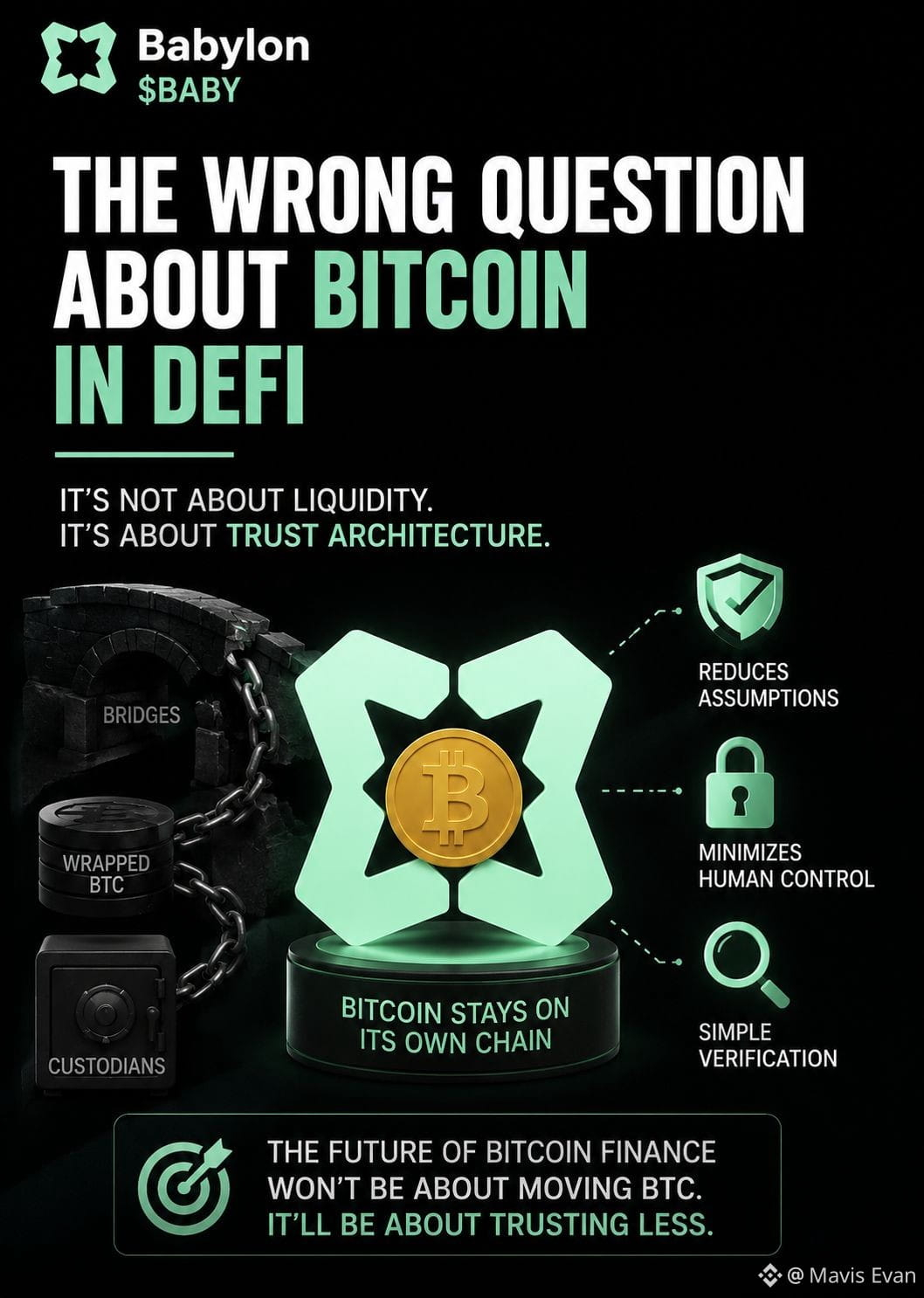

Das ist die Sache mit @BabylonLabs_io ($BABY ): Leute stellen bei Bitcoin in DeFi immer wieder die falsche Frage.
Meistens beginnt und endet das Gespräch mit Liquidität. Wie viel BTC können wir freischalten? Was ist die TVL? Können wir eine Milliarde erreichen? Klar, diese Zahlen sind nicht bedeutungslos. Sie bezahlen die Rechnungen. Aber sie verpassen total das große Ganze.
Denn Liquidität ist nur dann sinnvoll, wenn man nicht das aufreißen muss, was Bitcoin überhaupt wertvoll macht. Und genau da denke ich, dass die meisten Protokolle einfach… rückwärts laufen.
Seien wir ehrlich: Die spannendere Veränderung dreht sich nicht darum, Bitcoin über irgendeine Bridge zu bewegen, es zu tokenisieren, einzupacken oder an einen Custodian zu übergeben und dann die Daumen zu drücken. Einige neuere Designs drehen das Skript komplett um: Kann Bitcoin dort bleiben, wo es ist—auf seiner eigenen Chain, in seinem eigenen Sicherheitsmodell—und trotzdem im größeren finanziellen Sandbox-Umfeld mitspielen?
Das ändert alles.
Es geht nicht mehr um den Transfer von Assets. Es geht um Trust-Architektur. Und ehrlich gesagt? Das ist ein viel schwierigeres Problem. Aber es ist auch das, das wirklich zählt.
Wenn diese Richtung funktioniert—und ich glaube, dass sie funktioniert—dann wird der Wert nicht nur zu denen fließen, die die tiefsten Pools haben. Er wird zu Infrastruktur fließen, die Annahmen reduziert, menschliche Kontrolle minimiert und Verifikation so simpel wie möglich macht. In dieser Welt ist Sicherheit kein Feature, das man vermarktet. Sie ist das Produkt. Punkt.
Und jetzt mal nicht falsch verstehen: Elegante Architektur ist auf dem Whiteboard großartig. Aber Effizienz, Developer Experience und echte Zuverlässigkeit im Alltag müssen trotzdem im Chaos echter Live-Märkte bestehen. Ich habe wunderschöne Designs schon unter Druck zusammenbrechen sehen. Also ja—hier wird es knifflig.
Aber das will ich sagen: Die nächste Phase der Bitcoin-Finanzierung wird nicht davon bestimmt, wer die meisten BTC bewegt. Sondern davon, wer Bitcoins Nutzwert erweitern kann, während er Usern so wenig Vertrauen wie möglich abverlangt. Das ist die Richtung, die es zu beobachten gilt—und Babylon ist eines der wenigen Projekte, das tatsächlich um genau diese Idee herum gebaut wurde.
Darüber sprechen die Leute nicht genug. Sie sind zu beschäftigt damit, der TVL hinterherzujagen. Aber glaub mir: Wenn der Staub sich gelegt hat, werden die Gewinner diejenigen sein.
#baby
Meistens beginnt und endet das Gespräch mit Liquidität. Wie viel BTC können wir freischalten? Was ist die TVL? Können wir eine Milliarde erreichen? Klar, diese Zahlen sind nicht bedeutungslos. Sie bezahlen die Rechnungen. Aber sie verpassen total das große Ganze.
Denn Liquidität ist nur dann sinnvoll, wenn man nicht das aufreißen muss, was Bitcoin überhaupt wertvoll macht. Und genau da denke ich, dass die meisten Protokolle einfach… rückwärts laufen.
Seien wir ehrlich: Die spannendere Veränderung dreht sich nicht darum, Bitcoin über irgendeine Bridge zu bewegen, es zu tokenisieren, einzupacken oder an einen Custodian zu übergeben und dann die Daumen zu drücken. Einige neuere Designs drehen das Skript komplett um: Kann Bitcoin dort bleiben, wo es ist—auf seiner eigenen Chain, in seinem eigenen Sicherheitsmodell—und trotzdem im größeren finanziellen Sandbox-Umfeld mitspielen?
Das ändert alles.
Es geht nicht mehr um den Transfer von Assets. Es geht um Trust-Architektur. Und ehrlich gesagt? Das ist ein viel schwierigeres Problem. Aber es ist auch das, das wirklich zählt.
Wenn diese Richtung funktioniert—und ich glaube, dass sie funktioniert—dann wird der Wert nicht nur zu denen fließen, die die tiefsten Pools haben. Er wird zu Infrastruktur fließen, die Annahmen reduziert, menschliche Kontrolle minimiert und Verifikation so simpel wie möglich macht. In dieser Welt ist Sicherheit kein Feature, das man vermarktet. Sie ist das Produkt. Punkt.
Und jetzt mal nicht falsch verstehen: Elegante Architektur ist auf dem Whiteboard großartig. Aber Effizienz, Developer Experience und echte Zuverlässigkeit im Alltag müssen trotzdem im Chaos echter Live-Märkte bestehen. Ich habe wunderschöne Designs schon unter Druck zusammenbrechen sehen. Also ja—hier wird es knifflig.
Aber das will ich sagen: Die nächste Phase der Bitcoin-Finanzierung wird nicht davon bestimmt, wer die meisten BTC bewegt. Sondern davon, wer Bitcoins Nutzwert erweitern kann, während er Usern so wenig Vertrauen wie möglich abverlangt. Das ist die Richtung, die es zu beobachten gilt—und Babylon ist eines der wenigen Projekte, das tatsächlich um genau diese Idee herum gebaut wurde.
Darüber sprechen die Leute nicht genug. Sie sind zu beschäftigt damit, der TVL hinterherzujagen. Aber glaub mir: Wenn der Staub sich gelegt hat, werden die Gewinner diejenigen sein.
#baby