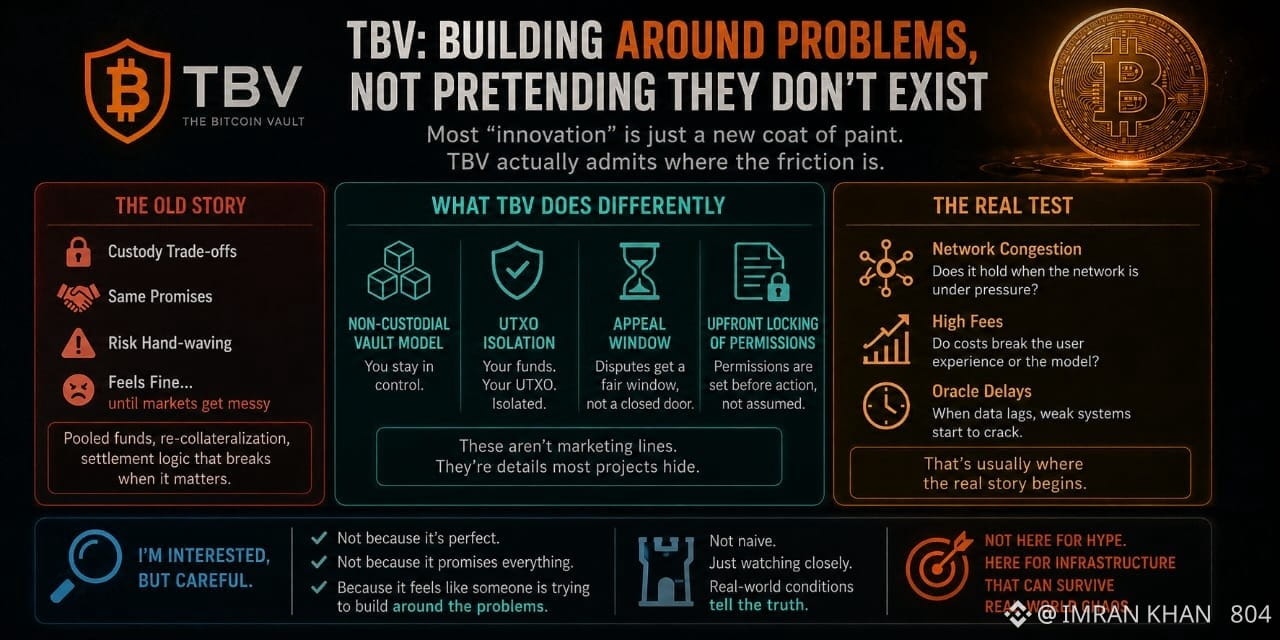
Ich habe genug Krypto-Zyklen gesehen, um zu wissen, wann aus etwas einfach nur eine neue Lackschicht gemacht wird. Die meiste „Innovation“ läuft am Ende auf denselben alten Interessenkonflikt beim Verwahren hinaus, dieselben Versprechen, dasselbe Ausweichen bei Risiken. Deshalb ist TBV bei mir ins Blickfeld geraten. Nicht, weil es perfekt klingt – das tut es nicht – sondern weil es tatsächlich zugibt, wo die Reibung liegt.
Ich merke immer wieder, wie viel von BTCFi noch immer von Strukturen abhängt, über die man lieber nicht nachdenken möchte: gebündelte Mittel, erneute Sicherheitenstellung (Re-Collateralization), sowie Abwicklungslogik, die sich gut anfühlt, bis die Märkte unübersichtlich werden. Das nicht-verwahrende Tresormodell von TBV wirkt anders – auch wenn ich noch nicht ganz bereit bin, ihm zu vertrauen. Die UTXO-Isolation, das Zeitfenster für die Einbindung (Appeal Window) und die anfängliche Sperrung von Berechtigungen – das sind nicht die Details, die Projekte normalerweise hervorheben, wenn sie nur Aufmerksamkeit jagen.
Allerdings habe ich das schon einmal gesehen. Der echte Test ist nie das Whitepaper. Entscheidend ist, was passiert, wenn das Netzwerk überlastet, die Gebühren steigen oder Verzögerungen bei Oracles beginnen, die Schwachstellen offenzulegen. Dort beginnt meistens die eigentliche Geschichte.
Also interessiere ich mich dafür, aber mit Vorsicht. Nicht, weil ich glaube, dass das alles löst, sondern weil es zumindest so wirkt, als würde jemand versuchen, rund um die Probleme etwas aufzubauen, statt so zu tun, als gäbe es sie nicht.
@BabylonLabs_io #baby $BABY
Ich merke immer wieder, wie viel von BTCFi noch immer von Strukturen abhängt, über die man lieber nicht nachdenken möchte: gebündelte Mittel, erneute Sicherheitenstellung (Re-Collateralization), sowie Abwicklungslogik, die sich gut anfühlt, bis die Märkte unübersichtlich werden. Das nicht-verwahrende Tresormodell von TBV wirkt anders – auch wenn ich noch nicht ganz bereit bin, ihm zu vertrauen. Die UTXO-Isolation, das Zeitfenster für die Einbindung (Appeal Window) und die anfängliche Sperrung von Berechtigungen – das sind nicht die Details, die Projekte normalerweise hervorheben, wenn sie nur Aufmerksamkeit jagen.
Allerdings habe ich das schon einmal gesehen. Der echte Test ist nie das Whitepaper. Entscheidend ist, was passiert, wenn das Netzwerk überlastet, die Gebühren steigen oder Verzögerungen bei Oracles beginnen, die Schwachstellen offenzulegen. Dort beginnt meistens die eigentliche Geschichte.
Also interessiere ich mich dafür, aber mit Vorsicht. Nicht, weil ich glaube, dass das alles löst, sondern weil es zumindest so wirkt, als würde jemand versuchen, rund um die Probleme etwas aufzubauen, statt so zu tun, als gäbe es sie nicht.
@BabylonLabs_io #baby $BABY