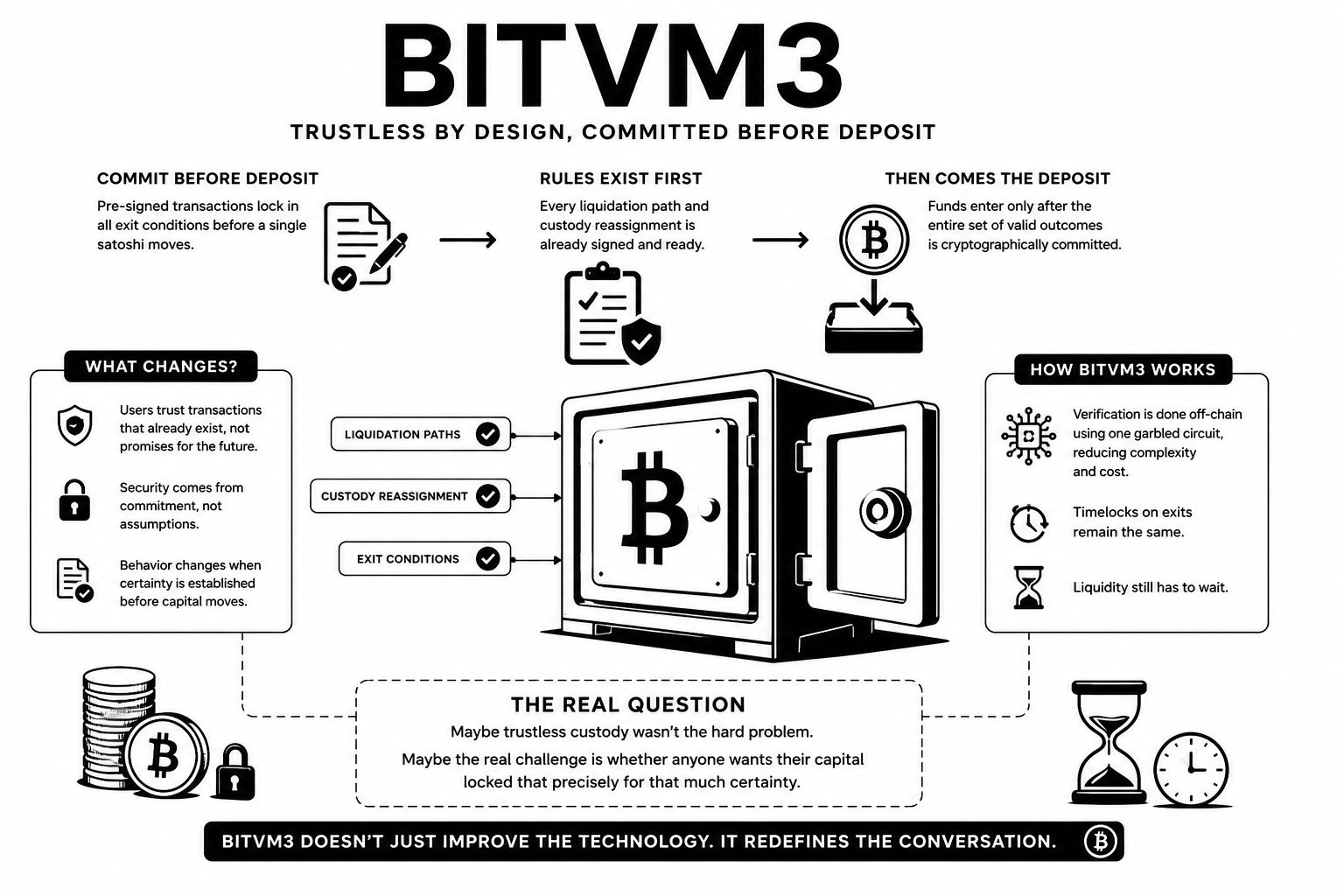
Zuerst dachte ich, der größte Vorteil von BitVM3 liege darin, die Verifizierungskosten zu senken. Je tiefer ich mich damit befasste, desto mehr hatte es den Eindruck, als liege die eigentliche Innovation darin, wie Zusagen (Commitments) erstellt werden. Statt darauf zu vertrauen, dass später jemand korrekt handelt, werden die entscheidenden Transaktionen vorbereitet und signiert, noch bevor überhaupt Gelder in das System fließen. Die Regeln existieren bereits, bevor überhaupt ein Wert übertragen wird. Das verändert das Vertrauensmodell. Sicherheit entsteht weniger dadurch, dass man ehrliches Verhalten in der Zukunft erwartet, und mehr dadurch, dass bekannt ist, dass die zulässigen Ausführungspfade bereits definiert wurden. Die Off-Chain-Verifizierung über eine einzelne „garbled circuit“ reduziert zwar die Komplexität, aber der Auszahlungsablauf hängt weiterhin von den Timelocks von Bitcoin ab. Schnellere Verifizierung beseitigt nicht die Wartezeit. Das wirft eine interessante Frage auf: Vielleicht besteht die größte Herausforderung für vertrauenslose Bitcoin-Infrastruktur nicht mehr darin, Sicherheit nachzuweisen. Vielleicht liegt sie eher darin, die Balance zu finden zwischen absoluter Gewissheit und der Flexibilität, die Nutzer von ihrem Kapital erwarten. BitVM3 bringt diese Diskussion offenbar genauso voran wie die Technologie selbst.
@BabylonLabs_io $BABY #baby $BNB
@BabylonLabs_io $BABY #baby $BNB