

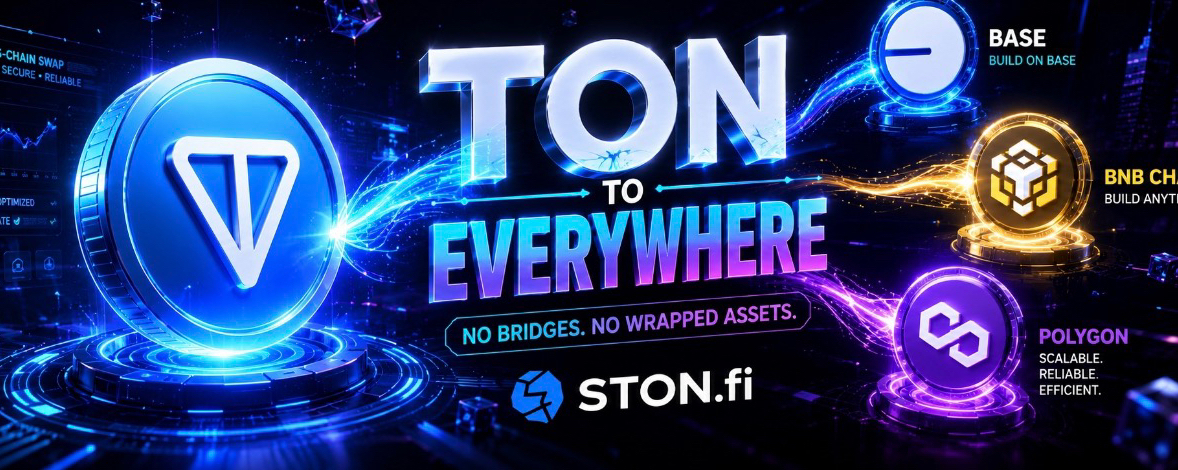

Während sich Blockchain-Ökosysteme weiter ausdehnen, sind Nutzer nicht länger auf ein einzelnes Netzwerk beschränkt.
Überall gibt es Chancen. Die Liquidität kann auf TON liegen, Ertragsmöglichkeiten können auf Base verfügbar sein, und ein bevorzugtes Trading-Paar könnte auf BNB Chain oder Polygon warten. Die Herausforderung besteht darin, den Wert zwischen diesen Ökosystemen effizient zu bewegen.
Auf den ersten Blick klingen Cross-Chain-Übertragungen einfach. Assets von einem Netzwerk senden und sie in einem anderen empfangen.
Die Realität ist komplizierter.
Verschiedene Blockchains arbeiten mit unterschiedlichen Architekturen, Sicherheitsmodellen und Smart-Contract-Umgebungen. TON ist zum Beispiel grundlegend anders als EVM-basierte Chains wie Base, BNB Chain und Polygon. Während EVM-Netzwerke viele Gemeinsamkeiten haben, folgt TON eigenen Designprinzipien, wodurch Cross-Chain-Konnektivität zu einem wichtigen Bestandteil des Wachstums des Ökosystems wird.
Traditionell waren Bridges die gängigste Lösung, um Assets zwischen Chains zu bewegen. In einem typischen Bridge-Modell werden Assets in einem Netzwerk gesperrt, während auf einem anderen eine verwrappte Repräsentation erscheint. Dieser Ansatz hat geholfen, Ökosysteme zu verbinden, bringt aber auch zusätzliche Ebenen mit sich – etwa verwrappte Assets, Relayer und Überlegungen zur Liquidität.
Mit wachsender Cross-Chain-Aktivität wünschen sich Nutzer zunehmend ein einfacheres Erlebnis.
Anstatt eine verwrappte Version eines Assets zu erhalten und danach zusätzliche Swaps durchzuführen, bevorzugen viele, das Ziel-Asset direkt zu erhalten. Das ist ein Grund, warum neuere Ausführungsmodelle in der gesamten Branche an Aufmerksamkeit gewinnen.
Resolver-basierte Abwicklungssysteme sind genau auf diese Idee ausgelegt. Anstatt sich auf verwrapped Assets zu verlassen, konkurrieren Liquiditätsanbieter darum, Anforderungen zu erfüllen, während die Abwicklung über vordefinierte Smart-Contract-Bedingungen erfolgt. Das Ziel ist ganz einfach: Wert über Netzwerke hinweg übertragen und dabei unnötige Komplexität für den Endnutzer reduzieren.
Für TON ist diese Entwicklung besonders wichtig.
Mit Millionen von Nutzern, die über Telegram und die breitere TON-Infrastruktur in das Ökosystem einsteigen, wird der nahtlose Zugriff auf externe Liquidität und Anwendungen zunehmend wertvoll. Cross-Chain-Konnektivität ist nicht mehr nur ein Komfort-Feature. Sie wird zu einer grundlegenden Voraussetzung für eine wirklich miteinander verbundene Blockchain-Ökonomie.
Egal, ob das Ziel Base, BNB Chain oder Polygon ist: Die Zukunft der Cross-Chain-Aktivität wird wahrscheinlich von einem entscheidenden Faktor geprägt werden – der Ausführungsqualität.
Nutzer interessieren sich für Geschwindigkeit, Transparenz, Sicherheit und Einfachheit. Die Lösungen, die all diese Punkte liefern, werden eine große Rolle dabei spielen, wie Wert in der nächsten Generation von Blockchain-Netzwerken fließt.
Finale Gedanken
Cross-Chain-Übertragungen sind keine Nischenaktivität mehr, die fortgeschrittenen Nutzern vorbehalten ist.
Da Blockchain-Ökosysteme immer stärker miteinander verbunden werden, wird die Qualität der Infrastruktur, die diese Transfers ermöglicht, zunehmend wichtiger. Für TON-Nutzer, die über nur ein einzelnes Netzwerk hinausblicken, könnte das Verständnis dafür, wie Wert zwischen Chains bewegt wird, schon bald genauso wichtig sein wie die Entscheidung, welche Assets man überhaupt halten möchte.