Tag 2 – Testen
Heute habe ich weniger Zeit damit verbracht, die Benutzeroberfläche zu erkunden, und mehr Zeit damit zu verstehen, wie das Babylon-Ökosystem im Hintergrund funktioniert. Je tiefer ich geschaut habe, desto klarer wurde mir die Architektur.
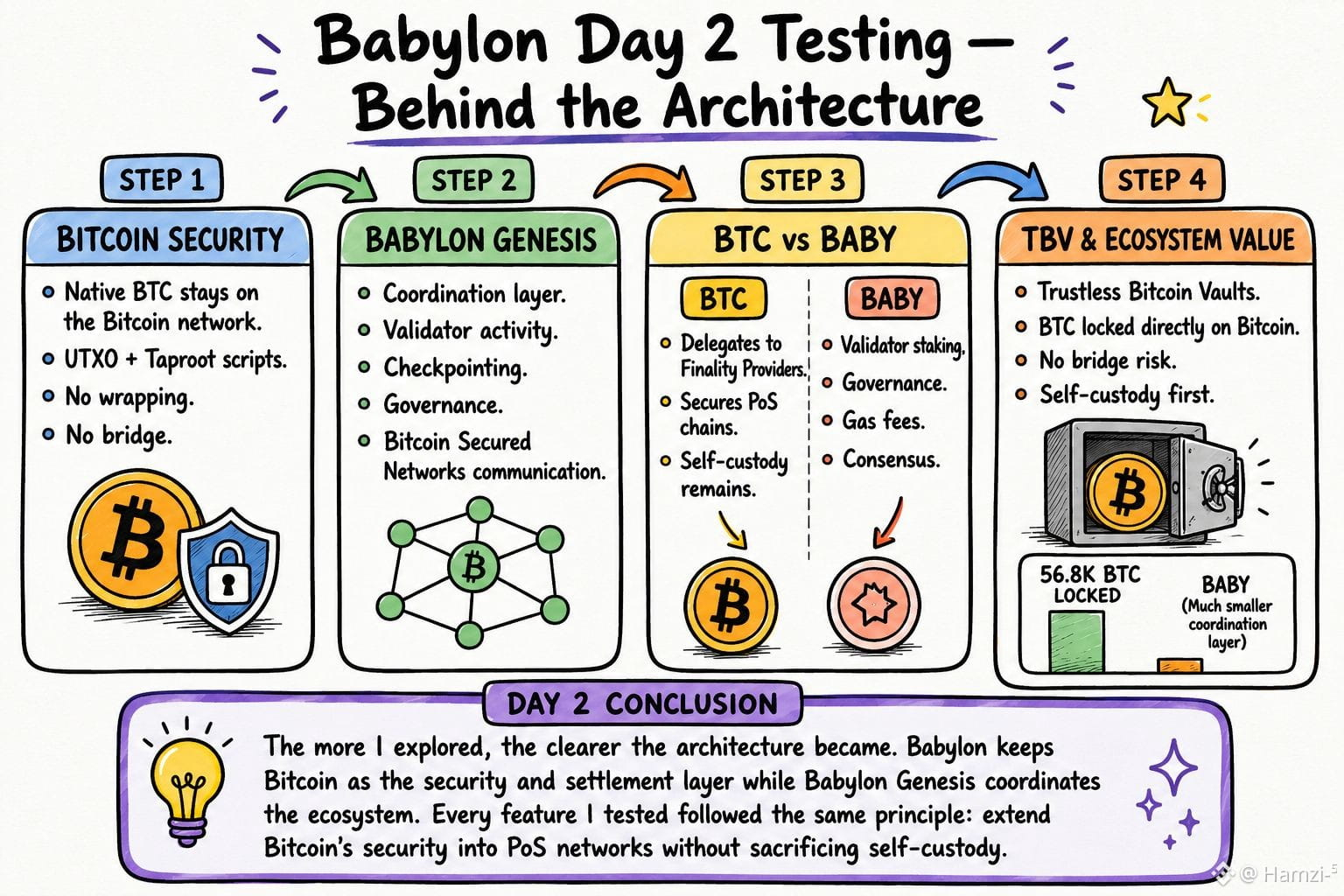
Eine meiner wichtigsten Erkenntnisse war, dass Bitcoin das Bitcoin-Netzwerk nie verlässt. Statt BTC einzuhüllen oder auf Brücken zu setzen, nutzt Babylon Bitcoins UTXO- und Taproot-Skriptmodell und hält die Selbstverwahrung als Kern des Designs.
Ich habe außerdem Babylon Genesis erkundet, das als Koordinationsschicht dient und Bitcoin nicht ersetzt. Es verwaltet die Aktivität von Validatoren, das Checkpointing, die Governance und die Kommunikation über Bitcoin Secured Networks hinweg, während Bitcoin weiterhin die Abrechnungsschicht ist.
Ein weiterer interessanter Teil war das Erlernen des Unterschieds zwischen BTC-Staking und BABY-Staking. BTC-Inhaber delegieren an Finality Provider, um die PoS-Sicherheit zu stärken und dabei die Eigentümerschaft an ihrem Bitcoin zu behalten. BABY treibt den Validator-Konsens, die Governance und Transaktionsgebühren an.
Ich habe mir auch Trustless Bitcoin Vaults (TBV) angesehen, bei denen BTC direkt auf Bitcoin gesperrt bleibt, statt eingewickelt zu werden. Dadurch werden Risiken im Zusammenhang mit Brücken reduziert und das Sicherheitsmodell von Bitcoin beibehalten.
Eine Sache, die mir besonders aufgefallen ist, war die Lücke zwischen der enormen Menge an Bitcoin, die das Ökosystem absichert, und der aktuellen Bewertung von BABY. Das hat mich darüber nachdenken lassen, wie sich die Koordinationsschicht weiterentwickeln könnte, während die Akzeptanz wächst.
Insgesamt fühlte sich Tag 2 deutlich lehrreicher an als Tag 1. Ich habe mit einem viel besseren Verständnis dafür aufgehört, wie Babylon die Sicherheit von Bitcoin in PoS-Netzwerke erweitert, ohne die Selbstverwahrung aufzugeben.
@BabylonLabs_io
#Babylon #BabylonGenesis #bitcoin #BTC #BABY #Testnet #crypto
#baby $BABY $BABY $BTC
Heute habe ich weniger Zeit damit verbracht, die Benutzeroberfläche zu erkunden, und mehr Zeit damit zu verstehen, wie das Babylon-Ökosystem im Hintergrund funktioniert. Je tiefer ich geschaut habe, desto klarer wurde mir die Architektur.
Eine meiner wichtigsten Erkenntnisse war, dass Bitcoin das Bitcoin-Netzwerk nie verlässt. Statt BTC einzuhüllen oder auf Brücken zu setzen, nutzt Babylon Bitcoins UTXO- und Taproot-Skriptmodell und hält die Selbstverwahrung als Kern des Designs.
Ich habe außerdem Babylon Genesis erkundet, das als Koordinationsschicht dient und Bitcoin nicht ersetzt. Es verwaltet die Aktivität von Validatoren, das Checkpointing, die Governance und die Kommunikation über Bitcoin Secured Networks hinweg, während Bitcoin weiterhin die Abrechnungsschicht ist.
Ein weiterer interessanter Teil war das Erlernen des Unterschieds zwischen BTC-Staking und BABY-Staking. BTC-Inhaber delegieren an Finality Provider, um die PoS-Sicherheit zu stärken und dabei die Eigentümerschaft an ihrem Bitcoin zu behalten. BABY treibt den Validator-Konsens, die Governance und Transaktionsgebühren an.
Ich habe mir auch Trustless Bitcoin Vaults (TBV) angesehen, bei denen BTC direkt auf Bitcoin gesperrt bleibt, statt eingewickelt zu werden. Dadurch werden Risiken im Zusammenhang mit Brücken reduziert und das Sicherheitsmodell von Bitcoin beibehalten.
Eine Sache, die mir besonders aufgefallen ist, war die Lücke zwischen der enormen Menge an Bitcoin, die das Ökosystem absichert, und der aktuellen Bewertung von BABY. Das hat mich darüber nachdenken lassen, wie sich die Koordinationsschicht weiterentwickeln könnte, während die Akzeptanz wächst.
Insgesamt fühlte sich Tag 2 deutlich lehrreicher an als Tag 1. Ich habe mit einem viel besseren Verständnis dafür aufgehört, wie Babylon die Sicherheit von Bitcoin in PoS-Netzwerke erweitert, ohne die Selbstverwahrung aufzugeben.
@BabylonLabs_io
#Babylon #BabylonGenesis #bitcoin #BTC #BABY #Testnet #crypto
#baby $BABY $BABY $BTC