the first thing that comes to mind is its price. One day it's making headlines for reaching new highs, and another day it's being criticized for a sharp correction. But focusing only on the price misses the bigger picture.
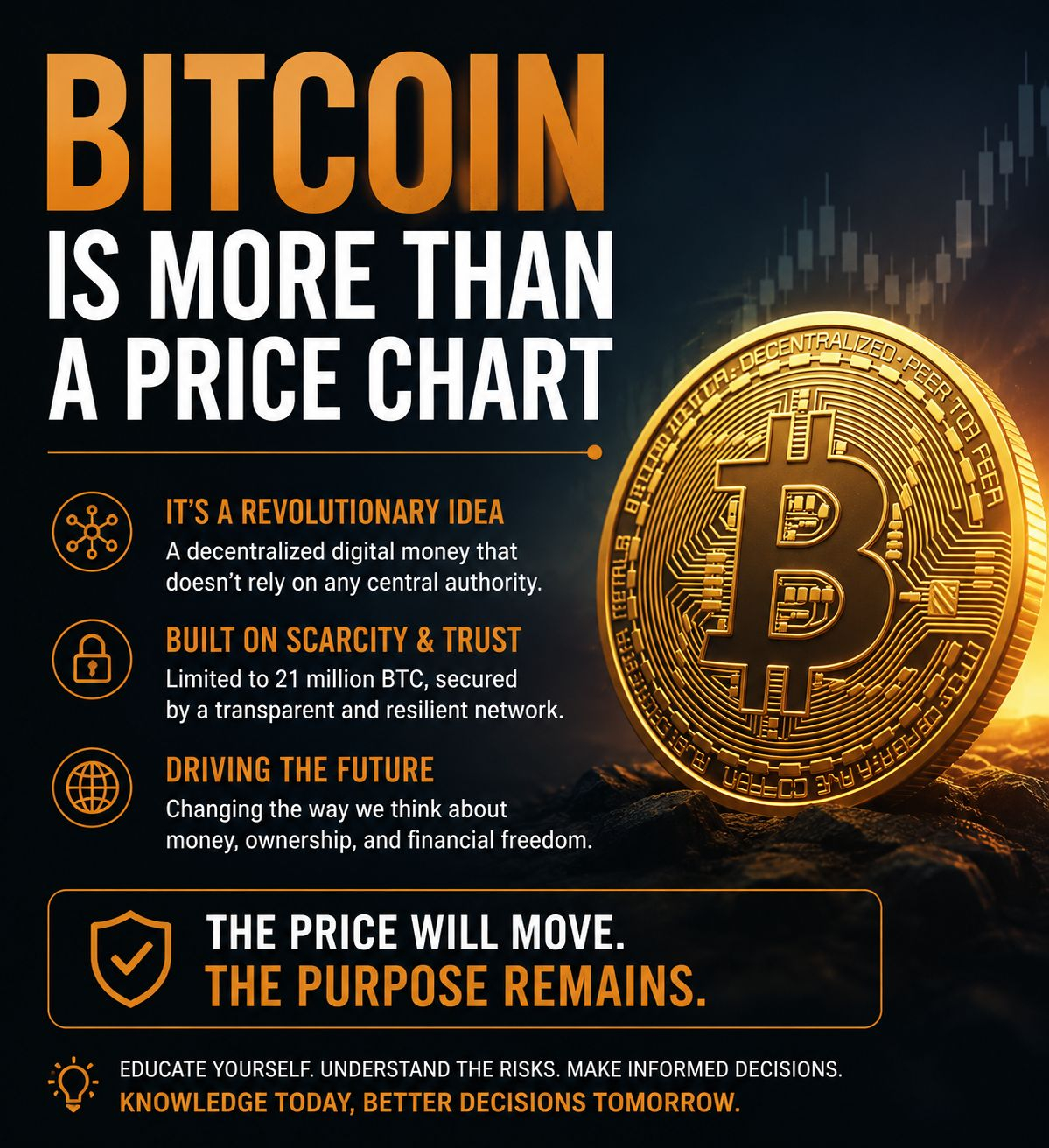
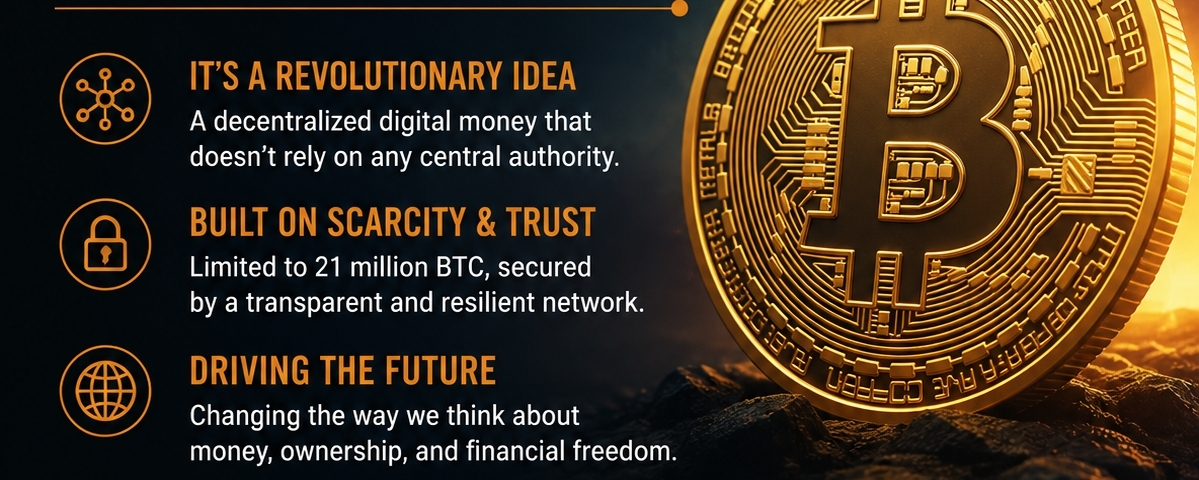
Bitcoin was introduced in 2009 with a simple yet revolutionary idea: create a digital form of money that doesn't rely on a central authority. Instead of being controlled by a government or a bank, Bitcoin operates on a decentralized network where transactions are verified by participants around the world using blockchain technology.
One of Bitcoin's defining features is its limited supply. There will never be more than 21 million BTC, making scarcity a core part of its design. Unlike traditional currencies, which can be issued in larger quantities by central banks, Bitcoin follows transparent rules that anyone can verify.
Over the years, Bitcoin has evolved from an experiment discussed by a small group of technology enthusiasts into an asset recognized by investors, companies, and financial institutions worldwide. Today, it is used in different ways: some view it as a long-term store of value, others use it for international transfers, and some simply see it as a way to gain exposure to a new financial technology.
Its journey hasn't been smooth. Bitcoin has experienced multiple boom-and-bust cycles, regulatory uncertainty, security incidents involving third-party platforms, and changing market sentiment. Despite these challenges, the network itself has continued to operate without interruption, highlighting the resilience of its underlying design.
The growth of Bitcoin has also encouraged broader innovation across the blockchain industry. New custody solutions, payment infrastructure, financial products, and educational resources have made it easier for people to learn about and access digital assets. At the same time, governments and regulators around the world continue to develop frameworks aimed at balancing innovation with investor protection.
However, enthusiasm should always be matched with caution. Bitcoin remains a highly volatile asset, and no investment is free from risk. Market prices can fluctuate significantly over short periods, and past performance does not guarantee future results. Anyone considering investing should understand how Bitcoin works, assess their own financial situation, and avoid making decisions based solely on social media trends or fear of missing out.
Bitcoin's long-term significance may not ultimately be measured by its price alone. Its greatest impact could be the way it has challenged traditional ideas about money, ownership, and financial systems while inspiring new approaches to digital finance.
Whether Bitcoin becomes a permanent global financial asset or continues to evolve in unexpected ways, one thing is clear: understanding the technology and the risks is far more valuable than simply following the latest market headlines.
In a rapidly changing financial landscape, informed decisions will always matter more than speculation.#BTC走势分析