Ich hab letzte Nacht aufgehört zu scrollen, als ich diese Schlagzeile sah: ein Vorschlag, 1,1 Millionen BTC von Satoshis einzufrieren –
in Bitcoin? Das Netzwerk wurde doch buchstäblich auf der Idee aufgebaut, dass niemand an deine Coins herankommen kann?
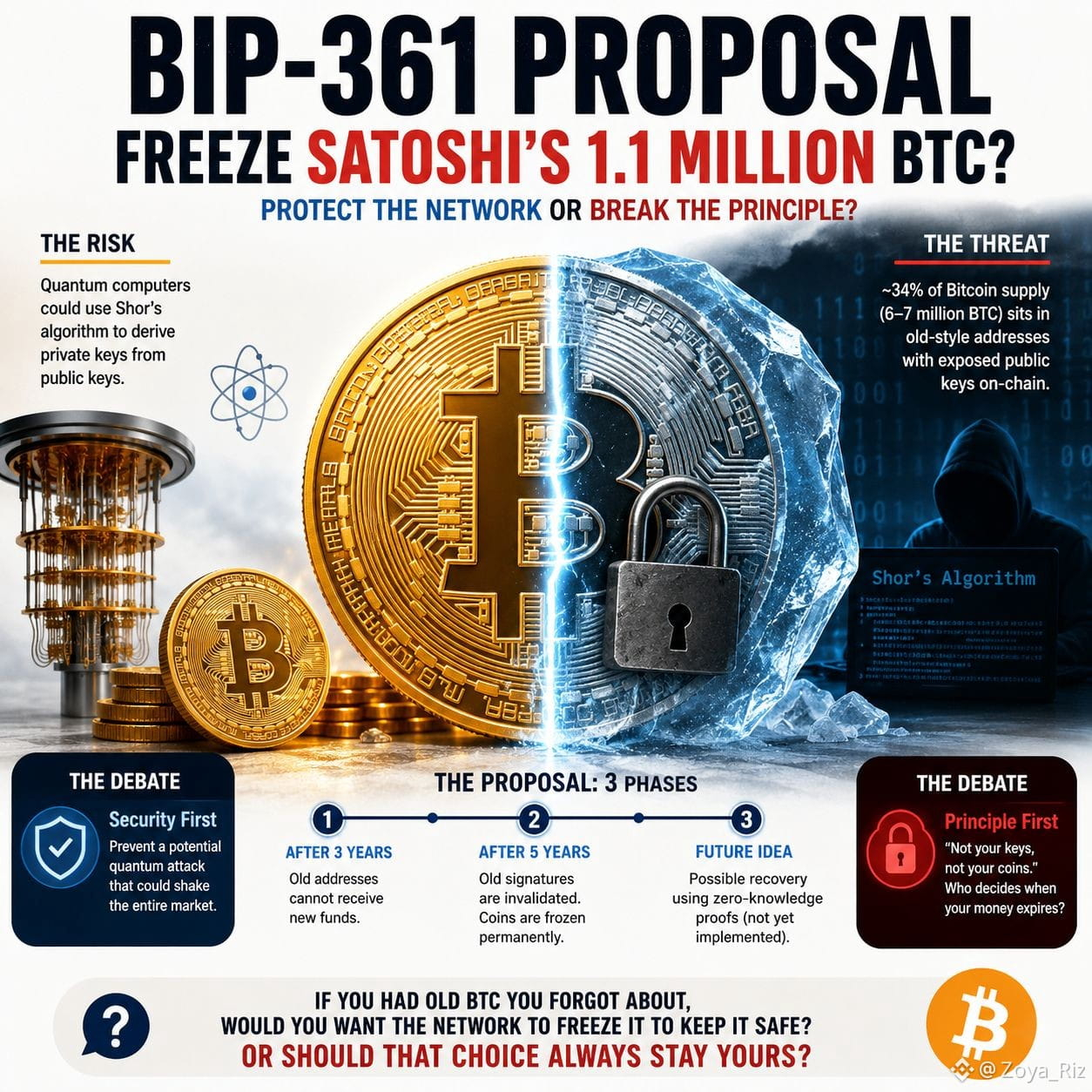
Also hab ich nachgeforscht. Ein Entwickler namens Jameson Lopp gemeinsam mit fünf anderen hat einen Vorschlag vorgelegt, der BIP 361 heißt. Und die Begründung ist nicht dramatisch – sie ist mathematisch. Quantencomputer, falls sie jemals stark genug werden, könnten etwas namens Shors Algorithmus verwenden, um rückwärts von einem öffentlichen Schlüssel zu arbeiten und den privaten Schlüssel abzuleiten. Hier ist aber das eigentliche Problem: Etwa 34 % des aktuellen Bitcoin-Bestands liegen in Adressen im alten Stil, bei denen der öffentliche Schlüssel bereits on-chain offengelegt ist. Das sitzt im Grunde schon da – bereit, gestohlen zu werden, sobald die Quantenwelt aufholt.
Der Vorschlag sieht drei Phasen vor. Nach drei Jahren hören diese alten Adressen auf, neue Gelder zu empfangen. Nach fünf Jahren werden alte Signaturen vollständig ungültig gemacht – das bedeutet, dass alle Coins, die dort noch herumliegen, für immer eingefroren sind. Eine dritte Phase spricht von einem möglichen Wiederherstellungsweg mithilfe von
Zero-Knowledge- Beweisen, aber das ist bislang nur eine Idee auf Papier – keine funktionierende Lösung.
Und hier beginnt die eigentliche Debatte. Auf der einen Seite gibt es einen echten Sicherheitsfall. Falls ein Quantenangriff jemals Realität wird – wir reden von 6 bis 7 Millionen BTC, die abgezapft werden könnten. Und das würde nicht nur die Besitzer der Adressen treffen – es würde den gesamten Markt erschüttern.
Auf der anderen Seite steht das Prinzip, auf dem Bitcoin aufgebaut wurde: nicht deine Keys, nicht deine Coins. Wenn das Netzwerk entscheiden kann, wann dein Geld still und heimlich abläuft – wie passt das dann zur Zensurresistenz?
Sogar Lopp hat gesagt, das sei derzeit nicht bereit für eine Übernahme, sondern nur ein mögliches Modell auf dem Tisch. Aber die Frage verschwindet nicht.
Also sag mir: Wenn du altes BTC in einer Wallet hättest, an die du dich nicht mehr erinnert hast, oder eine Seed-Phrase verloren hättest – würdest du wollen, dass das Netzwerk es einfriert, um es sicher zu halten? Oder sollte diese Entscheidung immer bei dir bleiben, egal wie es ausgeht?
#BIP361 #BitcoinDominanceRisesTo59%
in Bitcoin? Das Netzwerk wurde doch buchstäblich auf der Idee aufgebaut, dass niemand an deine Coins herankommen kann?
Also hab ich nachgeforscht. Ein Entwickler namens Jameson Lopp gemeinsam mit fünf anderen hat einen Vorschlag vorgelegt, der BIP 361 heißt. Und die Begründung ist nicht dramatisch – sie ist mathematisch. Quantencomputer, falls sie jemals stark genug werden, könnten etwas namens Shors Algorithmus verwenden, um rückwärts von einem öffentlichen Schlüssel zu arbeiten und den privaten Schlüssel abzuleiten. Hier ist aber das eigentliche Problem: Etwa 34 % des aktuellen Bitcoin-Bestands liegen in Adressen im alten Stil, bei denen der öffentliche Schlüssel bereits on-chain offengelegt ist. Das sitzt im Grunde schon da – bereit, gestohlen zu werden, sobald die Quantenwelt aufholt.
Der Vorschlag sieht drei Phasen vor. Nach drei Jahren hören diese alten Adressen auf, neue Gelder zu empfangen. Nach fünf Jahren werden alte Signaturen vollständig ungültig gemacht – das bedeutet, dass alle Coins, die dort noch herumliegen, für immer eingefroren sind. Eine dritte Phase spricht von einem möglichen Wiederherstellungsweg mithilfe von
Zero-Knowledge- Beweisen, aber das ist bislang nur eine Idee auf Papier – keine funktionierende Lösung.
Und hier beginnt die eigentliche Debatte. Auf der einen Seite gibt es einen echten Sicherheitsfall. Falls ein Quantenangriff jemals Realität wird – wir reden von 6 bis 7 Millionen BTC, die abgezapft werden könnten. Und das würde nicht nur die Besitzer der Adressen treffen – es würde den gesamten Markt erschüttern.
Auf der anderen Seite steht das Prinzip, auf dem Bitcoin aufgebaut wurde: nicht deine Keys, nicht deine Coins. Wenn das Netzwerk entscheiden kann, wann dein Geld still und heimlich abläuft – wie passt das dann zur Zensurresistenz?
Sogar Lopp hat gesagt, das sei derzeit nicht bereit für eine Übernahme, sondern nur ein mögliches Modell auf dem Tisch. Aber die Frage verschwindet nicht.
Also sag mir: Wenn du altes BTC in einer Wallet hättest, an die du dich nicht mehr erinnert hast, oder eine Seed-Phrase verloren hättest – würdest du wollen, dass das Netzwerk es einfriert, um es sicher zu halten? Oder sollte diese Entscheidung immer bei dir bleiben, egal wie es ausgeht?
#BIP361 #BitcoinDominanceRisesTo59%