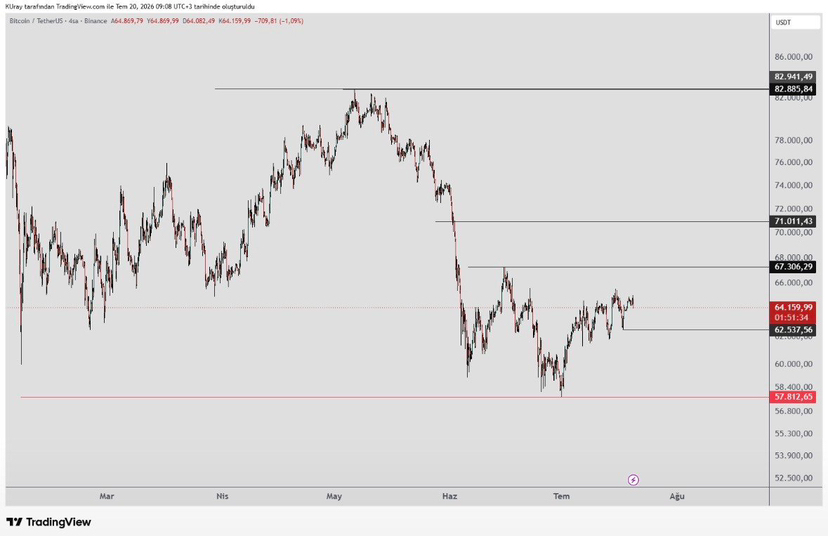


$BTC trading around $64,000 might not look particularly exciting at first glance, but the environment surrounding it tells a much more interesting story.
Recent spot ETF flows have remained positive, bringing in roughly $273 million over the past two weeks. While that may sound encouraging, it is worth remembering how quickly sentiment can shift. A single week of ETF outflows not long ago erased even more capital than that, reminding investors that institutional demand is still far from one directional.
At the same time, global macro conditions continue to shape market expectations. Brent crude has climbed nearly 4% amid renewed US Iran tensions, reaching its highest level in a month. Rising energy prices often strengthen concerns that inflation could remain elevated for longer, making it harder for central banks to ease monetary policy. That combination has historically reduced appetite for higher risk assets, including $BTC.
The pressure is not limited to energy markets. Asian technology stocks also faced renewed weakness following the selloff surrounding Kimi AI, adding another layer of uncertainty across global risk markets. While this may seem unrelated to digital assets, shifts in broader investor sentiment frequently spill over into crypto.
This is what makes the current market particularly interesting. $BTC itself has not fundamentally changed over the past few weeks, yet its short term direction continues to be influenced by factors that originate far outside the crypto industry.
For investors, that raises an important question. If macroeconomic events are driving most of the movement, how much of today’s price action actually reflects $BTC’s own fundamentals?
Understanding that distinction may be just as important as watching the chart itself.