
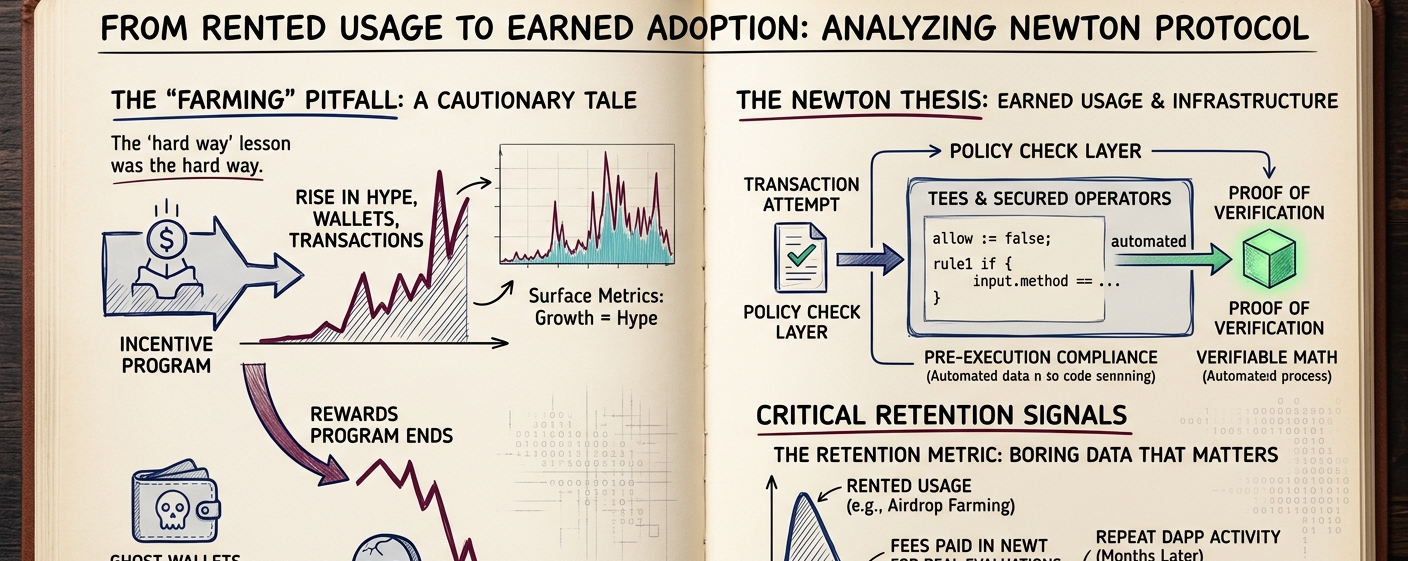
Ich habe das auf die harte Tour gelernt – in einem Zyklus, der noch immer nachwirkt, wenn ich daran denke. Da war dieser Token – alles sah perfekt aus. Die Anzahl der Inhaber wuchs, die Transaktionen stiegen jeden Tag, und der Chat hat unentwegt auf das gesperrte LP eingeschlagen, als wäre es eine Art heiliger Gral. Ich habe die Story gekauft, weil die Story stimmig war. Dann endete das Belohnungsprogramm, und innerhalb von drei Wochen… ist das Ganze einfach gestorben. All diese „aktiven“ Wallets? Nur Farmen von Anreizen. Keiner nutzte das Produkt wirklich. Diese Erfahrung hat meine Sicht auf On-Chain-Aktivität grundlegend verändert. Wenn jemand dafür bezahlt wird, aufzutauchen, taucht er in Wahrheit nicht wirklich auf.
Als ich auf @NewtonProtocol gestoßen bin, war ich sofort misstrauisch, obwohl die Prämisse sehr viel Sinn ergibt. Das Problem, das sie angehen, ist wirklich real: Transaktionen werden sofort und unwiderruflich finalisiert, und die meisten Betrugserkennungen passieren erst danach – sodass man kaum hinterherkommt, bevor der Angreifer die Gelder schon wieder bewegt hat. Newton dreht das, indem es eine Policy-Prüfung ausführt, bevor überhaupt ausgeführt wird. Deine Transaktion wird anhand von Regeln bewertet, die in Rego geschrieben sind – einer Policy-Sprache – und geht nur weiter, wenn sie besteht. Ein dezentraler Satz von Operatoren, abgesichert durch restaked ETH und NEWT-Kollateral, führt diese Checks in Trusted-Execution-Umgebungen aus und erzeugt einen kryptografischen Nachweis, dass die Verifikation tatsächlich stattgefunden hat. Du kannst das selbst über ihren Explorer verifizieren. Es ist Mathematik, der du vertraust – nicht das Wort irgendeines zufälligen Validators.
So ist jedenfalls die Theorie. Und hier beginnt mein Kopf zu kribbeln.
Eine Policy-Ebene vor der Ausführung ist nur dann wertvoll, wenn Entwickler sie lange nach dem Abklingen des Hype-Zyklus weiterverwenden. Und in diesem Bereich ist Retention brutal. Einen Compliance-Schritt hinzuzufügen ist für den Builder ein Aufwand – extra Arbeit, kein Reward. Jeder kann eine Partnerschaft ankündigen oder in einem Hype-Fenster eine Testnet-Integration pushen, um die Story aufzupumpen. Aber das echte Signal? Ob DApps, Stablecoin-Emittenten oder AI-Agent-Plattformen Monate später Transaktionen noch immer über diesen Policy-Check routen, wenn niemand dafür bezahlt wird, es zu tun. Oberflächenmetriken sind hier wertlos. Wie viele Wallets verbunden sind? Welche Integrationen angekündigt wurden? Das lässt sich über Nacht mit einem einzigen Listing-Deal aufblasen, und nicht eine einzige Transaktion muss die Autorisierungslogik tatsächlich verwenden. Entscheidend ist verifizierbare Nutzung: ob Proof-Events konsistent erzeugt und geprüft werden – nicht eine statische Zahl, die beim Launch einmal nach oben springt.
Wenn man sich die Zahlen zum Anfang Juli 2026 ansieht, liegt NEWT bei rund 14 Mio. USD Market Cap und etwa 7 Mio. USD Volumen in 24 Stunden. Ehrlich gesagt sagt mir das fast nichts über echte Adoption – Volumen ist nur Spekulationsrauschen. Das zirkulierende Angebot liegt bei ungefähr 288 Mio. bei einem festen Gesamtangebot von 1 Mrd., die Verwässerung ist also immer noch ein sehr realer Faktor, kein einmaliges Ding. Die Inhaberzahlen über verschiedene Tracker hinweg zeigen etwa 13.000 Adressen, mit lebenslangen Transfers von über einer halben Million. Klingt ordentlich, bis du fragst: Wie viele dieser Adressen haben ein Airdrop bekommen und haben den Token danach nie wieder angerührt? Das ist die Retention-Frage, die Preis-Charts nicht beantworten können.
Die Risiken sind nicht verborgen, aber sie lassen sich leicht ignorieren, wenn die Erzählung stark genug ist. Token-Freischaltungen sind ein struktureller Überhang – ein großer Teil des Angebots ist weiterhin gesperrt und soll in den kommenden Monaten auf den Markt kommen. Vergangene Cliff-Events haben bereits gezeigt, dass sie bei einem dünnen Markt erheblichen Verkaufsdruck auslösen können. Geringes Float plus ein moderates tägliches Volumen bedeutet, dass der Preis bei relativ kleinen Zuflüssen stark schwanken kann – und das zieht genau die Art spekulativer Rotation an, die nichts damit zu tun hat, ob die Policy-Engine tatsächlich verwendet wird. Es gibt außerdem echten Wettbewerb. On-Chain-Autorisierung und Compliance-as-Code werden zunehmend voll, und „früh“ heißt nicht, dass man automatisch zum Standard wird. Und dann gibt es noch das leisere Risiko: TEEs und Restaking-Modelle – so clever sie auch klingen mögen – beruhen weiterhin auf Annahmen, die bisher noch nicht vollständig in einem echten adversarialen Zyklus unter Stress gesetzt wurden.
Die Signale, die ich wirklich wichtig finde, sind die langweiligen, die niemand in Screenshots postet. Mit NEWT bezahlte Gebühren für echte Policy-Evaluierungen. Wiederkehrende Transaktionsmuster von denselben integrierten DApps Woche für Woche. Und ob die On-Chain-Aktivität in ruhigen Wochen am Leben bleibt, wenn es keine Incentive-Kampagne oder kein Exchange-Listing gibt, das Aufmerksamkeit in Richtung Token pumpt. Wenn diese Zahlen stabil bleiben oder ohne einen Marketing-Boost dahinter nach oben kriechen, dann ist das verdiente Nutzung – keine „geliehene“ Nutzung.
Mein Einsatz hier ist klein, und ich behandle es als Position zum mehrquartalsweisen Beobachten – nicht als Überzeugungstade. Compliance vor der Ausführung ist ein legitimes Infrastrukturproblem, das man lösen sollte, auch wenn dieser konkrete Token den langfristigen Wert vielleicht nie vollständig einfängt. Aber ich bin wirklich neugierig: Siehst du in deiner eigenen Recherche, dass tatsächlich Builder eine Policy-Integration am Leben halten, nachdem die Fördergelder für ihren Grant aufgebraucht sind? Oder klingt es still aus, genau so, wie die meisten, an Anreizen gebundenen Aktivitäten es immer tun?