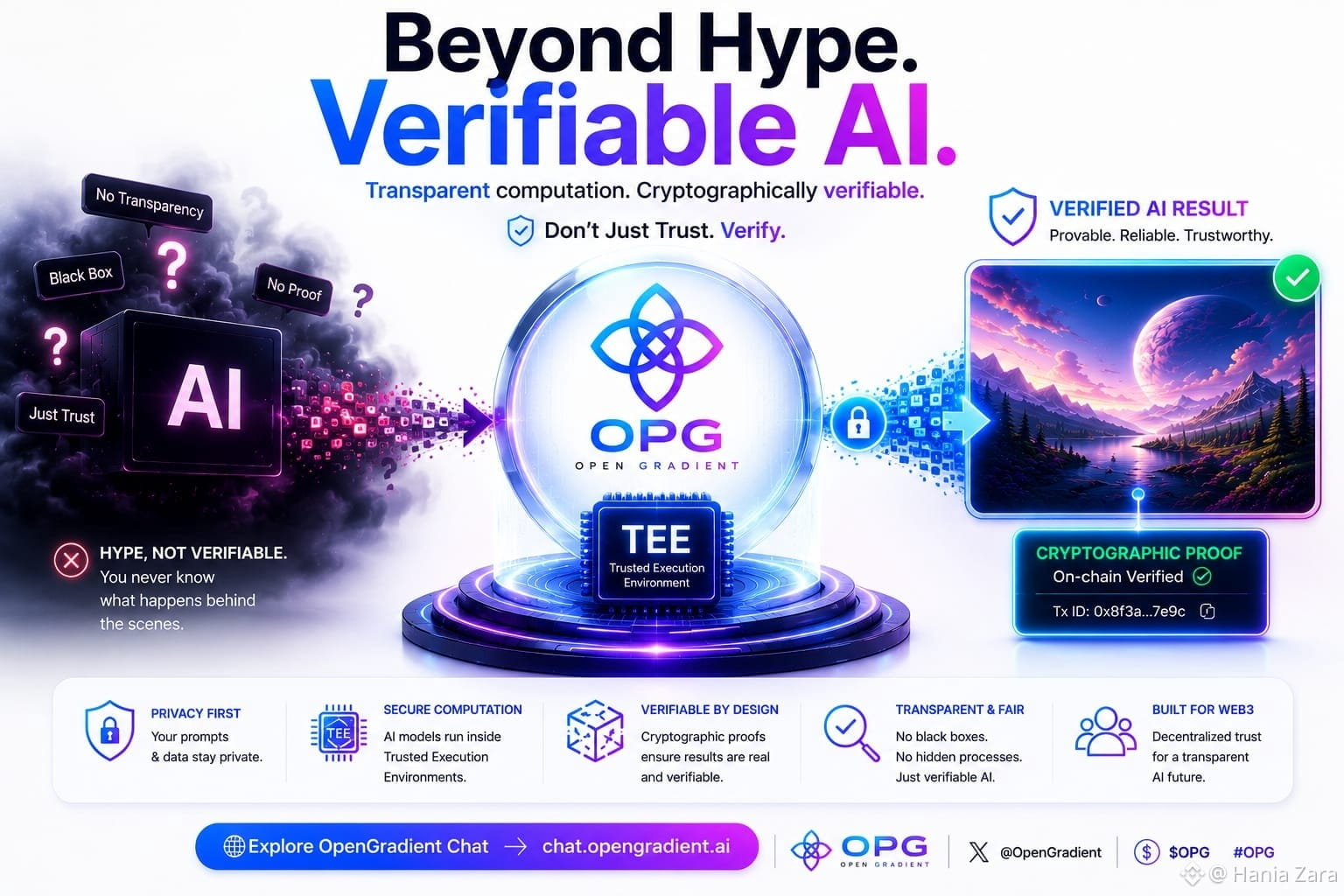
Die meisten Web3- und KI-Projekte verkaufen einfach Hype, indem sie das KI-Label aufsetzen, aber ich denke, die eigentliche Frage ist viel einfacher: Wie können Nutzer überprüfen, was tatsächlich hinter den Kulissen passiert?
Meist sehen wir nur die endgültige Antwort. Wir haben keine praktikable Möglichkeit zu wissen, ob die Berechnung wie behauptet durchgeführt wurde oder ob von uns lediglich erwartet wird, einer anderen Plattform zu vertrauen. Diese fehlende Transparenz sollte die Branche verbessern.
OpenGradient geht einen anderen Weg. Anstatt Nutzer darauf zu vertrauen, sich nur auf Versprechen zu verlassen, setzt das Projekt auf überprüfbare KI, indem es Trusted Execution Environments (TEEs) mit kryptografischer Verifikation kombiniert. Das Ziel ist, KI-Berechnungen transparenter zu machen und Nutzern mehr Sicherheit darüber zu geben, wie Ergebnisse zustande kommen.
Für mich ist das eine viel bedeutungsvollere Innovation als nur das Vermarkten eines weiteren KI-Produkts. Da die KI-Nutzung in Web3 weiter wächst, könnten Projekte, die Transparenz und Verifizierbarkeit in den Mittelpunkt stellen, viel stärkeres langfristiges Vertrauen bei den Nutzern aufbauen.
Entdecke OpenGradient Chat: chat.opengradient.ai
@OpenGradient $OPG #OPG #opg $AGLD $VELVET
Meist sehen wir nur die endgültige Antwort. Wir haben keine praktikable Möglichkeit zu wissen, ob die Berechnung wie behauptet durchgeführt wurde oder ob von uns lediglich erwartet wird, einer anderen Plattform zu vertrauen. Diese fehlende Transparenz sollte die Branche verbessern.
OpenGradient geht einen anderen Weg. Anstatt Nutzer darauf zu vertrauen, sich nur auf Versprechen zu verlassen, setzt das Projekt auf überprüfbare KI, indem es Trusted Execution Environments (TEEs) mit kryptografischer Verifikation kombiniert. Das Ziel ist, KI-Berechnungen transparenter zu machen und Nutzern mehr Sicherheit darüber zu geben, wie Ergebnisse zustande kommen.
Für mich ist das eine viel bedeutungsvollere Innovation als nur das Vermarkten eines weiteren KI-Produkts. Da die KI-Nutzung in Web3 weiter wächst, könnten Projekte, die Transparenz und Verifizierbarkeit in den Mittelpunkt stellen, viel stärkeres langfristiges Vertrauen bei den Nutzern aufbauen.
Entdecke OpenGradient Chat: chat.opengradient.ai
@OpenGradient $OPG #OPG #opg $AGLD $VELVET