

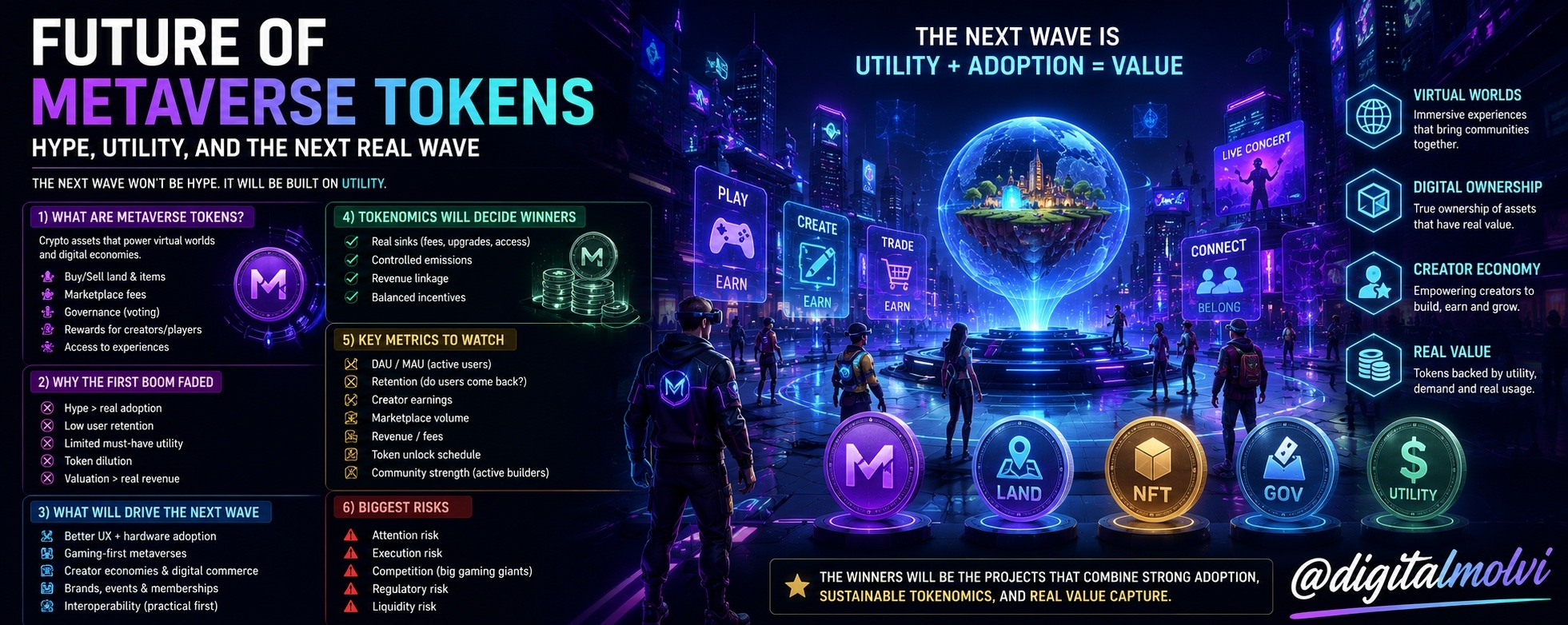

Metaverse-Token waren eines der lautesten Narrative des letzten Zyklus. Die Preise sind durch die Decke gegangen, die Erwartungen wurden unrealistisch, und dann hat der Markt abgekühlt. Aber die Idee des Metaversums ist nicht gestorben – sie hat sich einfach von "sofortiger Revolution" zu einem langsameren, realistischeren Weg bewegt.
Die eigentliche Frage ist jetzt: Haben Metaverse-Token eine Zukunft mit nachhaltiger Nachfrage oder bleiben sie größtenteils spekulativ? Dieser Artikel erklärt, was die nächste Phase antreiben wird, welche Risiken bestehen und wie man Metaverse-Token wie ein Profi bewertet.
1) Was Metaverse-Tokens sind (einfache Definition)
Metaverse-Tokens sind Krypto-Assets, die an virtuelle Welten und digitale Ökonomien gebunden sind. Sie ermöglichen typischerweise Dinge wie:
digitale Landflächen oder Items kaufen/verkaufen
Marktplatzgebühren
Governance (Abstimmung über Regeln)
Belohnungen für Creator/Spieler
Zugang zu Experiences oder Mitgliedschaften
Beispiele sind Tokens, die mit virtuellen Welten, Gaming-Ökosystemen und Creator-Plattformen verknüpft sind.
2) Warum der erste Metaverse-Boom abgeflaut ist
Die frühe Metaverse-Rallye wurde angetrieben von:
narrative Hype (große Tech-Headlines)
spekulatives Landkaufen
Token-Incentives
ein breiterer Bullenmarkt
Aber viele Projekte hatten mit:
niedrige tägliche aktive Nutzer (DAU)
schwache Retention (man hat es einmal ausprobiert und ist gegangen)
begrenzte „Must-have“-Utility
Token-Emissionen zu kämpfen, die Holder verwässern
eine Diskrepanz zwischen Bewertung und realen Umsätzen
Kurz gesagt: Preise waren schneller als die Produkt-Adoption.
3) Was die nächste Welle von Metaverse-Tokens wirklich antreibt
Die Zukunft von Metaverse-Tokens hängt davon ab, ob Metaverse-Plattformen nützlich und „sticky“ werden. Die stärksten Treiber sind wahrscheinlich:
A) Besseres UX + Hardware-Adoption
Metaverse-Experiences verbessern sich, wenn:
Onboarding ist einfach (keine komplizierten Wallets)
Grafik und Performance sind flüssig
Geräte werden günstiger und komfortabler
Wenn die Hardware-Adoption wächst, kann auch die Metaverse-Nutzung damit wachsen.
B) Gaming-first-Metaverses (nicht „leere Welten“)
Die erfolgreichsten virtuellen Welten werden wahrscheinlich zuerst Game-Loops sein – nicht nur soziale Räume. Menschen kommen zurück für:
Progression
Wettbewerb
Belohnungen
Community
Ein Metaverse ohne Grund, sich einzuloggen, wird zur Geisterstadt.
C) Creator-Ökonomien und digitaler Handel
Metaverse-Plattformen, die Creator ermöglichen, Geld zu verdienen – also den Verkauf von Skins, Items, Tickets, Experiences – können echte wirtschaftliche Aktivität aufbauen.
Tokens können profitieren, wenn sie Wert erfassen aus:
Marktplatzgebühren
Premium-Zugang
Creator-Tools
Nachfrage nach Abwicklungswährung
D) Brands, Events und Mitgliedschaften (echte Utility)
Das Metaverse wird bedeutungsvoller, wenn es mit echtem Wert aus der realen Welt verbunden ist:
Konzerte und Ticketing
Fan-Mitgliedschaften
digitale Sammlerstücke mit Vorteilen
Marken-Experiences, die Nutzer wirklich anziehen
Utility schlägt „virtuelles Land-Spekulieren.“
E) Interoperabilität (aber nur, wenn sie praktisch ist)
Der Traum ist, Items zwischen Welten zu bewegen. Die Realität ist schwierig: unterschiedliche Engines, Art-Styles und Regeln. Interoperabilität könnte zuerst in kleineren Formen passieren:
gemeinsame Identität
geteilte Wallets
gemeinsame Marktplätze
Standards für bestimmte Asset-Typen
4) Tokenomics entscheiden, wer gewinnt (mehr als Marketing)
Viele Metaverse-Tokens sind gescheitert, weil der Token keine starke Wertschöpfung hatte. Die nächsten Gewinner werden voraussichtlich:
echte „Sinks“ (Gründe, Tokens auszugeben: Gebühren, Upgrades, Crafting, Zugang)
kontrollierte Emissionen (Belohnungen, die nicht endlos verwässern)
Einnahmen-Verknüpfung (Token-Vorteile, wenn die Plattform verdient)
ausgewogene Anreize (Belohnen Nutzer, aber keine langfristigen Holder zerstören)
Wenn ein Metaverse-Token nur dann „pumpt“, wenn die Hype-Phase zurückkehrt, ist es kein dauerhaftes Modell.
5) Wichtige Kennzahlen im Blick (Professionelle Checkliste)
Wenn du einschätzen willst, ob ein Metaverse-Token eine echte Zukunft hat, beobachte:
DAU/MAU (täglich/monatlich aktive Nutzer)
Retention (kommen Nutzer zurück?)
Creator-Earnings (verdienen Menschen dort Geld?)
Marktplatz-Volumen (echter Handel, kein Wash-Trading)
Einnahmen/Gebühren (generiert die Plattform Einkommen?)
Token-Freigabeplan (große Unlocks können den Preis unter Druck setzen)
Stärke der Community (nicht nur Follower – aktive Builder)
Eine einfache Regel: Wenn die Nutzerzahlen nicht wachsen, ist die Token-Nachfrage meist nur vorübergehend.
6) Größte Risiken (Diese nicht ignorieren)
Aufmerksamkeitsrisiko: Metaverse ist narrativ-getrieben; die Aufmerksamkeit kann sich schnell wegdrehen
Execution Risk: Spaßige, skalierbare Welten zu bauen ist extrem schwer
Wettbewerb: Gaming-Giganten können Crypto-native Teams überbieten
Regulatorisches Risiko: Tokens, die an „Earn“-Modelle gekoppelt sind, können stärker geprüft werden
Liquiditätsrisiko: Viele Metaverse-Tokens sind volatil und werden in Bärenmärkten nur dünn gehandelt
Final Take
Metaverse-Tokens können absolut eine Zukunft haben – aber die nächste Welle wird nicht durch „virtuelles Land“-Hype getrieben. Sie wird durch echte Nutzung angetrieben werden: Game-Loops, Creator-Ökonomien, Commerce und Experiences, die die Leute wirklich wollen. Die Gewinner werden die Projekte sein, die starke Produkt-Adoption mit nachhaltiger Tokenomics und echter Wertschöpfung kombinieren.
#digitalmolvi #sand #AXS #mana #BinanceSquare


