

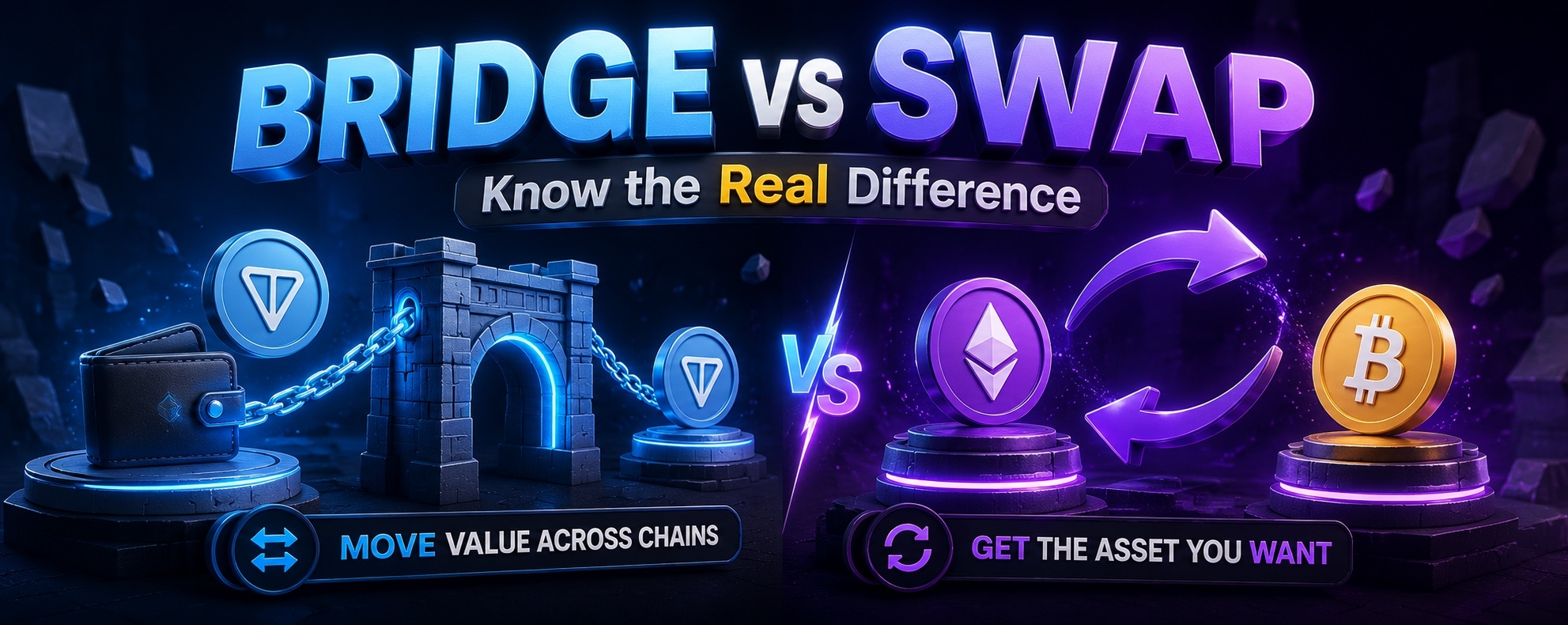

Eine Sache, die mir in letzter Zeit in Krypto-Gesprächen aufgefallen ist, ist das:
Viele Leute reden über Bridges und Cross-Chain Swaps, als wären das genau die gleichen Dinge 👀
Und ehrlich gesagt, es ist verständlich, warum die Verwirrung entsteht.
Moderne DeFi-Produkte haben sich so sehr weiterentwickelt, dass viele Plattformen jetzt kombinieren:
- Bridging
- Swapping
- Routing
- Liquiditätsbeschaffung
- Zielabwicklung
…alles innerhalb einer Schnittstelle.
Also aus der Sicht der Nutzer sieht alles so aus, als ob man einfach nur Vermögenswerte hin und her schiebt.
Aber nachdem ich die neueste Analyse von STONfi zu dem Thema gelesen habe, wurde es viel einfacher zu verstehen, wo der wirkliche Unterschied eigentlich anfängt.
## Bridges Fokussieren Hauptsächlich Auf Den Transfer
Im Kern der meisten traditionellen Bridge-Systeme ist das Ziel ganz einfach:
Wert von einer Blockchain auf eine andere übertragen.
Zum Beispiel:
wenn jemand USDC von einer Kette auf eine andere bridgt, besteht die Erwartung normalerweise darin, dass man auf der Zielkette dasselbe Asset erhält – oder eine verpackte Version davon.
Der Fokus liegt auf der Bewegung.
…ohne die Assets notwendigerweise zu ändern.
Historisch gesehen haben Bridges das über Systeme wie diese gelöst:
- Lock-and-Mint-Modelle
- verpackte Tokens
- übertragungsbasierte Liquiditäts-Transfers
Und obwohl diese Methoden geholfen haben, Ökosysteme miteinander zu verbinden, brachten sie auch zusätzliche Komplexität mit sich:
- mehrere Bestätigungen
- Liquiditätsabhängigkeit
- zusätzliche Gebühren
- mehr manuelle Schritte
- und manchmal Sicherheitsrisiken
Das ist einer der Gründe, warum Bridges in den Jahren so ein großes Thema in Sicherheitsdiskussionen rund um Krypto wurden.
Cross-Chain-Swaps Geht Mehr Um Das Endergebnis#
An dieser Stelle werden die Dinge stärker auf die Nutzer ausgerichtet.
Ein Cross-Chain-Swap ist so konzipiert, dass er Nutzern dabei hilft, am Ende mit genau dem Asset zu landen, das sie auf der Zielkette wirklich wollen.
Stattdessen:
- zuerst brücken
- Vermögenswerte später erhalten
- dann erst manuell danach swappen
…der Prozess wird zu einer einzigen kombinierten Route.
Du startest mit einem Asset auf einer Kette…
…und endet mit einem anderen Asset auf einer anderen Kette.
Das mag zunächst wie ein kleiner Unterschied klingen, aber aus Sicht der Nutzererfahrung verändert das alles.
Weniger Schritte.
Weniger Verwirrung.
Weniger manuelle Handhabung.
Weniger Spielraum für Fehler.
Und ganz ehrlich, genau deshalb werden Cross-Chain-Swaps immer attraktiver, je reifer die DeFi-Infrastruktur wird.
Warum sich Beide Kategorien Jetzt Überschneiden
Ein Punkt, den der Artikel sehr gut erklärt hat, ist, dass neuere Bridge-Plattformen sich nicht mehr wie einfache „Asset-Tunnel“ verhalten.
Viele moderne Systeme enthalten jetzt:
- automatisches Routing
- Liquiditätsaggregation
- Token-Umwandlung
- Ausführung auf der Zielseite
- integrierte Swaps
Das bedeutet, dass sich viele Bridge-Schnittstellen heute bereits sehr ähnlich anfühlen wie Cross-Chain-Swap-Produkte.
Genau diese Überschneidung ist der Grund, warum die meisten Nutzer beide Begriffe inzwischen ganz natürlich miteinander vermischen.
Aber die Unterscheidung ist immer noch wichtig, weil die Intention hinter dem Produkt eine andere ist.
Bridges priorisieren hauptsächlich das Übertragen von Wert zwischen Ökosystemen.
Cross-Chain-Swaps priorisieren es, Nutzern dabei zu helfen, am Ziel mit dem Asset anzukommen, das sie wirklich wollen – mit weniger manuellen Aktionen.
Warum Das Zukünftig Noch Wichtiger Wird
Je mehr Blockchain-Ökosysteme sich ausweiten, desto mehr Nutzer werden über mehrere Ketten hinweg interagieren, statt in einem einzelnen Netzwerk isoliert zu bleiben.
Und ganz ehrlich: Die meisten Nutzer wollen keine komplizierten Workflows mehr.
Menschen möchten zunehmend:
- reibungslose Ausführung
- weniger Reibung
- einfachere Schnittstellen
- vorhersehbare Ergebnisse
Deshalb fühlt sich die neuere Cross-Chain-Infrastruktur so wichtig an.
Je einfacher sich die Bewegung zwischen Ökosystemen gestalten lässt, desto natürlicher fühlt sich DeFi für normale Nutzer an, die neu in Krypto einsteigen.
Und persönlich, nachdem ich STONfi’s Erklärung sorgfältig gelesen habe, fühlt es sich sehr klar an, dass die Branche langsam auf eine Zukunft zusteuert, in der Nutzer nicht mehr so tief über die Route selbst nachdenken müssen.
Sie konzentrieren sich einfach auf das Ergebnis, das sie wollen 🚀