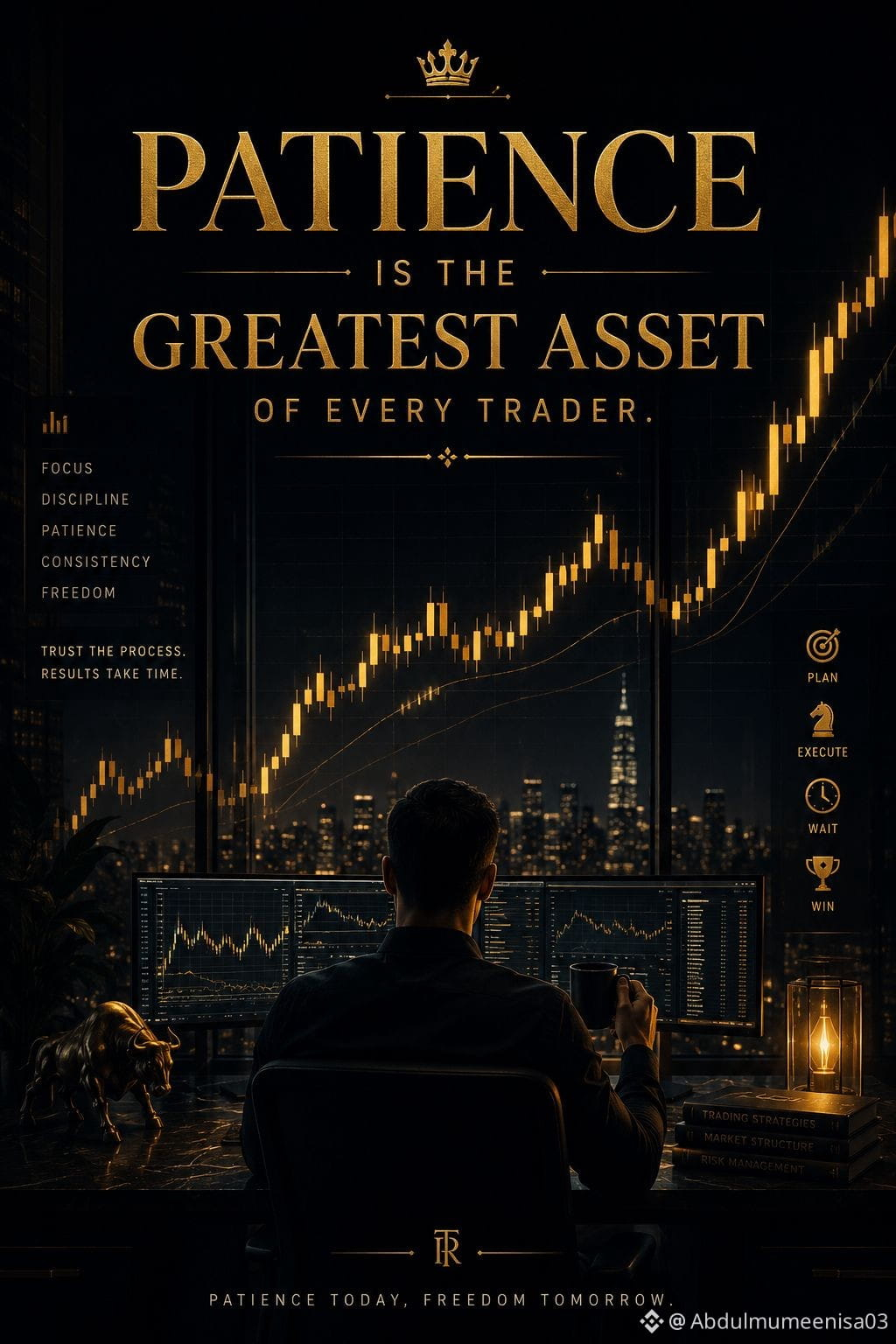
In trading, patience often matters more than finding the “perfect” strategy.
A few reasons why:
Good setups are rare. Many losses come from forcing trades out of boredom or fear of missing out.
Markets reward discipline over emotion. Waiting for confirmation can protect you from impulsive decisions.
Compounding needs time. Consistent small gains and controlled risk usually outperform reckless high-risk trades.
Patience helps with risk management. Not trading is sometimes the best trade.
Emotional control improves judgment. Traders who can stay calm during volatility usually make clearer decisions.
A common saying among traders is:
“The market pays those who wait.”
Some practical ways traders build patience:
1. Use a written trading plan.
2. Set strict entry conditions.
3. Limit the number of trades per day/week.
4. Journal every impulsive trade.
5. Focus on long-term consistency instead of quick wins.
Even legendary investors like Warren Buffett emphasize patience as a competitive advantage.
A few reasons why:
Good setups are rare. Many losses come from forcing trades out of boredom or fear of missing out.
Markets reward discipline over emotion. Waiting for confirmation can protect you from impulsive decisions.
Compounding needs time. Consistent small gains and controlled risk usually outperform reckless high-risk trades.
Patience helps with risk management. Not trading is sometimes the best trade.
Emotional control improves judgment. Traders who can stay calm during volatility usually make clearer decisions.
A common saying among traders is:
“The market pays those who wait.”
Some practical ways traders build patience:
1. Use a written trading plan.
2. Set strict entry conditions.
3. Limit the number of trades per day/week.
4. Journal every impulsive trade.
5. Focus on long-term consistency instead of quick wins.
Even legendary investors like Warren Buffett emphasize patience as a competitive advantage.