
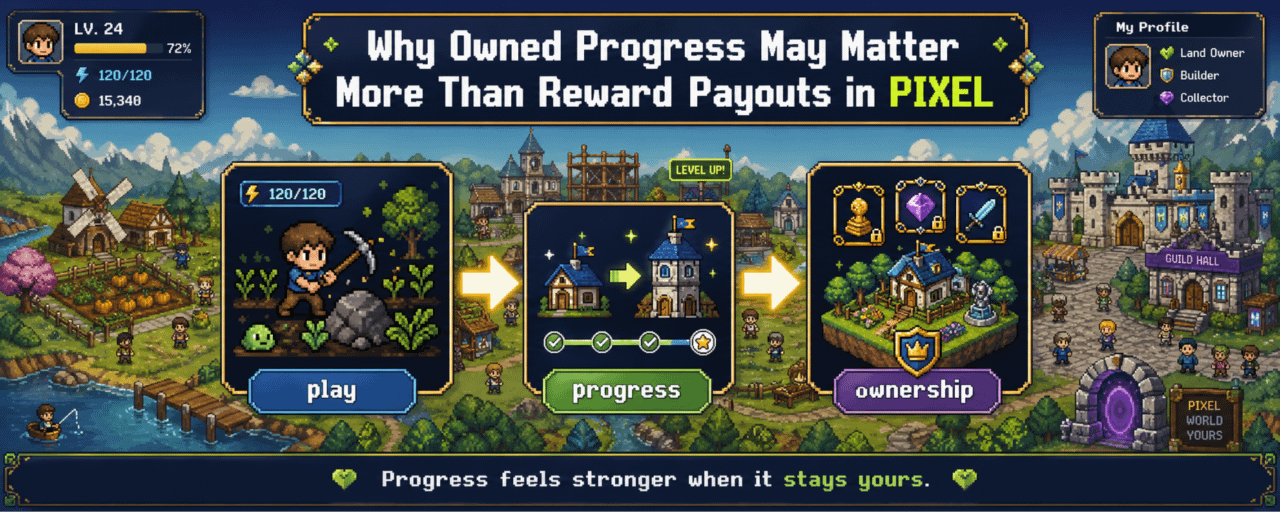
One of the weakest feelings in gaming is when progress never really belongs to you.
You log in, complete the loop, collect the reward, and leave with activity behind you rather than value that stays with you. Pixels seems to be pushing against that pattern. On the main site, the project says it wants users to “truly own their progress,” describes itself as a platform for games that natively integrate digital collectibles, and says, “What you build is yours to own.”
That changes how the economy should be read.
A payout can make a session feel worthwhile. Ownership can make the world feel worth returning to. That is why the ownership layer in Pixels matters more than it may first appear: it shifts the experience away from temporary extraction and toward accumulated presence inside the ecosystem. This is partly an inference from the project’s language, but it follows directly from how Pixels frames progress, building, and digital collectibles on its main site.
The distinction becomes clearer once you compare rewards with progress.
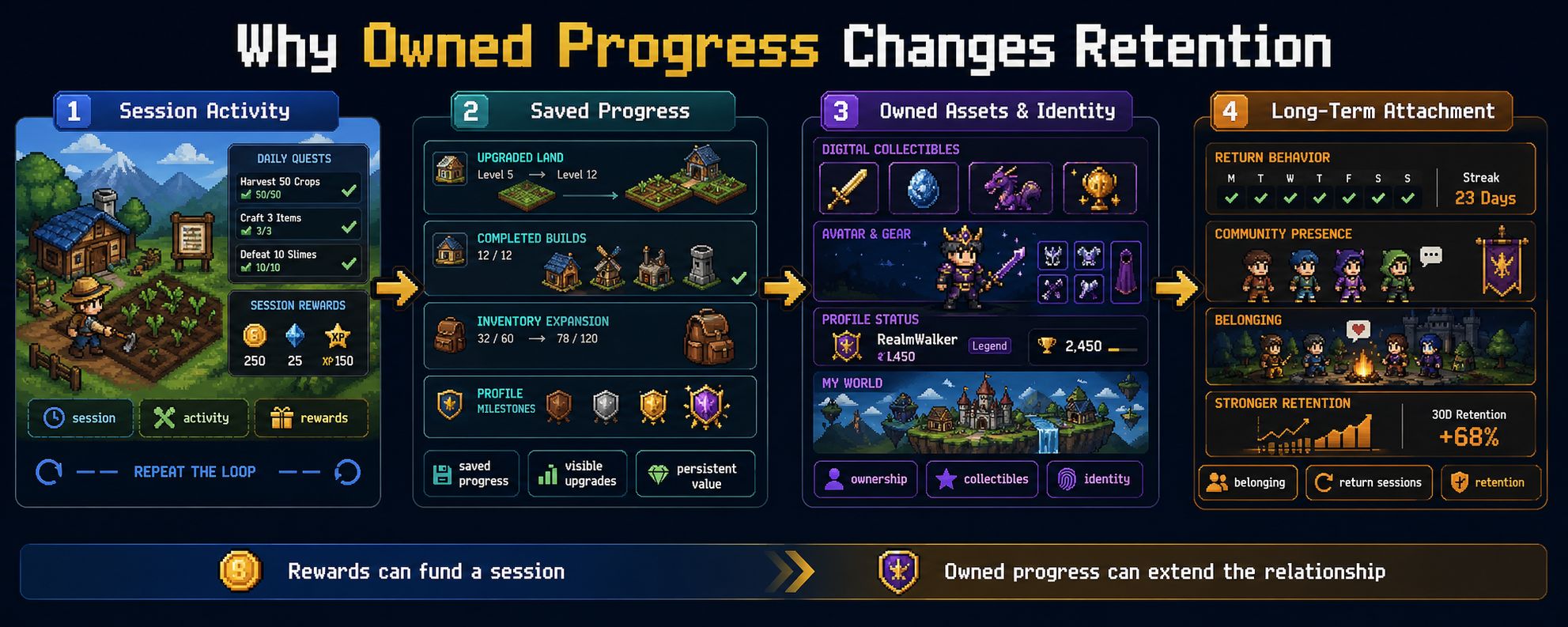
Rewards are transactional. They answer: what did I get this session? Owned progress answers a different question: what did I keep, build, or deepen that will still matter next time? Pixels’ site repeatedly emphasizes building, community, land, and progress that stays tied to the user, while the whitepaper says games need an intrinsic motivator and real user value rather than relying on incentives alone.
That is why this can become a stronger retention layer than rewards by themselves.
The whitepaper’s Fun First pillar says games need to be fun and create real value for users, while the main site presents Pixels as a social, free-to-play world where users play with friends, build communities, and shape the world over time. When ownership is layered on top of that, progression stops feeling like rented activity and starts feeling like something the player can meaningfully accumulate.
This also makes the social layer more important.
Owned progress is stronger when it is visible. A saved build, upgraded land, recognizable avatar, community role, or collectible tied to the player’s identity can make return behavior less about claiming the next reward and more about maintaining a place inside the world. That is an inference, but it is strongly grounded in the project’s emphasis on communities, friends, building, avatars, and user-owned progress.
The ownership angle also fits the broader structure of the whitepaper.
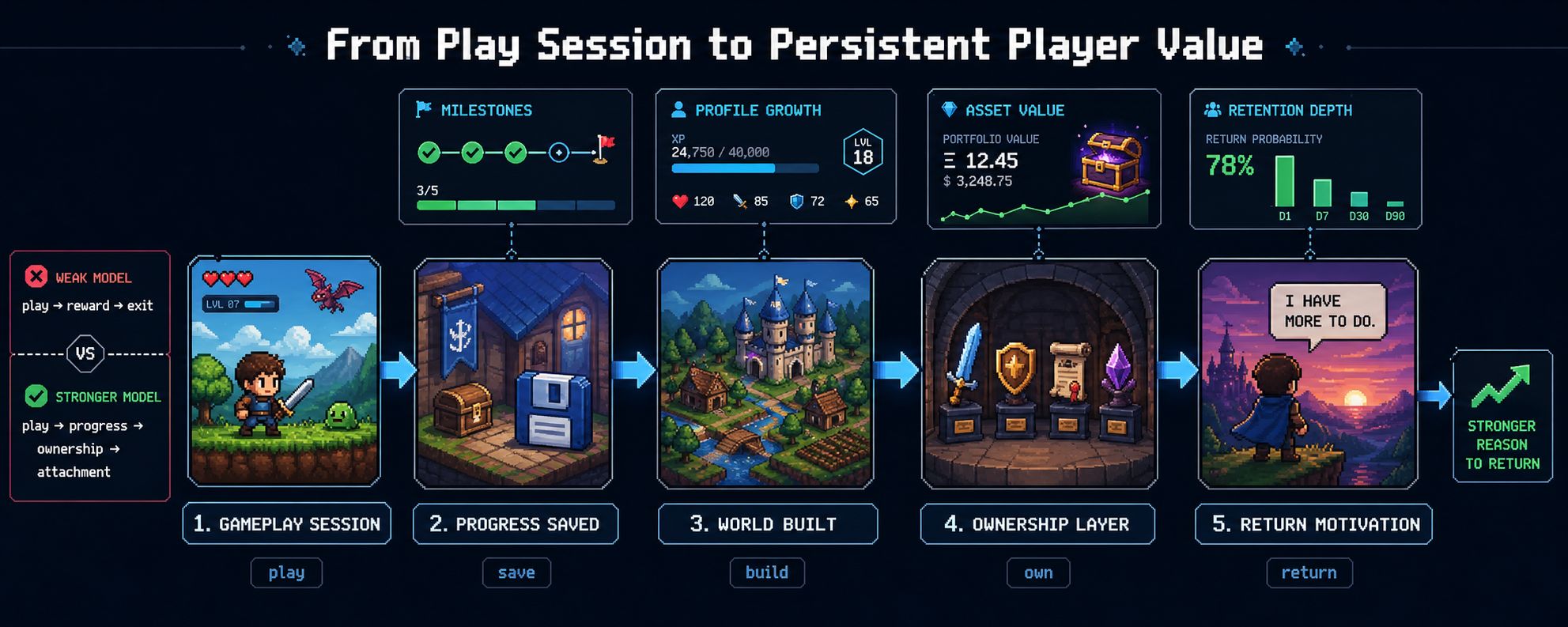
Pixels does not frame incentives as a substitute for game quality. It frames Fun First, Smart Reward Targeting, and the Publishing Flywheel as interconnected pillars. That matters because ownership works best when it sits on top of a world people already enjoy, not when it is the only reason they show up. In that model, rewards can support progress, but owned progress helps turn that support into longer-term attachment.
Seen that way, the stronger PIXEL thesis is not just “earn in the game.”
It is “build something that remains yours inside the game.” That is a more durable promise, because temporary payouts can always be competed away, while progress that feels persistent, personal, and worth protecting creates a deeper reason to come back. This final point is an inference, but it follows closely from the project’s official ownership language and the whitepaper’s focus on intrinsic value.
That may be why owned progress is such an underrated part of the story.
Not because ownership sounds good in theory, but because it changes the emotional shape of retention. The session is no longer only about what was earned today. It is also about what was advanced, preserved, and made more meaningful for tomorrow.