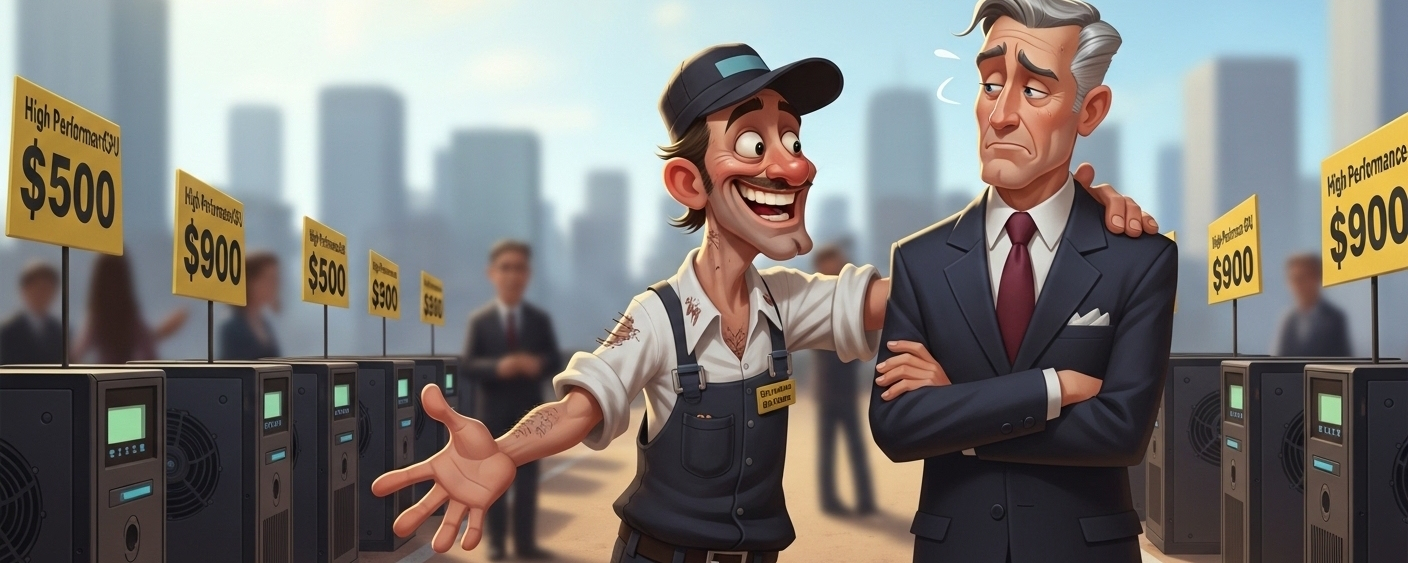

Lass mich dir USD.ai vorstellen, ein Projekt, das sich Krypto angesehen hat, sich AI angesehen hat und gesagt hat: Was wäre, wenn wir sie mit Schulden zusammenkleben?
Der Pitch ist elegant. Nimm High-End GPUs – diese glänzenden Biester von NVIDIA – behandle sie wie einkommensgenerierende Assets und leihe dagegen, um einen synthetischen Dollar, USDai, zu minten. Theoretisch ist es einfach asset-backed Lending. In der Praxis ist es eher wie die Finanzierung einer Flotte von Taxis in einer Stadt, in der die Straßen, die Fahrer und die Passagiere alle eine Identitätskrise haben.
Denn hier ist der Haken: GPUs sind keine Häuser. Sie verlieren schnell an Wert, hängen von einer volatilen Nachfrage im KI-Bereich ab und können über Nacht veraltet sein, weil der CEO von NVIDIA, Jensen Huang, einen neuen Chip aus dem Ärmel geschüttelt hat. Das Protokoll weiß das—deshalb verpackt es alles in rechtliche Strukturen, Bewertungen und etwas, das sich „queued exit system“ nennt—im Grunde eine höfliche Art zu sagen: „Bitte nicht alle auf einmal zur Tür rausrennen.“
Und dann gibt es noch die Dezentralisierung. Oder genauer gesagt: die Stimmung einer Dezentralisierung. Die Assets leben in echten Rechenzentren, unter echten Gesetzen, durch echte Menschen umgesetzt—mit Papierkram. Die Blockchain hält dabei vor allem den Spielstand fest.
Ist es nutzlos? Nein. Die Finanzierung von Recheninfrastruktur ist ein echtes Problem, und irgendwann wird das jemand knacken. Aber im Moment fühlt es sich weniger nach grundlegender Internet-Infrastruktur an und mehr nach einem ertragreichen Wissenschaftsexperiment.
Das Token, CHIP, sitzt oben drauf und koordiniert alles—wie ein überaus begeisterter Schiedsrichter. Aber die eigentliche Frage ist nicht das Token.
Es geht darum, ob die Sicherheiten—diese überarbeiteten, überhype-ten GPUs—auch dann noch standhalten, wenn die Musik aufhört.