



As you advance in your cryptocurrency journey, you may encounter the term Binance Futures. While the standard spot market allows you to buy and own digital assets, the futures market is a specialized platform designed for speculating on price movements. In 2026, Binance Futures remains one of the most liquid derivatives exchanges globally, offering tools for both profit-seeking and risk management. This guide will break down the fundamental concepts, the mechanics of leverage, and how to navigate this high-reward environment safely.
Link to sign up with Binance fee discount
1. What are Binance Futures? Understanding the Basics
A futures contract is an agreement to buy or sell a specific asset at a predetermined price at a specified time in the future. However, on Binance, most beginners trade Perpetual Futures.
No Expiry Date: Unlike traditional futures, perpetual contracts do not have an expiration date. You can hold a position for as long as you maintain enough collateral.
Price Tracking: These contracts use a mechanism called "Funding Rates" to ensure the futures price stays closely aligned with the actual market price (Index Price) of the underlying asset.
Directional Trading: You can profit whether the market goes up (Going Long) or down (Going Short).
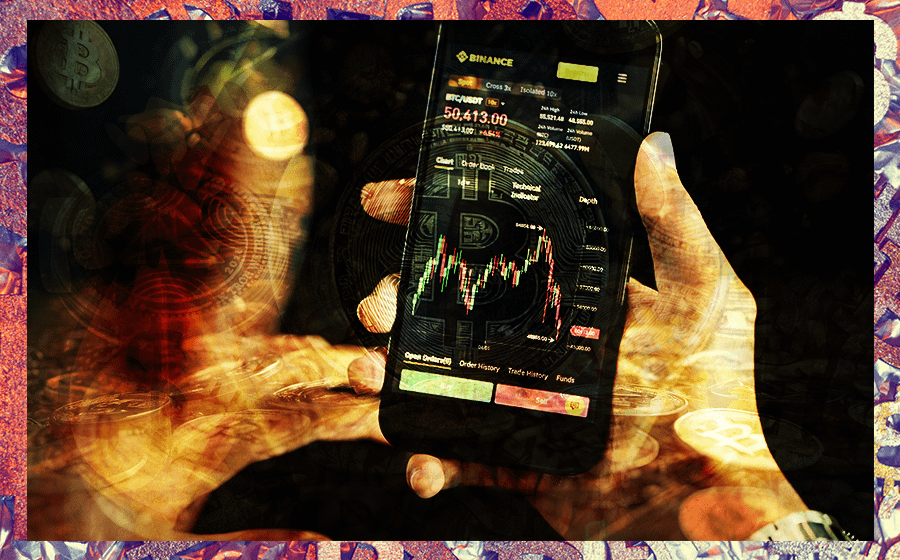
2. The Power and Risk of Leverage
Leverage is the defining feature of Binance Futures. It allows you to trade with more capital than you actually have in your wallet. For example, with 10x leverage, a $100 deposit allows you to open a position worth $1,000.
Magnified Gains: If the price moves 5% in your favor, your $1,000 position gains $50. This represents a 50% return on your initial $100.
Magnified Losses: Conversely, if the price moves 5% against you, you lose $50, which is half of your collateral.
Liquidation Risk: If the market moves significantly against your position and your collateral can no longer cover the losses, Binance will automatically close your trade. This is known as Liquidation.
3. Choosing Your Margin Mode: Isolated vs. Cross
One of the most important decisions a beginner makes is selecting a margin mode. This setting determines how your collateral is used.
Isolated Margin: The risk is confined to a single trading pair. If you allocate $50 to a BTC trade and it gets liquidated, you only lose that $50. Your remaining wallet balance is safe. (Highly recommended for beginners).
Cross Margin: All trades in your futures account share the same pool of collateral. While this provides more flexibility to prevent liquidation during small price swings, a major crash could wipe out your entire futures wallet balance.
4. Essential Order Types for Risk Management
Success in futures trading is not about predicting the future perfectly; it is about managing your downside. You must master these three tools:
Stop-Loss (SL): This is your primary safety net. It automatically closes your trade at a specific price to prevent further losses. Never enter a futures trade without a Stop-Loss.
Take-Profit (TP): This ensures you lock in your gains when the market hits your target price. Greed often leads traders to hold too long, only to watch their profits vanish.
Post-Only: This ensures your order is added to the order book as a "maker" and not executed immediately as a "taker," which helps you save on trading fees.

5. A Practical Workflow for Your First Trade
Step 1: Transfer Funds. You must move USDT or another supported asset from your "Spot Wallet" to your "USDS-M Futures Wallet."
Step 2: Select a Pair. Stick to high-liquidity pairs like BTC/USDT or ETH/USDT for your first few trades.
Step 3: Set Leverage Low. Beginners should avoid anything above 2x or 3x leverage. High leverage is the fastest way to lose capital.
Step 4: Analyze and Execute. Use the built-in charts to identify a trend, set your Stop-Loss and Take-Profit levels, and click "Buy/Long" or "Sell/Short."
6. Disclaimer
Futures trading carries a high level of risk and is not suitable for all investors. The use of leverage can lead to the total loss of your initial investment. Always perform your own research (DYOR) and understand the mechanics of liquidation before opening a position. This article is provided for educational purposes only and does not constitute financial, legal, or investment advice. The author and platform are not responsible for any financial losses incurred through the use of the Binance Futures platform.