

I’ve been watching Layer 1 projects for years, and I’ve noticed a pattern. Every cycle, a new wave of chains appears promising faster speeds, cheaper transactions, and bigger numbers. At first, that used to excite me. Now, I find myself paying more attention to something quieter — the ones focused on building systems people can actually use without constantly thinking about the technology behind them.
That’s where Vanar started to feel different to me.
Instead of presenting itself as another race car competing on TPS charts, it feels more like a workshop approach. The focus isn’t on who can shout the loudest about performance. It’s on building something steady enough that developers, brands, and everyday apps can rely on it without needing to understand every technical detail under the hood.
Vanar leans heavily into being AI-ready, entertainment-focused, and built for real deployment rather than speculation. And honestly, that shift makes sense for where the space is heading. The next phase of blockchain adoption won’t be driven by traders refreshing charts all day. It will come from automation, payments, games, and systems that quietly run in the background.
From a practical point of view, the basics are already there. EVM compatibility means developers don’t have to start from zero. Tools like MetaMask integrations, stable RPC connections, testnets, and WebSocket support make building feel familiar. For teams that aren’t deeply crypto-native, that kind of familiarity matters more than most people admit. If something is easy to connect to and easy to maintain, it gets used. If it’s complicated, it gets ignored.
Looking at the token side, VANRY is still sitting at what most would consider a small-cap level. Around early 2026, the price hovers near half a cent, with a market cap in the mid–teen millions and daily volume around a couple million. The circulating supply is already close to its maximum, which means the structure is relatively visible compared to projects still unlocking large portions of tokens.
What caught my attention more than the price, though, was the activity. The chain has processed hundreds of millions of transactions and tens of millions of wallets have interacted with it. Of course, I always take wallet counts with caution. Bots, app mechanics, and automated systems can inflate those numbers. But transaction depth over time is harder to fake. When activity continues beyond short-term campaigns, it suggests something is actually being used.
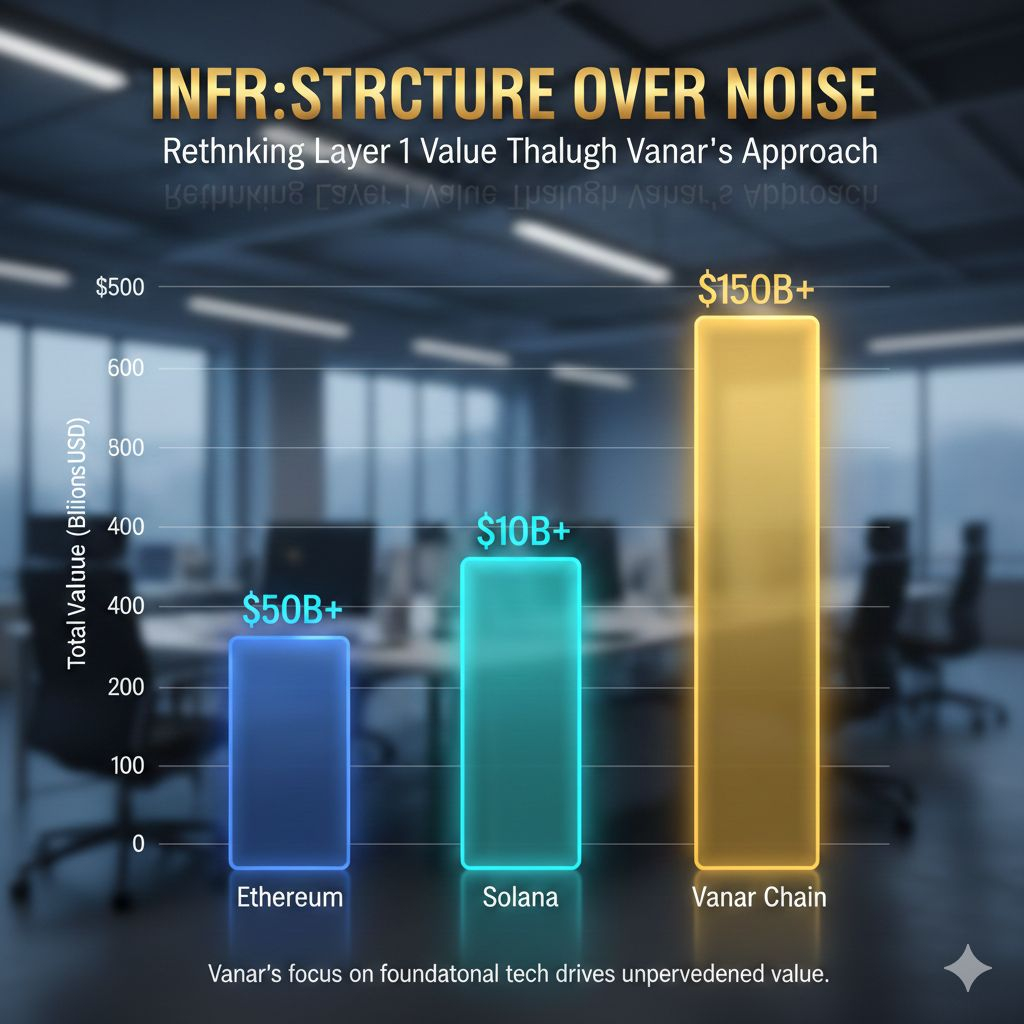
At current levels, the valuation gap becomes interesting from a purely mathematical perspective. If the network ever gets priced closer to the nine-figure range, the token price would naturally adjust higher just from market cap expansion. Not because of hype, but because the base level is still relatively low. That doesn’t guarantee anything, but it frames the situation in a more grounded way.
What really defines Vanar’s direction, though, is the AI-focused structure. The idea seems to revolve around creating an environment where AI agents can operate reliably — storing memory, making decisions, and executing tasks without constant human input. For that to work, the infrastructure has to stay online, responsive, and predictable.
If an automated system is handling payments, rewards, or digital access in real time, it can’t afford to break because of unstable endpoints or delayed data streams. That’s why elements like persistent memory layers, reasoning modules, and workflow automation tools are becoming central to the conversation. The chain isn’t just meant to process transactions; it’s meant to support systems that keep running.
What also stands out is the positioning. Instead of trying to dominate DeFi or compete directly with giants for liquidity, the focus seems to be on consumer experiences — games, loyalty platforms, payment flows, and brand integrations. That’s a different lane entirely.
When brands look at blockchain, they usually don’t care about TPS debates. They care about whether fees stay predictable, whether the user experience feels smooth, and whether the system is stable enough to trust. Reliability and simplicity carry more weight than raw performance.
There are also hints of enterprise alignment — validator infrastructure tied to professional environments, conversations around payments, and involvement in AI ecosystems. None of that guarantees success, but it shows the project is trying to pass credibility checks outside the usual crypto circles.
Still, everything comes back to one thing: retention.
The optimistic view is that if current activity turns into long-term usage, and if AI-driven systems begin running continuously on-chain, then demand could slowly build. If the token becomes part of staking, execution, or automated workflows, it starts to play a structural role instead of just being a tradable asset.
The cautious view is just as real. Activity today doesn’t always mean loyalty tomorrow. If users don’t stick around, or if the token isn’t tightly connected to how the network operates, then the infrastructure might grow without the asset necessarily following.
That’s why I think the most important signal to watch isn’t speed or partnerships. It’s consistency. Are people still using it months later? Are applications staying active after incentives fade? Are transactions steady, not just spiking?
Looking ahead over the next year or two, the real shift could come if AI-driven payments start running automatically, if games build persistent in-world economies, or if brands use blockchain quietly behind the scenes for access, rewards, and digital ownership. Those kinds of systems don’t generate hype. They generate steady background activity.
And in the long run, that’s what makes infrastructure valuable.
The chains that win aren’t always the ones everyone talks about. They’re the ones developers plug into and then forget about because everything just works. Clean connections, stable tools, and reliable performance don’t sound exciting, but they’re the foundation of real adoption.
If Vanar can turn its technical readiness into everyday usage, the story writes itself over time. Not through noise, not through big promises, but through quiet consistency. And sometimes, that’s exactly how lasting systems are built.
