
I’ll be honest. Almost every chain today claims it’s “built for payments.” Very few actually prove it where it matters. @Plasma is starting to stand out because it’s not pitching a story. It’s quietly moving money.
What’s changed recently isn’t just protocol upgrades or roadmap announcements. It’s usage. Real, boring, production-grade usage that pushes Plasma out of theory and into everyday financial flows.
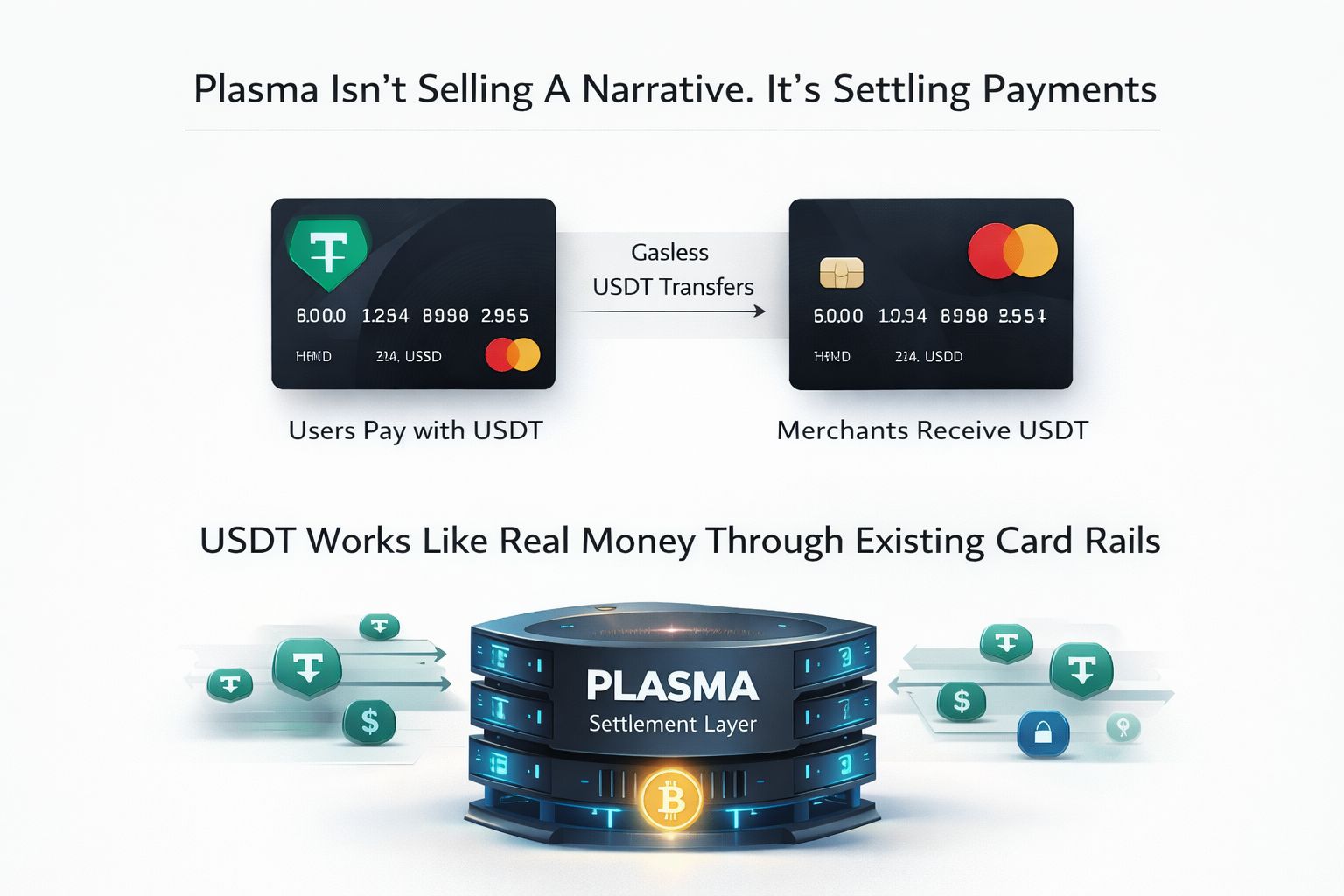
One of the clearest signals is how Plasma is pushing stablecoins into the real world through card-based payments. USDT on Plasma can now be spent at millions of merchant locations globally via existing card rails. This isn’t a future promise or a beta demo. It’s a practical shift toward stablecoins behaving like actual money.
The flow is simple:
• Users spend USDT
• Merchants receive USDT
Transfers are gasless, so fees don’t quietly destroy margins
That’s not a crypto-native experience. It’s a payments-native one. And that distinction matters more than most narratives admit.
To put this in context, many Ethereum L2s still require users to think about gas tokens, bridging delays, or fluctuating fees. Even when UX improves, there’s usually friction hiding underneath. Plasma strips most of that away. You send dollars. You receive dollars. The chain disappears in the background.
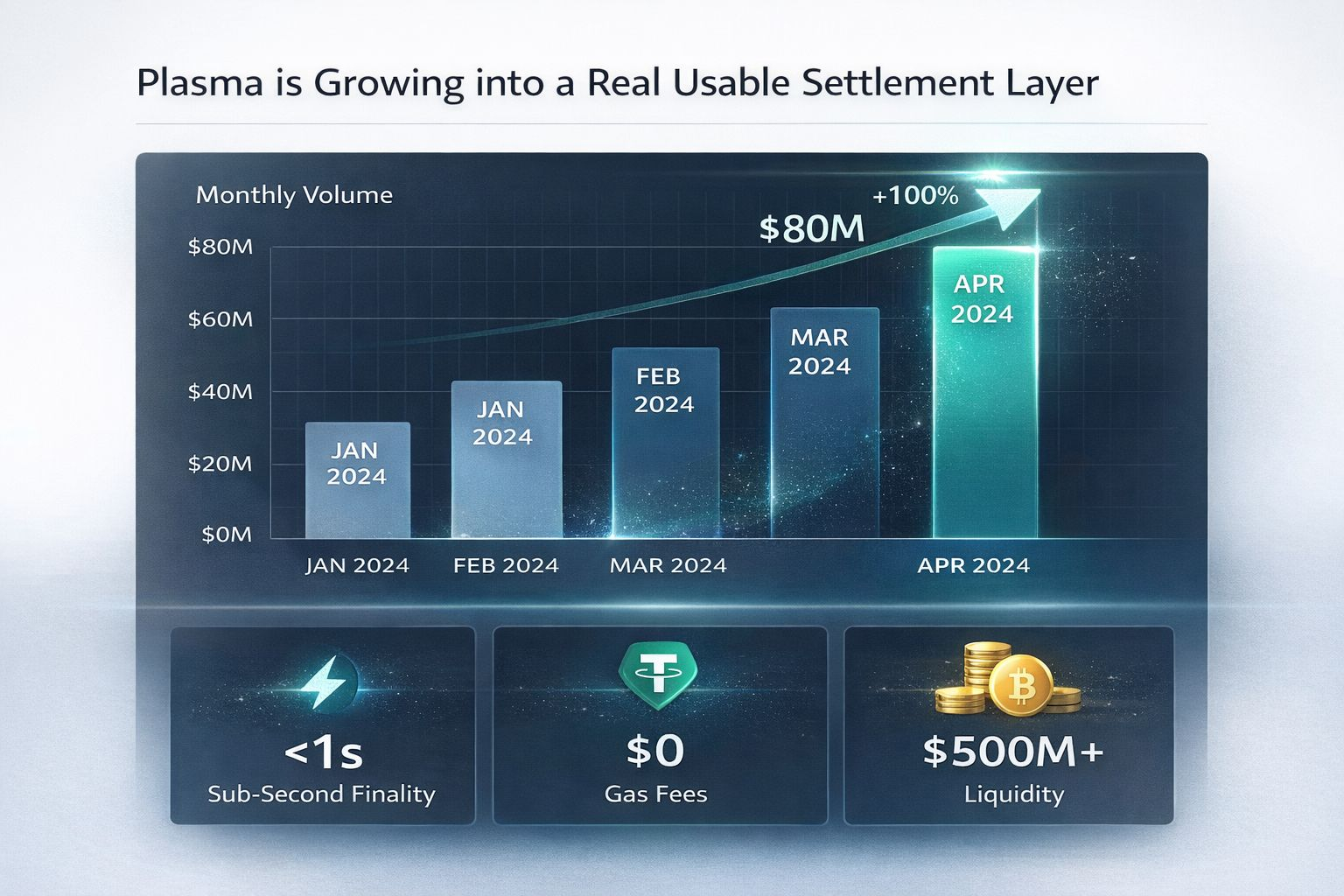
What really reinforces this shift is that Plasma isn’t just being tested at the edges. Payment processors are already routing meaningful volume through the network. One processor alone is reportedly handling around $80M per month, spanning e-commerce settlements, payroll, and FX-related flows.
That matters because businesses don’t care about narratives. They care about settlement speed, cost predictability, and reliability. If real money keeps moving through Plasma at that scale, it suggests the infrastructure is holding up under real conditions.
Speed plays a big role here. Plasma’s sub-second finality sounds like a spec-sheet bullet until you compare it to how slow most crypto payments still feel in practice. Instant settlement changes workflows. Merchants don’t wait. Payroll doesn’t lag. Reconciliation becomes simpler. Plasma is clearly optimized for the moment when users stop asking, “Is this confirmed yet?”
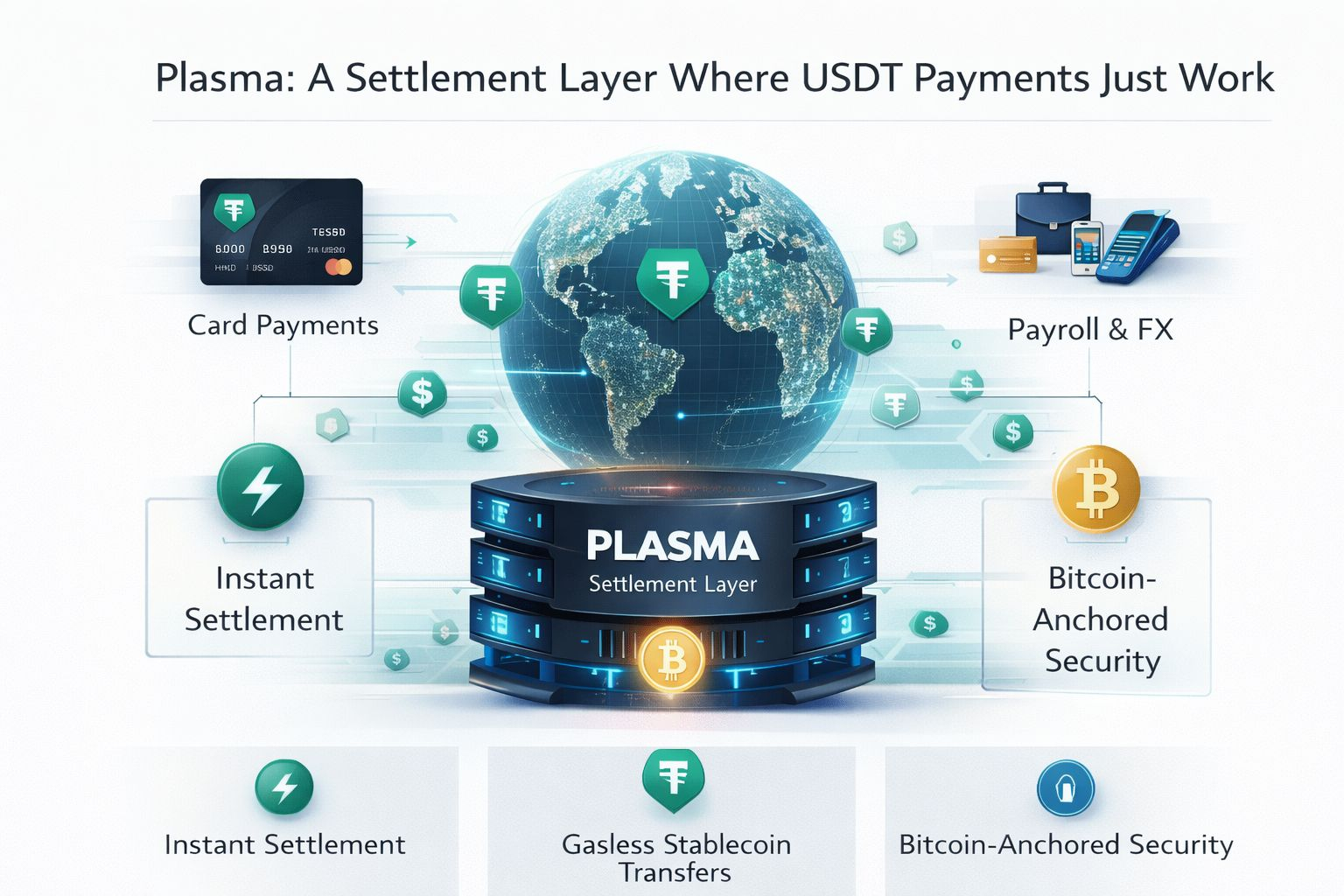
UX follows the same philosophy. Gasless USDT transfers and stablecoin-first gas remove one of crypto’s longest-running pain points. No volatile gas token. No mental math. No explaining fees in something that isn’t dollars. You send USDT, you pay in USDT, done. It sounds boring and that’s exactly why it works. Payments should be boring.
On the token side, the design feels intentional. Most users interact almost entirely with USDT, while $XPL operates underneath as infrastructure. It secures the network, aligns validators, and supports long-term incentives. Plasma isn’t forcing token usage into payments. It’s separating user experience from protocol economics, which is usually how real financial infrastructure scales.
Plasma’s ecosystem positioning is also pragmatic. Instead of locking liquidity inside its own walls, it integrates with cross-chain settlement frameworks, allowing USDT and $XPL to move across dozens of chains via aggregated liquidity pools. For a settlement layer, this matters. Money needs to take the fastest and cheapest route, not get trapped by chain loyalty.
Liquidity depth is starting to follow usage. Stablecoin pools connected to Plasma-linked ecosystems now sit in the hundreds of millions, with adjacent environments pushing toward billion-dollar territory. Speed without liquidity breaks the moment volume scales. Plasma seems aware of that tradeoff.
Security is where Plasma plays the long game. Its Bitcoin-anchored security model isn’t flashy, but it sends a clear signal. As stablecoins become more politically and regulatorily sensitive, neutrality and censorship resistance stop being abstract ideas. They become requirements. Anchoring settlement guarantees to Bitcoin looks less like ideology and more like preparation.
That said, risks remain. Competition is intense. Ethereum L2s are improving UX fast. Payment-focused chains keep launching. Card integrations introduce partner dependency risk, and stablecoins themselves carry issuer and regulatory exposure. Upcoming token unlocks will also test market confidence.
Still, #Plasma isn’t trying to be everything. It’s trying to be dependable.
Fast settlement. Predictable costs. Real-world integrations. Minimal friction.
If stablecoins are becoming the default money layer of the internet, the chains that treat them as actual money not just DeFi tools are going to matter most. Plasma is starting to look like it understands that.


