Binance Square
#web3usability

web3usability

37 Aufrufe
9 Kommentare
Winifred Akemon OBNU
·
--
Artikel
Übersetzung ansehen
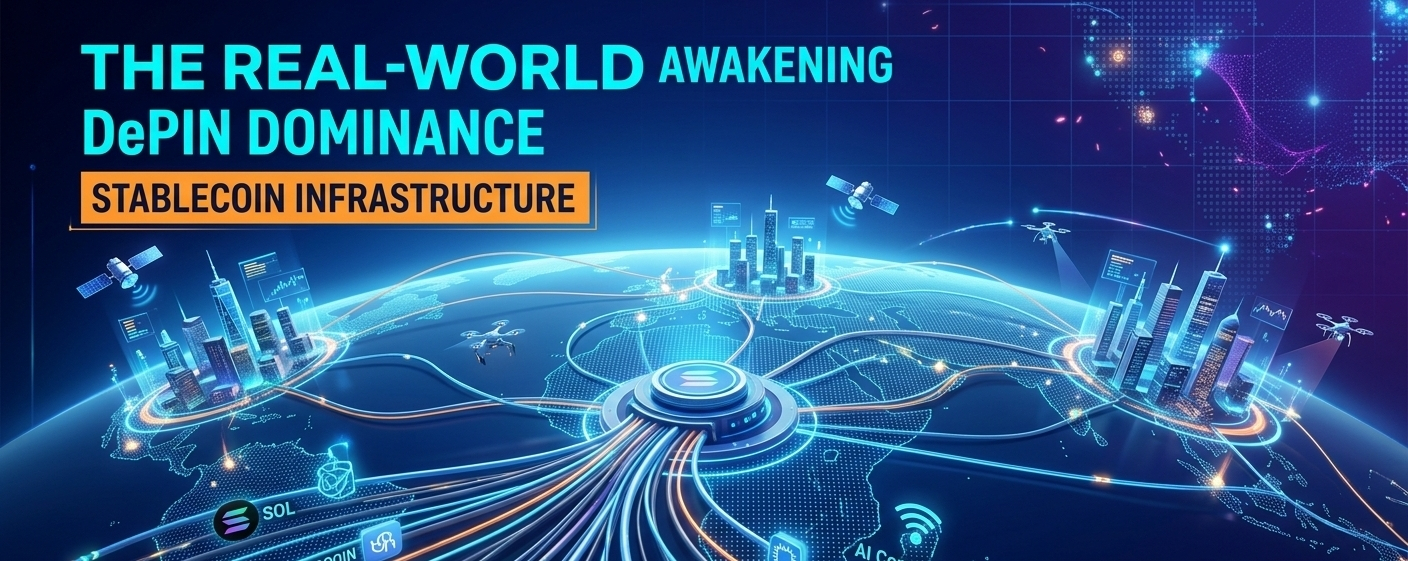
The Real-World Awakening: Why Stablecoin Infrastructure and DePIN Are Dominating H2 2026The Real-World Awakening: Why Stablecoin Infrastructure and DePIN Are Dominating H2 2026For the longest time, critics loved to bash the crypto industry with the same old argument: "But what is the actual real-world use case?"During previous cycles, it was hard to argue back. We were mostly trading speculative assets, looking at monkey pictures, and farming yield from empty-hype tokens. However, heading into the second half of 2026, the entire narrative has fundamentally shifted. The market is moving away from financial abstractions and leaning heavily into tangible, real-world utility.If you want to catch the next major structural wave, it’s time to stop looking at overnight micro-cap memes and start paying attention to Stablecoin Infrastructure and DePIN (Decentralized Physical Infrastructure Networks). Here is why the smart money is shifting gears. 1. Stablecoins Are Moving Beyond the Crypto BubbleIt used to be that stablecoins were just a safe-haven tool for traders sitting on centralized exchanges. Not anymore. Data from DefiLlama shows the global stablecoin market cap sitting at a staggering $323 billion, proving that digital dollars have become the internet's definitive settlement layer.While market mainstays like Tether’s $USDT still hold massive dominance, the real story right now is the sudden surge in institutional competition. Thanks to sweeping regulatory progressions like the GENIUS Act in the United States, decentralized payment networks are going corporate. Fresh entries backed by financial consortiums—such as Paxos's Global Dollar ($USDC ) surpassing $3.2 billion in circulation—are building a world where cross-border payments happen instantly, completely bypassing legacy banking networks.The play here isn’t just holding the stablecoins themselves; it’s identifying the network infrastructure powering them. The Layer-1 blockchains handling the highest daily settlement volume, the scaling solutions keeping transaction gas fees under a penny, and the Web3 payment gateways are the entities absorbing massive structural value. 2. The Rise of DePIN: Crypto Meets MachineThe second massive narrative gaining immense traction this quarter is DePIN. Think of DePIN as crowd-sourcing real-world infrastructure using token incentives. Instead of a multi-billion dollar corporation building cloud data centers, wireless 5G networks, or mapping systems, decentralized networks allow thousands of individual node operators to pool their hardware resources together.Why is this blowing up in 2026? Because of the AI boom.Artificial Intelligence models require massive computational power, cheaper storage, and localized data collection. High-speed protocols like Solana ($SOL L) have become absolute hotspots for DePIN projects because their high throughput allows real-time coordination of thousands of hardware devices. From distributed GPU rendering networks to machine-native payment rails for automated systems, crypto is shifting into production-ready infrastructure. 3. Regulatory Clarity is Unlocking Institutional TrillionsWe can't talk about H2 2026 without addressing the regulatory elephant in the room. The market is currently bracing for a monumental shift with the SEC’s upcoming "Regulation Crypto" agenda.According to early proposals, the agency is considering crucial safe harbors designed specifically for decentralized finance (DeFi) projects and hardware networks. Under these rules, once developers hand over a network to its community and it achieves true decentralization, the underlying utility token will no longer be treated as a security.This is the exact "green light" that risk-averse venture funds and sovereign wealth entities have been waiting for. It allows them to confidently deploy capital into functional, asset-backed Web3 ecosystems without legal fear. The Takeaway for TradersThe retail market might still be obsessing over short-term price ranges, but structural growth is happening beneath the surface. The projects that survive and thrive over the coming years won't be the ones selling empty promises—they will be the networks providing the plumbing for international commerce, cloud computing, and real-world infrastructure.Are you actively exposing your portfolio to DePIN and stablecoin utility plays, or are you still relying on traditional Layer-1 cycles? Let’s talk in the comments below! 👇Make sure to Like, Follow, and Share to keep up with the latest structural market shifts!Disclaimer: This article is for informational purposes only and does not constitute investment advice. Always perform your own thorough research (DYOR) before allocating capital.#DePIN. #Stablecoins #CryptoTrends2026 #Web3Usability #BinanceSquare

The Real-World Awakening: Why Stablecoin Infrastructure and DePIN Are Dominating H2 2026

The Real-World Awakening:
Why Stablecoin Infrastructure and DePIN Are Dominating H2 2026For the longest time, critics loved to bash the crypto industry with the same old argument: "But what is the actual real-world use case?"During previous cycles, it was hard to argue back. We were mostly trading speculative assets, looking at monkey pictures, and farming yield from empty-hype tokens. However, heading into the second half of 2026, the entire narrative has fundamentally shifted. The market is moving away from financial abstractions and leaning heavily into tangible, real-world utility.If you want to catch the next major structural wave, it’s time to stop looking at overnight micro-cap memes and start paying attention to Stablecoin Infrastructure and DePIN (Decentralized Physical Infrastructure Networks). Here is why the smart money is shifting gears.
1. Stablecoins Are Moving Beyond the Crypto BubbleIt used to be that stablecoins were just a safe-haven tool for traders sitting on centralized exchanges. Not anymore. Data from DefiLlama shows the global stablecoin market cap sitting at a staggering $323 billion, proving that digital dollars have become the internet's definitive settlement layer.While market mainstays like Tether’s $USDT still hold massive dominance, the real story right now is the sudden surge in institutional competition. Thanks to sweeping regulatory progressions like the GENIUS Act in the United States, decentralized payment networks are going corporate. Fresh entries backed by financial consortiums—such as Paxos's Global Dollar ($USDC ) surpassing $3.2 billion in circulation—are building a world where cross-border payments happen instantly, completely bypassing legacy banking networks.The play here isn’t just holding the stablecoins themselves; it’s identifying the network infrastructure powering them. The Layer-1 blockchains handling the highest daily settlement volume, the scaling solutions keeping transaction gas fees under a penny, and the Web3 payment gateways are the entities absorbing massive structural value.
2. The Rise of DePIN: Crypto Meets MachineThe second massive narrative gaining immense traction this quarter is DePIN. Think of DePIN as crowd-sourcing real-world infrastructure using token incentives. Instead of a multi-billion dollar corporation building cloud data centers, wireless 5G networks, or mapping systems, decentralized networks allow thousands of individual node operators to pool their hardware resources together.Why is this blowing up in 2026? Because of the AI boom.Artificial Intelligence models require massive computational power, cheaper storage, and localized data collection. High-speed protocols like Solana ($SOL L) have become absolute hotspots for DePIN projects because their high throughput allows real-time coordination of thousands of hardware devices. From distributed GPU rendering networks to machine-native payment rails for automated systems, crypto is shifting into production-ready infrastructure.
3. Regulatory Clarity is Unlocking Institutional TrillionsWe can't talk about H2 2026 without addressing the regulatory elephant in the room. The market is currently bracing for a monumental shift with the SEC’s upcoming "Regulation Crypto" agenda.According to early proposals, the agency is considering crucial safe harbors designed specifically for decentralized finance (DeFi) projects and hardware networks. Under these rules, once developers hand over a network to its community and it achieves true decentralization, the underlying utility token will no longer be treated as a security.This is the exact "green light" that risk-averse venture funds and sovereign wealth entities have been waiting for. It allows them to confidently deploy capital into functional, asset-backed Web3 ecosystems without legal fear.
The Takeaway for TradersThe retail market might still be obsessing over short-term price ranges, but structural growth is happening beneath the surface. The projects that survive and thrive over the coming years won't be the ones selling empty promises—they will be the networks providing the plumbing for international commerce, cloud computing, and real-world infrastructure.Are you actively exposing your portfolio to DePIN and stablecoin utility plays, or are you still relying on traditional Layer-1 cycles? Let’s talk in the comments below! 👇Make sure to Like, Follow, and Share to keep up with the latest structural market shifts!Disclaimer: This article is for informational purposes only and does not constitute investment advice. Always perform your own thorough research (DYOR) before allocating capital.#DePIN. #Stablecoins #CryptoTrends2026 #Web3Usability #BinanceSquare
Anmelden und weiter Inhalte entdecken
Krypto-Nutzer weltweit auf Binance Square kennenlernen
⚡️ Bleib in Sachen Krypto stets am Puls.
💬 Die weltgrößte Kryptobörse vertraut darauf.
👍 Erhalte verlässliche Einblicke von verifizierten Creators.
E-Mail-Adresse/Telefonnummer