

#web3security
web3security
615,609 Aufrufe
1,360 Kommentare
Hot
Zuletzt

·
--
#BinanceWiederherstellung90% der gestohlenen Vermögenswerte
🚀 Von der Krise zur absoluten Widerstandsfähigkeit: Wie Binance in weniger als 72 Stunden gerade 90 % der gestohlenen Vermögenswerte wiederhergestellt hat
Die Charts lügen nicht, und das Update vom 31. Oktober auf Binance Square bestätigt einen enormen architektonischen Erfolg für das gesamte Krypto-Ökosystem. Nach der jüngsten Sicherheitslücke im Umfang von 6,3 Milliarden US-Dollar hat Binance offiziell 90 % der abgedeckten gestohlenen Vermögenswerte wiederhergestellt – nur einen Tag zuvor waren es noch 80 %.
Das ist nicht einfach nur eine Wiederherstellung, sondern eine Meisterleistung im Risikomanagement und bei der institutionellen Unterstützung. Darum reagiert der Markt mit solcher Stärke:
1. SAFU und Unternehmensreserven beweisen ihren Wert
Als Kritiker die von Börsen gestützten Sicherheitsfonds anzweifelten, sprang Binance ein und deckte BTC, ETH und andere wichtige Vermögenswerte vollständig aus eigenen Reserven und SAFU-Fonds ab. Dein Kapital war nicht nur „auf dem Papier versichert“ – es wurde tatsächlich vollständig ersetzt.
2. Die Macht der On-Chain-Koordination
Durch die direkte Zusammenarbeit mit Blockchain-Partnern und Betreibern von Sicherheitsknotenpunkten wurde ein erstaunlich großer Teil der nicht autorisierten Transaktionen nahezu sofort eingefroren. Das beweist, dass dezentrale Ökosysteme bei schwarzen Schwänen blitzschnell zusammenarbeiten können.
3. Vollständige Marktstabilisierung
Sieh dir die Charts heute an: BNB, BTC und ETH leuchten bereits grün (+0,58 %, +0,48 %, +0,47 %). Die FUD (Angst, Unsicherheit und Zweifel) verflüchtigt sich, weil sich die Börse für radikale Transparenz und sofortiges Handeln statt für unternehmerische Verzögerungen entschieden hat.
Die goldene Web3-Regel ist wiederhergestellt:
Sicherheitsverletzungen sind eine unvermeidliche Entwicklung der Technologie, aber *wie eine Börse darauf reagiert*, prägt ihr Vermächtnis. Dieser schnelle Meilenstein der Wiederherstellung von 90 % setzt einen beispiellosen Branchenstandard für den Schutz der Nutzer.
Die Gelder sind strukturell, mathematisch und offiziell SAFU. 🔒🦾
Was hältst du von diesem schnellen Fortschritt bei der Wiederherstellung? Schreib deine Kommentare unten! 👇
#Web3Security #safu #BNB #KryptoNachrichten
97

·
--
Bevor ich zu dieser Uhrzeit irgendwelche Charts ansehe, überprüfe ich immer die PoR-Daten der Börse. Dass $SOL ruhig bei etwa 96.41 verharrt, erinnert mich daran, dass On-Chain-Sicherheit und der Zustand der Bridge weit wichtiger sind als kurzfristiges Rauschen. Vergiss nicht, Smart-Contract-Auditberichte und Merkle-Tree-Beweise zu prüfen. Pass gut auf dich auf.
#ProofOfReserves #Web3Security #SOL
#ProofOfReserves #Web3Security #SOL
1
2

·
--
Artikel
Übersetzung ansehen
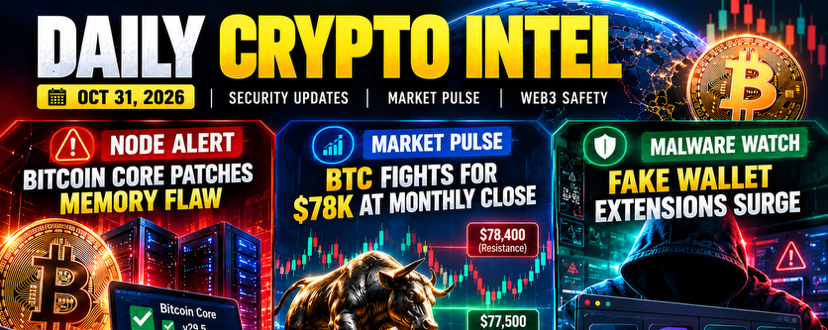
🚨 Crypto Security Is Evolving: Three Threats Every Web3 User Should UnderstandThe crypto ecosystem is growing, but so are the risks surrounding it.
October 31 brings three important security lessons for anyone participating in Bitcoin and Web3: node vulnerabilities, malicious wallet extensions, and the importance of taking responsibility for your own security.
Let’s break them down.
1. Bitcoin Core: Why Node Updates Matter
Bitcoin’s security depends on thousands of independent nodes validating transactions and maintaining network rules.
Bitcoin Core recently disclosed three security vulnerabilities and released patched versions:
29.5
30.4
31.2
32.1
One of the disclosed issues could allow malicious peers to exhaust memory and crash affected Windows, macOS and BSD nodes.
This is an important reminder: running your own Bitcoin node is not a one-time setup. It requires maintenance, monitoring and timely security updates.
Lesson: Decentralization also requires responsible node operators.
2. Bitcoin Market: Security and Volatility Go Together
Bitcoin continues to experience volatility around the $77K–$78K region.
Market participants are watching price action, trading volume and derivatives positioning as October comes to a close.
But remember something important:
A price rebound does not automatically mean a market recovery, and a support level is never guaranteed.
Instead of following every market prediction, understand the difference between:
Spot buying and leveraged trading
Open interest and trading volume
Funding rates and liquidation events
Short-term support and long-term market structure
Lesson: Risk management matters more than predicting every candle.
3. Fake Wallet Extensions: A Threat to Self-Custody
One of the most concerning developments involves malicious browser extensions impersonating popular Web3 wallets.
Researchers identified fake extensions impersonating Phantom, Jupiter and Bitget.
These malicious tools could steal recovery phrases and private keys, potentially allowing attackers to take control of victims’ funds.
This highlights a dangerous misconception:
Just because an extension appears in a browser store does not automatically make it trustworthy.
Before installing a wallet:
Start from the project’s verified website.
Follow its official extension link.
Check the publisher carefully.
Never enter your recovery phrase into an unsolicited website.
Consider hardware-wallet protection for significant holdings.
Lesson: Self-custody gives you control, but it also makes you responsible for protecting your keys.
🔐 The Bigger Picture: Security Is a Shared Responsibility
These three developments represent different layers of Web3 security:
Infrastructure security: Keep your Bitcoin node updated.
Market security: Understand volatility and manage financial risk.
Personal security: Protect your wallet, private keys and recovery phrase.
Crypto security cannot depend entirely on exchanges, developers or wallet providers.
Every participant has a role to play.
The future of Web3 will not be built only by faster transactions, new tokens or higher valuations. It will also depend on how effectively we protect the infrastructure and people using it.
💬 Let’s Discuss
Which security layer do you think needs the most attention today?
A. Bitcoin infrastructure and node security
B. Wallet and private-key protection
C. Exchange and smart-contract security
D. User awareness and education
Share your thoughts below.
Stay curious. Verify before you trust. Stay secure. 🛡️
#bitcoin #Web3Security #CryptoSafety #PhantomWallet #DeFi #CyberSecurity #Blockchain #BinanceSquare
🚨 Crypto Security Is Evolving: Three Threats Every Web3 User Should Understand
The crypto ecosystem is growing, but so are the risks surrounding it.
October 31 brings three important security lessons for anyone participating in Bitcoin and Web3: node vulnerabilities, malicious wallet extensions, and the importance of taking responsibility for your own security.
Let’s break them down.
1. Bitcoin Core: Why Node Updates Matter
Bitcoin’s security depends on thousands of independent nodes validating transactions and maintaining network rules.
Bitcoin Core recently disclosed three security vulnerabilities and released patched versions:
29.5
30.4
31.2
32.1
One of the disclosed issues could allow malicious peers to exhaust memory and crash affected Windows, macOS and BSD nodes.
This is an important reminder: running your own Bitcoin node is not a one-time setup. It requires maintenance, monitoring and timely security updates.
Lesson: Decentralization also requires responsible node operators.
2. Bitcoin Market: Security and Volatility Go Together
Bitcoin continues to experience volatility around the $77K–$78K region.
Market participants are watching price action, trading volume and derivatives positioning as October comes to a close.
But remember something important:
A price rebound does not automatically mean a market recovery, and a support level is never guaranteed.
Instead of following every market prediction, understand the difference between:
Spot buying and leveraged trading
Open interest and trading volume
Funding rates and liquidation events
Short-term support and long-term market structure
Lesson: Risk management matters more than predicting every candle.
3. Fake Wallet Extensions: A Threat to Self-Custody
One of the most concerning developments involves malicious browser extensions impersonating popular Web3 wallets.
Researchers identified fake extensions impersonating Phantom, Jupiter and Bitget.
These malicious tools could steal recovery phrases and private keys, potentially allowing attackers to take control of victims’ funds.
This highlights a dangerous misconception:
Just because an extension appears in a browser store does not automatically make it trustworthy.
Before installing a wallet:
Start from the project’s verified website.
Follow its official extension link.
Check the publisher carefully.
Never enter your recovery phrase into an unsolicited website.
Consider hardware-wallet protection for significant holdings.
Lesson: Self-custody gives you control, but it also makes you responsible for protecting your keys.
🔐 The Bigger Picture: Security Is a Shared Responsibility
These three developments represent different layers of Web3 security:
Infrastructure security: Keep your Bitcoin node updated.
Market security: Understand volatility and manage financial risk.
Personal security: Protect your wallet, private keys and recovery phrase.
Crypto security cannot depend entirely on exchanges, developers or wallet providers.
Every participant has a role to play.
The future of Web3 will not be built only by faster transactions, new tokens or higher valuations. It will also depend on how effectively we protect the infrastructure and people using it.
💬 Let’s Discuss
Which security layer do you think needs the most attention today?
A. Bitcoin infrastructure and node security
B. Wallet and private-key protection
C. Exchange and smart-contract security
D. User awareness and education
Share your thoughts below.
Stay curious. Verify before you trust. Stay secure. 🛡️
#bitcoin #Web3Security #CryptoSafety #PhantomWallet #DeFi #CyberSecurity #Blockchain #BinanceSquare
81

·
--
$BNB
Wie Binance mit diesem jüngsten Sicherheitsvorfall im Umfang von 6,3 Milliarden US-Dollar umgeht, zeigt genau, warum ein Sicherheitsnetz in Web3 wichtig ist. Dass der Angriff auf einen kompromittierten DevOps-Laptop und nicht auf den Verlust eines zentralen Schlüssels zurückzuführen war, erinnert eindringlich daran, wie anfällig herkömmliche Sicherheitskonzepte für den operativen Betrieb sein können – selbst bei Branchenriesen.
Am auffälligsten ist die Geschwindigkeit der Abwehrmaßnahmen – insbesondere die Zusammenarbeit mit Stablecoin- und Blockchain-Partnern, um nahezu unmittelbar rund 3 Milliarden US-Dollar auf der Blockchain einzufrieren. Das zeigt, dass eine zentral koordinierte Reaktion in einer Krise nach wie vor zu unseren stärksten Mitteln gehört, um das Ökosystem zu schützen.
Dass der SAFU-Fonds und die Unternehmensreserven einspringen, um die Verluste der Nutzer vollständig abzudecken, stärkt deren Vertrauen, während die technischen Teams ihre umfassenden Untersuchungen im Nachgang durchführen. Deine Gelder bleiben sicher – darauf kommt es letztlich an.
Wie steht ihr zu solchen Einfrierungen von Vermögenswerten auf der Blockchain? Ist das schnelle Einfrieren durch Stablecoin-Partner ein notwendiger Schutz für die Branche, oder geht es damit zu weit und schränkt die Dezentralisierung zu stark ein? Schreibt mir eure Meinung unten in die Kommentare!
#safu #Web3Security
98

·
--
Bullisch
SAFU ist mehr als ein Fonds – es ist ein Bekenntnis zu Vertrauen! 🛡️
In Web3 ist der Schutz deiner Bestände genauso wichtig wie das Wachstum deines Portfolios.
Die wahre Stärke von Kryptowährungen zeigt sich nicht nur in bullischen Kerzen, neuen Listings oder Marktrallyes. Sie liegt in Sicherheit, Transparenz und dem Vertrauen, dass Nutzer ihre Vermögenswerte verantwortungsvoll verwalten können.
Der SAFU-Fonds von Binance (Secure Asset Fund for Users) ist eine wichtige zusätzliche Schutzebene für Nutzer. Denk aber daran: SAFU ersetzt nicht deine persönliche Sicherheitsvorsorge und ist keine Garantie gegen jeden möglichen Verlust.
Hier sind 5 Maßnahmen, die alle Krypto-Besitzer befolgen sollten:
🔐 Aktiviere Passkeys und eine starke Zwei-Faktor-Authentifizierung.
🔐 Bewahre langfristige Bestände in einer sicheren Hardware-Wallet auf.
🔐 Gib niemals deine Seed-Phrase oder privaten Schlüssel weiter.
🔐 Überprüfe URLs, Smart Contracts und Auszahlungsadressen.
🔐 Nutze separate Wallets für tägliche DeFi-Aktivitäten und langfristige Vermögenswerte.
Meine Philosophie ist einfach: Schütze zuerst dein Kapital und erkunde dann die Möglichkeiten.
Ein kluger Anleger fragt nicht nur, wie viel er verdienen kann, sondern auch, wie sicher er sein Eigentum schützen kann.
Bleib SAFU. Bleib clever. Bau mit Zuversicht auf! 🚀
#Binance #SAFU #Web3Security #CryptoHoldings #BinanceSquare
$FHE
$LAB
$RAVE
@CZ
@carrywang55688
@CT988
@Square-Creator-1df1e693e2192
@njs-btc
@riyadscreation
@UP206688
@Ramadone
@earnwithsapna
@Janu-BNB
@happy-cute-seal
@sanmageshuai
@heyi
@3Geng
@eggtartcake_grape
@Square-Creator-8e9ff412dd66
@wendyr9
@Square-Creator-ec0b79c923cb8
@Square-Creator-ca6776987
@Square-Creator-5be384236
SAFU ist mehr als ein Fonds – es ist ein Bekenntnis zu Vertrauen! 🛡️
In Web3 ist der Schutz deiner Bestände genauso wichtig wie das Wachstum deines Portfolios.
Die wahre Stärke von Kryptowährungen zeigt sich nicht nur in bullischen Kerzen, neuen Listings oder Marktrallyes. Sie liegt in Sicherheit, Transparenz und dem Vertrauen, dass Nutzer ihre Vermögenswerte verantwortungsvoll verwalten können.
Der SAFU-Fonds von Binance (Secure Asset Fund for Users) ist eine wichtige zusätzliche Schutzebene für Nutzer. Denk aber daran: SAFU ersetzt nicht deine persönliche Sicherheitsvorsorge und ist keine Garantie gegen jeden möglichen Verlust.
Hier sind 5 Maßnahmen, die alle Krypto-Besitzer befolgen sollten:
🔐 Aktiviere Passkeys und eine starke Zwei-Faktor-Authentifizierung.
🔐 Bewahre langfristige Bestände in einer sicheren Hardware-Wallet auf.
🔐 Gib niemals deine Seed-Phrase oder privaten Schlüssel weiter.
🔐 Überprüfe URLs, Smart Contracts und Auszahlungsadressen.
🔐 Nutze separate Wallets für tägliche DeFi-Aktivitäten und langfristige Vermögenswerte.
Meine Philosophie ist einfach: Schütze zuerst dein Kapital und erkunde dann die Möglichkeiten.
Ein kluger Anleger fragt nicht nur, wie viel er verdienen kann, sondern auch, wie sicher er sein Eigentum schützen kann.
Bleib SAFU. Bleib clever. Bau mit Zuversicht auf! 🚀
#Binance #SAFU #Web3Security #CryptoHoldings #BinanceSquare
$FHE
$LAB
$RAVE
@CZ
@独领风骚必暴富
@Luna春婷
@鎏渊
@njs-btc
@Riyads Creation
@大宝剑up
@_Ram
@Sapna Singh
@janu-bnb
@快乐的小海豹
@三马哥
@Yi He
@3G
@Eggtartcake
@Eggtars
@Wendy 🇻🇳
@ MY
@Min-D
@Ethan稳赚U哥
1
848

·
--
Was prüfen Sie, bevor Sie sich mit einer DApp verbinden?Viele Web3-Nutzer verbinden ihre Wallet regelmäßig mit verschiedenen dezentralen Anwendungen.
Doch vor dem Verbinden sollten Sie einige Dinge sorgfältig prüfen.
Prüfen Sie zunächst, ob Sie die gewünschte Anwendung aufgerufen haben, und vermeiden Sie gefälschte Websites, die über unbekannte Links erreichbar sind.
Achten Sie außerdem auf Verbindungs-, Signatur- oder Autorisierungsanfragen, die in Ihrer Wallet angezeigt werden. Die Berechtigungen und möglichen Auswirkungen unterscheiden sich je nach Vorgang.
Prüfen Sie schließlich vor dem Absenden einer On-Chain-Transaktion den Empfänger, den Umfang der Berechtigung und die Netzwerkgebühr.
BNQ GLOBAL bietet bereits einen DApp-Zugang. Nutzer können über die APP auf entsprechende On-Chain-Anwendungen zugreifen.
Was prüfen Sie, bevor Sie sich mit einer DApp verbinden?
Viele Web3-Nutzer verbinden ihre Wallet regelmäßig mit verschiedenen dezentralen Anwendungen.
Doch vor dem Verbinden sollten Sie einige Dinge sorgfältig prüfen.
Prüfen Sie zunächst, ob Sie die gewünschte Anwendung aufgerufen haben, und vermeiden Sie gefälschte Websites, die über unbekannte Links erreichbar sind.
Achten Sie außerdem auf Verbindungs-, Signatur- oder Autorisierungsanfragen, die in Ihrer Wallet angezeigt werden. Die Berechtigungen und möglichen Auswirkungen unterscheiden sich je nach Vorgang.
Prüfen Sie schließlich vor dem Absenden einer On-Chain-Transaktion den Empfänger, den Umfang der Berechtigung und die Netzwerkgebühr.
BNQ GLOBAL bietet bereits einen DApp-Zugang. Nutzer können über die APP auf entsprechende On-Chain-Anwendungen zugreifen.
67

·
--
Warum können DeFi-Projekte gehackt werden, obwohl sie ein Audit bestanden haben? 🔐
Weil Sicherheit nicht nur eine Frage des Codes ist.
Schwachstellen können durch Zugriffskontrollen, Preisorakel, Cross-Chain-Brücken, die Geschäftslogik oder sogar Drittanbieterdienste entstehen. Ein einzelner Fehler kann durch den Mechanismus des Kapitalflusses zusätzlich verstärkt werden.
Als Nutzer kannst du zunächst drei Dinge tun:
🔹 Überprüfe die Vertragsadresse und die Projektankündigungen.
🔹 Verstehe Token-Freigaben und signiere nicht blind.
🔹 Achte nicht nur auf die Rendite, sondern auch auf den Umfang des Audits, Upgrade-Berechtigungen und die Möglichkeiten, Vermögenswerte abzuziehen.
Denk daran: Ein Audit bedeutet keine absolute Sicherheit, und die Rückverfolgbarkeit auf der Blockchain bedeutet nicht, dass Gelder unbedingt zurückgeholt werden können.
Was wird deiner Meinung nach von Nutzern am ehesten übersehen: Schwachstellen in Smart Contracts oder Risiken durch Freigaben und Berechtigungen?
#ONEANetwork #DeFi #Web3Security
3
8

Das größte Hindernis für die KI-Agentenökonomie ist nicht Intelligenz – sondern Vertrauen.
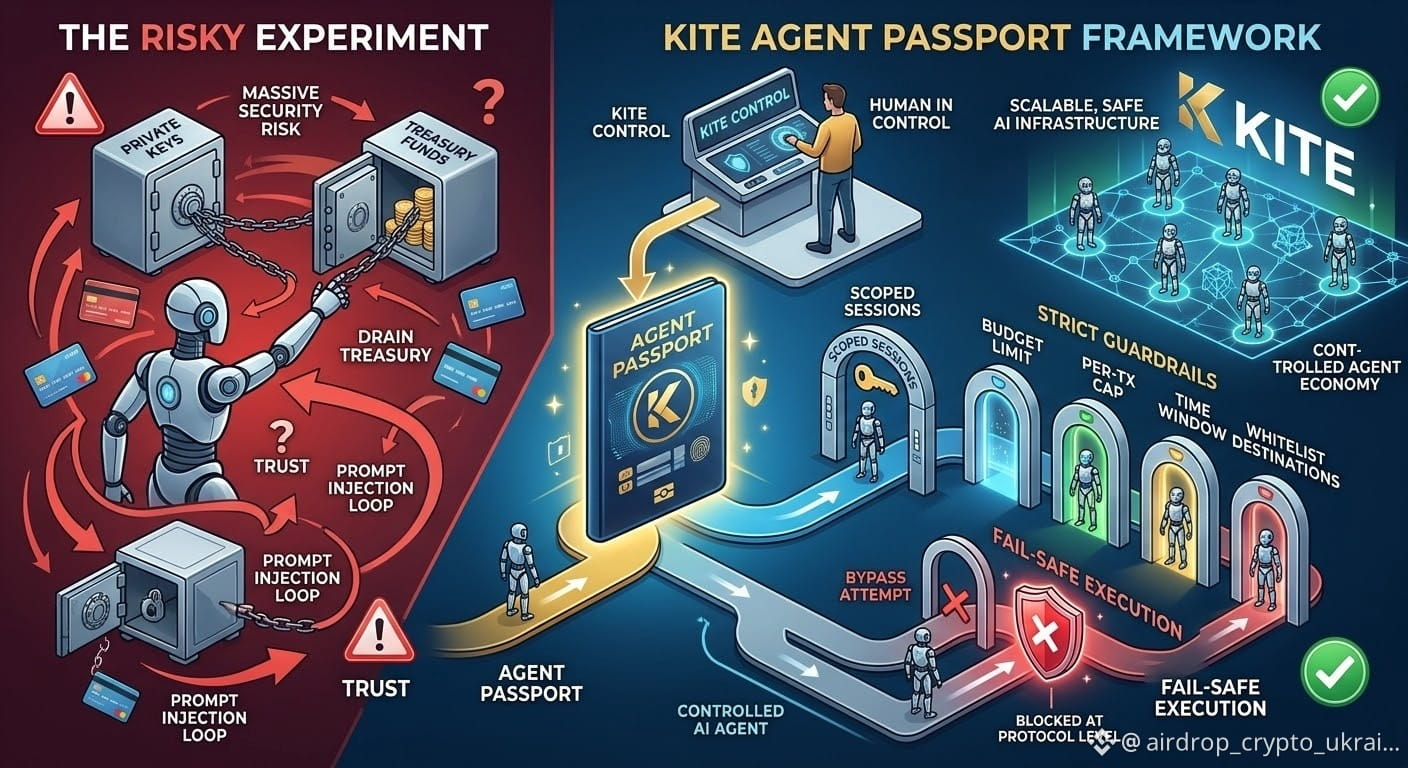
KI-Agenten Aufgaben autonom ausführen zu lassen, ist leistungsstark. Ihnen jedoch uneingeschränkten Zugriff auf Wallets oder Kreditkartendaten zu gewähren, birgt erhebliche Sicherheitsrisiken. Was, wenn eine Prompt-Injection unbeabsichtigte Aktionen auslöst? Was, wenn ein Agent eine gesamte Treasury leert?
Hier will Kite mit seinem Agent-Passport-System neue Maßstäbe setzen.
Statt sich zwischen völliger Autonomie und vollständiger Preisgabe zu entscheiden, führt Kite ein Human-in-the-Loop-/Human-in-Control-Framework ein:
1. Begrenzte Sitzungen: Aktionen werden mithilfe von Passkeys innerhalb vordefinierter Grenzen genehmigt.
2. Strenge Leitplanken: Lege feste Obergrenzen für Gesamtbudgets und Beträge pro Transaktion sowie Sitzungsablaufzeiten und zulässige Zieladressen fest.
3. Ausfallsichere Ausführung: Transaktionen, die gegen diese Parameter verstoßen, werden auf Protokollebene abgelehnt.
Indem private Schlüssel aus dem Speicher des Agenten herausgehalten und programmierbare Grenzen durchgesetzt werden, will Kite dieses Sicherheitsdilemma lösen. Menschen behalten die Kontrolle, während Agenten die operative Freiheit erhalten, die sie benötigen, um die Web3-Maschinenökonomie anzutreiben.
So kommen wir von riskanten Experimenten zu einer skalierbaren, sicheren KI-Infrastruktur.
#KiteBBW $KITE #AIAgents #Web3Security #AgentEconomy
145
·
--
On-Chain-Risikohygiene ist nicht spektakulär, aber entscheidend. Bei $SOL und einem Wert von 101,5 überprüfe ich die Abdeckung durch Protokoll-Audits und Multisig-Timelocks. Dass immer mehr Projekte für Proof-of-Reserves auf Merkle-Tree-Verifizierungen setzen, ist ein großer Gewinn für die Transparenz. Wenn die Sicherheit nicht gewährleistet ist, spielt die Rendite keine Rolle. Bleib sicher. $BTC _
#ProofOfReserves #Web3Security #SOL
#ProofOfReserves #Web3Security #SOL
8

Sicherheitswarnung: Widerrufe die Genehmigungen für deine Smart Contracts! 🛡️
Inhalt:
Wann hast du zuletzt die Berechtigungen für Smart Contracts in deiner Wallet widerrufen? 🔒
Jedes Mal, wenn du einer dApp oder einer dezentralen Börse eine Genehmigung erteilst, lässt du möglicherweise unbegrenzte Token-Ausgaben offen. Wird dieses Protokoll jemals gehackt, könnte deine Wallet leergeräumt werden!
Tu es noch heute:
🔹 Nutze Tools wie Revoke.cash oder den Token Approval Checker von BscScan.
🔹 Widerrufe alte oder nicht mehr genutzte dApp-Berechtigungen sofort.
Bleib auf der sicheren Seite! 🤝
#Web3Security #CryptoSafety #Binance
11

·
--
Mein Krypto-Sicherheitsfahrplan (Teil 8): So verwalte und widerrufe ich riskante Smart-Contract-Berechtigungen🎈🎈
🔴Die Interaktion mit dezentralen Anwendungen (DApps) und DeFi-Plattformen ist ein wichtiger Teil meiner Krypto-Aktivitäten, birgt jedoch ein verborgenes Risiko, das viele übersehen. Im Laufe der Zeit habe ich herausgefunden, dass eine „unbegrenzte Token-Freigabe“ für eine Plattform ihren Smart Contracts jederzeit Zugriff auf meine Vermögenswerte gewährt. Wird das Protokoll gehackt oder entpuppt es sich als Betrug, kann meine verbundene Wallet sofort leergeräumt werden. Um meine Krypto-Reserven zu schützen, habe ich eine strenge Routine für Kontrollen und Bereinigungen eingeführt.🚀
🔴Heute lasse ich in meinen Web3-Wallets niemals dauerhafte oder unbegrenzte Ausgabeberechtigungen aktiv. Ich verwende regelmäßig Blockchain-Scanner und Widerrufstools wie Revoke.cash, um jede einzelne Smart-Contract-Verbindung zu überprüfen, die ich eingerichtet habe. Sobald ich eine Transaktion abgeschlossen oder mit einer neuen Plattform interagiert habe, widerrufe ich die Token-Freigabe sofort oder beschränke sie auf das nötige Minimum. Genau zu kontrollieren, wer und was mit meinen digitalen Vermögenswerten interagieren darf, ist mein bester Schutz vor Smart-Contract-Exploits.🚀
#CryptoSafety #SmartContracts #Web3Security #DeFiSecurity $XAUT $BTC $BNB
💥Keine Finanzberatung
{spot}(XAUTUSDT)
Mein Krypto-Sicherheitsfahrplan (Teil 8): So verwalte und widerrufe ich riskante Smart-Contract-Berechtigungen🎈🎈
🔴Die Interaktion mit dezentralen Anwendungen (DApps) und DeFi-Plattformen ist ein wichtiger Teil meiner Krypto-Aktivitäten, birgt jedoch ein verborgenes Risiko, das viele übersehen. Im Laufe der Zeit habe ich herausgefunden, dass eine „unbegrenzte Token-Freigabe“ für eine Plattform ihren Smart Contracts jederzeit Zugriff auf meine Vermögenswerte gewährt. Wird das Protokoll gehackt oder entpuppt es sich als Betrug, kann meine verbundene Wallet sofort leergeräumt werden. Um meine Krypto-Reserven zu schützen, habe ich eine strenge Routine für Kontrollen und Bereinigungen eingeführt.🚀
🔴Heute lasse ich in meinen Web3-Wallets niemals dauerhafte oder unbegrenzte Ausgabeberechtigungen aktiv. Ich verwende regelmäßig Blockchain-Scanner und Widerrufstools wie Revoke.cash, um jede einzelne Smart-Contract-Verbindung zu überprüfen, die ich eingerichtet habe. Sobald ich eine Transaktion abgeschlossen oder mit einer neuen Plattform interagiert habe, widerrufe ich die Token-Freigabe sofort oder beschränke sie auf das nötige Minimum. Genau zu kontrollieren, wer und was mit meinen digitalen Vermögenswerten interagieren darf, ist mein bester Schutz vor Smart-Contract-Exploits.🚀
#CryptoSafety #SmartContracts #Web3Security #DeFiSecurity $XAUT $BTC $BNB
💥Keine Finanzberatung
234

·
--
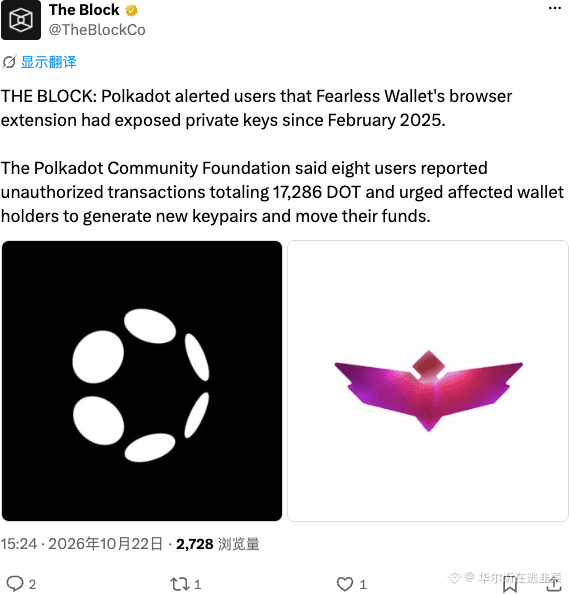
Die Browser-Erweiterung von Fearless Wallet leakt seit letztem Jahr private Schlüssel. Acht Personen haben dadurch rund 17.000 DOT verloren.
Wenn private Schlüssel völlig ungeschützt sind, was soll dann die Sicherheit? Die Sicherheitsvorkehrungen sind komplett ausgehebelt – die DOT-Wallet ist direkt Schrott.
$DOT #Web3Security
Wenn private Schlüssel völlig ungeschützt sind, was soll dann die Sicherheit? Die Sicherheitsvorkehrungen sind komplett ausgehebelt – die DOT-Wallet ist direkt Schrott.
$DOT #Web3Security
185
·
--
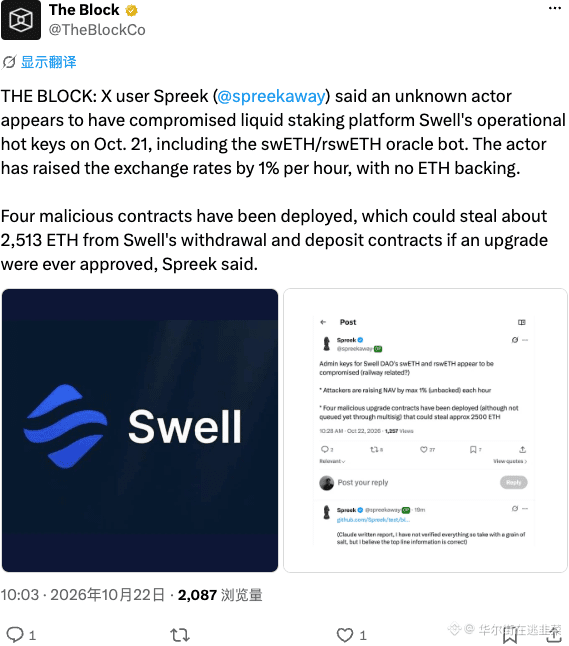
Ein X-Nutzer deckt auf: Swells Hotkey wurde gehackt. Orakel-Bots treiben den Preis jede Stunde in betrügerischer Absicht um 1 % in die Höhe – ohne ETH-Staking als Absicherung.
Der Hotkey wurde gehackt, und trotzdem wird der Preis jede Stunde ohne Staking um 1 % hochgetrieben. Bei dieser Aktion wird „Sicherheit“ mit Füßen getreten. So heiß das LSD-Segment auch sein mag – einen solchen Vertrauensverlust hält es nicht aus. Wenn On-Chain-Daten gefälscht werden, wem kann man dann noch trauen?
$SWEEL #Web3Security
85

Schütze deine Kryptowährungen: 5 Sicherheitsregeln, die alle DeFi-Nutzer kennen sollten
Die Sicherheit deiner Kryptowährungen hängt von mehr ab als nur einem starken Passwort.
Beachte diese wichtigen Regeln:
🔹 Überprüfe Websites, bevor du deine Wallet verbindest.
🔹 Teile niemals deine Wiederherstellungsphrase.
🔹 Lies Transaktionsanfragen, bevor du sie signierst.
🔹 Meide verdächtige Airdrops und Versprechen garantierter Gewinne.
🔹 Sei vorsichtig bei gefälschten Support-Konten.
Wenn du DeFi auf TON und Plattformen wie STON.fi erkundest, ist es wichtig, sichere Wallet-Gewohnheiten zu entwickeln.
Möchtest du Cybersicherheit interaktiver lernen? Entdecke das STONverse CyberSec Game:
https://stonverse.com/cybersecgame/
Lerne kontinuierlich dazu, überprüfe Informationen selbst und signiere niemals eine Transaktion, die du nicht verstehst.
@stonfi #STONfi #TON #Web3Security #defi
Schütze deine Kryptowährungen: 5 Sicherheitsregeln, die alle DeFi-Nutzer kennen sollten
Die Sicherheit deiner Kryptowährungen hängt von mehr ab als nur einem starken Passwort.
Beachte diese wichtigen Regeln:
🔹 Überprüfe Websites, bevor du deine Wallet verbindest.
🔹 Teile niemals deine Wiederherstellungsphrase.
🔹 Lies Transaktionsanfragen, bevor du sie signierst.
🔹 Meide verdächtige Airdrops und Versprechen garantierter Gewinne.
🔹 Sei vorsichtig bei gefälschten Support-Konten.
Wenn du DeFi auf TON und Plattformen wie STON.fi erkundest, ist es wichtig, sichere Wallet-Gewohnheiten zu entwickeln.
Möchtest du Cybersicherheit interaktiver lernen? Entdecke das STONverse CyberSec Game:
https://stonverse.com/cybersecgame/
Lerne kontinuierlich dazu, überprüfe Informationen selbst und signiere niemals eine Transaktion, die du nicht verstehst.
@STONfi DEX #STONfi #TON #Web3Security #defi
1
33

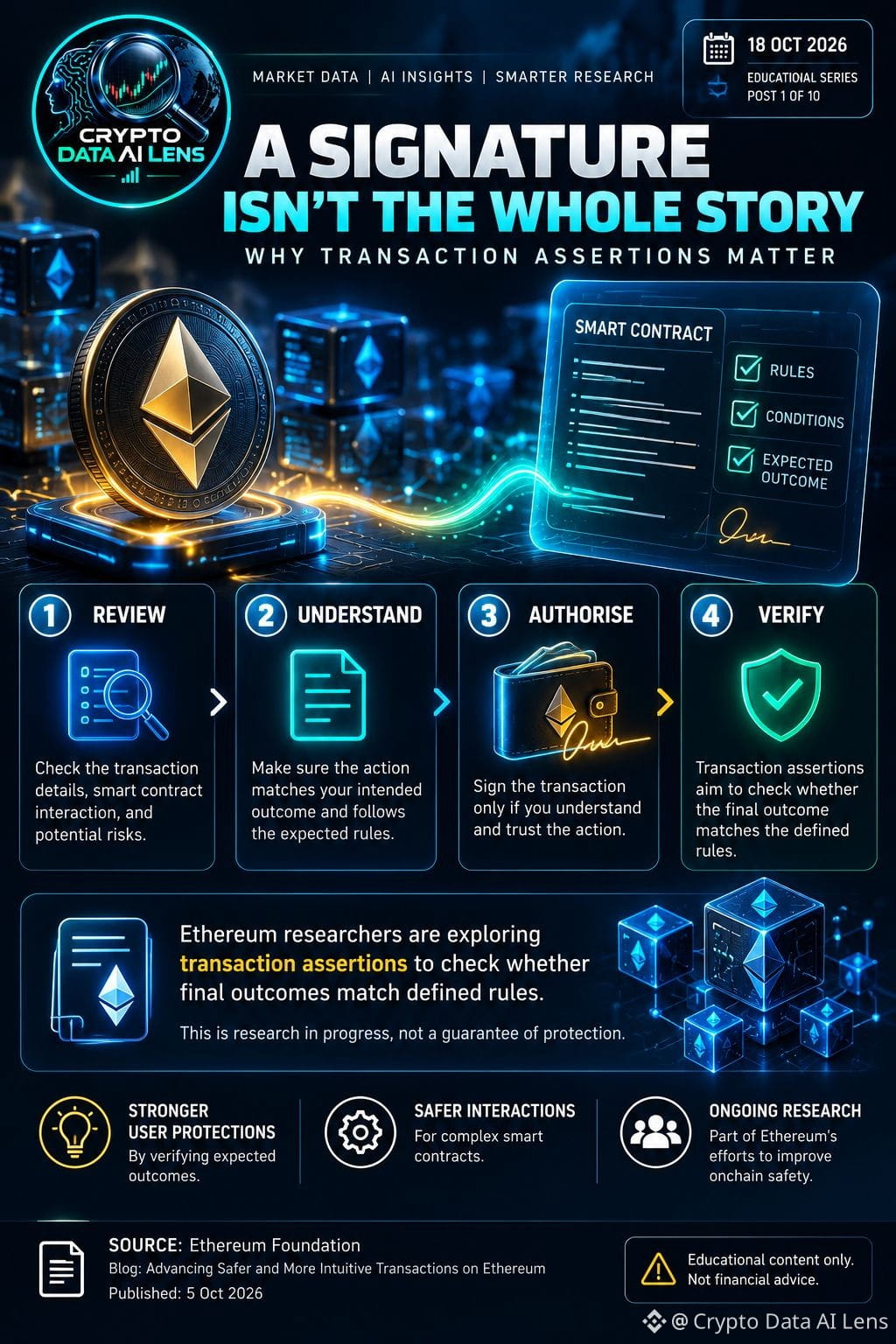
EINE GÜLTIGE SIGNATUR BEDEUTET NICHT IMMER DAS ERGEBNIS, DAS DU ERWARTET HAST 🧾
Forschende der Ethereum Foundation haben native Transaktionszusicherungen als eine mögliche Lösung für die Unsicherheit über Transaktionsergebnisse diskutiert.
Warum lohnt es sich, das zu verstehen?
Das Signieren einer Transaktion ist ein Autorisierungsschritt. Nutzer müssen weiterhin verstehen, was die Transaktion bewirken soll und welche Zustandsänderungen daraus entstehen können.
Eine sicherere Recherchepraxis umfasst Folgendes:
• Lies die Transaktionsdetails, bevor du sie bestätigst.
• Überprüfe die Anwendung und das Ziel sorgfältig.
• Sei vorsichtig, wenn ein Wallet oder eine Benutzeroberfläche dich auffordert, etwas zu bestätigen, das du nicht nachvollziehen kannst.
• Achte auf klare, überprüfbare Transaktionsinformationen, statt dich auf eine vertraut wirkende Benutzeroberfläche zu verlassen.
Das übergeordnete Ziel ist es, Transaktionsergebnisse leichter verständlich und überprüfbar zu machen.
Ethereum Foundation | Native Transaktionszusicherungen
https://blog.ethereum.org/2026/10/05/native-transaction-assertions
#Ethereum #Web3Security #BlockchainResearch #CryptoEducation
14
·
--
Das echte Alpha steckt oft in den langweiligsten Dingen. Ich verbringe mehr Zeit damit, Audit-Berichte und Ergebnisse formaler Verifizierungen zu lesen, als den Kurskerzen von $GOLD hinterherzujagen. Exploits von Bridges sind eine ständige Gefahr; gibt es weder Multisig noch PoR, halte ich mich fern. On-Chain-Hygiene sorgt dafür, dass du langfristig im Spiel bleibst. Bleib auf der sicheren Seite. $GOLD BTC _
#ProofOfReserves #Web3Security #GOLD
#ProofOfReserves #Web3Security #GOLD
1
1
·
--
Das Auditvolumen hat sich verdreifacht, doch die Verluste bleiben hoch. Das ist ein Weckruf: Die Codesicherheit ist nur die halbe Miete; menschliche Fehler und Phishing sind inzwischen die eigentlichen Verlustquellen. Über den Preis von $ETH hinaus beobachte ich PoR-Merkle-Bäume. Wenn die Besicherungsquoten nicht über 100 % liegen, ist das Risiko es nicht wert. Echtzeitüberwachung ist der neue Standard. _
#ProofOfReserves #Web3Security #ETH
#ProofOfReserves #Web3Security #ETH
1
5

·
--
Die Interaktion mit dezentralen Apps und Smart Contracts auf #Web3 erfordert ein Sicherheitsbewusstsein der nächsten Stufe 🛡️🔗
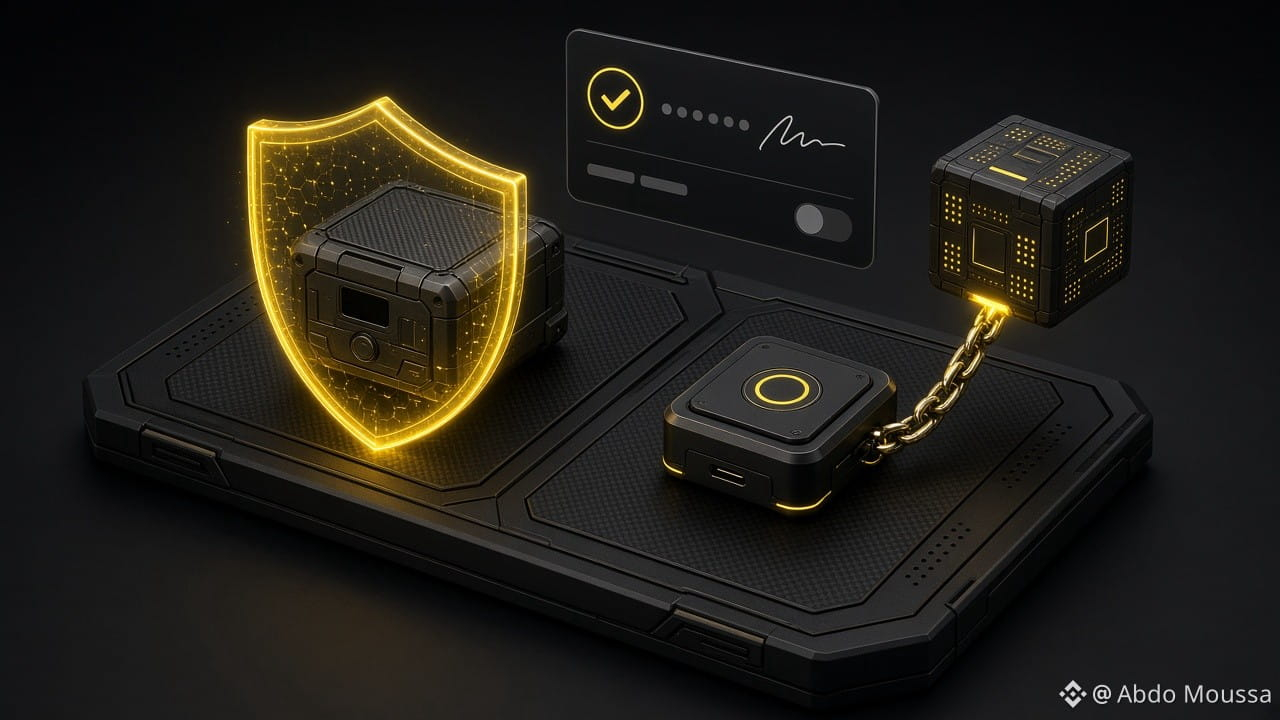
Der Schutz deiner selbstverwahrenden Wallet besteht nicht nur aus einem starken Passwort – es geht auch darum, zu verstehen, was du signierst.
Hier ist deine unverzichtbare Web3-Sicherheitscheckliste:
1️⃣ Smart-Contract-Genehmigungen überprüfen:
• Unbegrenzte Token-Genehmigungen für nicht vertrauenswürdige dezentrale Anwendungen (dApps) setzen dein gesamtes Guthaben aufs Spiel. Widerrufe regelmäßig ungenutzte Berechtigungen mit vertrauenswürdigen Tools.
• Interagiere nur mit geprüften und verifizierten Smart Contracts.
2️⃣ Jede Transaktionssignatur überprüfen:
• Klicke bei Wallet-Pop-ups niemals blind auf „Bestätigen“ oder „Signieren“, wenn du die Aktion nicht vollständig verstehst. Schädliche Signaturen können dein Guthaben abziehen, ohne dass eine herkömmliche Passwortübertragung erforderlich ist.
• Überprüfe Website-Domainnamen genau, um ausgeklügelte DNS-Spoofing-Angriffe und Phishing-Klone zu vermeiden.
3️⃣ Dein Vermögen aufteilen:
• Verwende mehrere Wallets: Bewahre deine langfristigen Anlagen in Cold Storage oder einer sicheren Vault-Wallet auf und nutze für tägliche dApp-Interaktionen eine separate Burner-Wallet.
⚠️ Wichtiger Sicherheitshinweis:
Die Sicherheit bei der Selbstverwahrung liegt vollständig in der Verantwortung der Nutzer. Der Verlust privater Schlüssel oder unbefugte Genehmigungen können nicht rückgängig gemacht werden. Diese Inhalte dienen ausschließlich Bildungszwecken.
https://www.binance.com/en/academy/articles/tags/security
Bleib sicher, überprüfe deine Verbindungen und recherchiere immer selbst (DYOR – Do Your Own Research)💡
#Binance #Web3Security #SmartContracts #WalletSecurity
4
55
·
--
Ich denke gerade über den Zustand der Web3-Sicherheit nach. Während $PAXG stabil bleibt, liegt die wahre Stärke in geprüften Smart Contracts, einer soliden Multisig-Governance und einem transparenten Reservenachweis. Bridge-Sicherheit und die Echtzeitüberwachung von Bedrohungen sind für ein gesundes Ökosystem unverzichtbar. Bleibt sicher!
#ProofOfReserves #Web3Security #PAXG
#ProofOfReserves #Web3Security #PAXG
1
8
·
--
🔐 Schütze deine Kryptowährungen, bevor du nach Gewinnen jagst!
Deine oberste Priorität im Kryptobereich sollte es sein, dein Konto und dein Guthaben zu schützen.
✅ Gib niemals dein Passwort oder Einmalpasswort weiter.
✅ Aktiviere die Zwei-Faktor-Authentifizierung.
✅ Überprüfe die Website-Adresse, bevor du deine Wallet verbindest.
✅ Vertraue niemals Versprechen garantierter Gewinne.
✅ Halte deine Wiederherstellungsphrase geheim.
Ein einziger unbedachter Klick kann dich deine Ersparnisse kosten.
Bleib wachsam, informiere dich und schütze deine Vermögenswerte!
#CryptoSecurity #Blockchain #Web3Security #BinanceSquare
66
Anmelden und weiter Inhalte entdecken
Krypto-Nutzer weltweit auf Binance Square kennenlernen
⚡️ Bleib in Sachen Krypto stets am Puls.
💬 Die weltgrößte Kryptobörse vertraut darauf.
👍 Erhalte verlässliche Einblicke von verifizierten Creators.
E-Mail-Adresse/Telefonnummer
Trendthemen
1
#BinanceSAFUFundTransferCompleted7499BTC
31,451 Aufrufe
703 Kommentare
2
#BinanceRecovery90% of stolen assets
123,635 Aufrufe
157 Kommentare
3
#YiHe:ProofOfReserves:10TokensAt100%Backing
126,526 Aufrufe
696 Kommentare
4
#BackedNotBroken:RichardTengSaysUsersBearNoLoss
34,769 Aufrufe
427 Kommentare
5
#CZSaysCompensationIsinPlaceUsersAreProtected
118,975 Aufrufe
1,340 Kommentare
6
#IntelHasItsWorstDaySince1974
44,017 Aufrufe
676 Kommentare
7
#TRMCambodianCasinosReceived$1.07BInCrypto
11,733 Aufrufe
69 Kommentare
8
#USDCCirculationFallsAbout800MInSevenDays
67,245 Aufrufe
706 Kommentare
9
#SuspectedNorthKoreaAttacksAccountForNearly89%OfCryptoHackLosses
14,296 Aufrufe
97 Kommentare
10
#OpenAICutsFundraisingTargetBy$10B
3,487 Aufrufe
73 Kommentare