
#starlinksatelite
starlinksatelite
1,762 Aufrufe
9 Kommentare
Hot
Zuletzt

Übersetzung ansehen
Break down SpaceX's S-1 metrics across Starlink, launch services, and xAI operational spending.SpaceX’s S-1 registration statement reveals a unique corporate structure consolidating three distinct business segments under a single balance sheet (SPCX).
The filing highlights a company where Starlink acts as the primary cash and profit engine, Launch Services operates as the operational backbone, and the xAI segment serves as a massive capital-intensive growth bet.
Consolidated Financial Summary (FY2025)
Segment-by-Segment S-1 Breakdown
1. Connectivity (Starlink) — The Cash & Profit Engine
Starlink generated 61% of total revenue and essentially 100% of SpaceX's operating profits in 2025.
Stock Alarm Pro
Revenue: $11.39 Billion (+49.8% YoY).SEC-API.ioConsumer Broadband: $7.21 Billion (+49% YoY) across 8.9M subscribers.Mostly metricsEnterprise & Government: $4.18 Billion (+51% YoY).Mostly metricsProfitability: $7.20 Billion in Segment EBITDA with a 38.8% operating margin (and ~63% EBITDA margin).Mostly metricsCapEx Allocation: $4.20 Billion in 2025 for satellite manufacturing and constellation expansion (9,600+ deployed satellites).Key Unit Metric: ARPU (Average Revenue Per User) fell from $99/mo (2023) to $81/mo (2025) as expansion targeted global markets, offset by zero-churn high-margin enterprise adoption.
2. Space (Launch Services) — The Foundational Platform
The traditional launch business operates with modest reported revenue growth because internal capacity is primarily directed to launching Starlink satellites and AI compute infrastructure.
Mostly metrics
Revenue: $4.09 Billion (+7.6% YoY, ~22% of total company revenue).Mostly metricsCommercial & NASA Launch Services: $2.58 Billion.Development Contracts & National Security: $1.51 Billion.Profitability: $653 Million in Segment EBITDA with an operating margin of -16.1% due to uncapitalized Starship R&D costs.Mostly metricsCapEx & R&D: $3.80 Billion CapEx + ~$3 Billion in R&D dedicated strictly to Starship development.
3. xAI & X Corp — The High-Burn AI Expansion
Formally consolidated under common-control accounting following SpaceX’s acquisition of xAI (and X Corp) in February 2026.
Revenue: $3.20 Billion (+22.2% YoY, ~17% of total company revenue).Mostly metricsAdvertising (X): $1.84 Billion (Contracted -21% from 2023 levels).SEC-API.ioAI Solutions & Infrastructure (Grok / Compute sales): $1.36 Billion (+52.1% YoY).SEC-API.ioOperating Loss: -$6.35 Billion in 2025 operating losses (expanding to a ~$10B annualized burn rate in Q1 2026).CapEx: $12.70 Billion spent in 2025 (buildouts for the 200,000+ GPU Colossus clusters).Major Commercial Milestone: Disclosed a landmark compute contract with Anthropic to rent xAI's Colossus infrastructure for $1.25 billion per month ($15B/year) through May 2029.
Primary Takeaway for Investors
The S-1 demonstrates that SpaceX operates as a cross-subsidized ecosystem. High-margin cash flows generated by Starlink's satellite network (~$3 billion in positive free cash flow) are deployed directly into financing Starship launches and scaling xAI's multi-billion-dollar compute cluster expansion.
#SpaceX #starlinksatelite #ATH
Break down SpaceX's S-1 metrics across Starlink, launch services, and xAI operational spending.
SpaceX’s S-1 registration statement reveals a unique corporate structure consolidating three distinct business segments under a single balance sheet (SPCX).
The filing highlights a company where Starlink acts as the primary cash and profit engine, Launch Services operates as the operational backbone, and the xAI segment serves as a massive capital-intensive growth bet.
Consolidated Financial Summary (FY2025)
Segment-by-Segment S-1 Breakdown
1. Connectivity (Starlink) — The Cash & Profit Engine
Starlink generated 61% of total revenue and essentially 100% of SpaceX's operating profits in 2025.
Stock Alarm Pro
Revenue: $11.39 Billion (+49.8% YoY).SEC-API.ioConsumer Broadband: $7.21 Billion (+49% YoY) across 8.9M subscribers.Mostly metricsEnterprise & Government: $4.18 Billion (+51% YoY).Mostly metricsProfitability: $7.20 Billion in Segment EBITDA with a 38.8% operating margin (and ~63% EBITDA margin).Mostly metricsCapEx Allocation: $4.20 Billion in 2025 for satellite manufacturing and constellation expansion (9,600+ deployed satellites).Key Unit Metric: ARPU (Average Revenue Per User) fell from $99/mo (2023) to $81/mo (2025) as expansion targeted global markets, offset by zero-churn high-margin enterprise adoption.
2. Space (Launch Services) — The Foundational Platform
The traditional launch business operates with modest reported revenue growth because internal capacity is primarily directed to launching Starlink satellites and AI compute infrastructure.
Mostly metrics
Revenue: $4.09 Billion (+7.6% YoY, ~22% of total company revenue).Mostly metricsCommercial & NASA Launch Services: $2.58 Billion.Development Contracts & National Security: $1.51 Billion.Profitability: $653 Million in Segment EBITDA with an operating margin of -16.1% due to uncapitalized Starship R&D costs.Mostly metricsCapEx & R&D: $3.80 Billion CapEx + ~$3 Billion in R&D dedicated strictly to Starship development.
3. xAI & X Corp — The High-Burn AI Expansion
Formally consolidated under common-control accounting following SpaceX’s acquisition of xAI (and X Corp) in February 2026.
Revenue: $3.20 Billion (+22.2% YoY, ~17% of total company revenue).Mostly metricsAdvertising (X): $1.84 Billion (Contracted -21% from 2023 levels).SEC-API.ioAI Solutions & Infrastructure (Grok / Compute sales): $1.36 Billion (+52.1% YoY).SEC-API.ioOperating Loss: -$6.35 Billion in 2025 operating losses (expanding to a ~$10B annualized burn rate in Q1 2026).CapEx: $12.70 Billion spent in 2025 (buildouts for the 200,000+ GPU Colossus clusters).Major Commercial Milestone: Disclosed a landmark compute contract with Anthropic to rent xAI's Colossus infrastructure for $1.25 billion per month ($15B/year) through May 2029.
Primary Takeaway for Investors
The S-1 demonstrates that SpaceX operates as a cross-subsidized ecosystem. High-margin cash flows generated by Starlink's satellite network (~$3 billion in positive free cash flow) are deployed directly into financing Starship launches and scaling xAI's multi-billion-dollar compute cluster expansion.
#SpaceX #starlinksatelite #ATH
12
Übersetzung ansehen
Compare Anthropic infrastructure lease commitments against SpaceX's xAI segment capital expendituresComparing Anthropic’s infrastructure commitments against SpaceX’s xAI segment capital expenditures highlights two contrasting financial approaches to acquiring compute capacity: Off-Balance-Sheet Contractual Commitments (Anthropic) versus On-Balance-Sheet Direct Capital Deployment (SpaceX/xAI)
Strategic Differences in AI Infrastructure Execution
1. Anthropic: Hyperscaler Dependency & Lease Obligations
The Neocloud & Hyperscaler Model: Anthropic operates as a software and model developer without owning physical data centers. To secure computing scale, it relies on multi-billion-dollar minimum spend guarantees with cloud providers:Broadcom Lease: ~$161.2 Billion for custom AI/TPU hardware hosting.Google Cloud: At least $121.3 Billion (April 2026–July 2033).SpaceX/xAI Leasing: Up to $120.5 Billion through 2029.Amazon Web Services (AWS): At least $110.0 Billion (May 2026–April 2036).Financial Risk Profile: Because a vast majority of these contracts contain minimum payment clauses regardless of actual API consumption, Anthropic must maintain high enterprise revenue growth to absorb $70+ billion in annual near-term obligations.
2. SpaceX / xAI: Asset Ownership & Heavy Balance-Sheet CapEx
Direct Hardware Ownership: SpaceX finances, builds, and directly owns its physical data center assets and GPU clusters (such as the Colossus supercomputer).Capex Drag vs. Monetization: Instead of committing to future payments to third-party clouds, SpaceX’s xAI segment absorbs massive upfront capital costs—spending $12.7 billion in 2025 CapEx and scaling to over $16 billion in single-quarter CapEx by late 2026.Cross-Segment Integration: SpaceX offsets xAI's direct capital expenditures through high-margin cash generation from Starlink (~$7.2B EBITDA), while simultaneously monetizing xAI’s compute clusters by leasing excess capacity back to third-party developers—including Anthropic itself.
Primary Takeaway for Institutional Investors
Anthropic trades capital ownership for speed and flexibility, incurring massive fixed operational contract risks over the next decade.SpaceX uses its multi-segment balance sheet to fund direct physical ownership of AI compute, bearing severe upfront cash burn that is cushioned by Starlink's operational revenues.
#starlinksatelite #SpaceX #BTC
Compare Anthropic infrastructure lease commitments against SpaceX's xAI segment capital expenditures
Comparing Anthropic’s infrastructure commitments against SpaceX’s xAI segment capital expenditures highlights two contrasting financial approaches to acquiring compute capacity: Off-Balance-Sheet Contractual Commitments (Anthropic) versus On-Balance-Sheet Direct Capital Deployment (SpaceX/xAI)
Strategic Differences in AI Infrastructure Execution
1. Anthropic: Hyperscaler Dependency & Lease Obligations
The Neocloud & Hyperscaler Model: Anthropic operates as a software and model developer without owning physical data centers. To secure computing scale, it relies on multi-billion-dollar minimum spend guarantees with cloud providers:Broadcom Lease: ~$161.2 Billion for custom AI/TPU hardware hosting.Google Cloud: At least $121.3 Billion (April 2026–July 2033).SpaceX/xAI Leasing: Up to $120.5 Billion through 2029.Amazon Web Services (AWS): At least $110.0 Billion (May 2026–April 2036).Financial Risk Profile: Because a vast majority of these contracts contain minimum payment clauses regardless of actual API consumption, Anthropic must maintain high enterprise revenue growth to absorb $70+ billion in annual near-term obligations.
2. SpaceX / xAI: Asset Ownership & Heavy Balance-Sheet CapEx
Direct Hardware Ownership: SpaceX finances, builds, and directly owns its physical data center assets and GPU clusters (such as the Colossus supercomputer).Capex Drag vs. Monetization: Instead of committing to future payments to third-party clouds, SpaceX’s xAI segment absorbs massive upfront capital costs—spending $12.7 billion in 2025 CapEx and scaling to over $16 billion in single-quarter CapEx by late 2026.Cross-Segment Integration: SpaceX offsets xAI's direct capital expenditures through high-margin cash generation from Starlink (~$7.2B EBITDA), while simultaneously monetizing xAI’s compute clusters by leasing excess capacity back to third-party developers—including Anthropic itself.
Primary Takeaway for Institutional Investors
Anthropic trades capital ownership for speed and flexibility, incurring massive fixed operational contract risks over the next decade.SpaceX uses its multi-segment balance sheet to fund direct physical ownership of AI compute, bearing severe upfront cash burn that is cushioned by Starlink's operational revenues.
#starlinksatelite #SpaceX #BTC
93

Marcos Zocaro, Steuerberater mit Spezialisierung auf Krypto-Assets, glaubt, dass die kürzlich vom Staat veröffentlichte Verordnung 475/2026 der „Abschluss einer Anomalie ist, die jahrelang als wahrer ‚Anti-Bitcoin-Steuer‘ funktioniert hat“ in Argentinien.
Lies die vollständige Stellungnahme im Post 👈
⛏️Ein von GoMining über den Pool DMND_Sv2 gemineteter Block hat eine Besonderheit: Er ist der am stärksten dezentralisierte, seit große, koordinierte Mining-Pools begonnen haben, das Proof-of-Work-Netzwerk von Bitcoin zu dominieren. Erfahre, was dieses jüngste Ereignis zu einer einzigartigen Episode im dezentralen Mining gemacht hat 🧡
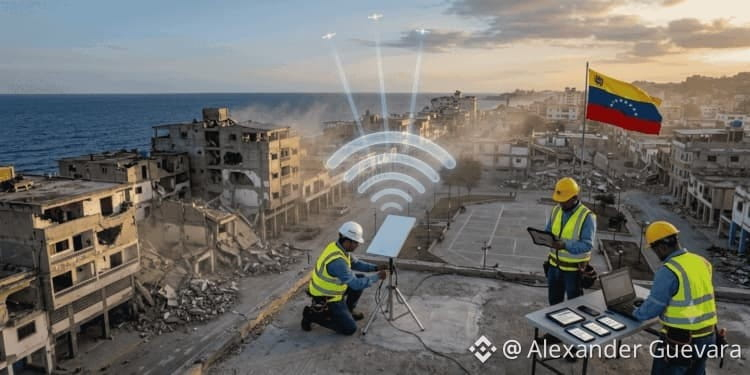
🇻🇪 Nach den Erdbeben in Venezuela genehmigt Conatel Movistar, Starlink für 3 Monate in La Guaira zu nutzen, und fordert, dass Movilnet und Digitel den Dienst ebenfalls nutzen können 📡
#starlinksatelite #venezuela #MineríaDeBitcoin #argentina #crypto $BTC


3
52
Anmelden und weiter Inhalte entdecken
Krypto-Nutzer weltweit auf Binance Square kennenlernen
⚡️ Bleib in Sachen Krypto stets am Puls.
💬 Die weltgrößte Kryptobörse vertraut darauf.
👍 Erhalte verlässliche Einblicke von verifizierten Creators.
E-Mail-Adresse/Telefonnummer
Trendthemen
1
#MoreHikesExpectedIsBTCUnderPressure
10,593 Aufrufe
141 Kommentare
2
#NvidiaBeatsEstimatesWith$130BQ4Outlook
77,536 Aufrufe
310 Kommentare
3
#AnthropicIPOPriceCouldExceed$80
75,261 Aufrufe
255 Kommentare
4
#RussiaCentralBankAddsAlfaBankToCryptoExchangeRegister
5,547 Aufrufe
65 Kommentare
5
#VisaPlansStablecoinPrefundingForAPACCrossBorderPayments
5,735 Aufrufe
50 Kommentare
6
#CanadaAndUSLaunchOperationNiagaraAgainstApprovalPhishing
48,748 Aufrufe
64 Kommentare
7
#BankOfEnglandUnveilsClearingHousePathwayCoveringDLTFirms
4,884 Aufrufe
68 Kommentare
8
#DBSAndCirclePartnerToExpandAsianInstitutionsUSDCAccess
6,306 Aufrufe
68 Kommentare
9
#LedgerHardwareImplantReportsExtendToDubai
112,448 Aufrufe
951 Kommentare
10
#NvidiaBoardNotConsideringHuang’sReturnasCEO
289,398 Aufrufe
1,721 Kommentare