

#openledfer
openledfer
141 Aufrufe
8 Kommentare
Hot
Zuletzt

·
--

Artikel
OpenLedger (OPEN): Aufbau der finanziellen Schicht für die autonome KI-Wirtschaft
Es gibt einen stillen WandelEs gibt einen stillen Wandel in der Welt der künstlichen Intelligenz. Jahrelang wurde KI hauptsächlich als Werkzeug betrachtet – etwas, das Menschen nutzen, um Texte zu generieren, Daten zu analysieren oder Aufgaben zu automatisieren. Aber die nächste Phase sieht ganz anders aus. KI-Modelle werden unabhängiger, Agenten beginnen, komplexe Aktionen selbst durchzuführen, und digitale Systeme entwickeln sich langsam zu wirtschaftlichen Akteuren statt zu einfacher Software.
Diese Transformation schafft ein neues Problem, das die meisten Leute immer noch übersehen: Intelligenz allein reicht nicht aus. KI-Agenten benötigen Infrastruktur. Sie brauchen eine Möglichkeit, Werte zu besitzen, auf Liquidität zuzugreifen, Daten sicher auszutauschen und die Arbeit, die sie produzieren, zu monetisieren. Genau hier positioniert sich OpenLedger (OPEN).
OpenLedger (OPEN): Aufbau der finanziellen Schicht für die autonome KI-Wirtschaft Es gibt einen stillen Wandel
Es gibt einen stillen Wandel in der Welt der künstlichen Intelligenz. Jahrelang wurde KI hauptsächlich als Werkzeug betrachtet – etwas, das Menschen nutzen, um Texte zu generieren, Daten zu analysieren oder Aufgaben zu automatisieren. Aber die nächste Phase sieht ganz anders aus. KI-Modelle werden unabhängiger, Agenten beginnen, komplexe Aktionen selbst durchzuführen, und digitale Systeme entwickeln sich langsam zu wirtschaftlichen Akteuren statt zu einfacher Software.
Diese Transformation schafft ein neues Problem, das die meisten Leute immer noch übersehen: Intelligenz allein reicht nicht aus. KI-Agenten benötigen Infrastruktur. Sie brauchen eine Möglichkeit, Werte zu besitzen, auf Liquidität zuzugreifen, Daten sicher auszutauschen und die Arbeit, die sie produzieren, zu monetisieren. Genau hier positioniert sich OpenLedger (OPEN).
Diese Transformation schafft ein neues Problem, das die meisten Leute immer noch übersehen: Intelligenz allein reicht nicht aus. KI-Agenten benötigen Infrastruktur. Sie brauchen eine Möglichkeit, Werte zu besitzen, auf Liquidität zuzugreifen, Daten sicher auszutauschen und die Arbeit, die sie produzieren, zu monetisieren. Genau hier positioniert sich OpenLedger (OPEN).
4
4
143


·
--
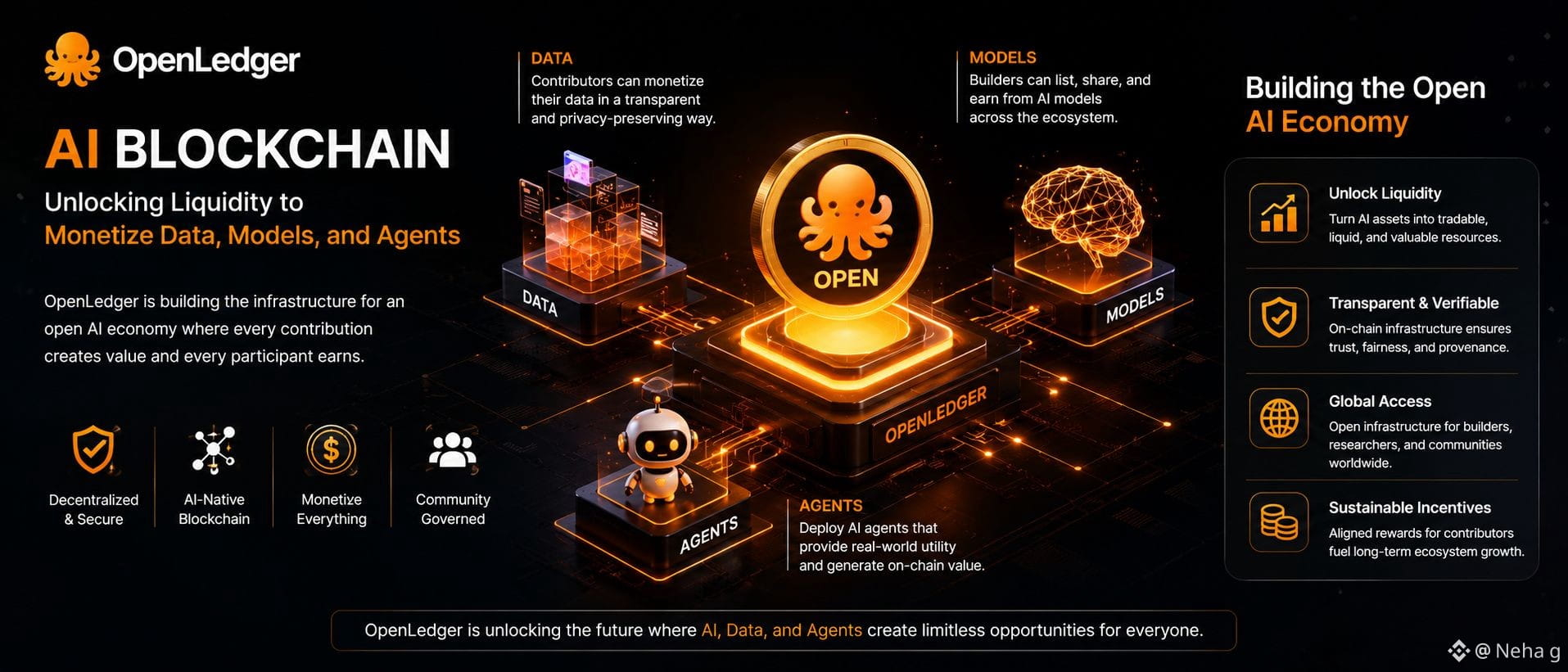
@Openledger baut eine neue Grundlage für die KI-Wirtschaft, indem es ein Ökosystem schafft, in dem Daten, KI-Modelle und autonome Agenten wertvolle digitale Vermögenswerte werden können. Anstatt mächtige Datensätze und KI-Infrastruktur in zentralisierten Plattformen zu blockieren, konzentriert sich OpenLedger darauf, Liquidität freizusetzen und transparente Monetarisierung im Blockchain-Bereich zu ermöglichen.
Das Projekt führt eine KI-native Blockchain ein, die darauf ausgelegt ist, Entwickler, Entwickler und Mitwirkende zu unterstützen, die intelligente Systeme schaffen. Mit OpenLedger können Nutzer potenziell Wert aus den Daten, die sie bereitstellen, den Modellen, die sie trainieren, und den KI-Agenten, die sie einsetzen, verdienen. Dies schafft ein offeneres Umfeld, in dem Innovation belohnt wird und das Eigentum dezentral bleibt.
Einer der stärksten Aspekte von OpenLedger ist die Vision, künstliche Intelligenz mit Blockchain-Transparenz zu kombinieren. Während die Akzeptanz von KI weltweit weiter zunimmt, wird der Bedarf an überprüfbarer, sicherer und monetarisierbarer KI-Infrastruktur immer wichtiger. OpenLedger zielt darauf ab, dies zu lösen, indem es ein skalierbares Ökosystem anbietet, in dem KI-Ressourcen frei fließen können, während Vertrauen und Effizienz gewahrt bleiben.
Das Projekt gewinnt an Aufmerksamkeit, weil es zwei der am schnellsten wachsenden Sektoren der Technologie verbindet: künstliche Intelligenz und dezentrale Finanzen. Durch die Ermöglichung von Liquidität für KI-gestützte Vermögenswerte positioniert sich OpenLedger als potenzielle Infrastrukturschicht für die zukünftige digitale Wirtschaft.
Während die Erzählung der KI-Blockchain stärker wird, sticht #OpenLedger weiterhin als ein Projekt hervor, das sich auf Nutzen, Innovation und die langfristige Entwicklung des Ökosystems konzentriert.
#OpenLedfer @Openledger $OPEN
{spot}(OPENUSDT)
@OpenLedger baut eine neue Grundlage für die KI-Wirtschaft, indem es ein Ökosystem schafft, in dem Daten, KI-Modelle und autonome Agenten wertvolle digitale Vermögenswerte werden können. Anstatt mächtige Datensätze und KI-Infrastruktur in zentralisierten Plattformen zu blockieren, konzentriert sich OpenLedger darauf, Liquidität freizusetzen und transparente Monetarisierung im Blockchain-Bereich zu ermöglichen.
Das Projekt führt eine KI-native Blockchain ein, die darauf ausgelegt ist, Entwickler, Entwickler und Mitwirkende zu unterstützen, die intelligente Systeme schaffen. Mit OpenLedger können Nutzer potenziell Wert aus den Daten, die sie bereitstellen, den Modellen, die sie trainieren, und den KI-Agenten, die sie einsetzen, verdienen. Dies schafft ein offeneres Umfeld, in dem Innovation belohnt wird und das Eigentum dezentral bleibt.
Einer der stärksten Aspekte von OpenLedger ist die Vision, künstliche Intelligenz mit Blockchain-Transparenz zu kombinieren. Während die Akzeptanz von KI weltweit weiter zunimmt, wird der Bedarf an überprüfbarer, sicherer und monetarisierbarer KI-Infrastruktur immer wichtiger. OpenLedger zielt darauf ab, dies zu lösen, indem es ein skalierbares Ökosystem anbietet, in dem KI-Ressourcen frei fließen können, während Vertrauen und Effizienz gewahrt bleiben.
Das Projekt gewinnt an Aufmerksamkeit, weil es zwei der am schnellsten wachsenden Sektoren der Technologie verbindet: künstliche Intelligenz und dezentrale Finanzen. Durch die Ermöglichung von Liquidität für KI-gestützte Vermögenswerte positioniert sich OpenLedger als potenzielle Infrastrukturschicht für die zukünftige digitale Wirtschaft.
Während die Erzählung der KI-Blockchain stärker wird, sticht #OpenLedger weiterhin als ein Projekt hervor, das sich auf Nutzen, Innovation und die langfristige Entwicklung des Ökosystems konzentriert.
#OpenLedfer @OpenLedger $OPEN
Das Projekt führt eine KI-native Blockchain ein, die darauf ausgelegt ist, Entwickler, Entwickler und Mitwirkende zu unterstützen, die intelligente Systeme schaffen. Mit OpenLedger können Nutzer potenziell Wert aus den Daten, die sie bereitstellen, den Modellen, die sie trainieren, und den KI-Agenten, die sie einsetzen, verdienen. Dies schafft ein offeneres Umfeld, in dem Innovation belohnt wird und das Eigentum dezentral bleibt.
Einer der stärksten Aspekte von OpenLedger ist die Vision, künstliche Intelligenz mit Blockchain-Transparenz zu kombinieren. Während die Akzeptanz von KI weltweit weiter zunimmt, wird der Bedarf an überprüfbarer, sicherer und monetarisierbarer KI-Infrastruktur immer wichtiger. OpenLedger zielt darauf ab, dies zu lösen, indem es ein skalierbares Ökosystem anbietet, in dem KI-Ressourcen frei fließen können, während Vertrauen und Effizienz gewahrt bleiben.
Das Projekt gewinnt an Aufmerksamkeit, weil es zwei der am schnellsten wachsenden Sektoren der Technologie verbindet: künstliche Intelligenz und dezentrale Finanzen. Durch die Ermöglichung von Liquidität für KI-gestützte Vermögenswerte positioniert sich OpenLedger als potenzielle Infrastrukturschicht für die zukünftige digitale Wirtschaft.
Während die Erzählung der KI-Blockchain stärker wird, sticht #OpenLedger weiterhin als ein Projekt hervor, das sich auf Nutzen, Innovation und die langfristige Entwicklung des Ökosystems konzentriert.
#OpenLedfer @OpenLedger $OPEN
2
1
112

·
--

Artikel
Open ist gerade voll im Aufwind@Openledger #OpenLedfer Leute glauben, dass Open eine gute Option ist, um zu kaufen. Ich sage ja, aber hier fragt ihr euch 🔥
Open ist gerade voll im Aufwind
@OpenLedger #OpenLedfer Leute glauben, dass Open eine gute Option ist, um zu kaufen. Ich sage ja, aber hier fragt ihr euch 🔥
6
·
--
@Openledger OPEN Wo KI auf Blockchain trifft
Die nächste Welle der Innovation geht nicht nur darum, dass KI noch intelligenter wird — es geht darum, den Menschen, die sie entwickeln, wieder echten Wert zurückzugeben. Genau hier verändert OpenLedger das Spiel.
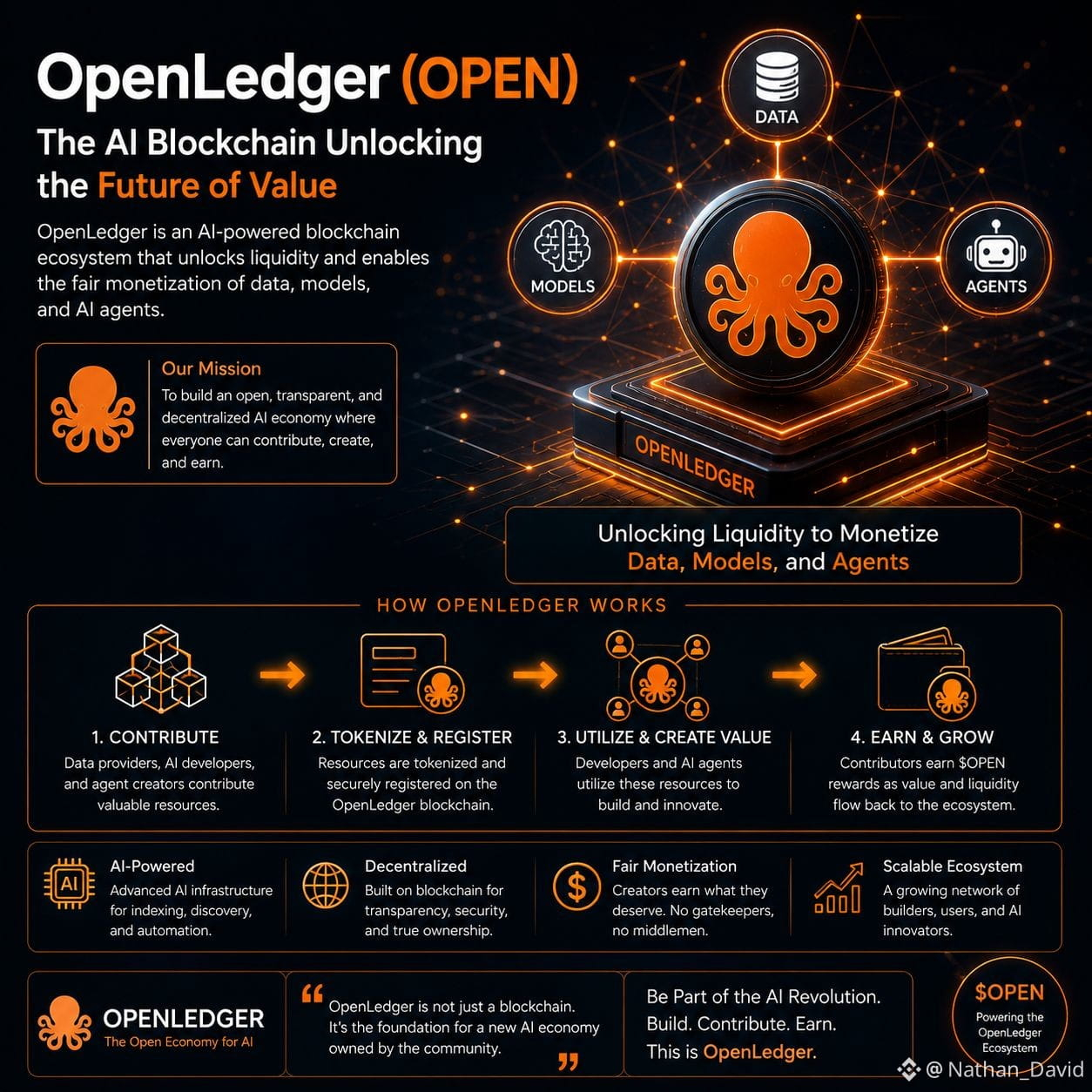
OpenLedger baut ein KI-gestütztes Blockchain-Ökosystem auf, das Liquidität für Daten, KI-Modelle und autonome Agenten erschließen soll. Statt wertvolle KI-Ressourcen in zentralisierten Plattformen einzuschließen, schafft OpenLedger eine offene Ökonomie, in der Kreatoren, Entwickler und Communities ihre Beiträge endlich fair monetarisieren können.
Stell dir eine Zukunft vor, in der:
• Datenanbieter Belohnungen für hochwertige Datensätze erhalten
• KI-Entwickler ihre Modelle transparent monetarisieren
• Autonome KI-Agenten interagieren und on-chain Wert generieren
• Eigentum, Belohnungen und Innovation dezentral sind
Diese Zukunft ist es, die OpenLedger aufbauen möchte.
Was #OpenLedger besonders macht, ist die Vision, Blockchain-Transparenz mit KI-Skalierbarkeit zu verbinden. In einer Welt, in der künstliche Intelligenz Tag für Tag noch leistungsfähiger wird, konzentriert sich OpenLedger darauf, diese Power zugänglich, liquid und belohnend für alle Beteiligten zu machen — nicht nur für große Konzerne.
Das $OPEN -Ökosystem ist für Builder, Kreatoren, Innovatoren und Menschen gedacht, die an dezentrale KI glauben. Indem Daten, Modelle und Agenten in einer einzigen ökonomischen Schicht verbunden werden, hat OpenLedger das Potenzial, neu zu gestalten, wie KI-Wert in der digitalen Welt entsteht und verteilt wird.
KI entwickelt sich rasant weiter. Blockchain entwickelt sich rasant weiter.
Aber Projekte wie OpenLedger bauen die Brücke zwischen beidem.
Die Zukunft dezentraler Intelligenz könnte schon jetzt hier beginnen.
#OpenLedfer @Openledger $OPEN
{spot}(OPENUSDT)
@OpenLedger OPEN Wo KI auf Blockchain trifft
Die nächste Welle der Innovation geht nicht nur darum, dass KI noch intelligenter wird — es geht darum, den Menschen, die sie entwickeln, wieder echten Wert zurückzugeben. Genau hier verändert OpenLedger das Spiel.
OpenLedger baut ein KI-gestütztes Blockchain-Ökosystem auf, das Liquidität für Daten, KI-Modelle und autonome Agenten erschließen soll. Statt wertvolle KI-Ressourcen in zentralisierten Plattformen einzuschließen, schafft OpenLedger eine offene Ökonomie, in der Kreatoren, Entwickler und Communities ihre Beiträge endlich fair monetarisieren können.
Stell dir eine Zukunft vor, in der:
• Datenanbieter Belohnungen für hochwertige Datensätze erhalten
• KI-Entwickler ihre Modelle transparent monetarisieren
• Autonome KI-Agenten interagieren und on-chain Wert generieren
• Eigentum, Belohnungen und Innovation dezentral sind
Diese Zukunft ist es, die OpenLedger aufbauen möchte.
Was #OpenLedger besonders macht, ist die Vision, Blockchain-Transparenz mit KI-Skalierbarkeit zu verbinden. In einer Welt, in der künstliche Intelligenz Tag für Tag noch leistungsfähiger wird, konzentriert sich OpenLedger darauf, diese Power zugänglich, liquid und belohnend für alle Beteiligten zu machen — nicht nur für große Konzerne.
Das $OPEN -Ökosystem ist für Builder, Kreatoren, Innovatoren und Menschen gedacht, die an dezentrale KI glauben. Indem Daten, Modelle und Agenten in einer einzigen ökonomischen Schicht verbunden werden, hat OpenLedger das Potenzial, neu zu gestalten, wie KI-Wert in der digitalen Welt entsteht und verteilt wird.
KI entwickelt sich rasant weiter. Blockchain entwickelt sich rasant weiter.
Aber Projekte wie OpenLedger bauen die Brücke zwischen beidem.
Die Zukunft dezentraler Intelligenz könnte schon jetzt hier beginnen.
#OpenLedfer @OpenLedger $OPEN
Die nächste Welle der Innovation geht nicht nur darum, dass KI noch intelligenter wird — es geht darum, den Menschen, die sie entwickeln, wieder echten Wert zurückzugeben. Genau hier verändert OpenLedger das Spiel.
OpenLedger baut ein KI-gestütztes Blockchain-Ökosystem auf, das Liquidität für Daten, KI-Modelle und autonome Agenten erschließen soll. Statt wertvolle KI-Ressourcen in zentralisierten Plattformen einzuschließen, schafft OpenLedger eine offene Ökonomie, in der Kreatoren, Entwickler und Communities ihre Beiträge endlich fair monetarisieren können.
Stell dir eine Zukunft vor, in der:
• Datenanbieter Belohnungen für hochwertige Datensätze erhalten
• KI-Entwickler ihre Modelle transparent monetarisieren
• Autonome KI-Agenten interagieren und on-chain Wert generieren
• Eigentum, Belohnungen und Innovation dezentral sind
Diese Zukunft ist es, die OpenLedger aufbauen möchte.
Was #OpenLedger besonders macht, ist die Vision, Blockchain-Transparenz mit KI-Skalierbarkeit zu verbinden. In einer Welt, in der künstliche Intelligenz Tag für Tag noch leistungsfähiger wird, konzentriert sich OpenLedger darauf, diese Power zugänglich, liquid und belohnend für alle Beteiligten zu machen — nicht nur für große Konzerne.
Das $OPEN -Ökosystem ist für Builder, Kreatoren, Innovatoren und Menschen gedacht, die an dezentrale KI glauben. Indem Daten, Modelle und Agenten in einer einzigen ökonomischen Schicht verbunden werden, hat OpenLedger das Potenzial, neu zu gestalten, wie KI-Wert in der digitalen Welt entsteht und verteilt wird.
KI entwickelt sich rasant weiter. Blockchain entwickelt sich rasant weiter.
Aber Projekte wie OpenLedger bauen die Brücke zwischen beidem.
Die Zukunft dezentraler Intelligenz könnte schon jetzt hier beginnen.
#OpenLedfer @OpenLedger $OPEN
1
2
152
·
--
Artikel
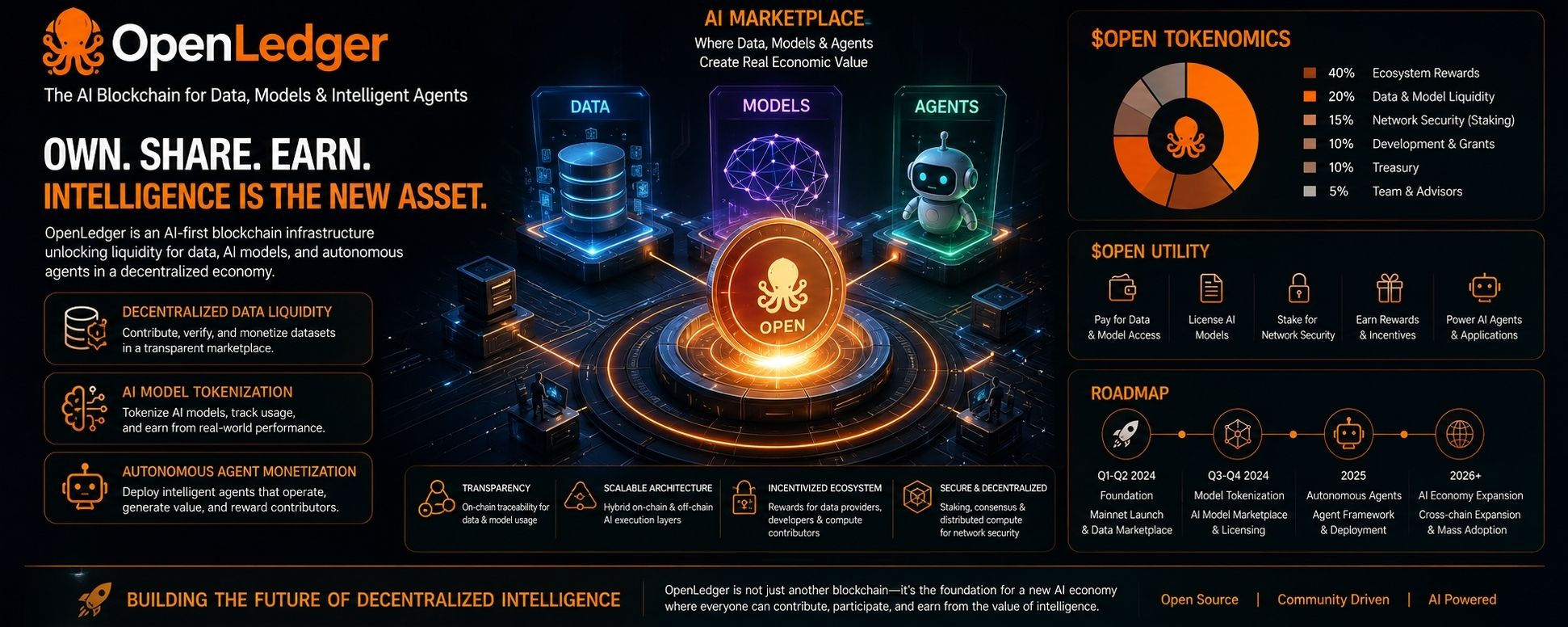
OpenLedger (OPEN): AI Blockchain Jo Daten, Modelle aur Intelligente Agenten Ko Naye Digital Economy MeinIn der sich rasant entwickelnden Schnittstelle zwischen Künstlicher Intelligenz und Blockchain-Technologie entsteht eine neue Kategorie von Infrastruktur—eine, die nicht nur Werte speichert, sondern aktiv dazu beiträgt, dass Intelligenz zu einer monetarisierbaren Anlageklasse wird. Zu den Projekten, die an dieser Wegspitze positioniert sind, gehört das @Openledger a-Netzwerk, das Liquidität für Daten, KI-Modelle und autonome Agenten in einer dezentralen Umgebung freisetzen soll. Die Idee besteht nicht nur darin, eine weitere Blockchain zu bauen, sondern zu definieren, wie digitale Intelligenz in einem globalen Ökosystem besessen, geteilt und belohnt wird.
OpenLedger (OPEN): AI Blockchain Jo Daten, Modelle aur Intelligente Agenten Ko Naye Digital Economy Mein
In der sich rasant entwickelnden Schnittstelle zwischen Künstlicher Intelligenz und Blockchain-Technologie entsteht eine neue Kategorie von Infrastruktur—eine, die nicht nur Werte speichert, sondern aktiv dazu beiträgt, dass Intelligenz zu einer monetarisierbaren Anlageklasse wird. Zu den Projekten, die an dieser Wegspitze positioniert sind, gehört das @OpenLedger a-Netzwerk, das Liquidität für Daten, KI-Modelle und autonome Agenten in einer dezentralen Umgebung freisetzen soll. Die Idee besteht nicht nur darin, eine weitere Blockchain zu bauen, sondern zu definieren, wie digitale Intelligenz in einem globalen Ökosystem besessen, geteilt und belohnt wird.
1
2
125
Anmelden und weiter Inhalte entdecken
Krypto-Nutzer weltweit auf Binance Square kennenlernen
⚡️ Bleib in Sachen Krypto stets am Puls.
💬 Die weltgrößte Kryptobörse vertraut darauf.
👍 Erhalte verlässliche Einblicke von verifizierten Creators.
E-Mail-Adresse/Telefonnummer
Trendthemen
1
#FedMinutesFocusOnOctoberPause
58,789 Aufrufe
800 Kommentare
2
#BinanceLaunchesBinanceIntelligence
1M Aufrufe
6,051 Kommentare
3
#EvernorthDelaysNasdaqDebutToOct12
2,509 Aufrufe
122 Kommentare
4
#RobinhoodAdds$25MInBitcoinToBalanceSheet
1,741 Aufrufe
49 Kommentare
5
#SP500AndNasdaqHitRecordHighs
10,231 Aufrufe
330 Kommentare
6
#USMortgageRatesRiseTo7.49%
11,242 Aufrufe
289 Kommentare
7
#BTCFallsBelow$84K
91,949 Aufrufe
211 Kommentare
8
#DubaiVARAIssuesReserveAssetAuditCircular
36,262 Aufrufe
874 Kommentare
9
#SECApproves3XBitcoinETF
34,270 Aufrufe
712 Kommentare
10
#WinklevossFilesSpotZcashETFApplication
42,683 Aufrufe
815 Kommentare