

#gno
gno
173,830 Aufrufe
1,226 Kommentare
Hot
Zuletzt

·
--
Bärisch
Übersetzung ansehen
*$GNO just wicked to $123.28? 👀🔥 Stop scrolling!*
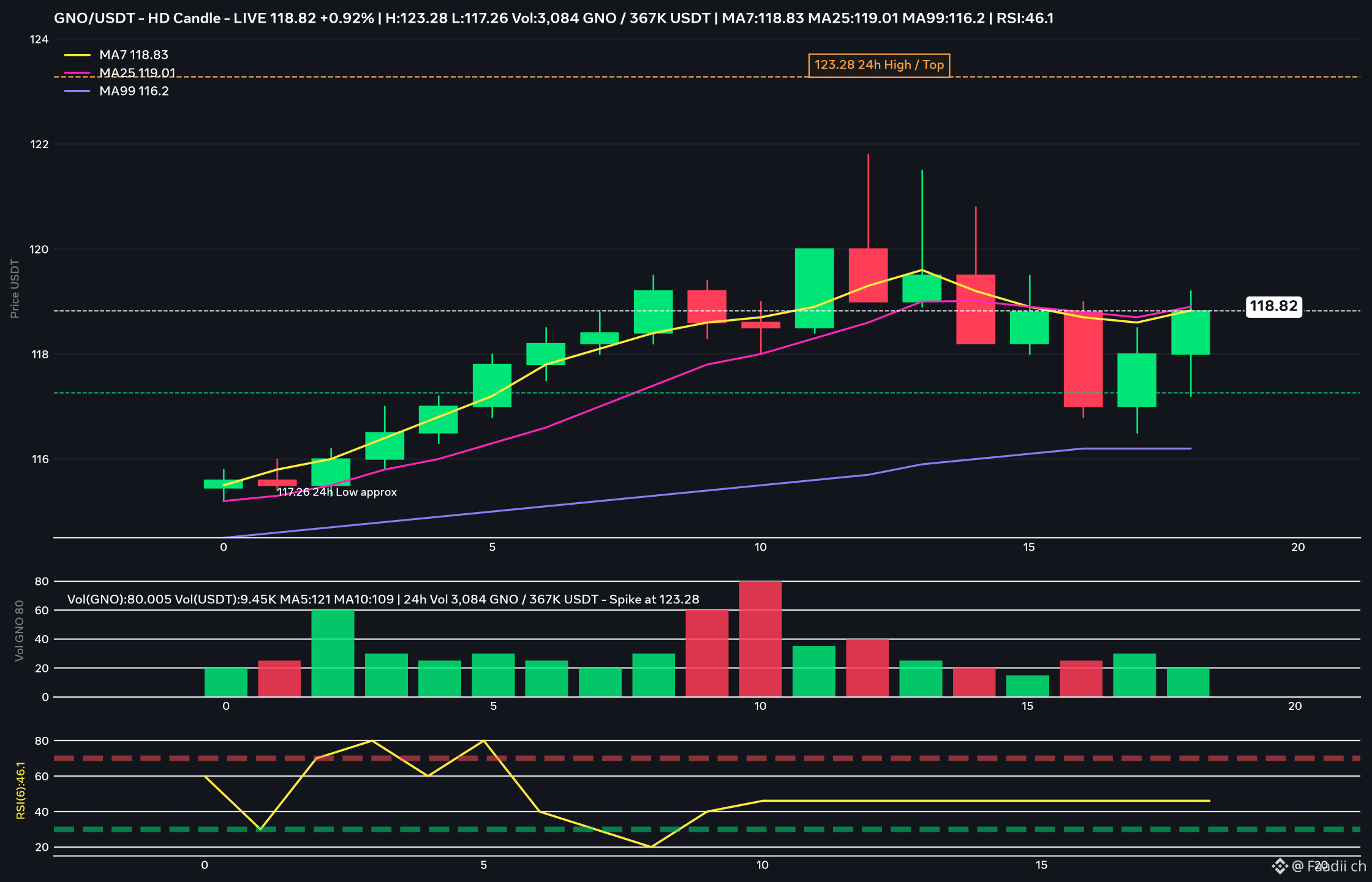
$118.82 (+0.92%) after that crazy run from $115.45 to $123.28 Top - sharp rejection but holding strong.
{spot}(GNOUSDT)
Price sitting right on MA7 $118.83, just under MA25 $119.01 but way above MA99 $116.20 - uptrend still intact. RSI 46.1 - cooled off from overbought, neutral now = healthy.
$GNO
🔴 Resistance: $119.01 / $123.28 - break $123.28 = fresh momentum possible
🟢 Support: $118.83 / $116.20 - hold = bounce intact, lose = deeper pullback to $117.26 risk
3,084 GNO traded today with huge spike at top 👀
You think $GNO takes out $123.28 next or needs more consolidation? 👇
#GNO #Gnosis #GNOUSDT #Layer1 #Crypto
*$GNO just wicked to $123.28? 👀🔥 Stop scrolling!*
$118.82 (+0.92%) after that crazy run from $115.45 to $123.28 Top - sharp rejection but holding strong.
Price sitting right on MA7 $118.83, just under MA25 $119.01 but way above MA99 $116.20 - uptrend still intact. RSI 46.1 - cooled off from overbought, neutral now = healthy.
$GNO
🔴 Resistance: $119.01 / $123.28 - break $123.28 = fresh momentum possible
🟢 Support: $118.83 / $116.20 - hold = bounce intact, lose = deeper pullback to $117.26 risk
3,084 GNO traded today with huge spike at top 👀
You think $GNO takes out $123.28 next or needs more consolidation? 👇
#GNO #Gnosis #GNOUSDT #Layer1 #Crypto
$118.82 (+0.92%) after that crazy run from $115.45 to $123.28 Top - sharp rejection but holding strong.
Price sitting right on MA7 $118.83, just under MA25 $119.01 but way above MA99 $116.20 - uptrend still intact. RSI 46.1 - cooled off from overbought, neutral now = healthy.
$GNO
🔴 Resistance: $119.01 / $123.28 - break $123.28 = fresh momentum possible
🟢 Support: $118.83 / $116.20 - hold = bounce intact, lose = deeper pullback to $117.26 risk
3,084 GNO traded today with huge spike at top 👀
You think $GNO takes out $123.28 next or needs more consolidation? 👇
#GNO #Gnosis #GNOUSDT #Layer1 #Crypto
75


·
--
Bullisch
Zeit zum Fliegen! Ist $GNO bereit für seinen nächsten explosiven Move, nachdem es den wichtigen Support gehalten hat? 🚀⚡
📍 Trade-Setup:
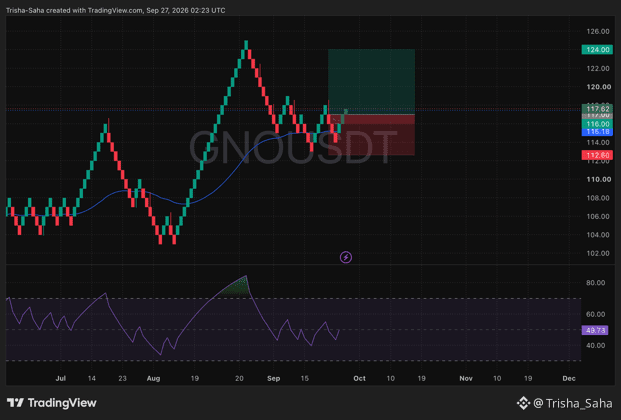
🟢 Einstieg: 115,18 $ – 117,62 $
🛑 Stop Loss: 112,60 $
🎯 Ziel: 124,00 $
📌 Chart-Insights:
* Support-Konsolidierung: Der Kurs hält sich nach einer gesunden Konsolidierung fest über dem lokalen Support, was auf eine mögliche Käuferansammlung für einen weiteren Rallye hindeutet.
* Kapital-Schutzregel: Verschiebe deinen Stop Loss auf Break-Even, sobald der Gewinn +3 % bis +4 % erreicht. Schütze zuerst dein Kapital, dann sichere Gewinne nach deinen Bedingungen oder folge dem Trend!
Ich reite diese Position gerade. Steigst du mit mir ein oder wartest du an der Seitenlinie? Teile deine Gedanken unten mit! 👇
#GNO #GNOUSDT #CryptoTrading #PolymarketBankFailureBetsDrawFDICConcern
{spot}(GNOUSDT)
Zeit zum Fliegen! Ist $GNO bereit für seinen nächsten explosiven Move, nachdem es den wichtigen Support gehalten hat? 🚀⚡
📍 Trade-Setup:
🟢 Einstieg: 115,18 $ – 117,62 $
🛑 Stop Loss: 112,60 $
🎯 Ziel: 124,00 $
📌 Chart-Insights:
* Support-Konsolidierung: Der Kurs hält sich nach einer gesunden Konsolidierung fest über dem lokalen Support, was auf eine mögliche Käuferansammlung für einen weiteren Rallye hindeutet.
* Kapital-Schutzregel: Verschiebe deinen Stop Loss auf Break-Even, sobald der Gewinn +3 % bis +4 % erreicht. Schütze zuerst dein Kapital, dann sichere Gewinne nach deinen Bedingungen oder folge dem Trend!
Ich reite diese Position gerade. Steigst du mit mir ein oder wartest du an der Seitenlinie? Teile deine Gedanken unten mit! 👇
#GNO #GNOUSDT #CryptoTrading #PolymarketBankFailureBetsDrawFDICConcern
📍 Trade-Setup:
🟢 Einstieg: 115,18 $ – 117,62 $
🛑 Stop Loss: 112,60 $
🎯 Ziel: 124,00 $
📌 Chart-Insights:
* Support-Konsolidierung: Der Kurs hält sich nach einer gesunden Konsolidierung fest über dem lokalen Support, was auf eine mögliche Käuferansammlung für einen weiteren Rallye hindeutet.
* Kapital-Schutzregel: Verschiebe deinen Stop Loss auf Break-Even, sobald der Gewinn +3 % bis +4 % erreicht. Schütze zuerst dein Kapital, dann sichere Gewinne nach deinen Bedingungen oder folge dem Trend!
Ich reite diese Position gerade. Steigst du mit mir ein oder wartest du an der Seitenlinie? Teile deine Gedanken unten mit! 👇
#GNO #GNOUSDT #CryptoTrading #PolymarketBankFailureBetsDrawFDICConcern
2
1.3k
Übersetzung ansehen
🚨 $GNO COILING AT KEY DEMAND AS SMART MONEY PREPARES FOR EXPANSION! 💥
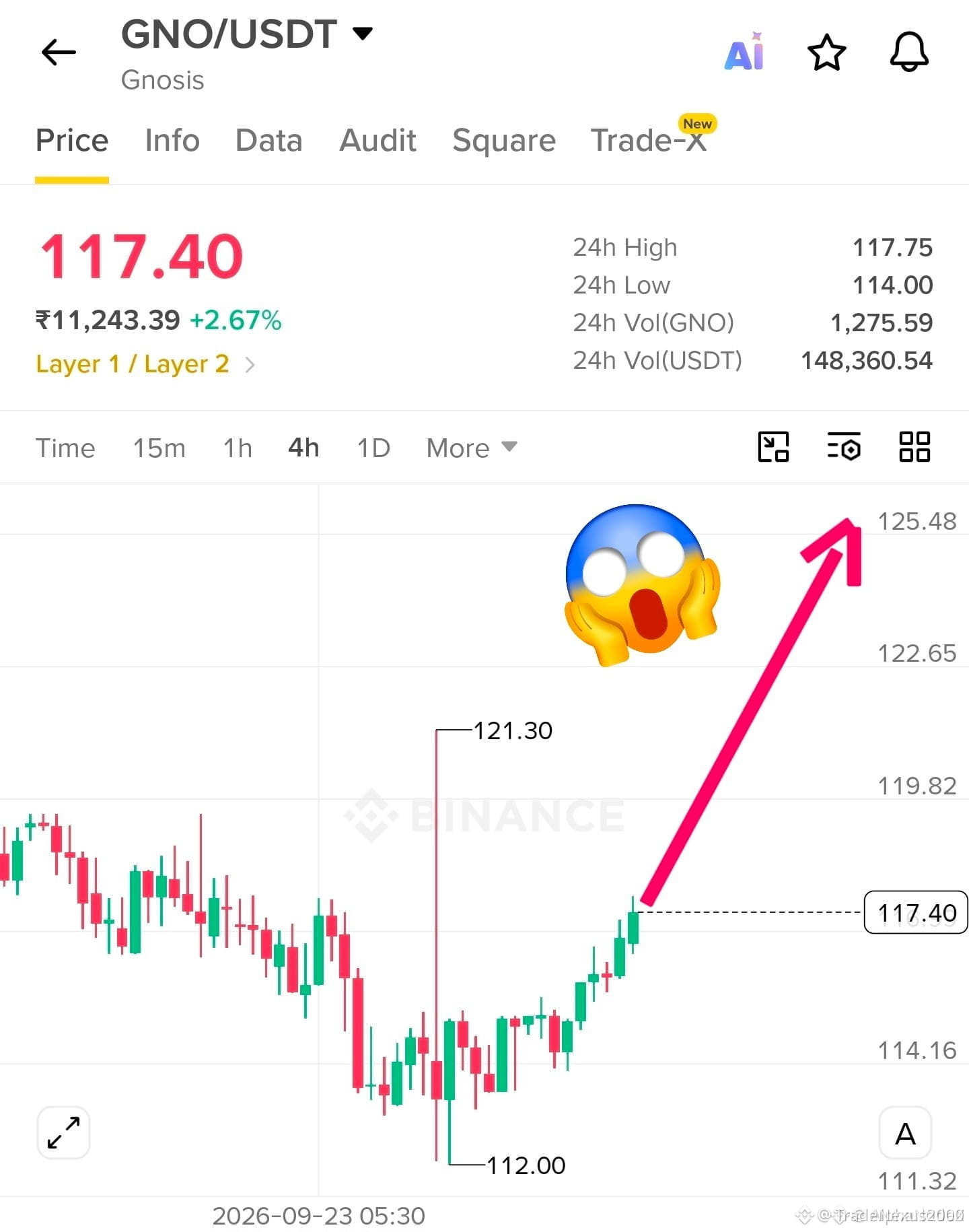
Entry: 115.18 - 117.62 ⚡
Target: 124.00 🚀
Stop Loss: 112.60 ⚠️
$GNO is currently compressing within a high-probability demand zone, demonstrating strong absorption of sell-side liquidity following its recent consolidation phase. 📊 Institutional buyers continue defending this structural higher-low, keeping market structure cleanly bullish as order flow prepares for the next leg up.
A sustained hold above this region validates structural integrity, paving the way for a swift run into upside inefficiencies toward 124.00. 🔍 As range compression tightens, momentum heavily favors an explosive expansion once local supply clears. 💬 Are you positioning inside this demand block or waiting for a structural breakout trigger? 👇
⚠️ Not financial advice. Always manage your risk. 🛡️
🏷️ #GNO #SmartMoney #Breakout #Crypto #Trading
🔥 🎯
🚨 $GNO COILING AT KEY DEMAND AS SMART MONEY PREPARES FOR EXPANSION! 💥
Entry: 115.18 - 117.62 ⚡
Target: 124.00 🚀
Stop Loss: 112.60 ⚠️
$GNO is currently compressing within a high-probability demand zone, demonstrating strong absorption of sell-side liquidity following its recent consolidation phase. 📊 Institutional buyers continue defending this structural higher-low, keeping market structure cleanly bullish as order flow prepares for the next leg up.
A sustained hold above this region validates structural integrity, paving the way for a swift run into upside inefficiencies toward 124.00. 🔍 As range compression tightens, momentum heavily favors an explosive expansion once local supply clears. 💬 Are you positioning inside this demand block or waiting for a structural breakout trigger? 👇
⚠️ Not financial advice. Always manage your risk. 🛡️
🏷️ #GNO #SmartMoney #Breakout #Crypto #Trading
🔥 🎯
Entry: 115.18 - 117.62 ⚡
Target: 124.00 🚀
Stop Loss: 112.60 ⚠️
$GNO is currently compressing within a high-probability demand zone, demonstrating strong absorption of sell-side liquidity following its recent consolidation phase. 📊 Institutional buyers continue defending this structural higher-low, keeping market structure cleanly bullish as order flow prepares for the next leg up.
A sustained hold above this region validates structural integrity, paving the way for a swift run into upside inefficiencies toward 124.00. 🔍 As range compression tightens, momentum heavily favors an explosive expansion once local supply clears. 💬 Are you positioning inside this demand block or waiting for a structural breakout trigger? 👇
⚠️ Not financial advice. Always manage your risk. 🛡️
🏷️ #GNO #SmartMoney #Breakout #Crypto #Trading
🔥 🎯
14
·
--
Kurzfristige Maßnahme in der nächsten Sitzung unter $GNO . Die Anhäufung würde nicht ignorieren. Achte auf den nächsten Versuch.
$BNB $DOGE Alarm
#GNO #watchlist #binance Bleib aufmerksam
Kurzfristige Maßnahme in der nächsten Sitzung unter $GNO . Die Anhäufung würde nicht ignorieren. Achte auf den nächsten Versuch.
$BNB $DOGE Alarm
#GNO #watchlist #binance Bleib aufmerksam
$BNB $DOGE Alarm
#GNO #watchlist #binance Bleib aufmerksam
17
🚨 $GNO PIVOTS ZU B2B-INFRASTRUKTUR, WÄHREND GNOSIS PAY RESTRUCTURED CARD-ISSUANCE-MODELL! 🏦
Gnosis Pay vollzieht einen entscheidenden strategischen Kurswechsel: Bis spätestens Ende 2026 stellt man sich von proprietären Consumer-Karten ab und konzentriert sich vollständig auf die B2B-Emissionsinfrastruktur. 📊 Indem man direkt Wallets, Fintech-Plattformen und digitale Banken betreut, optimiert $GNO die Kapitaleffizienz und integriert gleichzeitig Kartenverwaltung, sofortige Rückbuchungen und erweiterte Datenschutzfunktionen.
Dieser strukturelle Übergang verlagert den operativen Aufwand und skaliert den institutionellen Nutzen in Partner-Ökosystemen, ohne die Kundengelder aufs Spiel zu setzen. 💡 Smartes Kapital erkennt Infrastruktursprünge oft als langfristige Burggraben-Erbauer gegenüber hochreibenden Retail-Produkten. 💬 Siehst du diesen B2B-Pivot als strukturellen Katalysator für die langfristige Wertschöpfung von $GNO ? 👇
⚠️ Keine Finanzberatung. Managen Sie immer Ihr Risiko. 🛡️
🏷️ #GNO #Gnosis #CryptoPayments #DeFi #Altcoins
🎯 🦈
🚨 $GNO PIVOTS ZU B2B-INFRASTRUKTUR, WÄHREND GNOSIS PAY RESTRUCTURED CARD-ISSUANCE-MODELL! 🏦
Gnosis Pay vollzieht einen entscheidenden strategischen Kurswechsel: Bis spätestens Ende 2026 stellt man sich von proprietären Consumer-Karten ab und konzentriert sich vollständig auf die B2B-Emissionsinfrastruktur. 📊 Indem man direkt Wallets, Fintech-Plattformen und digitale Banken betreut, optimiert $GNO die Kapitaleffizienz und integriert gleichzeitig Kartenverwaltung, sofortige Rückbuchungen und erweiterte Datenschutzfunktionen.
Dieser strukturelle Übergang verlagert den operativen Aufwand und skaliert den institutionellen Nutzen in Partner-Ökosystemen, ohne die Kundengelder aufs Spiel zu setzen. 💡 Smartes Kapital erkennt Infrastruktursprünge oft als langfristige Burggraben-Erbauer gegenüber hochreibenden Retail-Produkten. 💬 Siehst du diesen B2B-Pivot als strukturellen Katalysator für die langfristige Wertschöpfung von $GNO ? 👇
⚠️ Keine Finanzberatung. Managen Sie immer Ihr Risiko. 🛡️
🏷️ #GNO #Gnosis #CryptoPayments #DeFi #Altcoins
🎯 🦈
Gnosis Pay vollzieht einen entscheidenden strategischen Kurswechsel: Bis spätestens Ende 2026 stellt man sich von proprietären Consumer-Karten ab und konzentriert sich vollständig auf die B2B-Emissionsinfrastruktur. 📊 Indem man direkt Wallets, Fintech-Plattformen und digitale Banken betreut, optimiert $GNO die Kapitaleffizienz und integriert gleichzeitig Kartenverwaltung, sofortige Rückbuchungen und erweiterte Datenschutzfunktionen.
Dieser strukturelle Übergang verlagert den operativen Aufwand und skaliert den institutionellen Nutzen in Partner-Ökosystemen, ohne die Kundengelder aufs Spiel zu setzen. 💡 Smartes Kapital erkennt Infrastruktursprünge oft als langfristige Burggraben-Erbauer gegenüber hochreibenden Retail-Produkten. 💬 Siehst du diesen B2B-Pivot als strukturellen Katalysator für die langfristige Wertschöpfung von $GNO ? 👇
⚠️ Keine Finanzberatung. Managen Sie immer Ihr Risiko. 🛡️
🏷️ #GNO #Gnosis #CryptoPayments #DeFi #Altcoins
🎯 🦈
122

·
--
🚨 $GNO PIVOTS ZU INFRASTRUKTUR, WÄHREND GNOSIS PAY SICH AUF B2B-KARTENAUSGABE VERLAGERT! ⚡
📌 Smart Money beobachtet die Wendepunkte, und Gnosis Pay hat gerade einen massiven strategischen Schritt von Retail-Consumer-Karten hin zu B2B-Infrastruktur vollzogen. 💡 Indem sie ihre proprietäre App bis 2026 einstellen, um die Kartenausgabe für Wallets und Fintechs zu ermöglichen, positioniert sich $GNO is stillschweigend als die zugrunde liegenden „Rails“ für reales Krypto-Ausgeben.
🔍 Infrastruktur spielt oft zu einem Aufschlag, sobald das Volumen der Partner-Integrationen einsetzt – besonders mit aufgerüsteten Funktionen für sofortige Abwicklung. 📊 Ist dieser B2B-Übergang der grundlegende Katalysator, den $GNO braucht, um konkurrierende Zahlungsprotokolle in den Schatten zu stellen? 👇
⚠️ Keine Finanzberatung. Verwalte stets dein Risiko. 🛡️
🏷️ #GNO #CryptoPayments #Gnosis #Altcoins #Fintech
⚡ 🎯
🚨 $GNO PIVOTS ZU INFRASTRUKTUR, WÄHREND GNOSIS PAY SICH AUF B2B-KARTENAUSGABE VERLAGERT! ⚡
📌 Smart Money beobachtet die Wendepunkte, und Gnosis Pay hat gerade einen massiven strategischen Schritt von Retail-Consumer-Karten hin zu B2B-Infrastruktur vollzogen. 💡 Indem sie ihre proprietäre App bis 2026 einstellen, um die Kartenausgabe für Wallets und Fintechs zu ermöglichen, positioniert sich $GNO is stillschweigend als die zugrunde liegenden „Rails“ für reales Krypto-Ausgeben.
🔍 Infrastruktur spielt oft zu einem Aufschlag, sobald das Volumen der Partner-Integrationen einsetzt – besonders mit aufgerüsteten Funktionen für sofortige Abwicklung. 📊 Ist dieser B2B-Übergang der grundlegende Katalysator, den $GNO braucht, um konkurrierende Zahlungsprotokolle in den Schatten zu stellen? 👇
⚠️ Keine Finanzberatung. Verwalte stets dein Risiko. 🛡️
🏷️ #GNO #CryptoPayments #Gnosis #Altcoins #Fintech
⚡ 🎯
📌 Smart Money beobachtet die Wendepunkte, und Gnosis Pay hat gerade einen massiven strategischen Schritt von Retail-Consumer-Karten hin zu B2B-Infrastruktur vollzogen. 💡 Indem sie ihre proprietäre App bis 2026 einstellen, um die Kartenausgabe für Wallets und Fintechs zu ermöglichen, positioniert sich $GNO is stillschweigend als die zugrunde liegenden „Rails“ für reales Krypto-Ausgeben.
🔍 Infrastruktur spielt oft zu einem Aufschlag, sobald das Volumen der Partner-Integrationen einsetzt – besonders mit aufgerüsteten Funktionen für sofortige Abwicklung. 📊 Ist dieser B2B-Übergang der grundlegende Katalysator, den $GNO braucht, um konkurrierende Zahlungsprotokolle in den Schatten zu stellen? 👇
⚠️ Keine Finanzberatung. Verwalte stets dein Risiko. 🛡️
🏷️ #GNO #CryptoPayments #Gnosis #Altcoins #Fintech
⚡ 🎯
84

·
--
Bullisch
🟢 $GNO BUY 🟢
{spot}(GNOUSDT)
📍 EINSTIEG: 114.25-115.40
🎯 ZIELBEREICHE:
💰 117.81
💰 126.75
💰 211.50
🛑 STOP: 111.04
🚀 WICHTIGER SUPPORT-BOUNCE — GNO BULLS SUCHEN EINE REVERSAL
$GNO reagiert von einem wichtigen Support aus und rückt die Kurs-Obere in den Fokus. 👀
⚡ Support-Verteidigung → bullische Fortsetzung im Blick.
📈 Bestätigung bleibt entscheidend.
#GNO #CryptoSignals #TradingSignals #FuturesSignals #LongSignal
🟢 $GNO BUY 🟢
📍 EINSTIEG: 114.25-115.40
🎯 ZIELBEREICHE:
💰 117.81
💰 126.75
💰 211.50
🛑 STOP: 111.04
🚀 WICHTIGER SUPPORT-BOUNCE — GNO BULLS SUCHEN EINE REVERSAL
$GNO reagiert von einem wichtigen Support aus und rückt die Kurs-Obere in den Fokus. 👀
⚡ Support-Verteidigung → bullische Fortsetzung im Blick.
📈 Bestätigung bleibt entscheidend.
#GNO #CryptoSignals #TradingSignals #FuturesSignals #LongSignal
📍 EINSTIEG: 114.25-115.40
🎯 ZIELBEREICHE:
💰 117.81
💰 126.75
💰 211.50
🛑 STOP: 111.04
🚀 WICHTIGER SUPPORT-BOUNCE — GNO BULLS SUCHEN EINE REVERSAL
$GNO reagiert von einem wichtigen Support aus und rückt die Kurs-Obere in den Fokus. 👀
⚡ Support-Verteidigung → bullische Fortsetzung im Blick.
📈 Bestätigung bleibt entscheidend.
#GNO #CryptoSignals #TradingSignals #FuturesSignals #LongSignal
41

·
--
Bärisch
$GNO 229x Volumen in Widerstand umwandeln – Ausbruch oder Bull-Trap?
Mein Bias ist bärisch für die 1h. Der vertikale Spike in 117.68–119.02, gefolgt von einem Docht oberhalb des Widerstands, wirkt eher wie ein Liquidity-Grab als wie eine saubere Akkumulation.
Ich beobachte 117.54–118.41 auf eine Zurückweisung. Wenn Verkäufer eingreifen, sind die Ziele 115.00 → 113.84 → 112.24.
Ich würde den Spike nicht hinterherjagen. Ein Schlusskurs (1h) über 117.54, gefolgt von einem erfolgreichen Retest von 116.13–115.82, würde das bärische Setup entkräften und meinen Bias bärisch in Richtung 118.41 und 126.79 drehen.
BTC bleibt konstruktiv, daher ist der breitere Flow für GNO weiterhin entscheidend.$GNO
{spot}(GNOUSDT)
#GNO #CryptoTrading #Altcoins #Binance #Crypto
$GNO 229x Volumen in Widerstand umwandeln – Ausbruch oder Bull-Trap?
Mein Bias ist bärisch für die 1h. Der vertikale Spike in 117.68–119.02, gefolgt von einem Docht oberhalb des Widerstands, wirkt eher wie ein Liquidity-Grab als wie eine saubere Akkumulation.
Ich beobachte 117.54–118.41 auf eine Zurückweisung. Wenn Verkäufer eingreifen, sind die Ziele 115.00 → 113.84 → 112.24.
Ich würde den Spike nicht hinterherjagen. Ein Schlusskurs (1h) über 117.54, gefolgt von einem erfolgreichen Retest von 116.13–115.82, würde das bärische Setup entkräften und meinen Bias bärisch in Richtung 118.41 und 126.79 drehen.
BTC bleibt konstruktiv, daher ist der breitere Flow für GNO weiterhin entscheidend.$GNO
#GNO #CryptoTrading #Altcoins #Binance #Crypto
Mein Bias ist bärisch für die 1h. Der vertikale Spike in 117.68–119.02, gefolgt von einem Docht oberhalb des Widerstands, wirkt eher wie ein Liquidity-Grab als wie eine saubere Akkumulation.
Ich beobachte 117.54–118.41 auf eine Zurückweisung. Wenn Verkäufer eingreifen, sind die Ziele 115.00 → 113.84 → 112.24.
Ich würde den Spike nicht hinterherjagen. Ein Schlusskurs (1h) über 117.54, gefolgt von einem erfolgreichen Retest von 116.13–115.82, würde das bärische Setup entkräften und meinen Bias bärisch in Richtung 118.41 und 126.79 drehen.
BTC bleibt konstruktiv, daher ist der breitere Flow für GNO weiterhin entscheidend.$GNO
#GNO #CryptoTrading #Altcoins #Binance #Crypto
44

·
--
Bullisch
$GNO
{spot}(GNOUSDT)
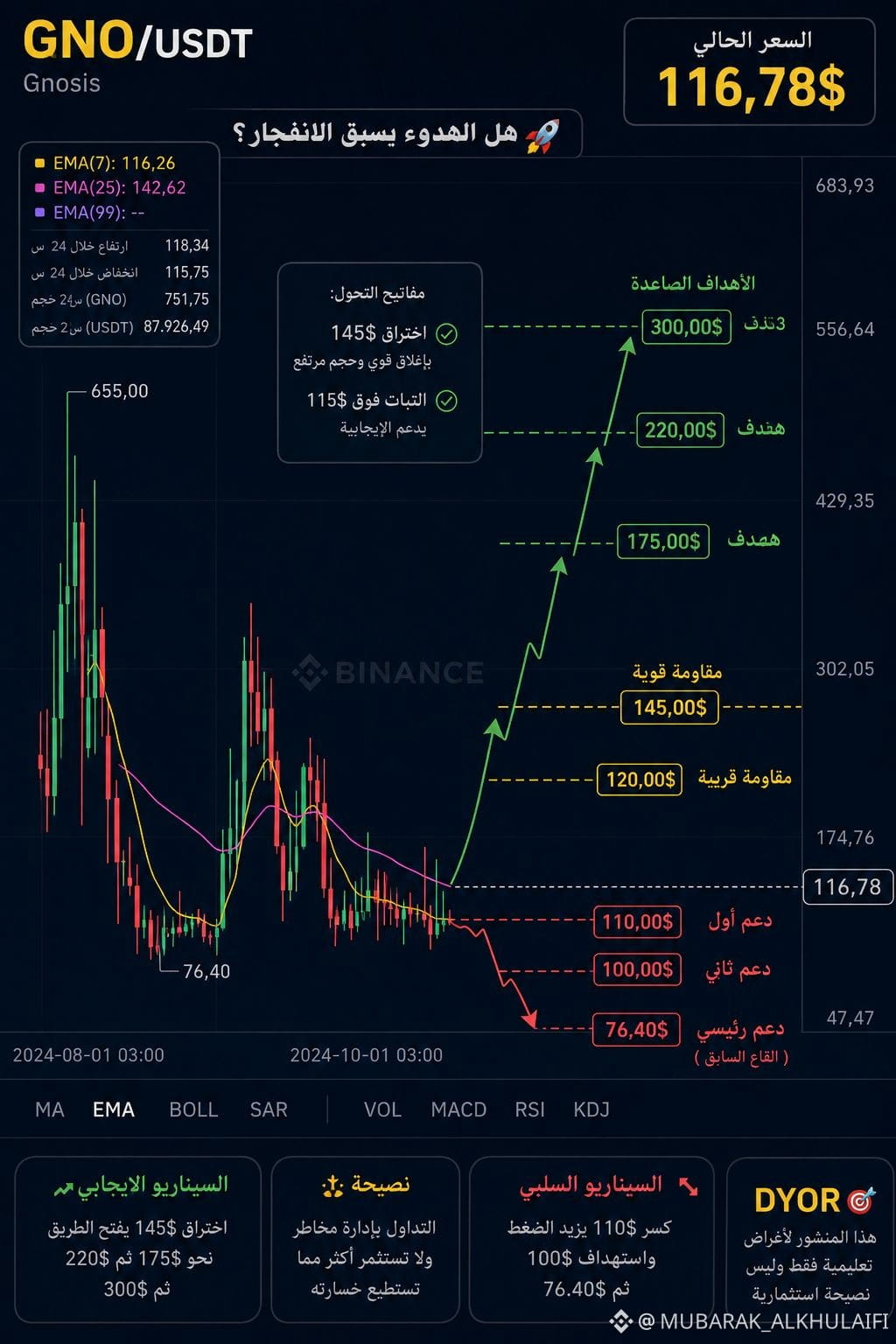
🔥 GNO | Kommt die Ruhe vor der Explosion?
Nach einem langen Rückgang scheint GNO eine Kursbasis in einer Niedrig-Region aufzubauen.
📍 Aktueller Preis: 116.78$
⚡ EMA7: 116.26$
⚠️ EMA25: 142.62$
Das Niveau, das ich besonders im Blick habe: 145$
Ein nachhaltiger Ausbruch + starkes Handelsvolumen könnte das Bild komplett verändern.
🎯 Danach: 175$ → 220$ → 300$
Doch ein Bruch von 110$ wäre eine Warnung, dass die Basis noch nicht vollständig abgeschlossen ist.
Die eigentliche Frage: Bereitet sich GNO auf einen neuen Zyklus vor… oder hat der Markt das Startsignal noch nicht gegeben? 👀
Keine Finanzberatung — bitte mach deine eigene Recherche
#GNO #Crypto #Web3 #Spot #dyor
$GNO
🔥 GNO | Kommt die Ruhe vor der Explosion?
Nach einem langen Rückgang scheint GNO eine Kursbasis in einer Niedrig-Region aufzubauen.
📍 Aktueller Preis: 116.78$
⚡ EMA7: 116.26$
⚠️ EMA25: 142.62$
Das Niveau, das ich besonders im Blick habe: 145$
Ein nachhaltiger Ausbruch + starkes Handelsvolumen könnte das Bild komplett verändern.
🎯 Danach: 175$ → 220$ → 300$
Doch ein Bruch von 110$ wäre eine Warnung, dass die Basis noch nicht vollständig abgeschlossen ist.
Die eigentliche Frage: Bereitet sich GNO auf einen neuen Zyklus vor… oder hat der Markt das Startsignal noch nicht gegeben? 👀
Keine Finanzberatung — bitte mach deine eigene Recherche
#GNO #Crypto #Web3 #Spot #dyor
🔥 GNO | Kommt die Ruhe vor der Explosion?
Nach einem langen Rückgang scheint GNO eine Kursbasis in einer Niedrig-Region aufzubauen.
📍 Aktueller Preis: 116.78$
⚡ EMA7: 116.26$
⚠️ EMA25: 142.62$
Das Niveau, das ich besonders im Blick habe: 145$
Ein nachhaltiger Ausbruch + starkes Handelsvolumen könnte das Bild komplett verändern.
🎯 Danach: 175$ → 220$ → 300$
Doch ein Bruch von 110$ wäre eine Warnung, dass die Basis noch nicht vollständig abgeschlossen ist.
Die eigentliche Frage: Bereitet sich GNO auf einen neuen Zyklus vor… oder hat der Markt das Startsignal noch nicht gegeben? 👀
Keine Finanzberatung — bitte mach deine eigene Recherche
#GNO #Crypto #Web3 #Spot #dyor
1
285
·
--
Bullisch
🟢 $GNO BUY 🟢
{spot}(GNOUSDT)
📍 EINSTIEG: 115.25-117.45
🎯 ZIELE:
💰 125.42
💰 127.87
💰 139.59
🛑 STOP: 114.01
🚀 STARKES BUY-SETUP — GNO BULLS HABEN DEN NÄCHSTEN AUFWÄRTS-MOVE IM BLICK
$GNO zeigt bullischen Momentum, während Käufer die nächsten wichtigen Kursniveaus beobachten. 👀
⚡ Bullische Struktur → Aufwärtziele im Fokus.
🚀 Auf Bestätigung und Fortsetzung achten.
#GNO #CryptoSignals #TradingSignals #FuturesSignals #LongSignal
🟢 $GNO BUY 🟢
📍 EINSTIEG: 115.25-117.45
🎯 ZIELE:
💰 125.42
💰 127.87
💰 139.59
🛑 STOP: 114.01
🚀 STARKES BUY-SETUP — GNO BULLS HABEN DEN NÄCHSTEN AUFWÄRTS-MOVE IM BLICK
$GNO zeigt bullischen Momentum, während Käufer die nächsten wichtigen Kursniveaus beobachten. 👀
⚡ Bullische Struktur → Aufwärtziele im Fokus.
🚀 Auf Bestätigung und Fortsetzung achten.
#GNO #CryptoSignals #TradingSignals #FuturesSignals #LongSignal
📍 EINSTIEG: 115.25-117.45
🎯 ZIELE:
💰 125.42
💰 127.87
💰 139.59
🛑 STOP: 114.01
🚀 STARKES BUY-SETUP — GNO BULLS HABEN DEN NÄCHSTEN AUFWÄRTS-MOVE IM BLICK
$GNO zeigt bullischen Momentum, während Käufer die nächsten wichtigen Kursniveaus beobachten. 👀
⚡ Bullische Struktur → Aufwärtziele im Fokus.
🚀 Auf Bestätigung und Fortsetzung achten.
#GNO #CryptoSignals #TradingSignals #FuturesSignals #LongSignal
2

·
--
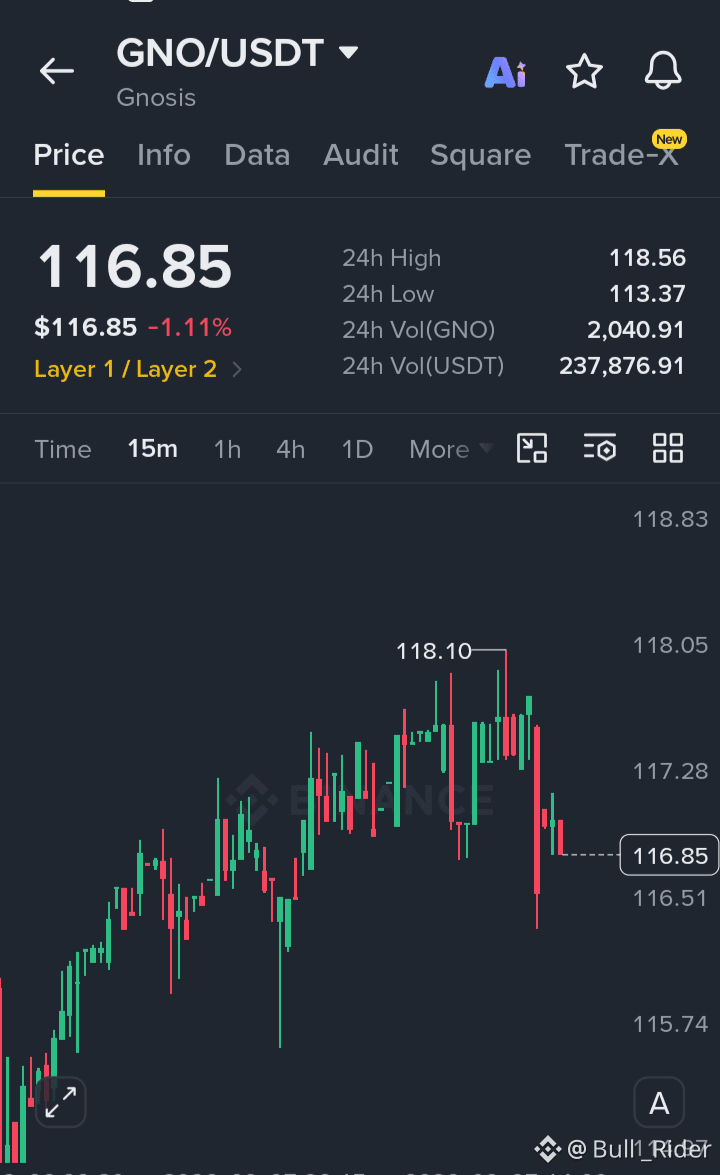
$GNO zeigt starke bullische Aussichten um $116.85, nachdem der Kurs über der $114.97-Unterstützungszone gehalten hat. Käufer versuchen, die Widerstandszone $118.05–$118.83 zurückzuerobern, und ein anhaltender Ausbruch über $118.83 könnte den Weg für weiteres Upside ebnen, während $114.97 weiterhin eine wichtige Unterstützungszone bleibt.
Ziel 1: $118.05
Ziel 2: $119.50
Ziel 3: $121.00
Kaufen und Handeln $GNO
#GNO #ETH #UNI
$GNO zeigt starke bullische Aussichten um $116.85, nachdem der Kurs über der $114.97-Unterstützungszone gehalten hat. Käufer versuchen, die Widerstandszone $118.05–$118.83 zurückzuerobern, und ein anhaltender Ausbruch über $118.83 könnte den Weg für weiteres Upside ebnen, während $114.97 weiterhin eine wichtige Unterstützungszone bleibt.
Ziel 1: $118.05
Ziel 2: $119.50
Ziel 3: $121.00
Kaufen und Handeln $GNO
#GNO #ETH #UNI
Ziel 1: $118.05
Ziel 2: $119.50
Ziel 3: $121.00
Kaufen und Handeln $GNO
#GNO #ETH #UNI
2
161

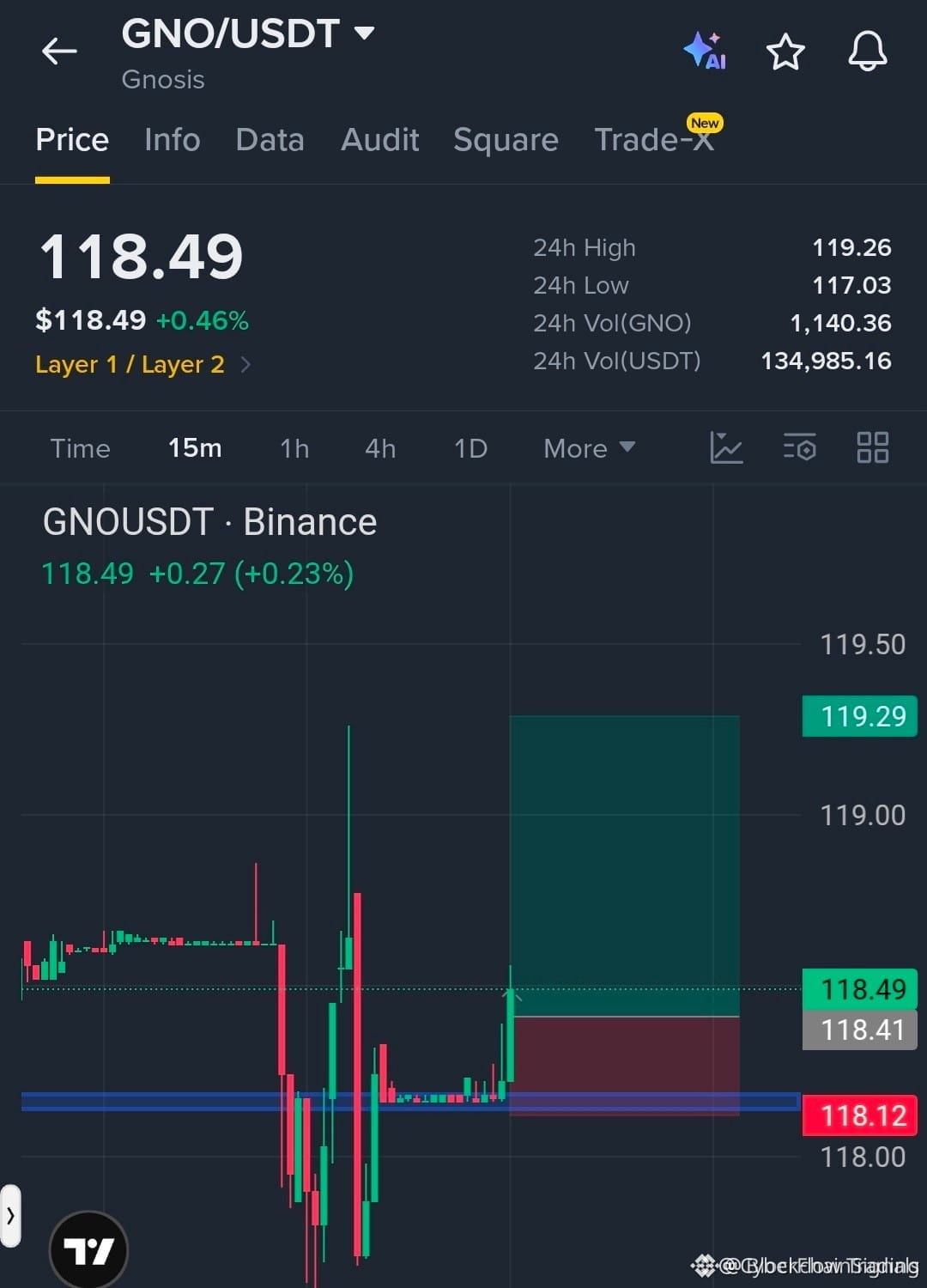
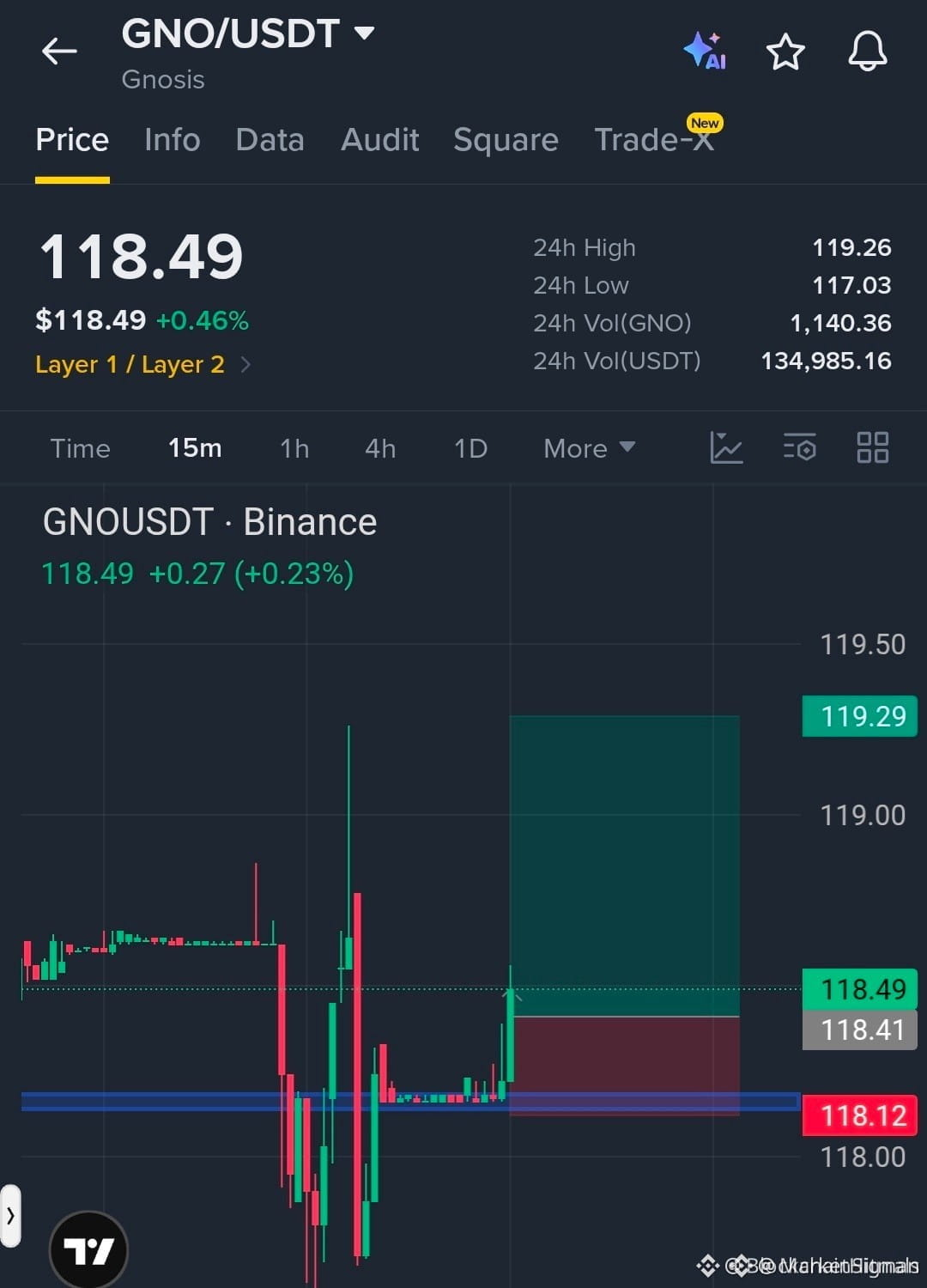
💥 $GNO RECLAIMS WICHTIGE UNTERSTÜTZUNG MIT EXPLOSIVEM MOMENTUM AUF 119.29! 🐂
Einstieg: 118.41 - 118.49 ⚡
Ziel: 119.29 🚀
Stop Loss: 118.12 ⚠️
Käufer sind gerade massiv eingestiegen bei $GNO , haben das kritische Level von 118.12 zurückerobert und den Verkaufsdruck in saubere Nachfrage umgedreht. 📊 Ein schneller Durchbruch über 118.50 öffnet eine direkte Startbahn in die Liquiditätstasche von 119.00 bis 119.29.
Der Orderflow zeigt, dass die Gebote ordentlich oberhalb der Unterstützung gestapelt sind, während Smart Money auf Fortsetzung positioniert. 💡 Mit einer extrem engen Invalidierung bietet dieses Risiko-Setup maximale Effizienz, während sich der Impuls beschleunigt. 💬 Bietest du hier auf die Rückeroberung oder wartest du auf den Auslöser beim Breakout über 118.50? 👇
⚠️ Keine Finanzberatung. Steuere immer dein Risiko. 🛡️
🏷️ #GNO #LongSetup #Breakout #Crypto #Trading
🔥 💎
💥 $GNO RECLAIMS WICHTIGE UNTERSTÜTZUNG MIT EXPLOSIVEM MOMENTUM AUF 119.29! 🐂
Einstieg: 118.41 - 118.49 ⚡
Ziel: 119.29 🚀
Stop Loss: 118.12 ⚠️
Käufer sind gerade massiv eingestiegen bei $GNO , haben das kritische Level von 118.12 zurückerobert und den Verkaufsdruck in saubere Nachfrage umgedreht. 📊 Ein schneller Durchbruch über 118.50 öffnet eine direkte Startbahn in die Liquiditätstasche von 119.00 bis 119.29.
Der Orderflow zeigt, dass die Gebote ordentlich oberhalb der Unterstützung gestapelt sind, während Smart Money auf Fortsetzung positioniert. 💡 Mit einer extrem engen Invalidierung bietet dieses Risiko-Setup maximale Effizienz, während sich der Impuls beschleunigt. 💬 Bietest du hier auf die Rückeroberung oder wartest du auf den Auslöser beim Breakout über 118.50? 👇
⚠️ Keine Finanzberatung. Steuere immer dein Risiko. 🛡️
🏷️ #GNO #LongSetup #Breakout #Crypto #Trading
🔥 💎
Einstieg: 118.41 - 118.49 ⚡
Ziel: 119.29 🚀
Stop Loss: 118.12 ⚠️
Käufer sind gerade massiv eingestiegen bei $GNO , haben das kritische Level von 118.12 zurückerobert und den Verkaufsdruck in saubere Nachfrage umgedreht. 📊 Ein schneller Durchbruch über 118.50 öffnet eine direkte Startbahn in die Liquiditätstasche von 119.00 bis 119.29.
Der Orderflow zeigt, dass die Gebote ordentlich oberhalb der Unterstützung gestapelt sind, während Smart Money auf Fortsetzung positioniert. 💡 Mit einer extrem engen Invalidierung bietet dieses Risiko-Setup maximale Effizienz, während sich der Impuls beschleunigt. 💬 Bietest du hier auf die Rückeroberung oder wartest du auf den Auslöser beim Breakout über 118.50? 👇
⚠️ Keine Finanzberatung. Steuere immer dein Risiko. 🛡️
🏷️ #GNO #LongSetup #Breakout #Crypto #Trading
🔥 💎
41
·
--
⚡ $GNO RECLAIMS KRITISCHE NACHFRAGEZONE FÜR EINEN HOCHWAHRSCHEINLICHEN ANSTIEG RICHTUNG 119.29! 🦈
Einstieg: 118.41 - 118.49 ⚡
Ziel: 119.29 🚀
Stop-Loss: 118.12 ⚠️
Smart Money hat sich wieder eingeschaltet, um den Pivot bei 118.12 zu verteidigen, und orchestriert auf niedrigeren Zeiteinheiten einen sauberen Strukturwechsel des Marktes. 📊 Die aggressive Rückeroberung deutet auf institutionelle Absorption der Verkaufsliquidität hin und schafft einen effizienten Weg durch die lokale Ineffizienz oberhalb von 118.50.
Mit dem nach oben gerichteten Momentum in Richtung des Liquiditätspools bei 119.00 bis 119.29 übernehmen Käufer fest die Kontrolle über den kurzfristigen Orderfluss. 💡 Solange 118.12 als strukturelle Unterstützung hält, bleiben die Risiko-Ertrags-Parameter für systematische Ausführung außergewöhnlich klar. 💬 Reitest du diese strukturelle Fortsetzung, oder wartest du auf einen Retest, bevor du Kapital einsetzt? 👇
⚠️ Keine Finanzberatung. Verwalte dein Risiko immer sorgfältig. 🛡️
🏷️ #GNO #Crypto #MarketStructure #TradingSetup #Breakout
🎯 🦈
⚡ $GNO RECLAIMS KRITISCHE NACHFRAGEZONE FÜR EINEN HOCHWAHRSCHEINLICHEN ANSTIEG RICHTUNG 119.29! 🦈
Einstieg: 118.41 - 118.49 ⚡
Ziel: 119.29 🚀
Stop-Loss: 118.12 ⚠️
Smart Money hat sich wieder eingeschaltet, um den Pivot bei 118.12 zu verteidigen, und orchestriert auf niedrigeren Zeiteinheiten einen sauberen Strukturwechsel des Marktes. 📊 Die aggressive Rückeroberung deutet auf institutionelle Absorption der Verkaufsliquidität hin und schafft einen effizienten Weg durch die lokale Ineffizienz oberhalb von 118.50.
Mit dem nach oben gerichteten Momentum in Richtung des Liquiditätspools bei 119.00 bis 119.29 übernehmen Käufer fest die Kontrolle über den kurzfristigen Orderfluss. 💡 Solange 118.12 als strukturelle Unterstützung hält, bleiben die Risiko-Ertrags-Parameter für systematische Ausführung außergewöhnlich klar. 💬 Reitest du diese strukturelle Fortsetzung, oder wartest du auf einen Retest, bevor du Kapital einsetzt? 👇
⚠️ Keine Finanzberatung. Verwalte dein Risiko immer sorgfältig. 🛡️
🏷️ #GNO #Crypto #MarketStructure #TradingSetup #Breakout
🎯 🦈
Einstieg: 118.41 - 118.49 ⚡
Ziel: 119.29 🚀
Stop-Loss: 118.12 ⚠️
Smart Money hat sich wieder eingeschaltet, um den Pivot bei 118.12 zu verteidigen, und orchestriert auf niedrigeren Zeiteinheiten einen sauberen Strukturwechsel des Marktes. 📊 Die aggressive Rückeroberung deutet auf institutionelle Absorption der Verkaufsliquidität hin und schafft einen effizienten Weg durch die lokale Ineffizienz oberhalb von 118.50.
Mit dem nach oben gerichteten Momentum in Richtung des Liquiditätspools bei 119.00 bis 119.29 übernehmen Käufer fest die Kontrolle über den kurzfristigen Orderfluss. 💡 Solange 118.12 als strukturelle Unterstützung hält, bleiben die Risiko-Ertrags-Parameter für systematische Ausführung außergewöhnlich klar. 💬 Reitest du diese strukturelle Fortsetzung, oder wartest du auf einen Retest, bevor du Kapital einsetzt? 👇
⚠️ Keine Finanzberatung. Verwalte dein Risiko immer sorgfältig. 🛡️
🏷️ #GNO #Crypto #MarketStructure #TradingSetup #Breakout
🎯 🦈
36
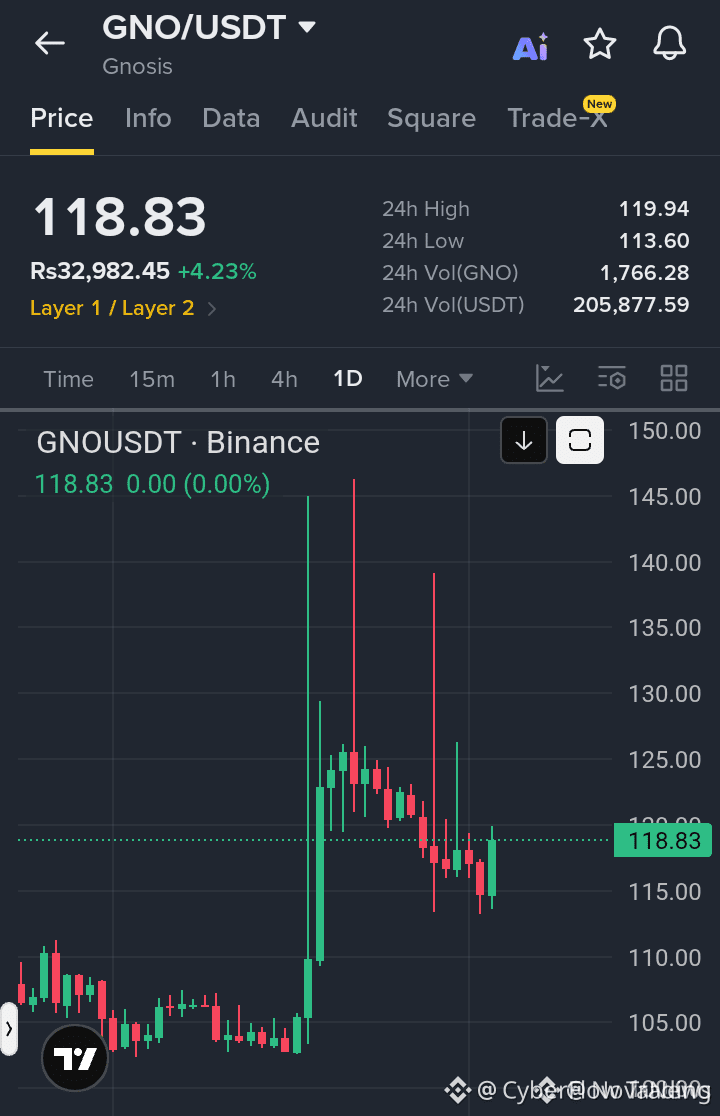
🚨 $GNO STÜRMT IN DIE SCHWERE SUPPLY-ZONE, WÄHREND EINE BÄRISCHE ABLEHNUNG DROHT! 🔻
Einstieg: 118.50 - 121.50 ⚡
Ziel: 112.00 / 106.50 / 101.00 🎯
Stop Loss: 124.80 ⚠️
$GNO drückt hart und direkt in den hochgradig reibungsintensiven $119 - $122-Distributionsblock, wo institutionelle Verkäufer historisch auf den Plan treten, um ihr Revier zu verteidigen. 📊 Obwohl dieser jüngste Bounce energiegeladen aussieht, zeigt der Orderflow, dass der Schwung genau unter der schweren, höher liegenden Angebotszone erschöpft.
Eine bestätigte strukturelle Ablehnung von dieser Widerstandszone ebnet den Weg nach unten zu wichtigen Liquiditäts-Hotspots. 💡 Geduldiges Kapital wartet auf explizite Preisbestätigung – statt die Wand blind zu „front-runnen“ zusammen mit $ZEC und $TUT . 💬 Positionierst du dich für eine Abwärtsrotation hier – oder wartest du darauf, dass Käufer den Kurs weiter nach oben drücken? 👇
⚠️ Keine Finanzberatung. Manage immer dein Risiko. 🛡️
🏷️ #GNO #ShortSetup #Trading #Crypto #ZEC
🎯 🐻
🚨 $GNO STÜRMT IN DIE SCHWERE SUPPLY-ZONE, WÄHREND EINE BÄRISCHE ABLEHNUNG DROHT! 🔻
Einstieg: 118.50 - 121.50 ⚡
Ziel: 112.00 / 106.50 / 101.00 🎯
Stop Loss: 124.80 ⚠️
$GNO drückt hart und direkt in den hochgradig reibungsintensiven $119 - $122-Distributionsblock, wo institutionelle Verkäufer historisch auf den Plan treten, um ihr Revier zu verteidigen. 📊 Obwohl dieser jüngste Bounce energiegeladen aussieht, zeigt der Orderflow, dass der Schwung genau unter der schweren, höher liegenden Angebotszone erschöpft.
Eine bestätigte strukturelle Ablehnung von dieser Widerstandszone ebnet den Weg nach unten zu wichtigen Liquiditäts-Hotspots. 💡 Geduldiges Kapital wartet auf explizite Preisbestätigung – statt die Wand blind zu „front-runnen“ zusammen mit $ZEC und $TUT . 💬 Positionierst du dich für eine Abwärtsrotation hier – oder wartest du darauf, dass Käufer den Kurs weiter nach oben drücken? 👇
⚠️ Keine Finanzberatung. Manage immer dein Risiko. 🛡️
🏷️ #GNO #ShortSetup #Trading #Crypto #ZEC
🎯 🐻
Einstieg: 118.50 - 121.50 ⚡
Ziel: 112.00 / 106.50 / 101.00 🎯
Stop Loss: 124.80 ⚠️
$GNO drückt hart und direkt in den hochgradig reibungsintensiven $119 - $122-Distributionsblock, wo institutionelle Verkäufer historisch auf den Plan treten, um ihr Revier zu verteidigen. 📊 Obwohl dieser jüngste Bounce energiegeladen aussieht, zeigt der Orderflow, dass der Schwung genau unter der schweren, höher liegenden Angebotszone erschöpft.
Eine bestätigte strukturelle Ablehnung von dieser Widerstandszone ebnet den Weg nach unten zu wichtigen Liquiditäts-Hotspots. 💡 Geduldiges Kapital wartet auf explizite Preisbestätigung – statt die Wand blind zu „front-runnen“ zusammen mit $ZEC und $TUT . 💬 Positionierst du dich für eine Abwärtsrotation hier – oder wartest du darauf, dass Käufer den Kurs weiter nach oben drücken? 👇
⚠️ Keine Finanzberatung. Manage immer dein Risiko. 🛡️
🏷️ #GNO #ShortSetup #Trading #Crypto #ZEC
🎯 🐻
23
·
--
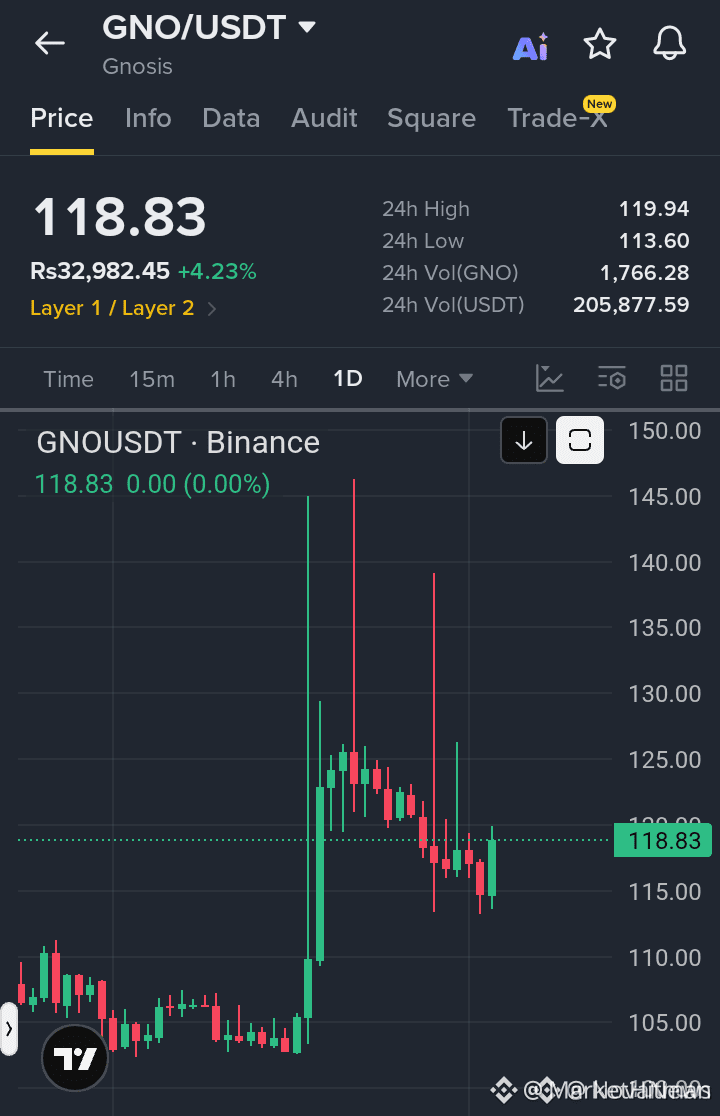
🚨 $GNO NÄHERT SICH EINEM KRITISCHEN WIDERSTAND EINER INSTITUTION FÜR MÖGLICHE LIQUIDITÄTSABWEISUNG! 📉
Einstieg: 118,50 - 121,50 ⚡
Ziel: 112,00 / 106,50 / 101,00 🎯
Stop Loss: 124,80 ⚠️
$GNO erweitert sich direkt in einen dichten Order-Block zwischen 119,00 und 122,00 und bereitet eine erstklassige institutionelle Liquiditätsjagd vor. 🔍 Während der jüngste Rückprall zwar oberflächlichen Aufwärtsimpuls zeigt, treibt die Kursbewegung direkt in ein schweres Überangebot oberhalb – dort absorbiert „Smart Money“ historisch Kaufvolumen.
Eine bestätigte strukturelle Zurückweisung von dieser Schlüsselzone eröffnet eine saubere Abwärtsbewegung hin zu niedrigeren Fair-Value-Gaps. 📊 Beobachte Intraday-Lower-Highs gemeinsam mit $ZEC und $TUT für eine korrelierte Marktausrichtung vor der Ausführung. 💬 Wartest du auf einen Sweep über dem Widerstand oder suchst du hier einen aggressiven Short-Einstieg? 👇
⚠️ Keine Finanzberatung. Verwalte immer dein Risiko. 🛡️
🏷️ #GNO #ShortSetup #MarketStructure #ZEC #TUT
🎯 🛡️
🚨 $GNO NÄHERT SICH EINEM KRITISCHEN WIDERSTAND EINER INSTITUTION FÜR MÖGLICHE LIQUIDITÄTSABWEISUNG! 📉
Einstieg: 118,50 - 121,50 ⚡
Ziel: 112,00 / 106,50 / 101,00 🎯
Stop Loss: 124,80 ⚠️
$GNO erweitert sich direkt in einen dichten Order-Block zwischen 119,00 und 122,00 und bereitet eine erstklassige institutionelle Liquiditätsjagd vor. 🔍 Während der jüngste Rückprall zwar oberflächlichen Aufwärtsimpuls zeigt, treibt die Kursbewegung direkt in ein schweres Überangebot oberhalb – dort absorbiert „Smart Money“ historisch Kaufvolumen.
Eine bestätigte strukturelle Zurückweisung von dieser Schlüsselzone eröffnet eine saubere Abwärtsbewegung hin zu niedrigeren Fair-Value-Gaps. 📊 Beobachte Intraday-Lower-Highs gemeinsam mit $ZEC und $TUT für eine korrelierte Marktausrichtung vor der Ausführung. 💬 Wartest du auf einen Sweep über dem Widerstand oder suchst du hier einen aggressiven Short-Einstieg? 👇
⚠️ Keine Finanzberatung. Verwalte immer dein Risiko. 🛡️
🏷️ #GNO #ShortSetup #MarketStructure #ZEC #TUT
🎯 🛡️
Einstieg: 118,50 - 121,50 ⚡
Ziel: 112,00 / 106,50 / 101,00 🎯
Stop Loss: 124,80 ⚠️
$GNO erweitert sich direkt in einen dichten Order-Block zwischen 119,00 und 122,00 und bereitet eine erstklassige institutionelle Liquiditätsjagd vor. 🔍 Während der jüngste Rückprall zwar oberflächlichen Aufwärtsimpuls zeigt, treibt die Kursbewegung direkt in ein schweres Überangebot oberhalb – dort absorbiert „Smart Money“ historisch Kaufvolumen.
Eine bestätigte strukturelle Zurückweisung von dieser Schlüsselzone eröffnet eine saubere Abwärtsbewegung hin zu niedrigeren Fair-Value-Gaps. 📊 Beobachte Intraday-Lower-Highs gemeinsam mit $ZEC und $TUT für eine korrelierte Marktausrichtung vor der Ausführung. 💬 Wartest du auf einen Sweep über dem Widerstand oder suchst du hier einen aggressiven Short-Einstieg? 👇
⚠️ Keine Finanzberatung. Verwalte immer dein Risiko. 🛡️
🏷️ #GNO #ShortSetup #MarketStructure #ZEC #TUT
🎯 🛡️
335
INSTITUTIONELLE LIQUIDITÄT NEU AUSRICHTUNG VON VORHERSAGEMÄRKTEN ÜBER $GNO ECOSYSTEM-RAILS! 🦈 📊
Der Echtzeit-Order-Flow in Prediction-Protokollen verändert grundlegend, wie kluges Kapital Makro-Informationen hinsichtlich Effizienz handelt. Während sich institutionelles Kapital um Echtzeit-Preisbildung von Wahrscheinlichkeiten konsolidiert, nehmen Infrastruktur-Assets wie $GNO und $DRIFT strukturelles Interesse entlang neu entstehender narrativer Vektoren auf. 📊
Durch die Umwandlung von Stimmungswerten realer Ereignisse in liquide, handelbare Orderbücher schaffen diese Protokolle Mechanismen für hochkonfidente Preisbildung – statt Retail-spekulativem Rauschen. 🌊 Smart-Money-Positionen gehen lange vor dem Entstehen eines narrativen Konsenses hinein und nutzen binäre Yield-Dynamiken, um strukturelle Effizienz zu erfassen. 🔍
💬 Positionierst du dich früh in die Infrastruktur von Vorhersagemärkten – oder wartest du, bis der Konsens die Bewegung bestätigt? 👇
⚠️ Keine Finanzberatung. Managed immer dein Risiko. 🛡️
🏷️ #GNO #DRIFT #PredictionMarkets #Crypto #SmartMoney
🎯 🦈
INSTITUTIONELLE LIQUIDITÄT NEU AUSRICHTUNG VON VORHERSAGEMÄRKTEN ÜBER $GNO ECOSYSTEM-RAILS! 🦈 📊
Der Echtzeit-Order-Flow in Prediction-Protokollen verändert grundlegend, wie kluges Kapital Makro-Informationen hinsichtlich Effizienz handelt. Während sich institutionelles Kapital um Echtzeit-Preisbildung von Wahrscheinlichkeiten konsolidiert, nehmen Infrastruktur-Assets wie $GNO und $DRIFT strukturelles Interesse entlang neu entstehender narrativer Vektoren auf. 📊
Durch die Umwandlung von Stimmungswerten realer Ereignisse in liquide, handelbare Orderbücher schaffen diese Protokolle Mechanismen für hochkonfidente Preisbildung – statt Retail-spekulativem Rauschen. 🌊 Smart-Money-Positionen gehen lange vor dem Entstehen eines narrativen Konsenses hinein und nutzen binäre Yield-Dynamiken, um strukturelle Effizienz zu erfassen. 🔍
💬 Positionierst du dich früh in die Infrastruktur von Vorhersagemärkten – oder wartest du, bis der Konsens die Bewegung bestätigt? 👇
⚠️ Keine Finanzberatung. Managed immer dein Risiko. 🛡️
🏷️ #GNO #DRIFT #PredictionMarkets #Crypto #SmartMoney
🎯 🦈
Der Echtzeit-Order-Flow in Prediction-Protokollen verändert grundlegend, wie kluges Kapital Makro-Informationen hinsichtlich Effizienz handelt. Während sich institutionelles Kapital um Echtzeit-Preisbildung von Wahrscheinlichkeiten konsolidiert, nehmen Infrastruktur-Assets wie $GNO und $DRIFT strukturelles Interesse entlang neu entstehender narrativer Vektoren auf. 📊
Durch die Umwandlung von Stimmungswerten realer Ereignisse in liquide, handelbare Orderbücher schaffen diese Protokolle Mechanismen für hochkonfidente Preisbildung – statt Retail-spekulativem Rauschen. 🌊 Smart-Money-Positionen gehen lange vor dem Entstehen eines narrativen Konsenses hinein und nutzen binäre Yield-Dynamiken, um strukturelle Effizienz zu erfassen. 🔍
💬 Positionierst du dich früh in die Infrastruktur von Vorhersagemärkten – oder wartest du, bis der Konsens die Bewegung bestätigt? 👇
⚠️ Keine Finanzberatung. Managed immer dein Risiko. 🛡️
🏷️ #GNO #DRIFT #PredictionMarkets #Crypto #SmartMoney
🎯 🦈

104

·
--
GNO-Spotmarkt: Daten hier erst mal vorab – aktueller Preis, Handelsvolumen und Kennzahlenposition werden zuerst mit den Grenzen angegeben. Letzte vollständige 5-Minuten-Kerze +11,18%, aktueller Preis 131,49, 24h-Volumen 52,40 Mio., VWAP 123,6931 darüber, Volumenstärke 122,4x.
Nicht nur darauf schauen, ob sich etwas bewegt hat oder nicht – sondern ob es nach der Bewegung auch stabil stehen geblieben ist.
#GNO #Störungsmeldung
GNO-Spotmarkt: Daten hier erst mal vorab – aktueller Preis, Handelsvolumen und Kennzahlenposition werden zuerst mit den Grenzen angegeben. Letzte vollständige 5-Minuten-Kerze +11,18%, aktueller Preis 131,49, 24h-Volumen 52,40 Mio., VWAP 123,6931 darüber, Volumenstärke 122,4x.
Nicht nur darauf schauen, ob sich etwas bewegt hat oder nicht – sondern ob es nach der Bewegung auch stabil stehen geblieben ist.
#GNO #Störungsmeldung
Nicht nur darauf schauen, ob sich etwas bewegt hat oder nicht – sondern ob es nach der Bewegung auch stabil stehen geblieben ist.
#GNO #Störungsmeldung
33

Übersetzung ansehen
$BTC AND $GNO ARE SIGNALING A SHIFT TOWARD PREDICTION MARKET DOMINANCE 📈
Most people consume information, but the smart money is now monetizing it. Platforms like $GNO are proving that when you put real capital behind expectations, you get a much clearer signal than any poll could ever provide.
We are moving from reading headlines to watching probabilities get priced in real time. The most valuable data point right now is the shift in market conviction, as $GNO volume trends higher alongside the broader interest in decentralized prediction protocols. Are you tracking these markets to gauge sentiment before the crowd catches on?
Not financial advice. Always manage your risk.
#GNO #BTC #Crypto #MarketSentiment #PredictionMarkets
🎯
$BTC AND $GNO ARE SIGNALING A SHIFT TOWARD PREDICTION MARKET DOMINANCE 📈
Most people consume information, but the smart money is now monetizing it. Platforms like $GNO are proving that when you put real capital behind expectations, you get a much clearer signal than any poll could ever provide.
We are moving from reading headlines to watching probabilities get priced in real time. The most valuable data point right now is the shift in market conviction, as $GNO volume trends higher alongside the broader interest in decentralized prediction protocols. Are you tracking these markets to gauge sentiment before the crowd catches on?
Not financial advice. Always manage your risk.
#GNO #BTC #Crypto #MarketSentiment #PredictionMarkets
🎯
Most people consume information, but the smart money is now monetizing it. Platforms like $GNO are proving that when you put real capital behind expectations, you get a much clearer signal than any poll could ever provide.
We are moving from reading headlines to watching probabilities get priced in real time. The most valuable data point right now is the shift in market conviction, as $GNO volume trends higher alongside the broader interest in decentralized prediction protocols. Are you tracking these markets to gauge sentiment before the crowd catches on?
Not financial advice. Always manage your risk.
#GNO #BTC #Crypto #MarketSentiment #PredictionMarkets
🎯
17

·
--
$GNO +8.46% | $LA +7.82% | $PROM +7.72%
#GNO Trades bei 112,61 $, plus +8,46% gegenüber 2,6 M Volumen. Das Full‑Stack‑Ökosystem des Projekts erweitert weiterhin seine Brücke zwischen dezentraler Technologie und alltäglichem Finanzwesen.
#LA Trades bei 0,0565 $, plus +7,82% gegenüber 4,7 M Volumen.
#PROM Trades bei 2,02 $, plus +7,72% gegenüber 2,6 M Volumen. Seine modulare ZkEVM Layer 2 soll EVM- und Non‑EVM‑Chains verbinden.
Das höhere Volumen von LA könnte kurzfristig einen etwas stärkeren Push liefern als GNO und PROM.
#Binance #Crypto
$GNO +8.46% | $LA +7.82% | $PROM +7.72%
#GNO Trades bei 112,61 $, plus +8,46% gegenüber 2,6 M Volumen. Das Full‑Stack‑Ökosystem des Projekts erweitert weiterhin seine Brücke zwischen dezentraler Technologie und alltäglichem Finanzwesen.
#LA Trades bei 0,0565 $, plus +7,82% gegenüber 4,7 M Volumen.
#PROM Trades bei 2,02 $, plus +7,72% gegenüber 2,6 M Volumen. Seine modulare ZkEVM Layer 2 soll EVM- und Non‑EVM‑Chains verbinden.
Das höhere Volumen von LA könnte kurzfristig einen etwas stärkeren Push liefern als GNO und PROM.
#Binance #Crypto
#GNO Trades bei 112,61 $, plus +8,46% gegenüber 2,6 M Volumen. Das Full‑Stack‑Ökosystem des Projekts erweitert weiterhin seine Brücke zwischen dezentraler Technologie und alltäglichem Finanzwesen.
#LA Trades bei 0,0565 $, plus +7,82% gegenüber 4,7 M Volumen.
#PROM Trades bei 2,02 $, plus +7,72% gegenüber 2,6 M Volumen. Seine modulare ZkEVM Layer 2 soll EVM- und Non‑EVM‑Chains verbinden.
Das höhere Volumen von LA könnte kurzfristig einen etwas stärkeren Push liefern als GNO und PROM.
#Binance #Crypto
121

·
--
$GNO +8.81% | $ALPINE +8.41% | $LA +8.03%
#GNO auf $113.38 gestiegen, plus +8.81% bei einem Volumen von $2.6 M. Das Full-Stack-Ökosystem dahinter zieht auch nach Jahren der Entwicklung weiterhin Aufmerksamkeit auf sich.
#ALPINE stieg auf $0.3350, plus +8.41% bei $9.2 M Umsatz. Die neue Binance-BWT Alpine F1-Partnerschaft treibt das Interesse am Fan-Token eindeutig an.
#LA kletterte auf $0.0565, plus +8.03% bei $4.7 M Volumen. Sein moderater Preis bietet in der aktuellen Rallye noch immer spürbares Aufwärtspotenzial.
Alle drei Tokens verzeichneten ähnliche zweistellige Gewinne, doch das Volumen von ALPINE liegt über dem der anderen und deutet auf eine stärkere kurzfristige Liquidität hin.
#Binance #Crypto
$GNO +8.81% | $ALPINE +8.41% | $LA +8.03%
#GNO auf $113.38 gestiegen, plus +8.81% bei einem Volumen von $2.6 M. Das Full-Stack-Ökosystem dahinter zieht auch nach Jahren der Entwicklung weiterhin Aufmerksamkeit auf sich.
#ALPINE stieg auf $0.3350, plus +8.41% bei $9.2 M Umsatz. Die neue Binance-BWT Alpine F1-Partnerschaft treibt das Interesse am Fan-Token eindeutig an.
#LA kletterte auf $0.0565, plus +8.03% bei $4.7 M Volumen. Sein moderater Preis bietet in der aktuellen Rallye noch immer spürbares Aufwärtspotenzial.
Alle drei Tokens verzeichneten ähnliche zweistellige Gewinne, doch das Volumen von ALPINE liegt über dem der anderen und deutet auf eine stärkere kurzfristige Liquidität hin.
#Binance #Crypto
#GNO auf $113.38 gestiegen, plus +8.81% bei einem Volumen von $2.6 M. Das Full-Stack-Ökosystem dahinter zieht auch nach Jahren der Entwicklung weiterhin Aufmerksamkeit auf sich.
#ALPINE stieg auf $0.3350, plus +8.41% bei $9.2 M Umsatz. Die neue Binance-BWT Alpine F1-Partnerschaft treibt das Interesse am Fan-Token eindeutig an.
#LA kletterte auf $0.0565, plus +8.03% bei $4.7 M Volumen. Sein moderater Preis bietet in der aktuellen Rallye noch immer spürbares Aufwärtspotenzial.
Alle drei Tokens verzeichneten ähnliche zweistellige Gewinne, doch das Volumen von ALPINE liegt über dem der anderen und deutet auf eine stärkere kurzfristige Liquidität hin.
#Binance #Crypto
73
Anmelden und weiter Inhalte entdecken
Krypto-Nutzer weltweit auf Binance Square kennenlernen
⚡️ Bleib in Sachen Krypto stets am Puls.
💬 Die weltgrößte Kryptobörse vertraut darauf.
👍 Erhalte verlässliche Einblicke von verifizierten Creators.
E-Mail-Adresse/Telefonnummer
Trendthemen
1
#ChainlinkLaunchesCCIP2WithEnterpriseVerification
1,581 Aufrufe
178 Kommentare
2
#GoldFallsTo$4144
2,425 Aufrufe
73 Kommentare
3
#QNTFallsOver40%FromMorningHigh
22,225 Aufrufe
621 Kommentare
4
#KospiFalls2.7%SamsungSKHynixDropOver5%
3,997 Aufrufe
258 Kommentare
5
#BitgetCEOConfirms$388MStolenInHack
1,608 Aufrufe
30 Kommentare
6
#BTCFallsBelow$83000
14,136 Aufrufe
120 Kommentare
7
#BitgetDetailsSecurityIncidentTimeline
13,823 Aufrufe
415 Kommentare
8
#BitcoinSpotETFs$2.39BWeeklyNetInflow
5,766 Aufrufe
26 Kommentare
9
#FedProposesPaymentStablecoinRules
43,294 Aufrufe
781 Kommentare
10
#ChinaMayLetAlibabaByteDanceBuyNvidiaChips
45,165 Aufrufe
792 Kommentare